
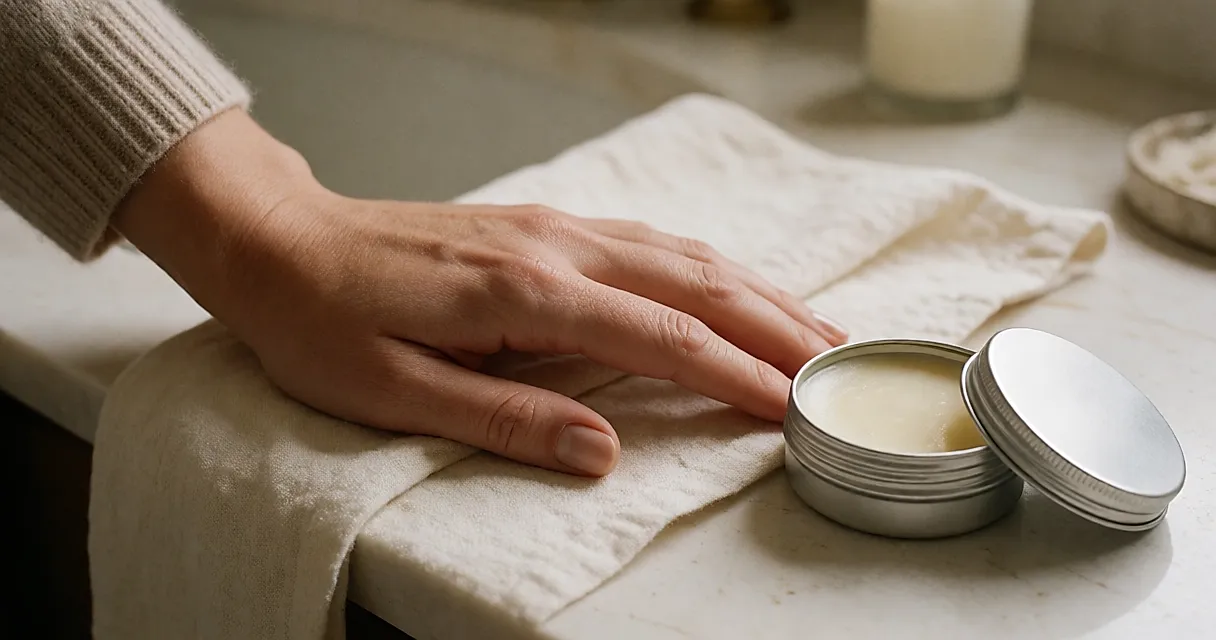
Take the last group photo you're in. Your face is broadly holding up: thank the skincare, thank the angle. Then your eye slides down to your hands and the illusion collapses — fine lines, dark spots, cuticles on strike. Nobody warned you that the back of your hand delivers its verdict before your forehead does.
The most exposed area, the least looked after
Add up an ordinary day. Hand sanitiser on the way out of the Tube, hot water and washing-up liquid at lunch, cleaning spray in the evening, a steering wheel or bike handlebars in between, and the autumn cold settling in without warning. Your hands are on the front line from the moment you wake to the moment you sleep — which is probably why we assume they're indestructible.

Except the skin on the back of your hand is thin, with few sebaceous glands to protect it, so it tightens fast. As far as care goes, it's a desert. Your face gets a serum, an eye cream and a Tuesday-night mask; your hands inherit a half-used tube that's been rattling around at the bottom of a bag since last winter — often fragranced, often forgotten. We reach for it when the skin feels tight, which is already too late, and rarely on the backs of the fingers, which dry out first.
Borrow from your face routine
The new idea fits into a sentence: what if we stopped inventing a separate hand routine and simply raided the face one? Some brands sell serums, essences and actives for hands. On paper it's intriguing. In practice the question isn't the bottle, it's the technique.

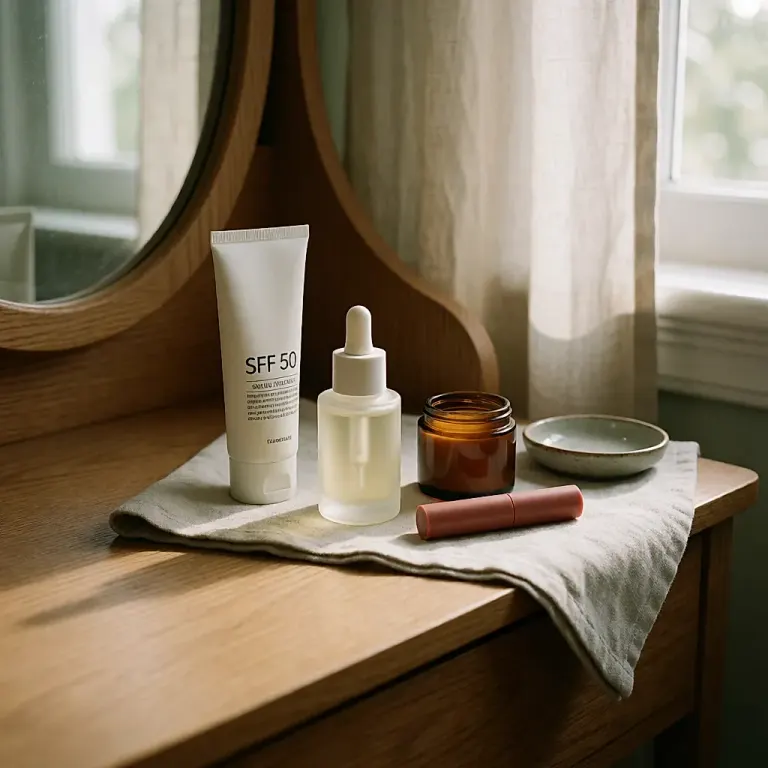
The most cost-effective habit costs nothing: when you apply your face serum, keep the leftovers on the backs of your hands, from wrist to fingertip. One sizeable caveat, though: if you apply a dedicated serum to your hands twice a day, a 30ml bottle will run out fast. Keep that serum for your face and give your hands a generous balm instead. Order matters too: serum on clean skin, balm on top to seal it in, and in the morning an SPF — the backs of your hands catch the sun at the wheel, sitting outside a café, in February as well as July.
Gloves: the ritual nobody saw coming
If you're curious about hand masks, the principle is simple: two cream-soaked gloves — leave them on for about the length of one episode — and the aim is to leave hands feeling softer and less dry. No transformation, but a bit of immediate comfort.
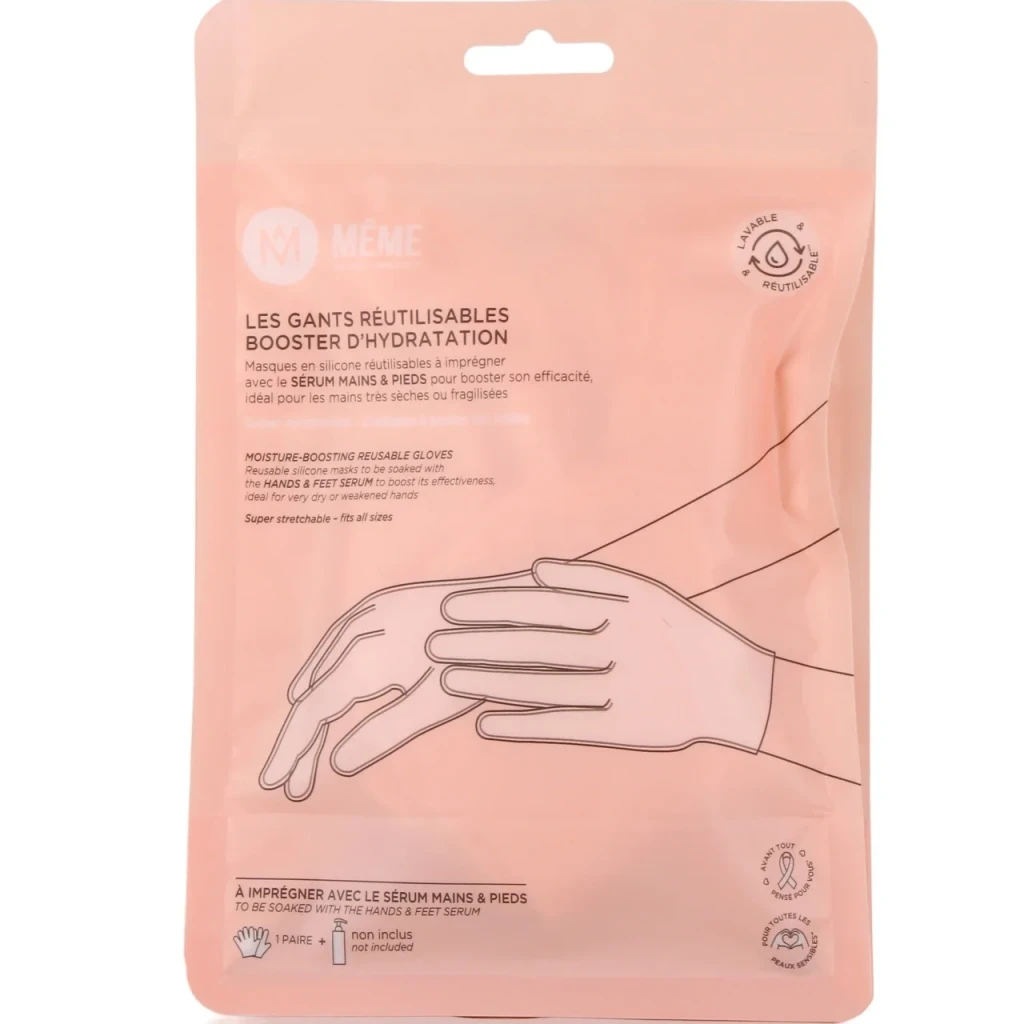
A reusable option: silicone gloves into which you squeeze your own cream. You control the dose, and the idea is to reuse them rather than replace them after every use. The glove doesn't do the work for you, though: it keeps the cream in contact with your skin instead of letting it disappear up your pyjama sleeve. As for single-use sachets, they deliver once and then go in the bin — a choice worth making with your eyes open. And we won't pretend a hand mask is life-changing: the evidence specific to this area is still thin.
The technique, no stopwatch required
The first tip isn't a product, it's a location. Keep the balm next to the soap, where you wash your hands ten times a day, and put a travel-size tube in your coat pocket. What you can see gets used; what stays at the bottom of your bag ends up in the loft with the chargers nobody can identify.
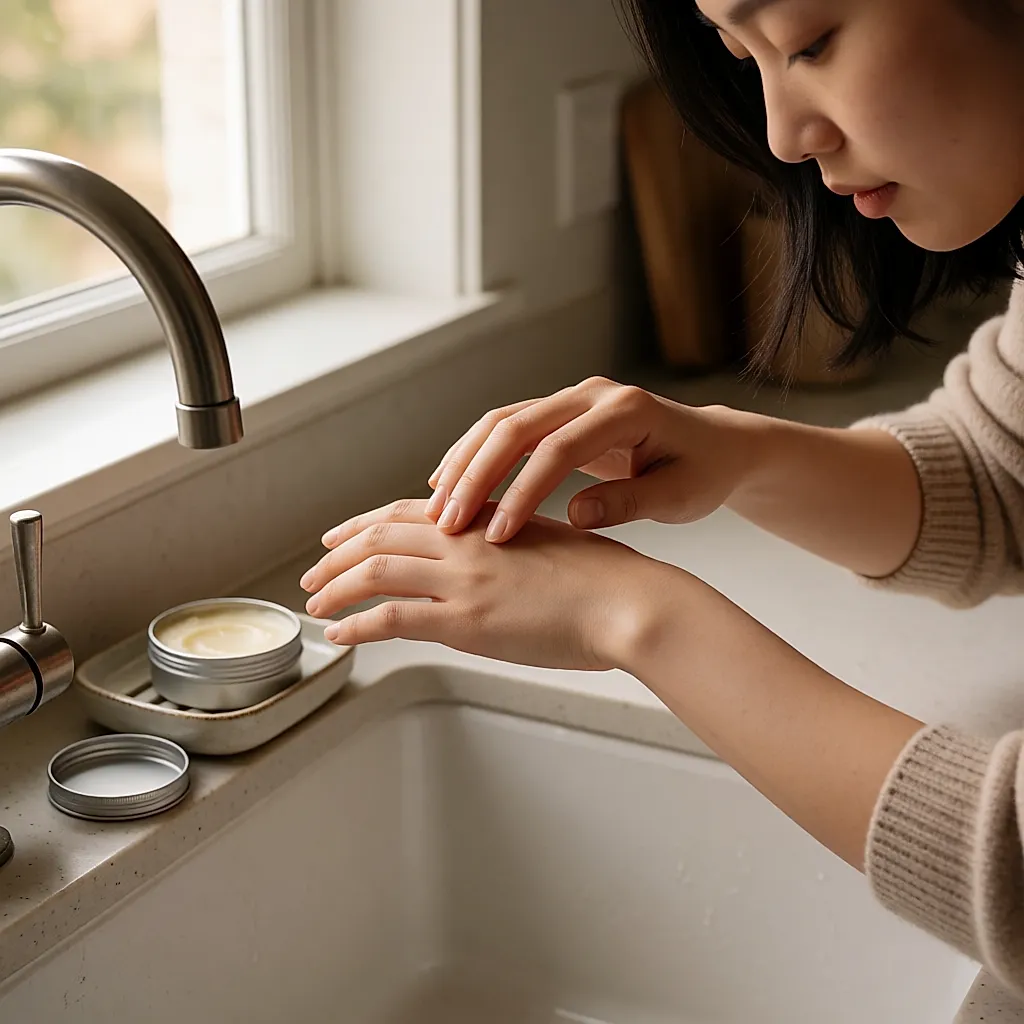
And the technique itself: a pea-sized amount warmed between your palms, then a few moments massaging the backs of your hands, between the fingers and around the nails. There's no need to push your cuticles back until they bleed — they only want hydration. In the evening, go for a thicker layer, even a cotton glove over the top, like our grandmothers did. And exfoliation? When your skin asks for it, gently: sugar and a plant oil do the job perfectly, rinsed off with lukewarm water and no scrubbing.
What it costs
As a rough guide, expect to pay around £4 to £10 for a simple balm from a pharmacy, supermarket or health food shop; £15 to £30 for a beauty hall balm in a nicely designed tube; £20 to £45 for a serum formulated specifically for hands, the least essential item on the list. A single-use glove mask costs £5 to £12 each, a pair of reusable silicone gloves £10 to £25, and a solid balm in a metal tin £10 to £20 — and it can last longer than a tube. Prices vary with brand, size, packaging and retailer.
Where to find them? Supermarkets and pharmacies for the essentials, department stores and specialist retailers for the more elaborate formulas, brand websites for exact references. One name that comes up again and again is L'Occitane, whose hand balms are heavily fragranced.
A Sunday-night ritual, no clock-watching: a gentle scrub (one spoonful of sugar, one of plant oil), a lukewarm rinse, serum or oil, a thick layer of balm, cotton gloves and an episode of something. On Monday morning you won't have different hands — you'll just have stopped forgetting them.
There's a certain logic to the hand becoming a skincare zone: it's the part of us that touches everything, shakes hands, carries the shopping and wipes away a tear at the end of a film. If only one habit survived, it should be this one: balm by the soap, leftover serum on the backs of your hands, and reusable gloves rather than a sachet a night. The rest is comfort — and we're all for comfort.

Comments
Your opinion matters: rate the article, react and reply to comments.
Comments are moderated; AI-assisted comments are flagged. Text emoticons (8-), :-), <3…) are automatically shown as images.