
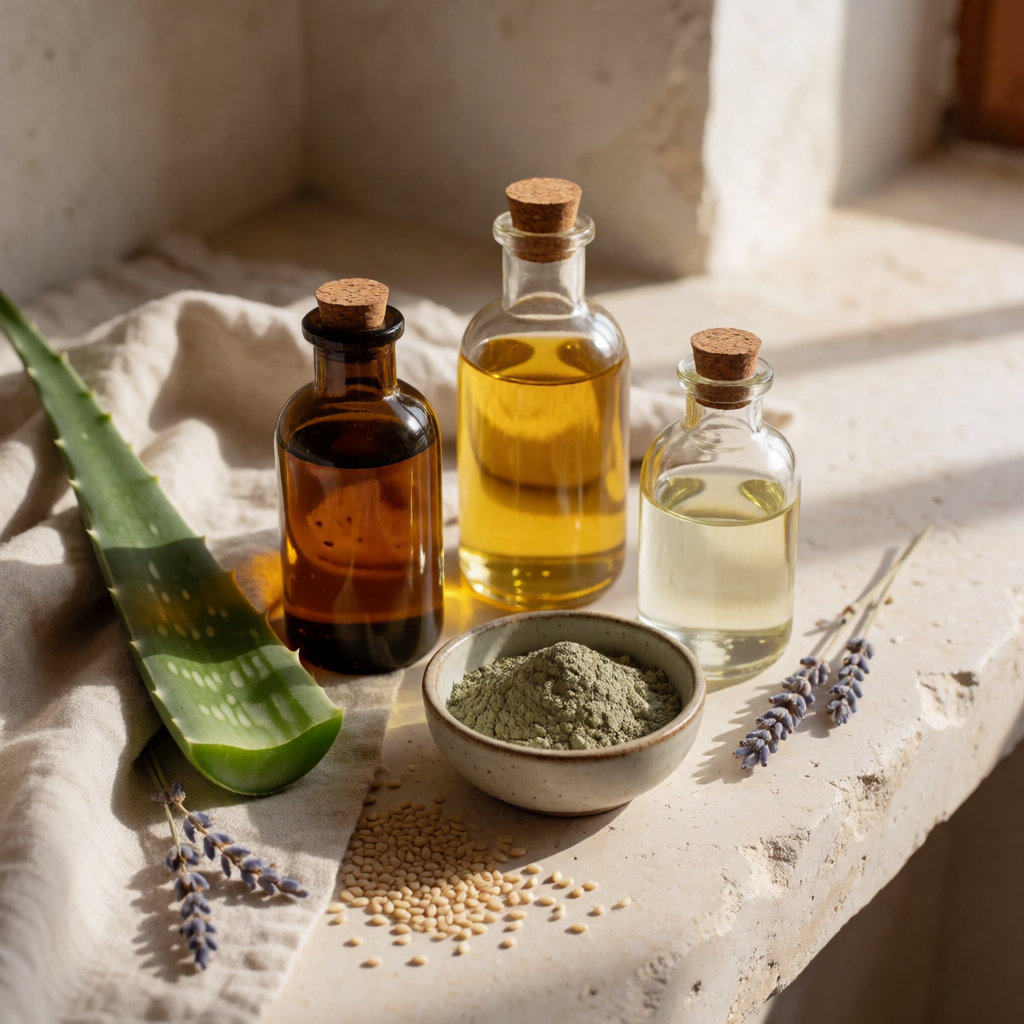
Ayurveda is no passing trend. This traditional Indian medicine, practised for millennia, starts from a simple idea: our beauty depends on the balance of three forces, the doshas — vata (air), pitta (fire), kapha (water and earth). We inherit a unique combination, with one often dominant. A word of caution: this is not a medical diagnosis, just a framework for adapting your rituals. And in practice, it can help explain why your skin doesn't react in the same way in January and July, or after too short a night.
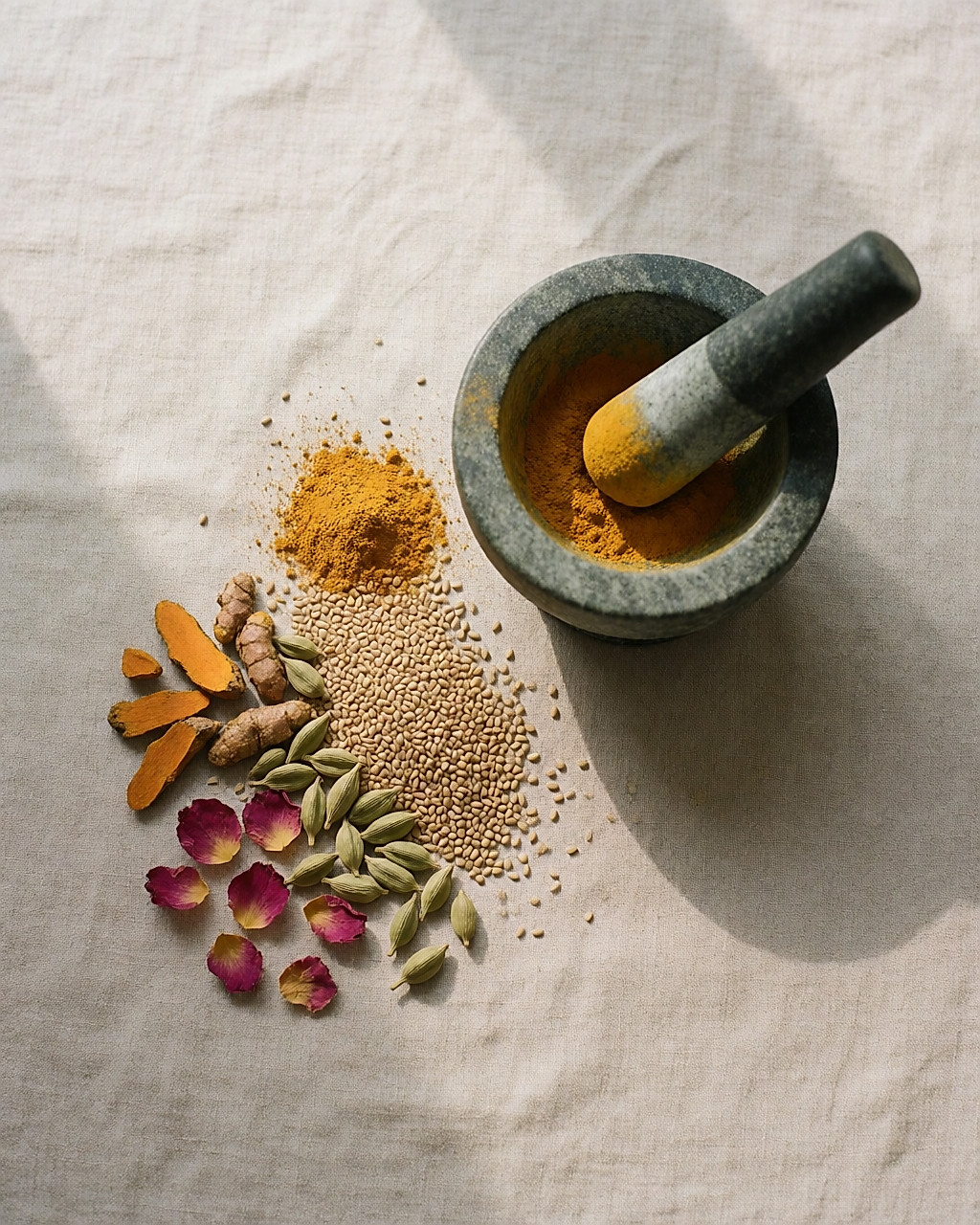
Vata: when skin feels tight
Tight-feeling skin, brittle hair, ridged nails? You're probably vata. Your enemy is cold and dryness — and winter makes it worse. The step that changes everything? Hydrate and warm, without stripping. Sesame oil warmed between your palms and applied to damp skin after a shower remains the benchmark. Choose it organic, in a glass bottle, with a Cosmos Organic label: this standard requires a large proportion of plant ingredients from organic farming, as well as a minimum of organic ingredients in the total formula. Sweet almond oil works very well too. In the bath, a few drops of true lavender essential oil diluted in a carrier oil may soothe — never neat on the skin. And skip abrasive scrubs: they would only make the tight feeling worse.

Pitta: when skin runs hot
Fair skin, freckles, redness that settles in, fine hair: welcome to pitta. You crave coolness, and it shows on your face as soon as it's hot or you go through a stressful spell. Cucumber, aloe or avocado masks can be your allies; choose lightweight formats, gels or lotions, rather than rich textures that feel suffocating. Sandalwood is often mentioned in traditional recipes, but the species is under threat — we prefer organic coconut or jojoba oil, reputed to be soothing. In the shower, lukewarm rather than scalding: your skin will thank you.

Kapha: when the complexion looks dull
Smooth but oily skin, a cloudy complexion, blackheads, abundant hair: kapha. Here you need to stimulate and purify. Sunflower oil warmed and massaged in can create a feeling of relaxation. Neem (margosa) is an interesting active ingredient, reputed to be antiseptic and sebum-regulating; you can find it as a powder or in organic skincare. Green clay or a red sandalwood mask, if you can find a sustainable version, can mattify. But don't overload: a simple routine, morning and evening, is more than enough.

To identify your dominant dosha, observe yourself over a week: how does your skin react to temperature changes? To tiredness? Write it all down. An Ayurvedic assessment with a trained practitioner can help, but it does not replace a dermatologist.
Budget
Organic plant oils (sesame, sweet almond, coconut) cost between £8 and £20 for 100 ml in health food shops or online. Ready-made masks (neem, clay): expect £10 to £25. Ayurvedic treatments sold in beauty retailers or online: £20 to £45. Prices vary with certification, size and brand. The most eco-friendly options remain glass bottles, refills and local manufacturing.
Sources
- World Health Organization, 'Traditional medicine', fact sheet.



Comments
Your opinion matters: rate the article, react and reply to comments.
Comments are moderated; AI-assisted comments are flagged. Text emoticons (8-), :-), <3…) are automatically shown as images.