
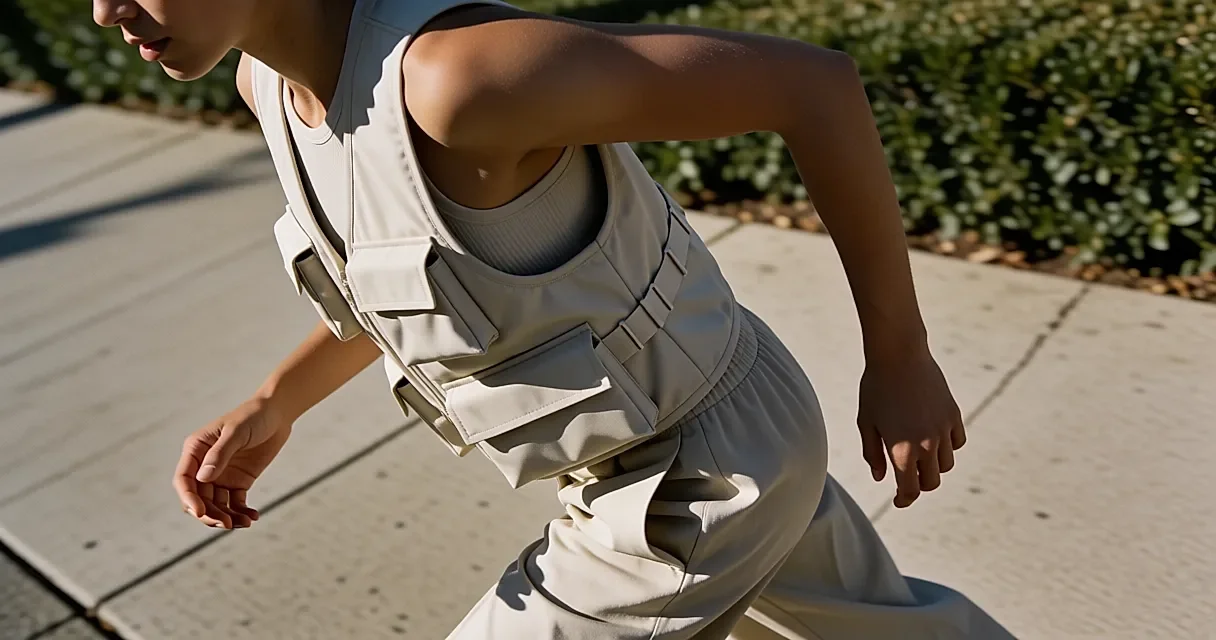
Sunday, 9.12am, on the park path. You have been walking for twenty minutes, your legs are warm, your breathing is still easy, and your body still has that energy which, on a Monday evening, would end up as a cancelled session. Would three extra kilos on your shoulders be enough to turn a stroll into training?
What the load changes, and what it does not
The body does not negotiate with gravity. Adding weight asks a little more of your muscles and cardiovascular system with every step: the energy cost of walking rises with the load you carry, and how much depends on the added weight, your speed and how long you walk. Nothing dramatic, but an ordinary walk stops feeling quite so ordinary.
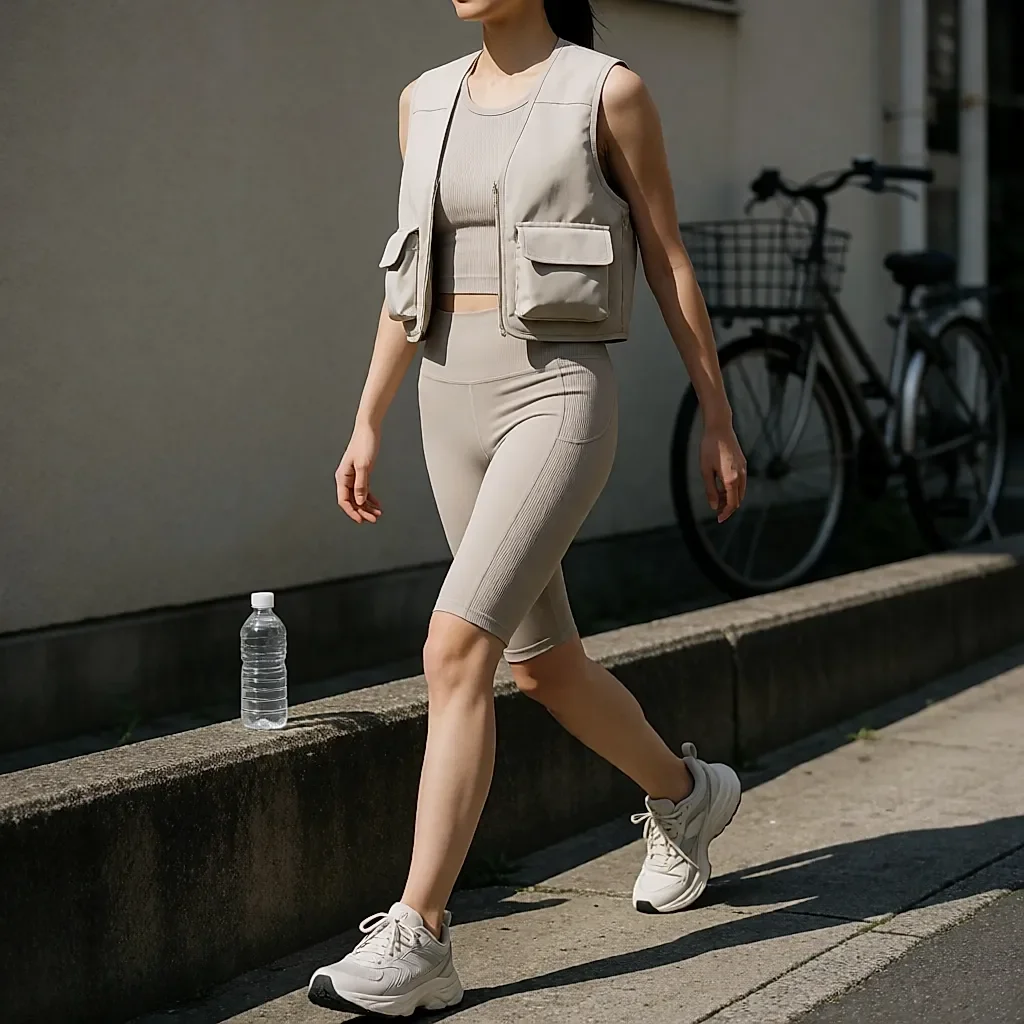
What we know far less about is what that does over time. Trials have looked at the effects of loaded walking on bone density or body composition, but their protocols vary too much to draw a firm conclusion. In other words, it is not a treatment, and no measurable result can be guaranteed in the short term.
With that caveat in place, one practical benchmark still holds, without tying it to one specific source: regular moderate-intensity activity, such as walking, remains a sensible habit. A vest does not create a new category of activity; it makes the activity you already do more demanding, which helps when time is short.
On your shoulders, not at the ends of your arms
So, vest or backpack? A loaded backpack sits behind you: the weight moves away from your body, the straps pull, you compensate by leaning slightly, and the whole thing ends up swinging with your stride. A vest, by contrast, puts weight at the front and back, close to your body – the load moves with you rather than behind you.
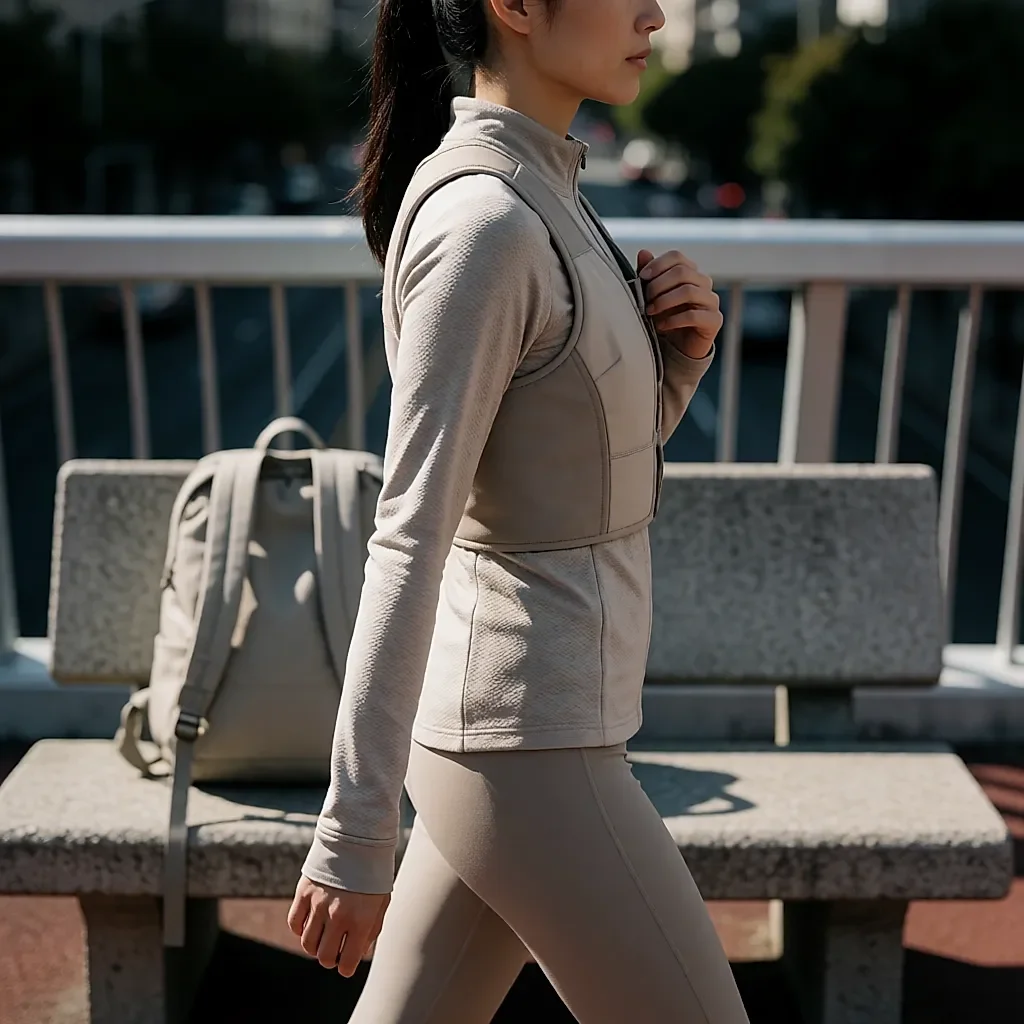
It still has to fit properly. Look for wide straps that do not cut into the base of your neck, an adjustment that feels snug around your torso without restricting your breathing, and a roughly even split between front and back. If the vest rides up when you raise your arms, it is too loose; if it cuts you in two, it is too tight.
The criterion that sums up all the others comes down to one word: silence. A vest that clacks, slips or pulls to one side with every stride is working against you. Climb the stairs three times before you head out: you will know.
Pockets that hold the weight while you walk
A weighted vest depends on its pockets. Models with individual weights – small plates or sandbags slipped into compartments – let you adjust the load and spread it out. Look for high pockets on the chest, with a flap or hook-and-loop fastening, and check that no weight can shift sideways: a kilo sliding to the right unbalances you more than it strengthens you.
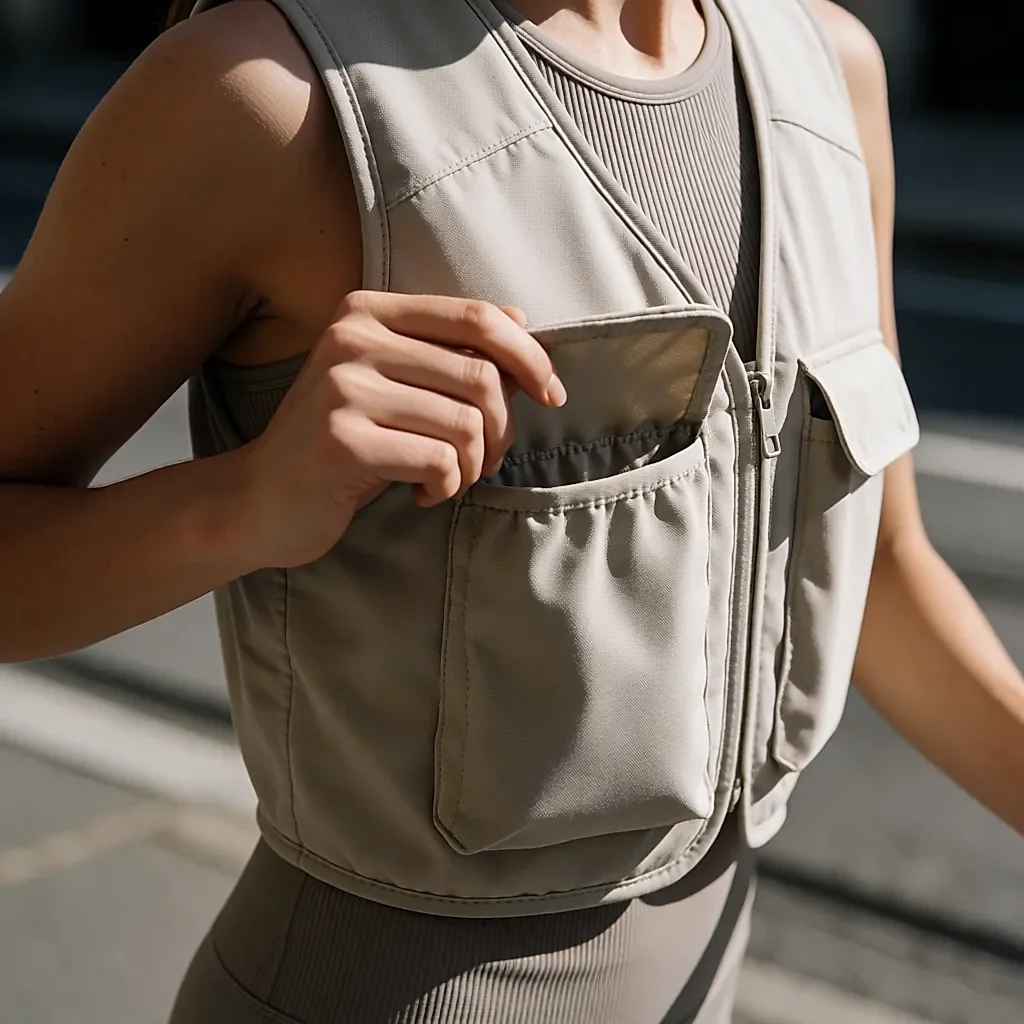
Two everyday details. Your phone and keys do not go in the weight pocket: they end up wedged under a plate and you are hunting for your mobile on all fours in the hallway. And the vest is not a hiking pack – anything dangling, a loose strap or an open pocket, becomes irritating after the first stretch of pavement.
Loaded walking when you do not run
There are those who run, and those who have tried. A troublesome knee, breath that burns too quickly, a schedule that makes jogging unlikely: for all of them, loaded walking offers an intermediate intensity without a running phase. The talk test is still the best guide: if you can hold a conversation in short sentences without gasping, you are at a moderate pace.
In practice, many people advise starting with a light load and increasing gradually: add time before you add weight. And keep your feet on the ground: a vest will not replace running where pure performance is concerned; the intensity usually remains lower than running. It simply makes a daily walk more demanding, which is not nothing.
The budget and the space it takes up at home
Expect to pay around £25 to £50 for a simple canvas model with sand or light plates from a large sports retailer, and £50 to £130 for a vest with adjustable weights and better-designed straps. The price rises with load capacity, stitching quality and fit – not with the promise printed on the box.
As for space, it is far less obtrusive than a treadmill: it rolls up, hangs on a hook or slips into the back of a drawer, which matters in a studio flat. And if you wanted to test the idea before investing? A backpack, two 1.5-litre bottles of water – 1 litre of water weighs 1 kilo – and you have a load adjustable to the nearest millilitre, at no cost.
Weight is not harmless for everyone. Back problems, joint pain, balance problems, pregnancy, cardiovascular conditions: ask a healthcare professional before adding weight, and never try to compensate for pain by simply changing your vest. Start light, walk, and listen to your body.
One benchmark is worth keeping in mind: ten minutes of slightly loaded walking on a Sunday morning beats a fantasised run next Tuesday. A vest will not lose the weight for you, and it does not replace professional advice if something feels strained, or the pleasure of walking with nothing at all. It simply makes everyday life a little more demanding – and that is often where things begin.
Sources
- World Health Organization — Physical activity fact sheet, 2020.



Comments
Your opinion matters: rate the article, react and reply to comments.
Comments are moderated; AI-assisted comments are flagged. Text emoticons (8-), :-), <3…) are automatically shown as images.