
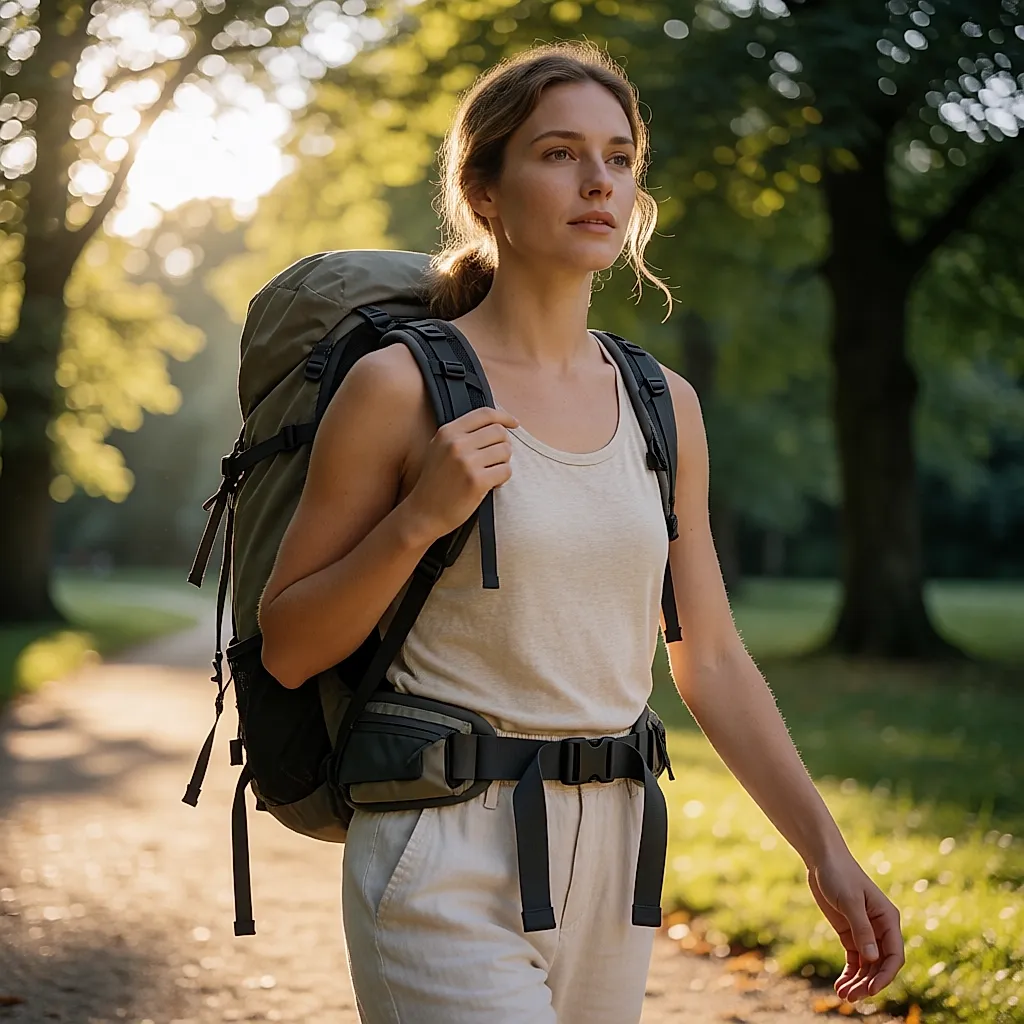
On top of the pile of bed linen sits a hiking rucksack that has never seen a trail. Rucking — walking with weight on your back — offers it a second career right on your doorstep. No trail run, no race number, no 6am alarm: just a walk, a little denser than usual. And if it were the compromise we’ve been waiting for between a post-dinner stroll and the run you don’t enjoy?
A soldier’s habit turned neighbourhood walk
The word comes from the English ruck, meaning a pack. Loaded marches are an old military business: recruits are trained to carry heavy loads, for long periods, over all kinds of terrain, because walking remains the simplest way to move a body and its kit. Nothing very glamorous, then — and perhaps that is exactly what appeals.
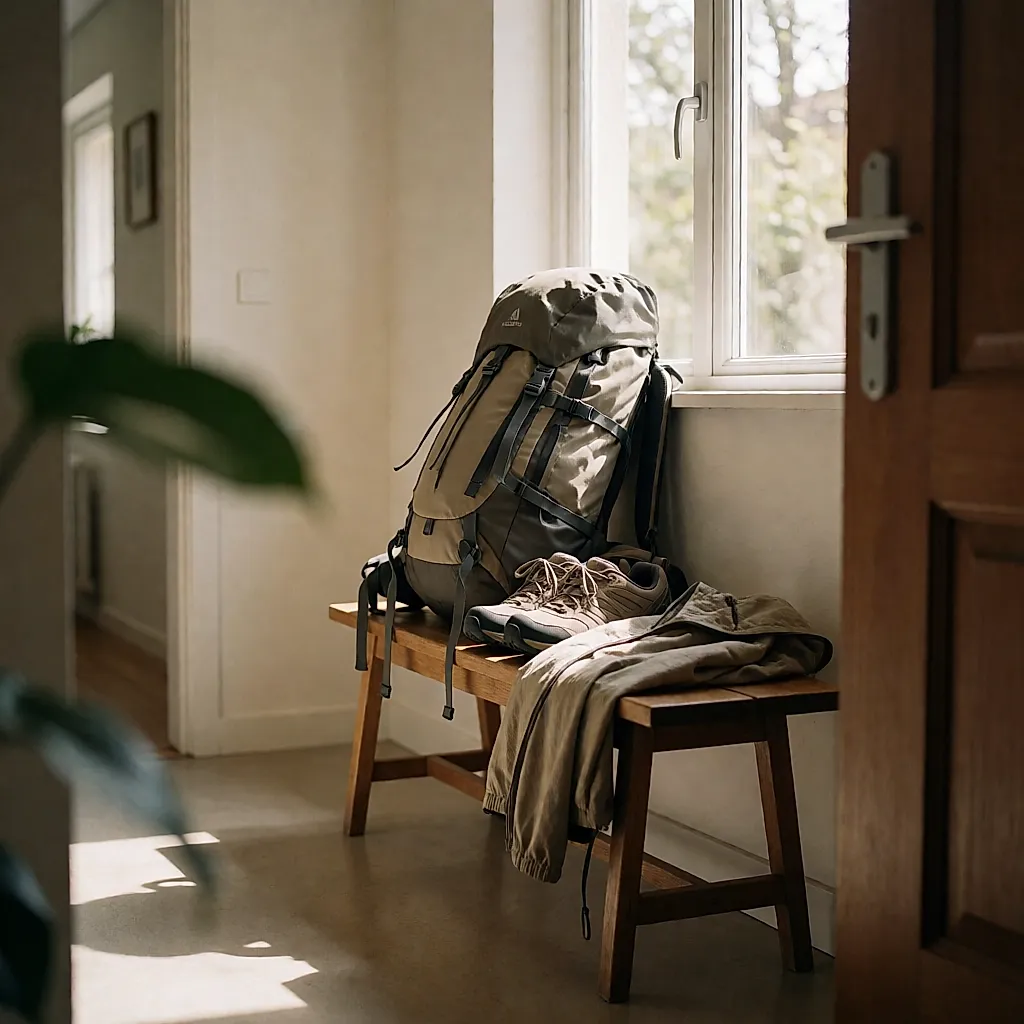
In recent years the practice has appeared in English-language discussions and videos, where it is described as an in-between: more intense than a stroll, less demanding than a run. What we do know is that loaded walking is an old and studied practice. What we don’t yet know very well is what it adds beyond a brisk walk at comparable effort. Caution, then, but legitimate curiosity.
Walking heavy without the impacts of running
There is fairly broad agreement on one point: carrying a rucksack increases the cost of walking. The heavier the load, the more the body spends to move — current data suggest a real effect on energy expenditure. In other words, your usual route does not become another route: it becomes another effort.
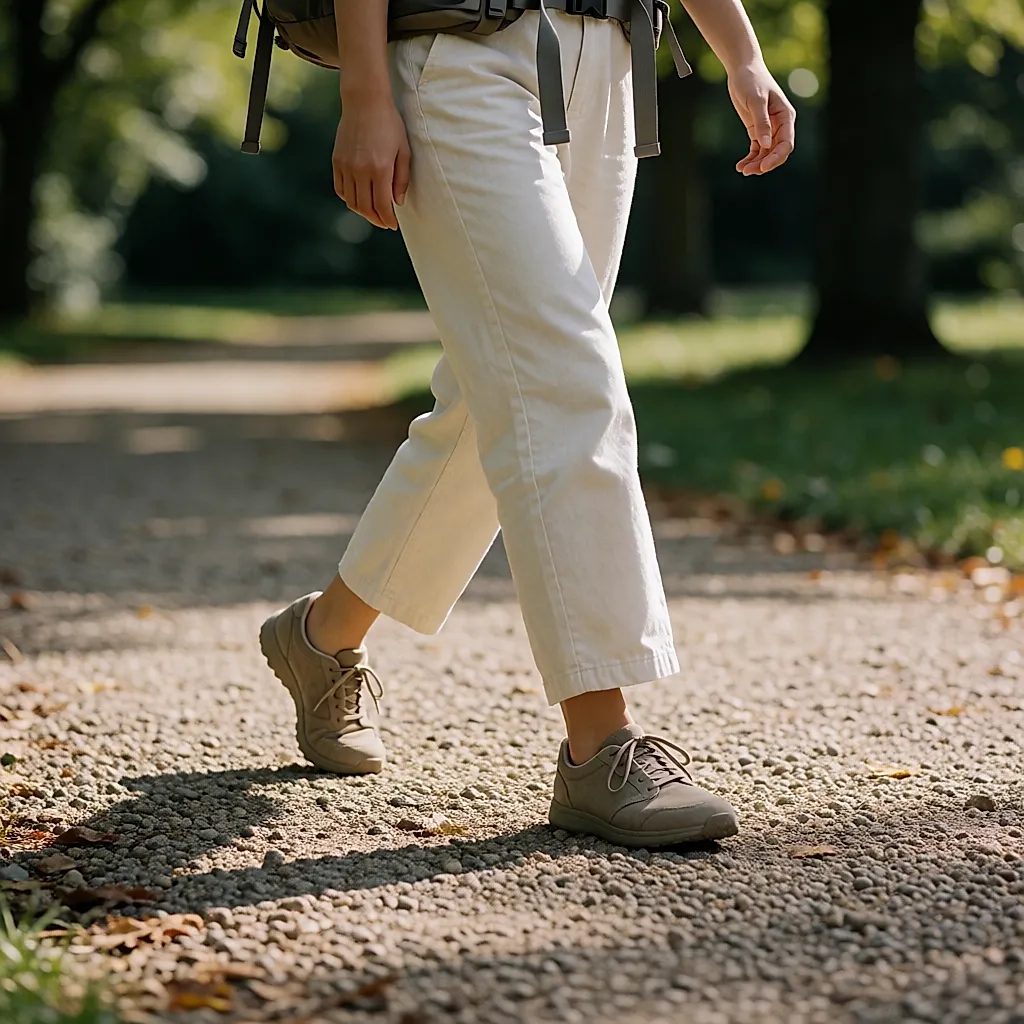
The other argument made is gentleness. In walking, one foot is always on the ground, whereas running multiplies footfalls and impacts. Careful, though: the back, shoulders and knees also absorb the load, and weighted walking is not trivial just because it is slow. A simple way to set your intensity: you should be able to hold a conversation in full sentences throughout the route.
The weight: start lighter than you expect
The classic mistake? Filling the rucksack “so it’s useful”. In practice — an editorial benchmark, not a prescription — 2–3kg is enough to transform an ordinary walk, and 4–5kg already makes a proper session. If you don’t have dedicated weights, household items work perfectly: water bottles, bags of rice, paperbacks, a full water bottle. A litre of water weighs a kilo, and you can even drink it en route — the rucksack gets lighter by itself, which is the only good news we’ll accept from a walking rucksack.

Then progress on one lever at a time: a few more minutes, or a few hundred grams more, never both in the same week. The body adapts quickly to what it is asked to do regularly, and much less quickly to what it is asked to do all at once.
Straps, torso, short steps
It is all in the placement. The load should travel high on the back, against the shoulder blades, not swing around at the lower back: heavy items high, close to the back; lighter items lower down. Tighten the straps without turning yourself into a tied-up parcel, and if the rucksack has a hip belt, place it on your hips rather than your stomach. If the belt is tight, you feel less strain in your shoulders; if it is loose, your neck pays.
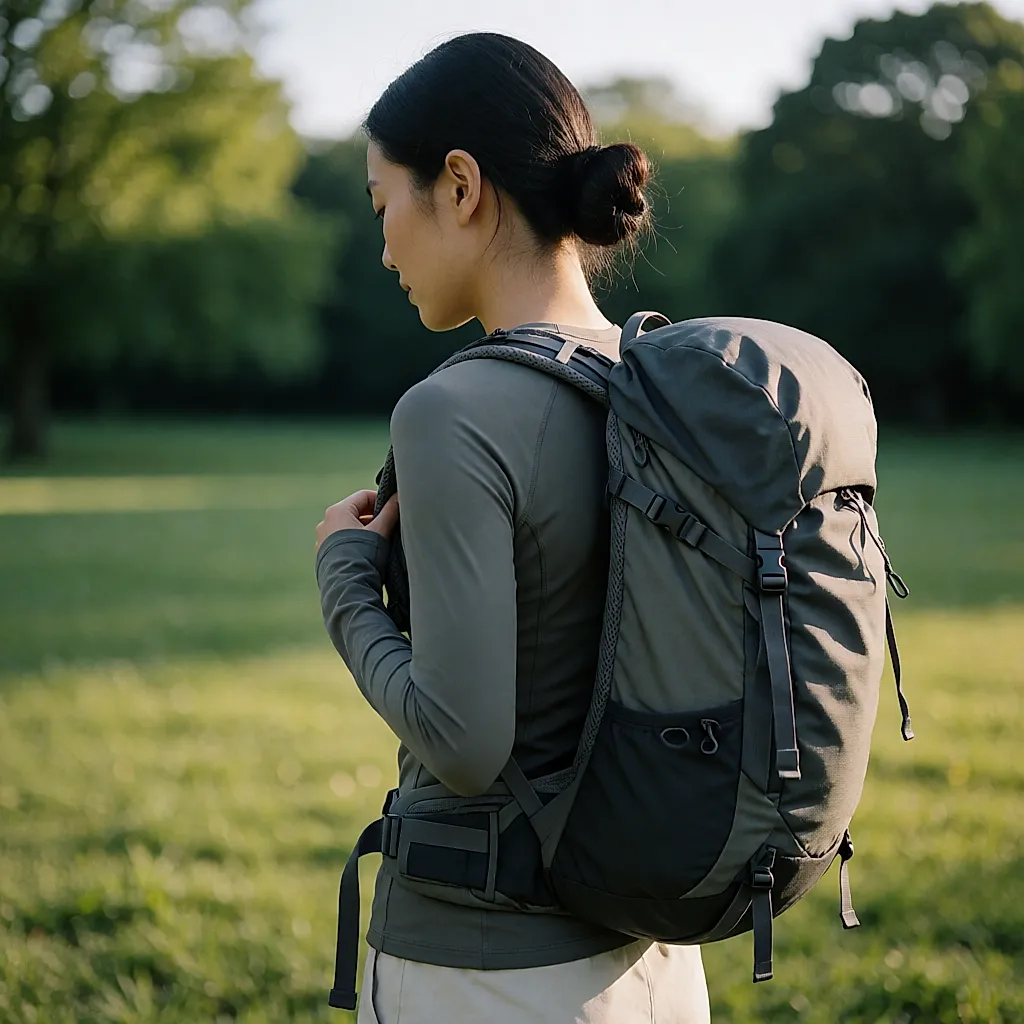
As you walk, open your chest, lower your shoulders and shorten your stride — shorter, slightly faster. Look far ahead, not at the toes of your shoes. Check after ten minutes: that’s when everything starts to loosen, straps included. A one-minute stop to tighten up is better than an hour spent compensating.
A well-adjusted rucksack can be checked with three signs: it doesn’t hit your back with every step, it doesn’t tip backwards, and your shoulders don’t rise towards your ears. If one of the three is off, the load is too heavy, too low or badly strapped.
Staying the distance, breathing, and knowing when to lighten
Start short: 20–30 minutes, once or twice a week — a practical benchmark, to adjust to your fitness — already counts as a session. For context, the WHO recommends that adults get 150–300 minutes of moderate-intensity activity a week; weighted walking can contribute to that, without claiming to replace the rest.

Breathing follows the effort: breathe in through your nose while it remains comfortable, and keep that ability to speak in full sentences. The day you can’t, it isn’t a feat, it’s a signal. As are lower back pain that persists after the walk, tingling in the hands, sore shoulders or a feeling of imbalance: lighten the load, shorten the route, and if the pain returns, speak to a healthcare professional. If you are pregnant, have back problems, a heart condition or recent surgery, it is better to seek advice before loading up the rucksack.
There is still that small Sunday-evening sense of pride: a walk that doesn’t look like training, but leaves something in your legs. Rucking is nothing spectacular — and perhaps that is exactly why it is sustainable. Get the rucksack out of the cupboard, slip in two bottles, and listen to what your back says: it will have the last word.



Comments
Your opinion matters: rate the article, react and reply to comments.
Comments are moderated; AI-assisted comments are flagged. Text emoticons (8-), :-), <3…) are automatically shown as images.