
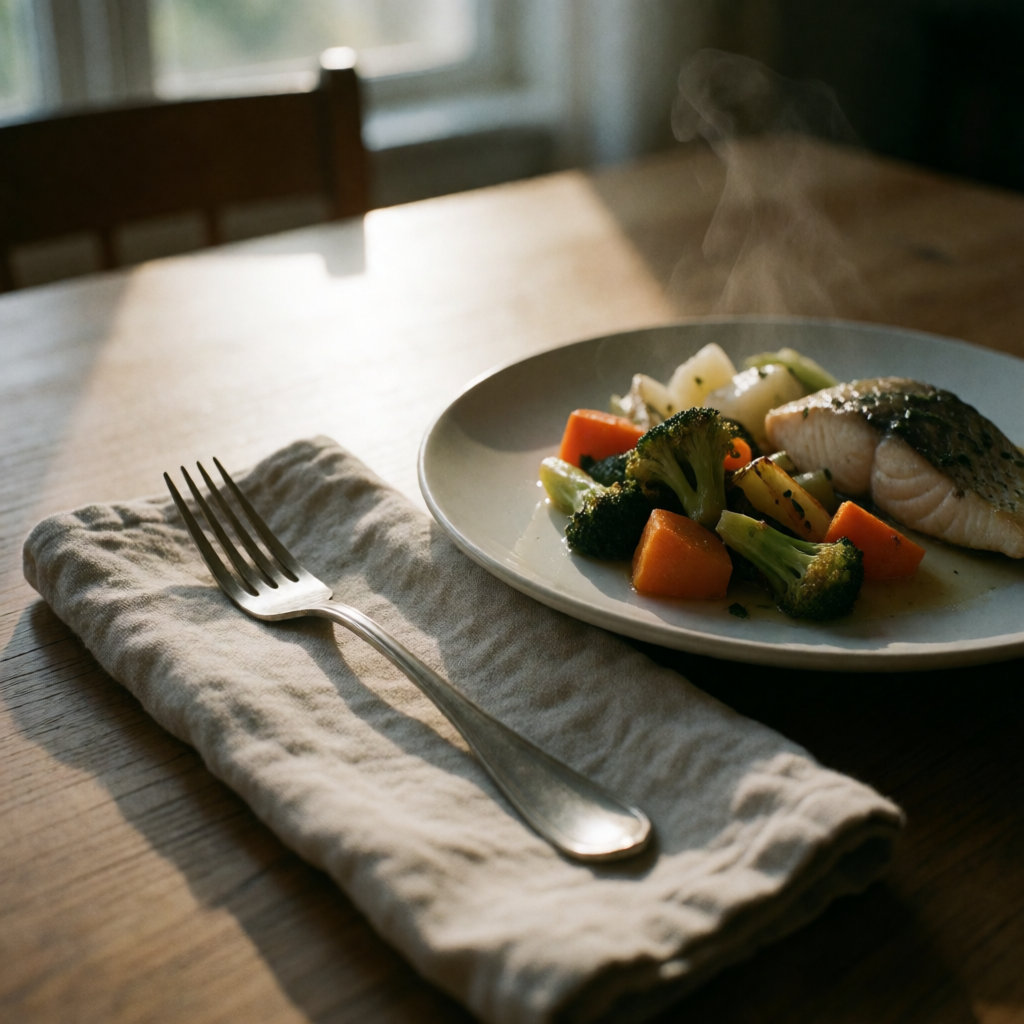
You know the scene. You've held it together all day, and by the evening the drinks have stretched out, the cheese has been round the table twice, and you promise yourself that tomorrow — definitely tomorrow — you'll be more careful. But what if the answer was simply the piece of cutlery sitting next to your plate?
The Forking method starts from a disarmingly simple idea: in the evening, you eat with a fork only. Nothing else. The name comes from the English word fork, paired with dinner, because it applies only to the last plate of the day.
Where does the idea come from?
It was dreamt up by Ivan Gavriloff, a graduate of France's École Polytechnique who turned his attention to weight. He didn't invent a nutritional theory: he drew together principles that are already widely accepted, starting with the fact that a light dinner is easier to digest than a heavy one. His real find was turning a rather vague recommendation into one concrete gesture — something you can keep up without counting anything.
One fork, and the plate looks different
The choice of cutlery does all the work. Plenty of high-energy foods are eaten with the fingers or spread on something: cheese, bread, crisps, pastries, cured meats. By ruling them out in practice, you lighten your dinner without counting a single calorie.

One word of caution, though: the fork is for spearing, not for cutting in place of a knife. Otherwise the rule loses its point and the usual contents quietly creep back onto your plate.
What you can put on your plate
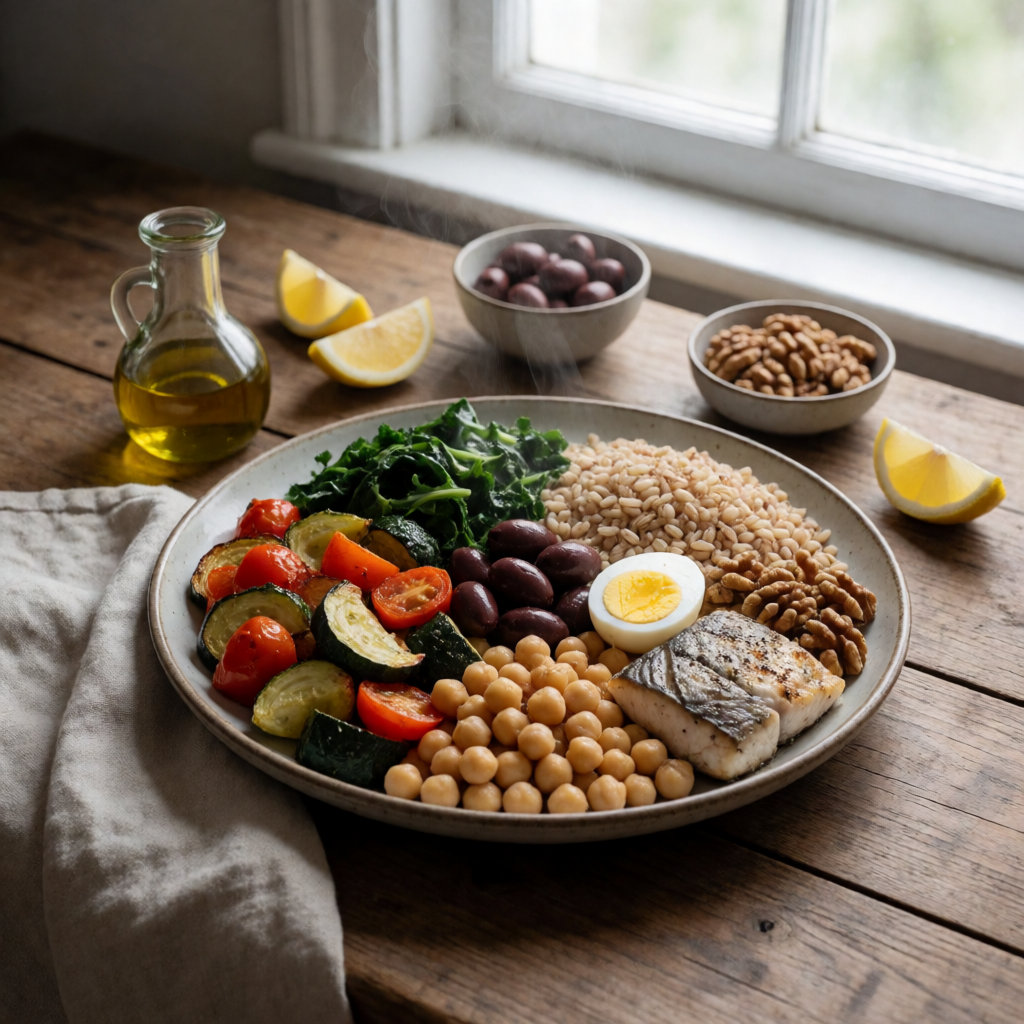
Vegetables, pulses, pasta, rice, couscous, potatoes (not as chips), fish, omelette, mashed potato: anything you can spear and lift to your mouth stays on the menu. You can even decide, while you're cooking, to choose only foods that need no cutting or peeling once they're served. It sounds almost too simple, and yet it works.

In the morning and at lunchtime, you eat as usual, without going overboard. That's the sociable side of the method: dinner with friends is still on — you just hold on to your fork.
Forking is not a treatment and does not replace medical care. It isn't suitable for everyone: if you are pregnant or breastfeeding, or if you have diabetes, an eating disorder or are taking medication, speak to a healthcare professional first. Lasting weight loss is built with them, not instead of them.
What the data says, and doesn't say
What we do know: how your intake is spread across the day matters. Public Health France recommends a lighter dinner than lunch and a regular meal pattern. What isn't yet certain is the idea that no food eaten after 5pm is absorbed. Current data suggests metabolism does vary with the time of day, but that claim is too sweeping. The clock alone doesn't decide what you store — your overall diet and physical activity do.
So, a gimmick or a genuine helping hand? Let's say the method has one real merit: it makes visible what slips into a dinner, without banning anything outright. But it is no substitute for balance across the day, or for movement.
In practice, here's what to remember
A light dinner, every evening, without starving yourself. Vegetables and protein first, starchy foods in sensible amounts. One fork, and nothing else, at the evening table. Morning and midday, you eat normally. And regular physical activity: at least 30 minutes of brisk walking, five days a week.

No diet works if it doesn't last. Forking has at least this in its favour: it gently teaches you to spot the foods that really weigh heavy at dinner. If you are overweight and want to lose weight, your GP or a registered dietitian remains your best source of support.
Sources
- Public Health France — National Nutrition and Health Programme (PNNS), consulted 2026.
- ANSES — French Agency for Food, Environmental and Occupational Health & Safety, consulted 2026.
- Assurance Maladie (French national health insurance) — Overweight and obesity dossier, consulted 2026.


Comments
Your opinion matters: rate the article, react and reply to comments.
Comments are moderated; AI-assisted comments are flagged. Text emoticons (8-), :-), <3…) are automatically shown as images.