
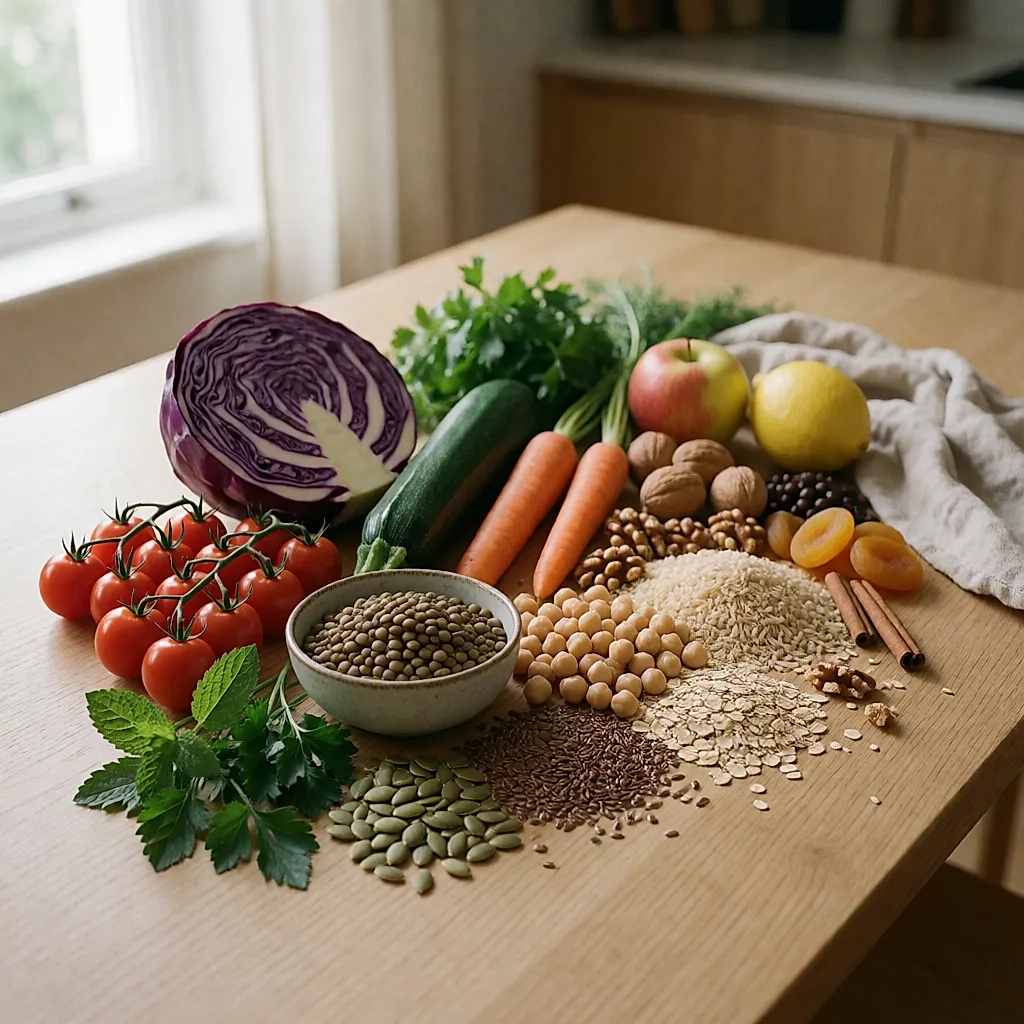
Thirty courgettes? No — three courgettes, two carrots, the tail end of a bag of lentils: that's an ordinary week's haul. Nothing to be ashamed of, and yet the tally is thin. What if the useful benchmark wasn't how much was on your plate, but how many different plants passed through it? Thirty, a week.
The idea came from a microbial headcount
It doesn't come from a diet book but from a citizen-science project launched in the US, the American Gut Project. Thousands of volunteers sent a sample of their microbiome — the bacteria that live in our guts — and filled in a very detailed questionnaire about their diets. The results were published in 2018 in the journal mSystems: participants who reported eating thirty different plants or more a week had a more diverse microbiome than those eating ten or fewer.
Thirty. The number stuck, partly by chance: it comes from a statistical threshold, not a prescription. It crossed the Atlantic with epidemiologist Tim Spector and the Zoe app, before the US health press turned it into a benchmark. A number that circulates that much is often a bad sign. Here, the original idea stands up — as long as you don't make it say more than it does.
Everything that grows counts
The word "plant" is easily misunderstood. It doesn't mean thirty portions, or thirty vegetables, but thirty different plant foods. Three mint leaves in a salad, a spoonful of pumpkin seeds on yoghurt, leftover chickpeas: everything counts.
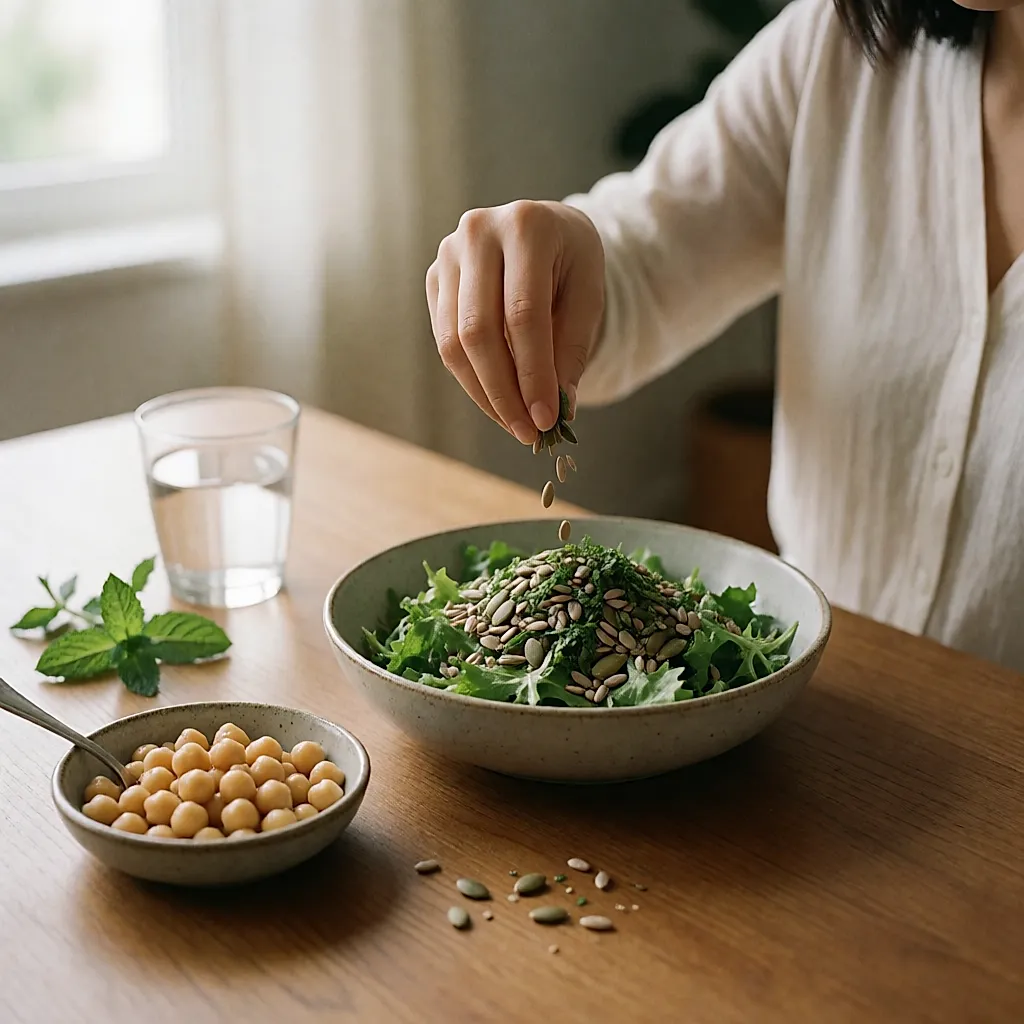
Most versions of the benchmark include fresh, frozen or tinned vegetables, fresh or dried fruit, wholegrains, pulses, nuts, seeds, herbs and spices. Some add coffee, tea or dark chocolate, which makes the count a lot more appealing! What matters is variety, not volume — a handful of almonds and a serving of broccoli count the same. Hence a slightly counter-intuitive idea: better to nibble five different vegetables than eat a kilo of the same one.
What the data suggest — and what they don't say
The American Gut study is observational: it finds an association between plant diversity and microbiome diversity. It doesn't prove that eating thirty plants makes your microbiome more diverse — people who eat a varied diet also, on average, do many other things differently.
What we do know is that fibre feeds some of these gut bacteria, and that France's national nutrition and health programme (PNNS) has for years encouraged people to eat more pulses and wholegrains. In the UK, the NHS Eatwell Guide points in a similar direction. Current data suggest that a diet rich in varied plants is associated with many favourable health indicators — but "associated" is not "cause". No one can promise that a more diverse microbiome will make you slimmer or sleep better: research is moving forward, but it hasn't reached a conclusion.
How to get there without thinking about it
In practice, remember this: nobody counts thirty plants in a day, and that's fine. The benchmark is read over seven days, which leaves room for leftovers, surprises and uninspired Tuesdays.

The list on the fridge. A sheet of paper, a pencil, one line per species — not per portion. After a few days, many people realise they are already counting several without having changed anything. The count isn't an exam: it's just a way of seeing what's missing.
A few simple moves are enough to push up the total without changing the menu. A seed mix on salads and soups. Fresh herbs where you used to add salt. Two different grains in the jar instead of one. A jar of chickpeas opened at the last minute for a rushed dinner. And in the freezer, a bag of mixed vegetables: five species at once, ready in eight minutes.
A benchmark, not a school report
The point of the number is that it shifts your gaze: you move from "how much" to "what", you stop weighing and start asking what you haven't eaten for a long time. It's a good question, especially when weeks speed up.

The downside is that a score quickly invites guilt, and guilt feeds no one. If you end up at eighteen rather than thirty, there's nothing to make up for. And if you have digestive issues, a chronic illness or concerns about your diet, that's something to discuss with a healthcare professional — not with a tally.
Keep the list for a week, on the fridge, without grading yourself. You might discover you were closer to thirty than you thought. And that the only real rule, deep down, is not to keep bringing home the same three courgettes.
Sources
- American Society for Microbiology — American Gut: plant diversity and gut microbiome, 2018.
- Santé publique France — Manger Bouger, dietary guidelines, accessed 2026.
- NHS — The Eatwell Guide, accessed 2026.
- Zoe — the thirty plants a week benchmark, accessed 2026.



Comments
Your opinion matters: rate the article, react and reply to comments.
Comments are moderated; AI-assisted comments are flagged. Text emoticons (8-), :-), <3…) are automatically shown as images.