
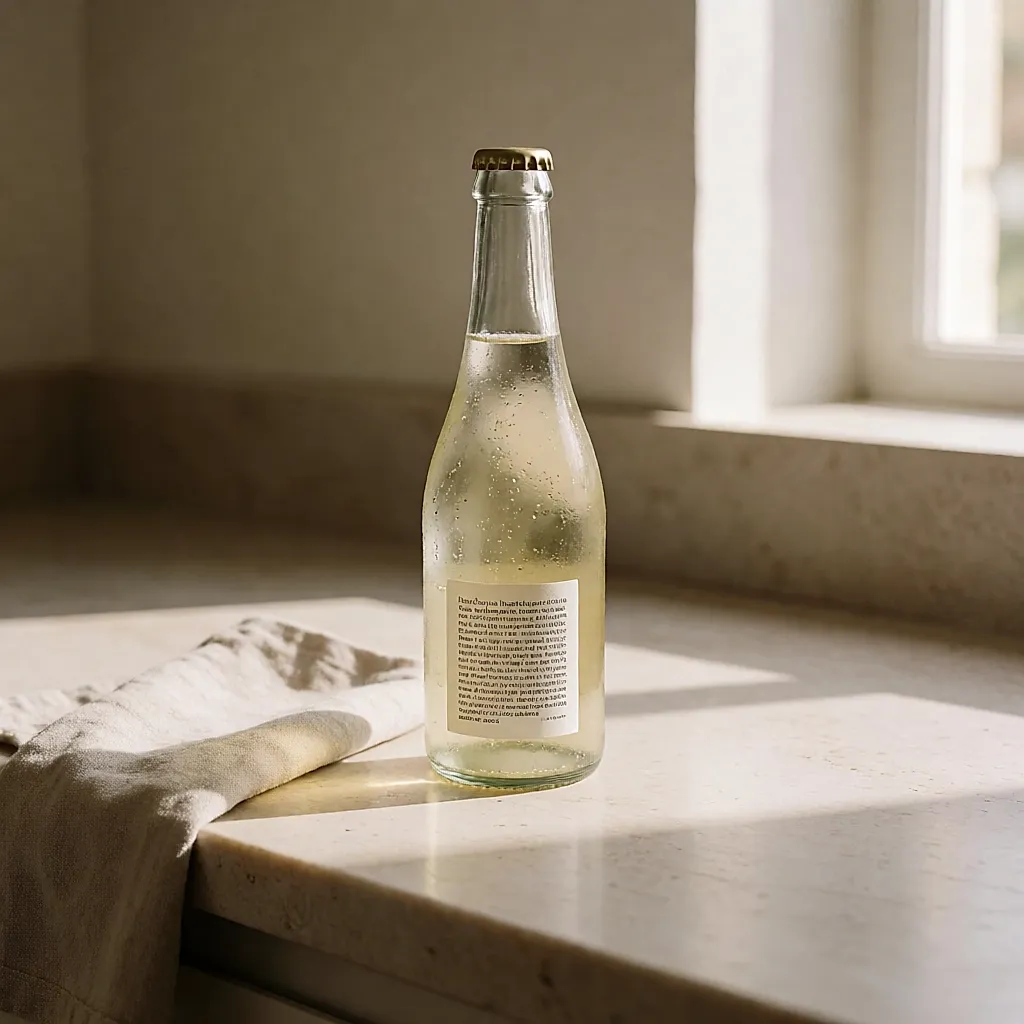
Friday, 7pm. The fridge door swings open and yellow light lands on two glass bottles that could easily be mistaken for beer: slim neck, understated label, a promise of prebiotics. Except there's no alcohol and not much sugar in either. For a few years now these sparkling drinks have been slotting in between kombucha and cola, at a few pounds a bottle. Time to find out what's actually in the glass.
What "prebiotic" means — and what it doesn't promise
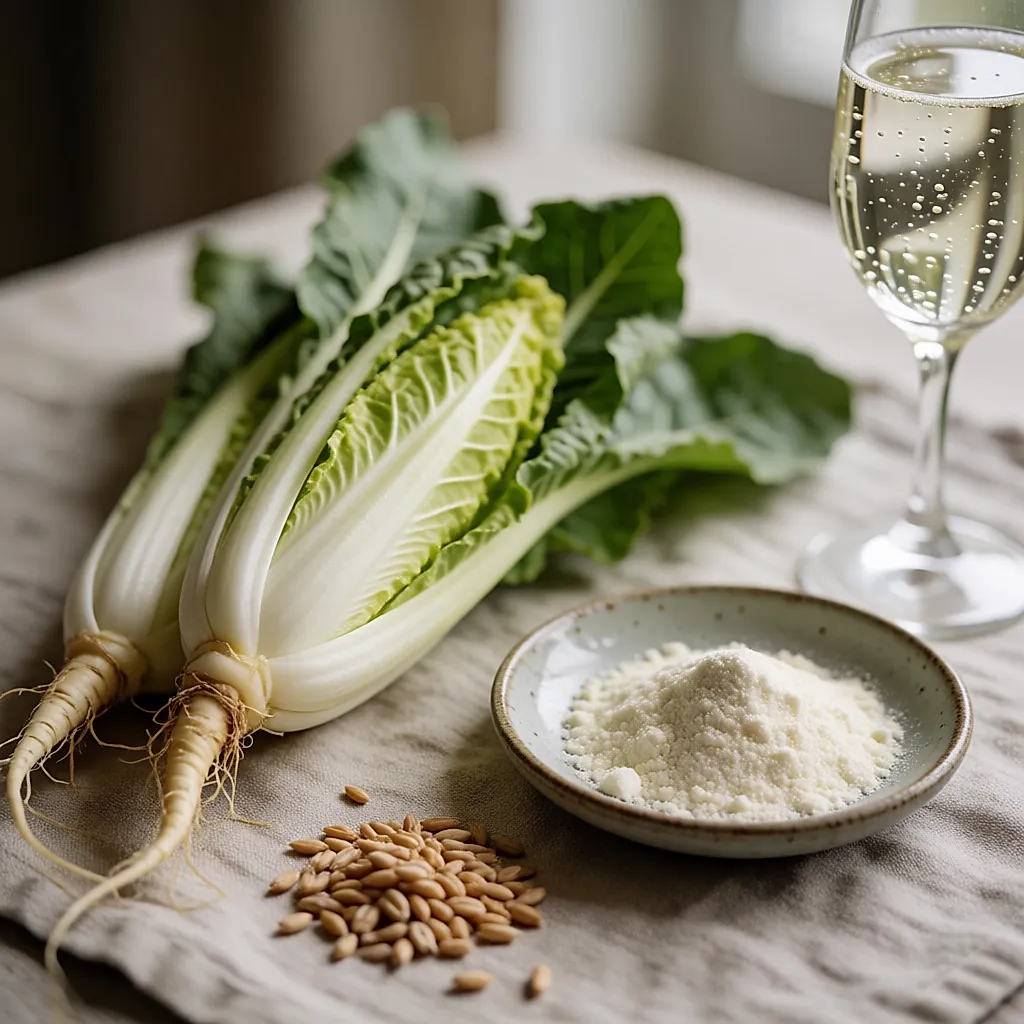
By convention, a prebiotic ingredient is a substrate that certain gut bacteria ferment in preference to others. In these drinks you'll mostly find inulin or oligofructose from chicory root, or wheat and maize dextrins. There is not yet enough evidence to say whether that changes the composition of the gut microbiome or helps digestive comfort. Not on your waistline: a fibre that feeds bacteria doesn't melt anything.
Prebiotic is best read as a shelf claim, then, not as a promise of a health benefit. And a bottle will never stand in for the fibre on your plate: pulses, wholegrains and fruit still do the heavy lifting.
Reading the label in three lines
Start with the nutrition table, on the "fibre" row. Figures appear per 100ml: multiply by the volume of the bottle. You'll often see a few grams. Then check "of which sugars": a classic cola is much sweeter, while many of these sparkling drinks contain only a few grams, sometimes none.
Careful, though: "zero sugar" doesn't mean "no sweet taste". Stevia, erythritol, sucralose or aspartame step in, and they are not a free pass when it comes to weight. You may like the flavour; you just shouldn't count on anything for the scales. Last note: polyols such as erythritol can cause bloating at high doses, and the label lists them just below sugars.
Glass, can, and that deposit business
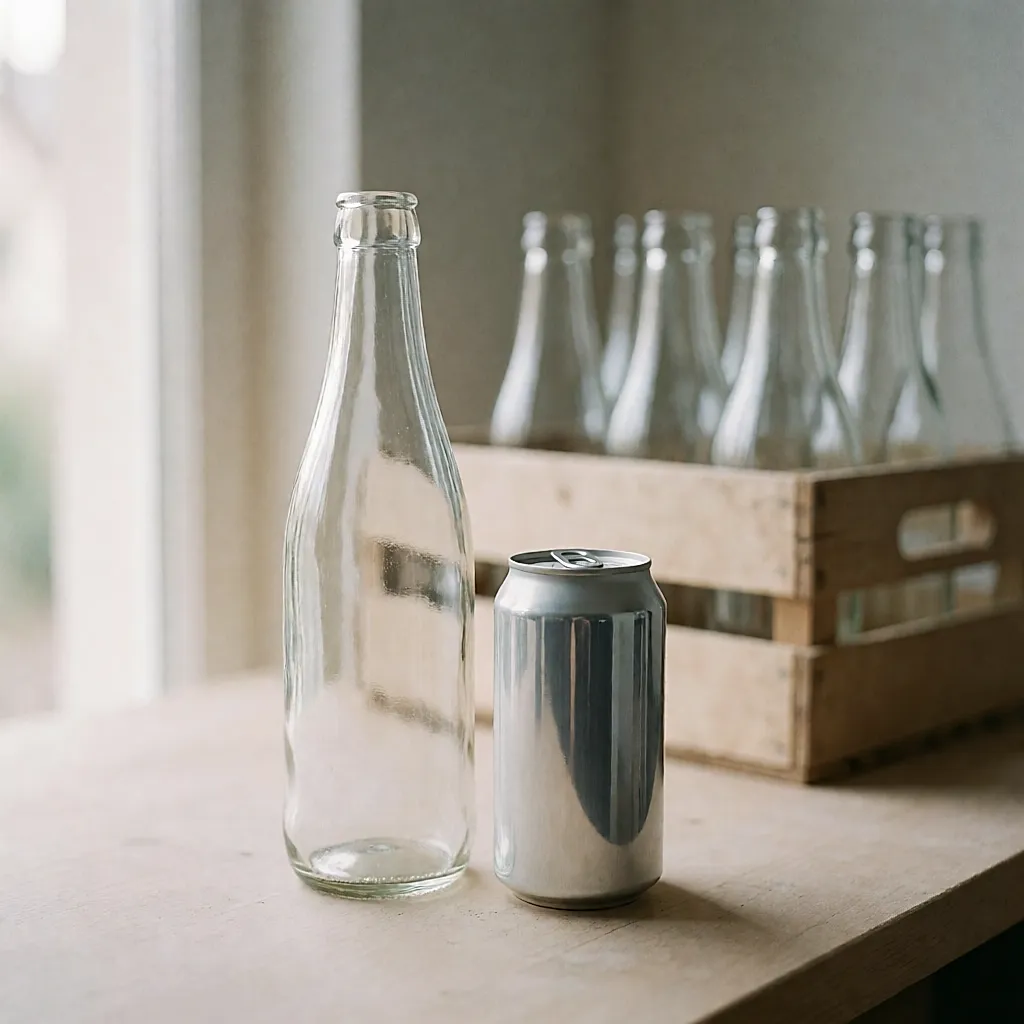
Glass has one plain advantage: it's inert, it carries no taste, and it can be washed, so reused. Its deposit — where it applies — has you taking the bottle back: it is then collected to be recycled or, when reusable, washed and refilled by the producer.
A can, by contrast, is light, chills fast and recycles well, but usually ends up single-use. Deep down, the best container is the one you bring back — or keep to refill with sparkling water. Not spectacular, and yet it's that gesture that counts most.
On the table: in place of what, exactly?
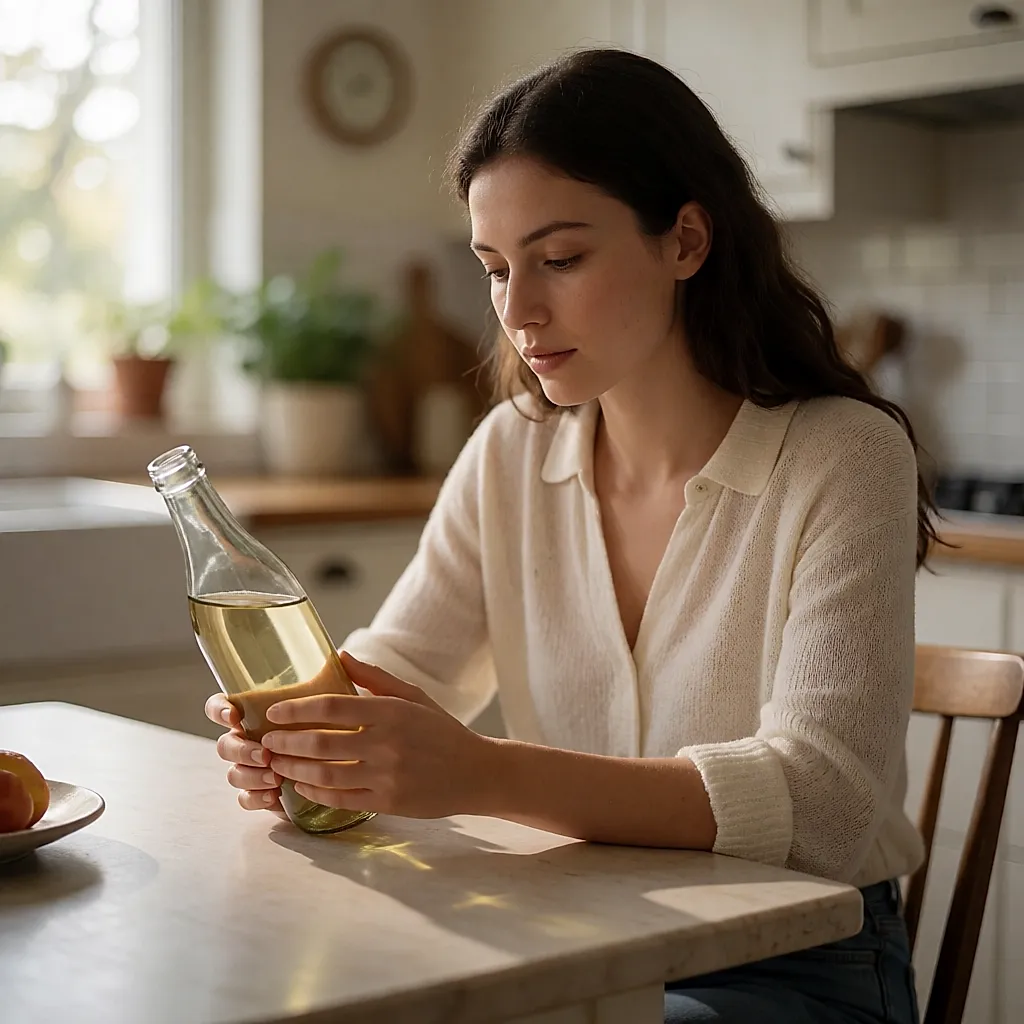
This is where these bottles come into their own. Over pre-dinner drinks, when you want something sparkling without alcohol; on a weeknight, to swap out the third fizzy drink without feeling deprived; after a rich autumn dinner, when herbal tea feels flat and cola feels like too much. Serve very cold, in a proper glass, with two ice cubes and a slice of orange: the ritual does half the work.

Keep your bearings, though. These are less-sweet fizzy drinks, not vegetable juice. In practice, you can set yourself a simple benchmark: one bottle shared between two, once or twice a week; the rest of the time, water — still or sparkling, with a squeeze of lemon — remains unbeatable. And if your gut is temperamental, start with a small amount, then see how you get on.
Budget: a few pounds, and where to track them down
Expect £2 to £4 for a 330ml bottle in a health-food shop or on a specialist site, often £1.50 to £3 in a supermarket or on a click-and-collect order; multipacks bring the unit price down, without any miracles. It's pricier than a supermarket cola, and far cheaper than an alcohol-free cocktail ordered at a bar.
On the shelves, the range isn't standardised yet: check the alcohol-free aisle, often next to the alcohol-free beers, then the health-food section, then online, where the selection shifts from region to region. Buy one bottle, taste it, and don't stack up six before you're sure of the flavour: it's the kind of stock that ages badly in a cupboard.
These drinks are neither a treatment nor an appetite suppressant. If you have irritable bowel syndrome, a known FODMAP intolerance, are pregnant, or are on medication, speak to a healthcare professional before making them a habit. And if bloating sets in, the answer is simple: cut back, watch, and revisit it.
Nothing says you have to choose between yesterday's cola and tomorrow's water. A well-chilled glass bottle, a nice glass, a slice of orange — and Sunday evening already feels different.
Comments
Your opinion matters: rate the article, react and reply to comments.
Comments are moderated; AI-assisted comments are flagged. Text emoticons (8-), :-), <3…) are automatically shown as images.