
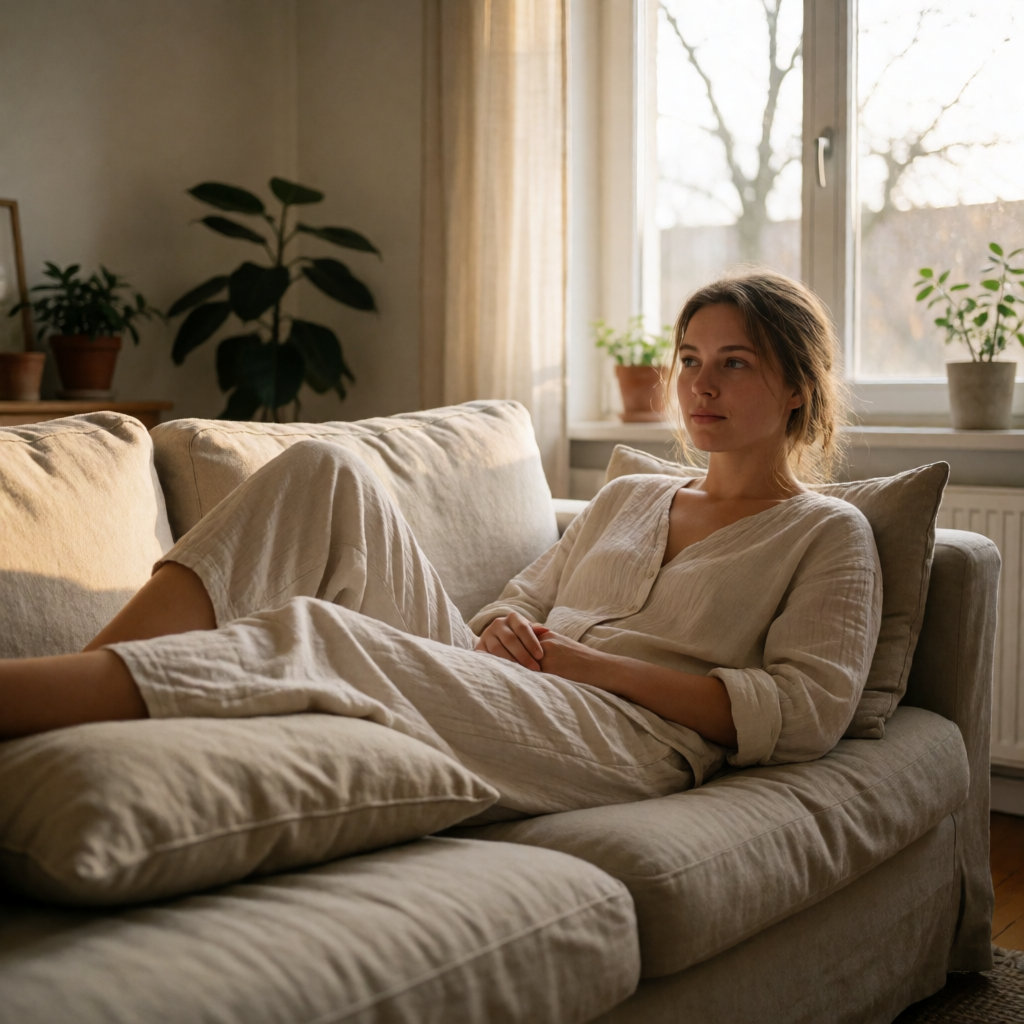
You know that end-of-day feeling: ankles that swell, a ring that leaves a mark, heavy legs. Most of the time it's nothing serious, but it's uncomfortable enough to spoil the evening. The good news is that a few simple habits, repeated regularly, really can improve everyday comfort. So where does this water that lingers come from, and what actually helps? Let's look together at what works, and what needs a caveat.
Where does this trapped water come from?
The principle is simple. Your blood carries a large amount of water, and this water helps nourish cells: it's vital. Some of it then returns to the blood and lymph to be cleared. Sometimes this return journey works less well and fluid builds up in the tissues. This oedema is what creates the feeling of swelling.
One reassuring point, and it matters: this has nothing to do with how much water you drink. Drinking enough does not trigger retention, and cutting down won't make it disappear. In practice, keep drinking according to your thirst, and speak to a healthcare professional if swelling becomes persistent.
Why do these swellings tend to appear in the evening, or in hot weather? Because standing, being sedentary and high temperatures dilate the veins and slow the return of blood. It's not a matter of willpower, nor a 'circulation problem' you can sort out on your own.
Salt: the first thing to look at
Salt attracts water and holds it in the tissues. It's the factor we can act on most easily. The World Health Organization recommends staying below 5 grams of salt per day, about one teaspoon (UK guidance is no more than 6g). In practice, many of us still eat more than that.
Where does the excess come from? Rarely from the salt shaker. Ready meals, cured meats, cheeses, savoury snacks, sauces, bread and pastries make up most of our intake. So the first step is to read labels and cook more from scratch. Fresh herbs, spices, lemon, garlic, vinegar: you can use much less salt without losing flavour!

A note of caution: don't cut all salt from your diet on your own, especially if you're taking medication. The body needs sodium, in small amounts, and this is a question to discuss with a healthcare professional, not one to tackle alone.
When medication is involved
Some treatments can encourage water retention. These include certain hormonal contraceptives, as well as medicines prescribed for blood pressure, corticosteroids or some painkillers. If swelling appears after starting a treatment, don't stop anything yourself. Note what you notice, when it started, and at what times of day, then speak to your GP or pharmacist: an alternative can sometimes be considered.
When should you seek help without delay? Sudden swelling, swelling in only one leg, pain, redness, shortness of breath or chest tightness are not covered by the advice below. In these situations, seek urgent medical help: call 111 for advice, or 999 if you have chest pain or severe breathlessness.
Massage and lymphatic drainage
Massage helps mobilise the fluid that has built up in the tissues. You don't need a complicated technique: gentle movements, from the feet towards the hips, already bring a feeling of lightness. If you want a support to glide without pulling the skin, a simple plant oil—sweet almond, argan, grapeseed—works very well.
As for packaging, choose what lasts: a glass bottle keeps well and recycles easily, and refill formats, when your health food shop offers them, often work out cheaper per litre. A small eco-friendly step that does nothing to reduce the effectiveness of the massage.
Some physiotherapists practise manual lymphatic drainage, which is more precise and firmer. This technique can be appropriate in some cases, but it needs medical advice before you start, especially if you have a known vein condition.

Movement: the habit that matters most
Did you know that the calf works like a pump? Every time it contracts, it sends blood back towards the heart. That's why walking, swimming, aqua aerobics, cycling or hiking are good allies. No need to be an athlete: around thirty minutes of walking several times a week, a few stretches, and circulation gets going again! And it costs nothing at all.

Good news for those who don't like running: there's no need to force yourself through a gruelling session. Consistency matters more than intensity, and it's gentle repetition that makes the difference over the weeks.
Raised legs, coolness, loose clothing
When it's hot, veins dilate and legs feel heavier. In the evening, raise your legs: a pillow under your feet, or under the mattress, is enough to encourage venous return. A cool shower, from your feet up to the top of your thigh, brings immediate relief! When it comes to your wardrobe, avoid anything that compresses your thighs or waist. If you have a vein condition, properly fitted compression stockings, prescribed by a doctor, are often more effective than tight clothing.
Budget
The habits that help most remain free: walking, raising your legs, cutting back on salt. If you want to add a paid helping hand, three areas stand out.
Manual lymphatic drainage, carried out by a physiotherapist, generally costs between £35 and £65 per session. The price varies by city, duration and practitioner, and packages of several sessions are sometimes available. If you have a diagnosed vein condition, a medical prescription may mean some treatment is available on the NHS.
Compression stockings are available from pharmacies or online, where you'll generally pay between £15 and £45 a pair. The compression class, brand and style all affect the price, so a fitting at a pharmacy can help you choose the right size.
Then there's massage oil: around £7 to £22 for a 100 ml bottle from a health food shop, beauty retailer or online, depending on the ingredient and packaging.
What we know, what we don't yet know
The causes of retention are often multiple: hormones, heredity, heat, sedentary lifestyle, diet. Current data suggest that no single measure is enough on its own. In practice, remember this: less salt, more movement, legs raised in the evening, and medical advice as soon as something changes or worries you.
The rest is a matter of patience and observation. Note what makes you feel better, what coincides with your swelling, and let your body tell you what works for you. No magic bullet, but gentle habits that, added together, can really make the end of the day feel lighter.
Sources
- World Health Organization — Salt reduction
- NHS — Salt: the facts
- NHS — Varicose veins


Comments
Your opinion matters: rate the article, react and reply to comments.
Comments are moderated; AI-assisted comments are flagged. Text emoticons (8-), :-), <3…) are automatically shown as images.