
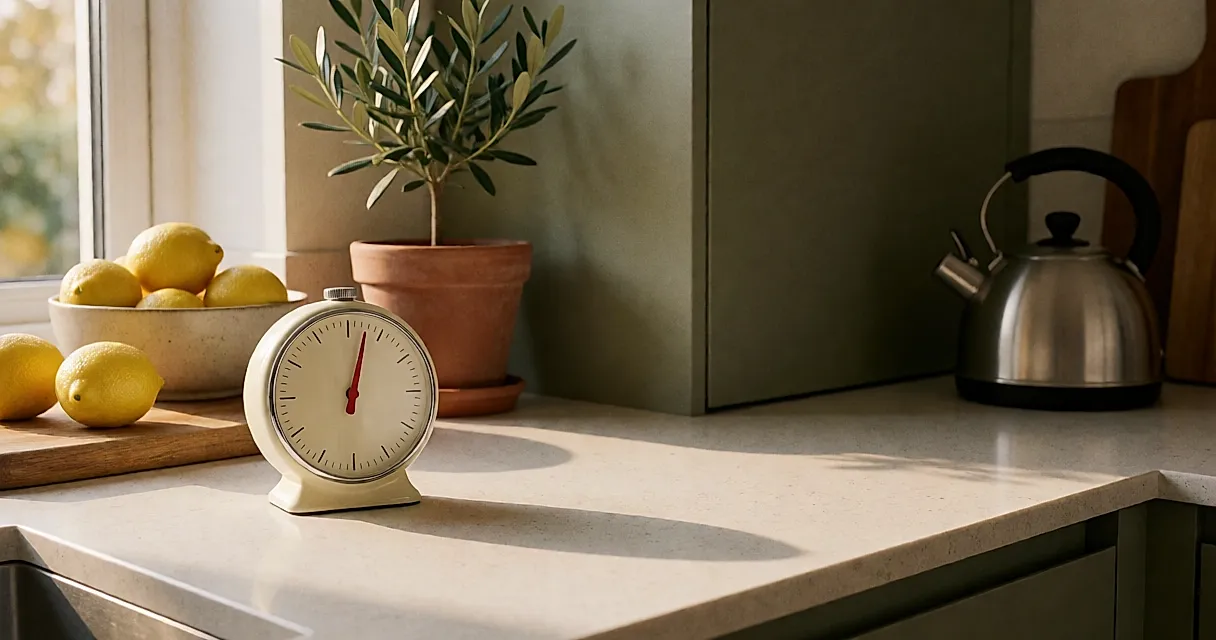
Adding more minutes is the laziest response in home exercise. We stretch out a session the way we stretch out a conversation that is running out of steam, hoping time will fix what the movement has not. But it is not the timer that decides whether ten minutes does any good; it is the resistance you put into them. And when the living room becomes your default gym, that is the question to ask before you open an app.
What the guidelines actually say
The World Health Organization's 2020 guidelines recommend that adults do regular aerobic activity, alongside muscle-strengthening work. The reference document sets out weekly volumes and frequencies; these are weekly benchmarks, not per-session prescriptions, and certainly not a verdict on your ten minutes on a Tuesday.
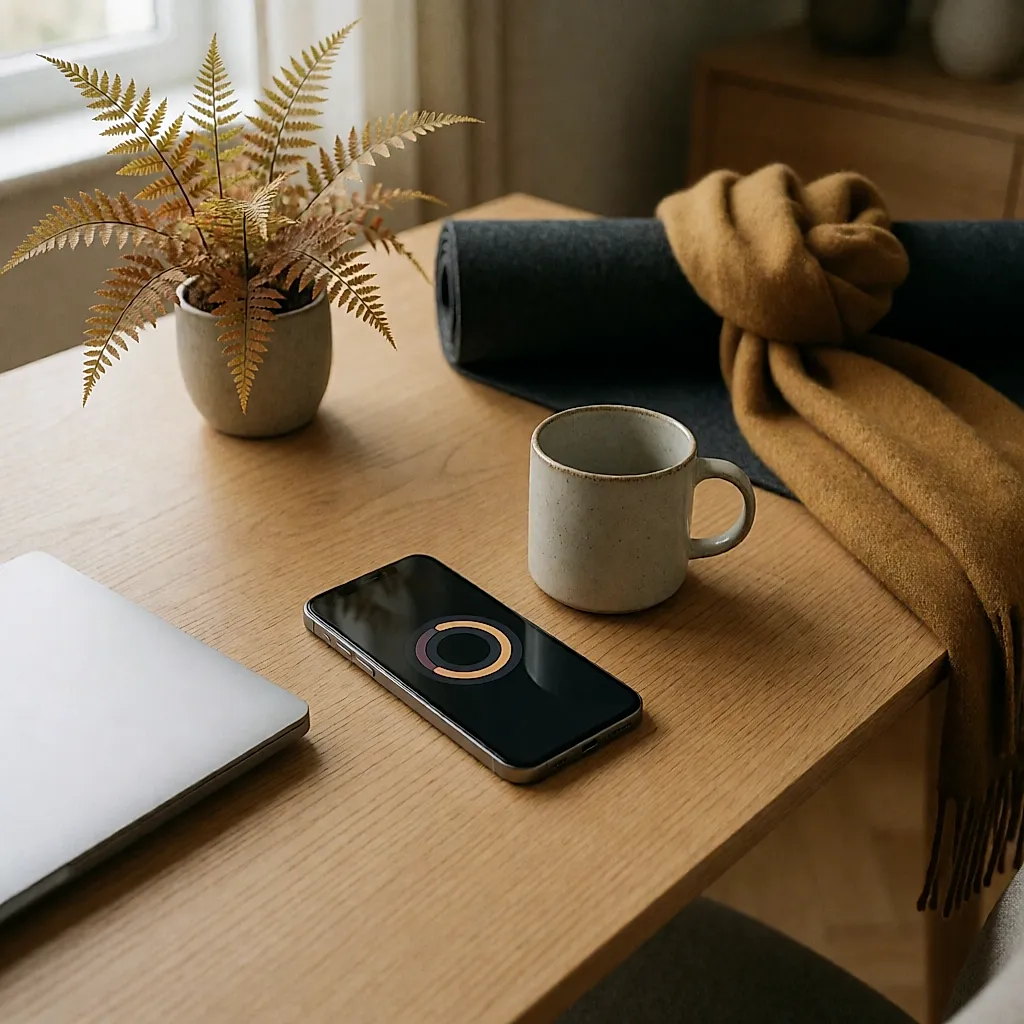
Yet none of these recommendations tells you what ten minutes is worth for you in particular. Current data suggest that the benefit depends mainly on consistency and relative intensity — how breathless you are, how hard the muscle is working — rather than a magic number of minutes. In other words, duration is a result, not a starting point.
Before adding time, add resistance
Without weights to add, many of us assume there is no dial left to turn. There are three, and they are remarkably effective. The first is leverage: a forearm plank asks something different from a straight-arm plank; a knee push-up tells a different story from a push-up with your feet on a step. The second is unilateral work — a supported single-leg squat, a single-leg glute bridge — which loads one leg or one glute more at a time, with no equipment. The third is range of motion: go lower, come up higher, without forcing the joint.
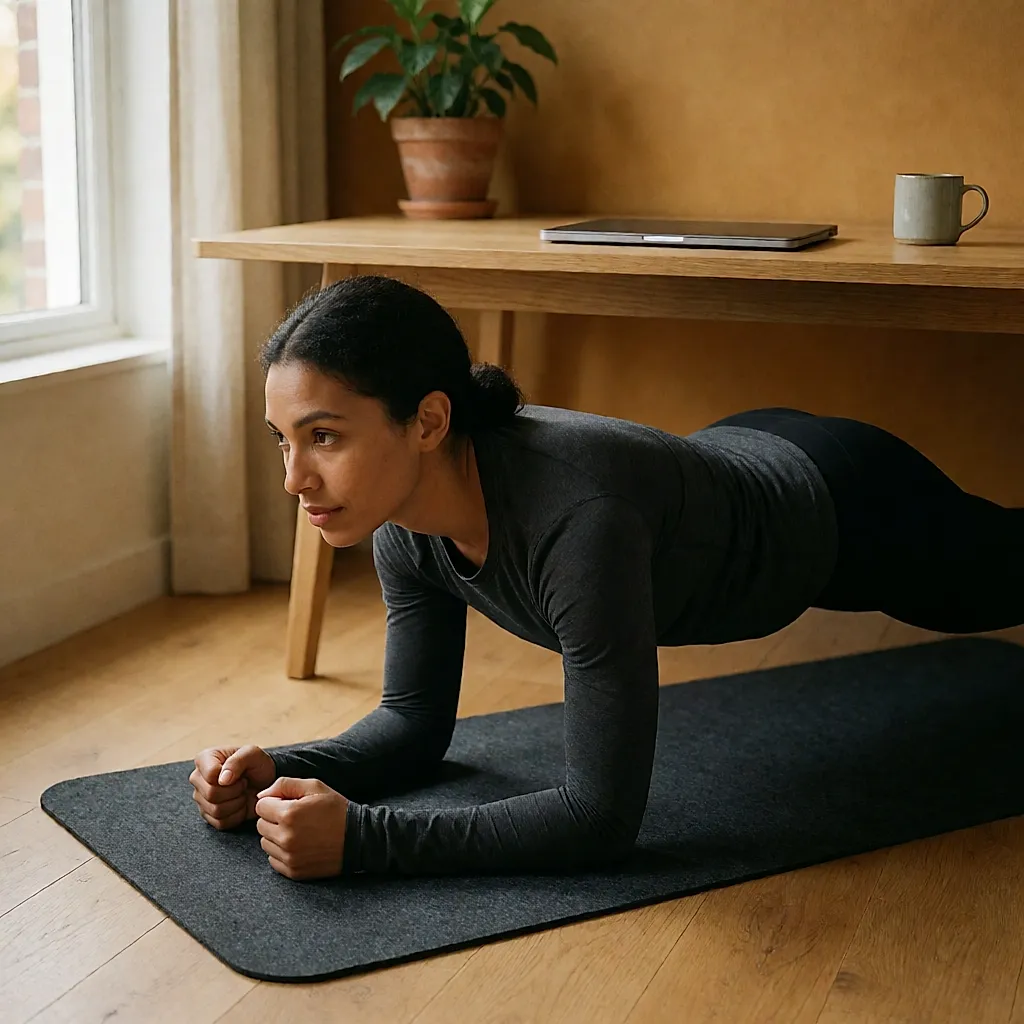
Then you need to know whether the resistance is right. The practical marker we use comes down to one sentence: by the end of the set, you should have about two clean reps left in reserve. If you could rattle off ten more with a smile, it is too light for what you are after; if your form breaks on the third, it is too heavy, and the remaining minutes will just be punishment. In practice, this self-check is more reliable than the clock, because it reflects your day, your sleep and your current level.
Professionals also use a perceived exertion scale, known as the Borg scale, to rate that feeling numerically. You do not need to know it by heart to take the point: gauge first, time yourself second.
Three dials to set before you look at the clock
Range of motion first. A full squat is one range; a jerky half squat is another. As long as the movement stays clean and pain-free, look for the largest comfortable range: that is extra work for free. Tempo next: you might, for example, slow the descent and rise in a controlled way, without clock-watching. It is a practical way to vary an exercise, not a guarantee of results.
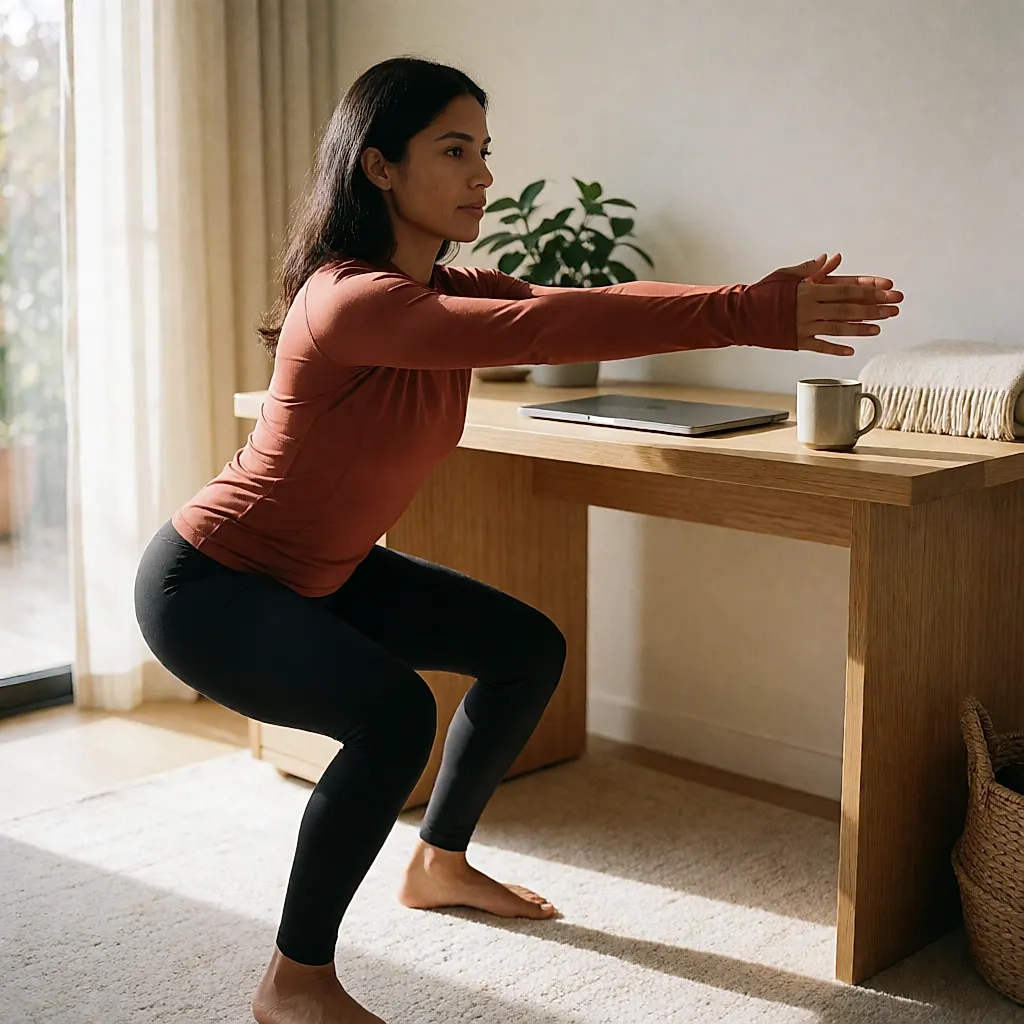
Breathing, finally, is the dial we forget. Breathe out on the effort, in on the way back, never hold your breath: that is what stops a set turning into a breath-hold. The November cold makes no difference, but it does call for a proper warm-up, a few minutes of walking or mobility, and layers you can take off as you go. You do not start cold in an 18°C living room, even for ten minutes.
Before you add time to a session, ask yourself three questions: can I go lower or higher without pain? Can I slow the movement without losing it? Am I breathing, or holding my breath? If any answer makes you hesitate, you have found your next adjustment — and it costs you not one extra minute.
The rest of the day counts too
The same WHO publication is clear: every movement counts. A ten-minute brisk walk, two flights of stairs, a bag of shopping carried in one hand while the other arm tenses as the door refuses to open — it all adds up. So you do not have to choose between the "real session" and the rest of your life: it is the weekly total that counts.

What is less often said is how much consistency matters more than heroic intensity. A ten-minute session done three times a week for two months is not comparable to a heroic one-hour session abandoned after ten days. And here we come to what the data cannot settle for you: the best session is the one you repeat.
What should make you stop
There is a clear difference between effort that burns and a signal that warns you. Sharp joint pain, discomfort that lingers after the session, unusual breathlessness, dizziness or chest pain are not up for negotiation with a timer. Stop, note what happened, and speak to your GP or another healthcare professional — especially if it happens again or if you are returning after a long break.

This caution is not timidity. It is what allows you to come back next time, which is, in the end, the whole point.
The marker worth keeping
If you take one thing away, make it this: resistance first, duration second. A slower, larger, more demanding movement — or simply one done on a single leg — makes a real difference to a given ten minutes. The clock only confirms what the muscle already knew.
This marker is not a substitute for medical advice, particularly if you have a health condition, have recently started exercising again or have a lingering pain. But it will keep you from adding minutes to a session that simply needed a better load.
Sources
- World Health Organization — Physical activity: fact sheet, consulted on 7 November 2026.



Comments
Your opinion matters: rate the article, react and reply to comments.
Comments are moderated; AI-assisted comments are flagged. Text emoticons (8-), :-), <3…) are automatically shown as images.