

Seven in the morning, the kitchen still blue with night, and the screen lights up before the kettle. In October, it can feel as if you live in half-light: you leave at dusk, come home at dusk, and in between you see an office window. Morning light, though, cannot be made up for in the evening.
A signal we underestimate
What we know is fairly solid: our internal clock is not perfectly set to twenty-four hours, and it is daylight — especially morning light — that resets it. Bright light soon after waking tends to bring the rhythm forward; strong light late at night tends to push it back. Research from Inserm, the French national institute for health and medical research, on biological rhythms, and sleep guidance from Santé publique France, the French public health agency, point in the same direction: light during the day, darkness in the evening.
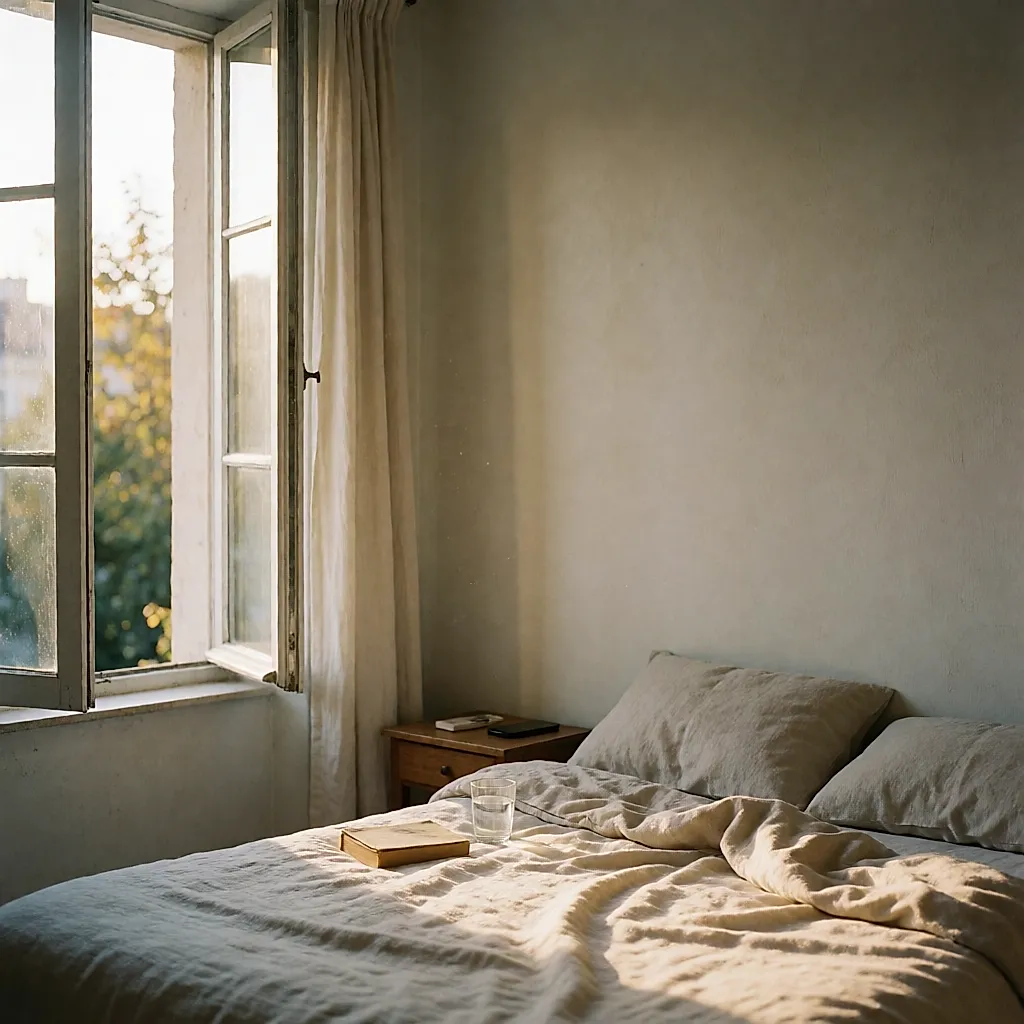
What is less clear is what this will do for you, specifically. Some data suggest a possible advance in sleep timing, with effects varying from person to person — and no one can promise you an effect on your sleep or your weight. Hence the approach: try it, observe, and don't draw conclusions too quickly.
Outside, even under a grey sky
Does a grey sky count? Yes, and that's the most reassuring part of the story. Outside, even in overcast weather, daylight is far more intense than indoor lighting; your kitchen lamp, however bright it seems, is not in the same league. In other words: going out in the rain is grey, damp, and it still counts!
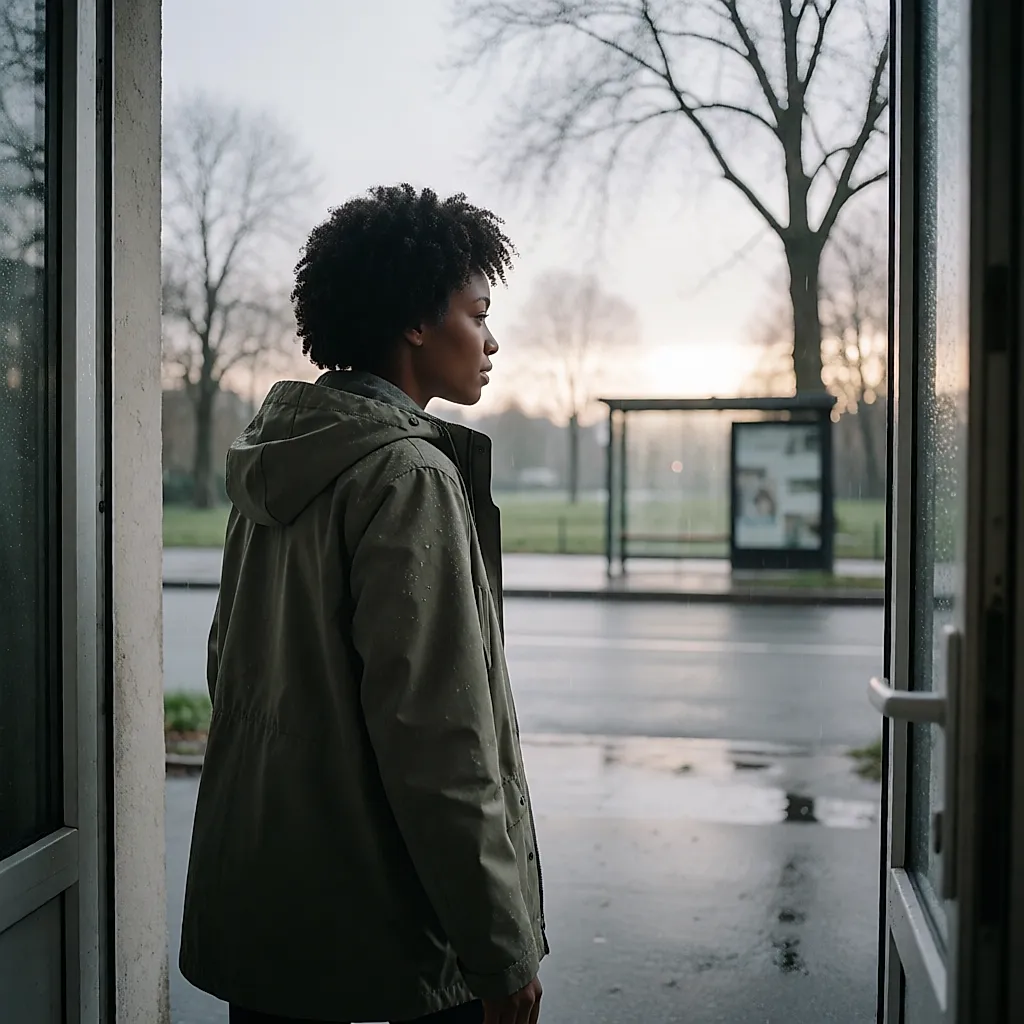
As for the phone, it does light up — but mostly it lights up your attention. A few minutes of scrolling when you wake up, and you can miss the most favourable window. The point is not to demonise the screen; it is already on somewhere, but to move it a little later.
Attach it to what you already do
A new habit rarely stands on its own; it stands when it attaches to an old one. You already have your coffee: why not drink it standing on the balcony, rather than sitting in front of your inbox? You walk the dog, you walk to the bus stop: these trips already exist, you just need to see them as your daylight moment of the day. Nothing to add to your schedule — just a change of scene.

It's this association that keeps it going, not motivation. On mornings when the desire is missing — almost every Tuesday in November — the ritual carries you. If it rains, a porch, an umbrella and a hood do just fine. Bad weather is not the enemy; the enemy is the sofa with the phone.
A slot, a place, a duration — and nothing to buy
In practice, remember three things: a slot (just after waking, before the first screen), a place (a courtyard, a balcony, the pavement, a bench halfway to the office) and a minimum duration you know you can keep on a tired day. Concretely, ten minutes can be an easy starting point that you can stick to, adapting it to your rhythm: it is regularity that keeps the habit going, rarely the ambition of day one.

And above all, nothing to buy, nothing to measure. No special lamp, no app, no watch counting your lux. You don't need a number for the outing to be worthwhile. If the urge to keep a record nags at you, a line in your phone notes is enough — and even then, only if it amuses you.
What you might notice over a few weeks
In practice, you can give yourself a few weeks of observation, without drawing a verdict. Some people notice they fall asleep earlier, or that evening snacking calms down. Others notice nothing at all, and that is not a failure: this habit is not a treatment, and a cloudy autumn does not allow for conclusions.
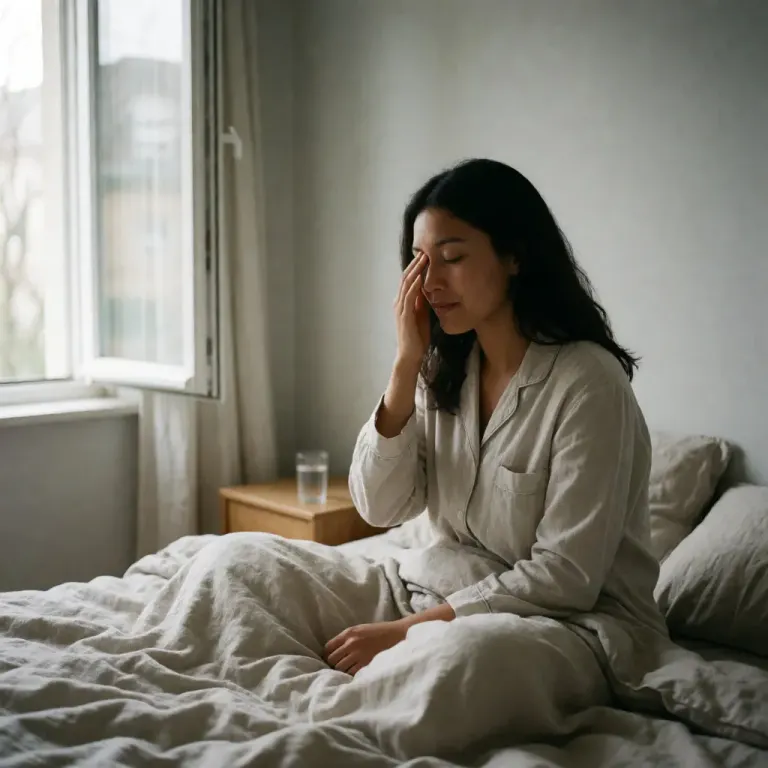
One thing, however, deserves your attention. A temporary dip in November has nothing to do with seasonal affective disorder (SAD), which comes with loss of interest, a persistent low mood, and disturbed sleep and appetite. In that case, don't tinker with balcony timings: speak to a doctor or a healthcare professional.
Morning light is a wellbeing habit, not a treatment. It does not replace a diagnosis or ongoing care, and it is not a substitute for seeing a healthcare professional if your mood, sleep or appetite change significantly — or if you are receiving treatment.
Then there is the essential point: this slot is not about optimising anything. It is about setting an anchor point — ten minutes outside, before the day demands its due. If you forget three mornings out of four, you start again the next day, coffee in hand, on the doorstep. That is often how the most tenacious habits take hold: quietly, and without buying anything.
Sources
- Inserm — French National Institute of Health and Medical Research
- Santé publique France — French national public health agency

Comments
Your opinion matters: rate the article, react and reply to comments.
Comments are moderated; AI-assisted comments are flagged. Text emoticons (8-), :-), <3…) are automatically shown as images.