
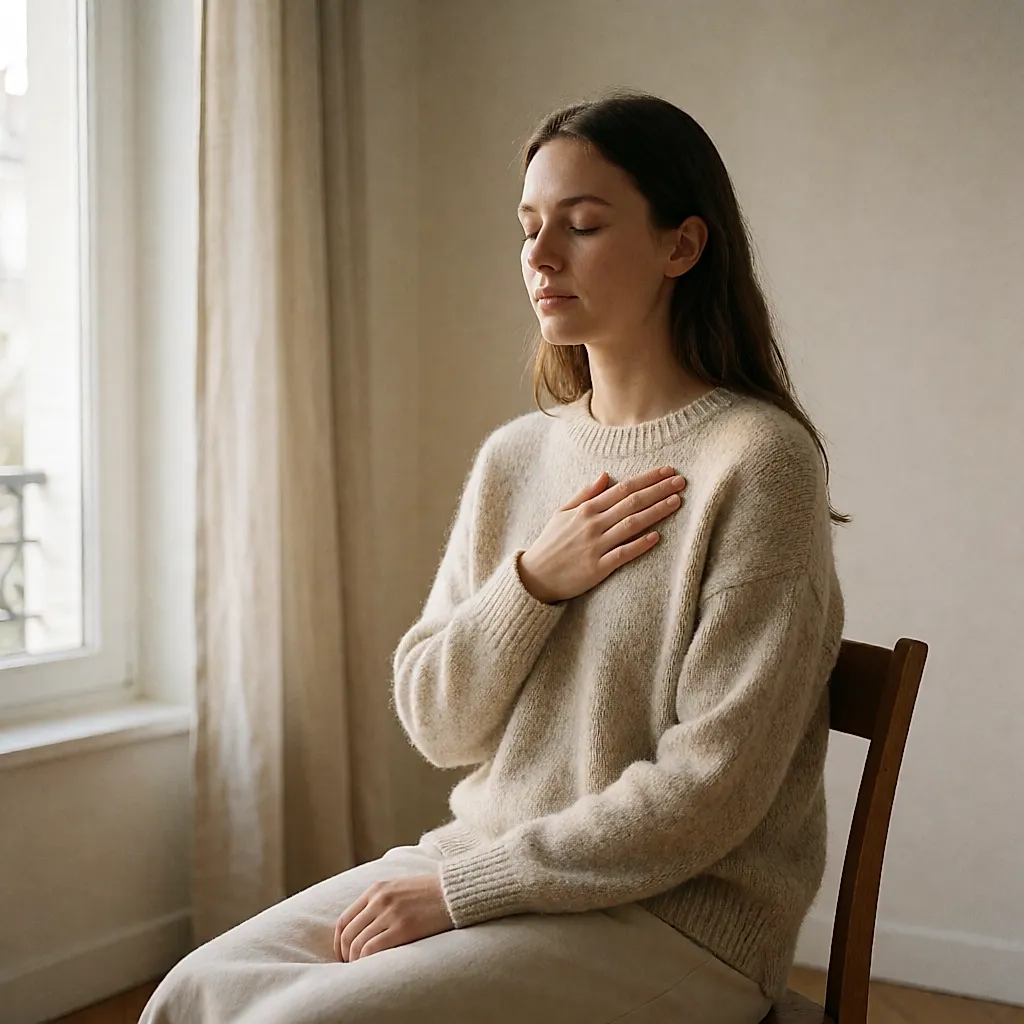
A rhythm, not a performance
The principle can be summed up in one sentence: breathe slowly, at a steady rhythm, around six breaths a minute. In practice, that often means counting five seconds in, five seconds out — a comfortable pace, not a magic number. Counted breathing is nothing new: yoga, meditation and many prayer traditions have used it for centuries, each in their own way. Modern research looks at something else: the way heart rate changes with the breath, known as heart rate variability.
What we know, and what we don't yet know: several studies suggest an effect on how stressed people feel and on comfort, but the protocols vary widely and the results don't all point in the same direction. There's nothing spectacular in that, and that's fine. A gentle practice you can repeat every day often does more than a flashy promise abandoned after a week.
The technique, as it is
Sit with your back straight but not stiff, feet on the floor. Close your eyes if you're at home; lower your gaze if you're on the bus. Breathe in through your nose, without forcing it, letting your belly expand before your chest. Then breathe out calmly — nose or mouth, it doesn't matter, as long as the breath stays soft and quiet. Your shoulders shouldn't rise; if they do, you're breathing like you're carrying a box that's too heavy.
Then a timer and nothing else. In practice, many advise starting with a few minutes, morning and evening — and that's it: no graph to follow, no streak to beat. If you lose the thread, come back. That's the only rule that really helps.
The number one trap is wanting to do it well. If you catch yourself holding your breath, tensing your neck or counting the seconds with clenched teeth, you've already left the rhythm. A comfortable breath is better than a perfect one.
Making it stick without buying anything
The real challenge isn't understanding the idea; it's doing it on a rainy Tuesday in November. Three hooks are often enough: an object, a moment, a habit. The kitchen timer on the worktop; the coffee you wait for with nothing else to do; the bedroom light you switch off just after. Your phone can serve as a timer — in flight mode, preferably, otherwise you'll get a notification before your second inhale.
There's no need to kit yourself out. This is one of the few wellbeing practices that costs nothing: no mat, no ergonomic cushion, no smart belt, no subscription to unlock the right sessions. A chair, a wall, a breath. The rest is comfort, not method.
Three slots that work well in autumn
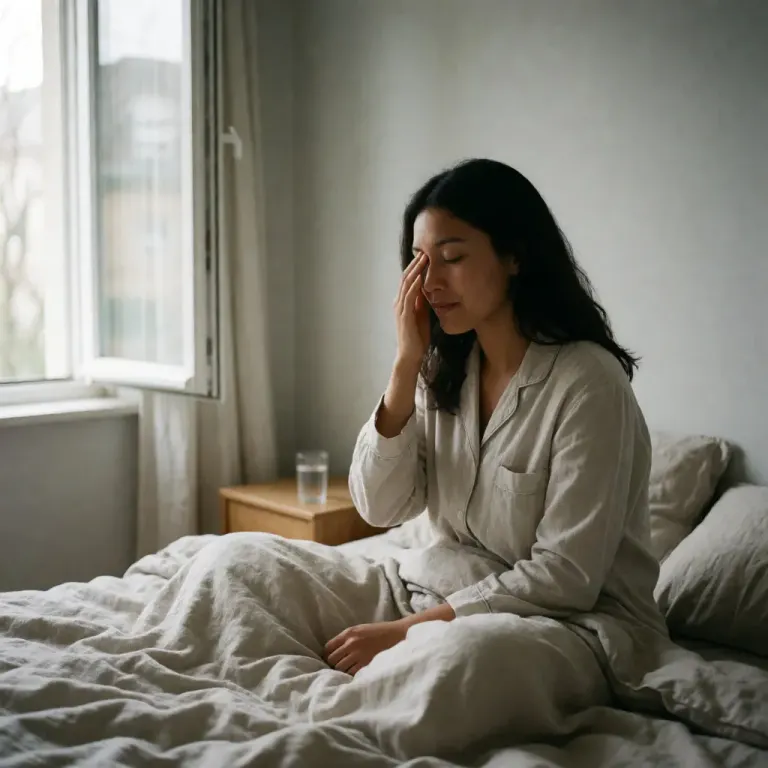
Morning first, before screens. A few minutes on the edge of the bed, lights still low, and the day starts without anyone asking anything of you. It's the easiest slot to keep, because there's nothing to interrupt.
Afternoon next, at the classic slump, when the light fades early and the third coffee isn't doing much. It's the one people skip most readily — and the one that cuts the day most cleanly in two.
Evening last, like a step you go down before lights out: not to fall asleep on command, but to set the day down. On sleep, the evidence stays cautious; what many people describe, though, is a gentler landing into sleep.
How to tell whether it's doing anything for you
Test it the old-fashioned way: a few weeks, a four-line note — the time, how tense you felt before and after, how you slept. One word is enough; no need to score out of ten. After two or three weeks, you'll see whether the pattern tells you anything or whether you've simply ticked boxes. And if nothing shifts, that's information too: breathing isn't your lever right now, and it isn't a failure.
Beware the opposite kind of zeal: believing it works because you believe in it. Conviction is comfortable; it isn't proof. That's exactly why a small record is worth more than a grand feeling. Public-facing stress resources — the NHS pages on stress, for example — often list slow breathing among the ways to regulate stress, without presenting it as a single solution.
And if stress takes hold, your sleep gets worse or you notice palpitations, the answer isn't to add a few more minutes of breathing: it's to book an appointment with a healthcare professional. Breathing supports, it doesn't replace.
That's why this practice moves through fads without leaving routines: it asks for no heroic motivation, no equipment, no special talent. Just somewhere to sit and a few minutes nobody will ask you for. Start tonight, after you turn off the light — the worst that can happen is that you fall asleep before the end.
Comments
Your opinion matters: rate the article, react and reply to comments.
Comments are moderated; AI-assisted comments are flagged. Text emoticons (8-), :-), <3…) are automatically shown as images.