
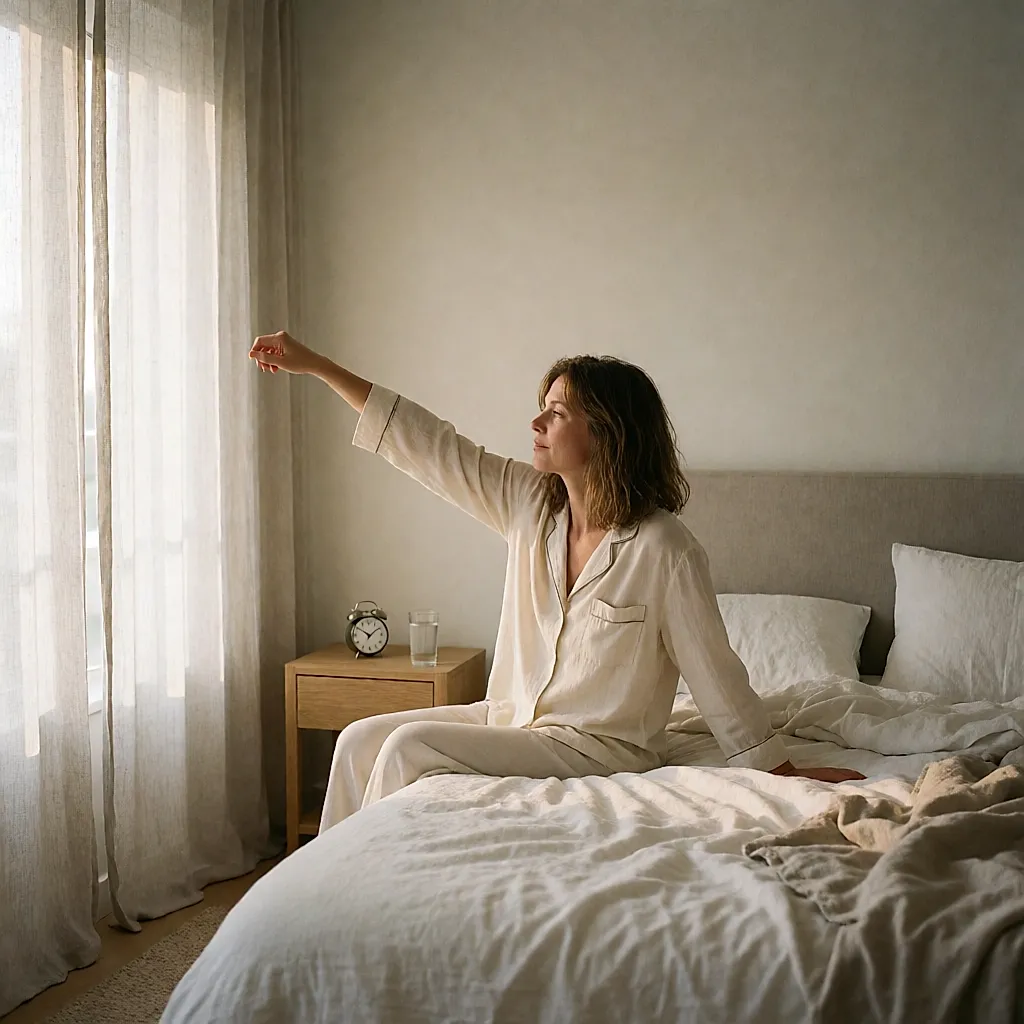
They promise you an extra hour of sleep, and you're already sleeping as if it's a done deal. Then the first Monday arrives: night falls before teatime, and your body hasn't signed anything. The clock change is barely an ordeal for most people—but it becomes an event when sleep was already fragile. And that can be prepared for.
One hour, two clocks
Your body doesn't set itself by the town hall clock. It follows an internal clock, close to 24 hours, which it continually resets using external cues: morning light first, then mealtimes, activity, and, incidentally, your phone alarm. When legal time jumps all at once, the internal clock takes its time. Some people feel nothing at all; for others—already difficult mornings, young children, fragile sleep—the shift leaves a few days of fog.
What we know: the autumn change is the gentler of the two, lengthening the night and making waking easier. What is less well known is that light fading an hour earlier also disrupts evening cues—sleepiness at 8.30pm, dinner that doesn't feel due, waking at 4am. Worth noting: the European Parliament voted in 2019 to end seasonal clock changes, but it has never been implemented.
Four evenings, 15 minutes at a time
The simplest method comes down to one word: split it. Instead of swallowing the whole hour in one night, shift your bedtime in small 15-minute steps, a few days before the change—or just after, if you're reading this too late. Dinner, dimmed lights, screens off, bed: everything moves a notch earlier each evening, and your body clock follows. In practice, four evenings cover the hour without forcing it.
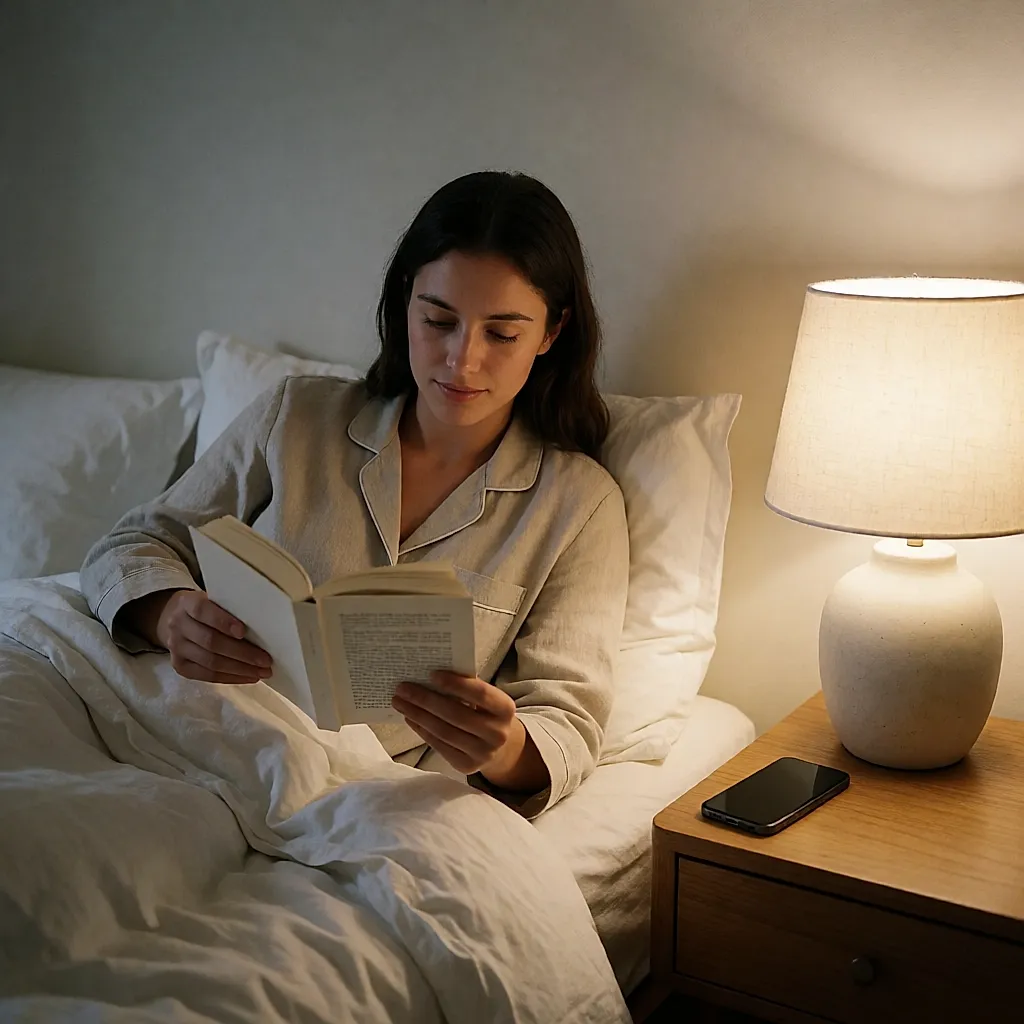
The one thing you don't negotiate is your wake-up time: the same every morning, weekends included. It's the most powerful signal you can send to a body looking for cues—and the reason a catch-up lie-in throws off the following Monday.
There's nothing magic about it: many people sail through the change without noticing. For others, these steps avoid that feeling of changing time zones without leaving the sofa.
The morning is what matters
Light is the conductor. A good dose of daylight within an hour of waking—15 minutes walking outside after breakfast, even under a grey sky—helps reset the whole system. An overhead light illuminates; it doesn't reset your clock. And no blue-light filter can replace it!

In the evening, reverse it: dim the lights, and keep your phone out of reach. Current evidence suggests it's less the screen itself than the later bedtime that's the problem. In other words, switching it off only to stay up an hour longer does nothing.
The nap that comes at the wrong time
Naps are lovely. But a long nap late in the afternoon takes away some of your evening sleep drive, and falling asleep becomes a negotiation. If you're set on having one, keep it short and early.

Same logic at weekends: a Saturday lie-in shifts the dial, and Sunday night feels like a small case of domestic jet lag. The 5pm coffee, the 9pm workout, the late dinner after a 4pm snack—none will derail a night on its own, but together they keep the shift going.
November tiredness: routine or mood?
November tiredness is often put down to missed hours. Yet there is a seasonal component, linked to lower light levels, that has nothing to do with a poor bedtime routine. A temporary dip in mood in winter is common; a seasonal depressive episode—often known as seasonal affective disorder (SAD)—is something else, which is diagnosed and managed. The boundary doesn't draw itself.
What we still don't fully understand is why some people are very sensitive to it and others not at all: vulnerability varies widely, and the reasons are not fully known. Hence a more useful question than 'Am I tired?'—in November, the answer is often yes. Rather: 'Does it improve when I sleep better?' If the answer is still no, week after week, sleep may not be the right place to look.
When to seek help
Giving your body clock a few days is reasonable. Struggling on for weeks much less so. Sleep-onset difficulties that become established, sleepiness that affects driving or work, snoring broken by pauses, mood that doesn't lift with light: these are things to discuss with a GP or a sleep specialist, not with a pile of stacked-up tips.

The steps described here are for people whose sleep is broadly in place. If difficulties have lasted several weeks, if fatigue is weighing on your day, or if there is any doubt about sleep apnoea, advice from a healthcare professional is better than a new ritual—and it is never a reason to stop any care you are already receiving.
There are two weeks left. Enough time to shift four evenings by 15 minutes, get outside after breakfast and resist the Saturday nap. And if the nights remain short and the days cotton-woolly despite all that, it won't be a lack of willpower: it may be the moment to talk to someone whose job it is. Until then, go easy on evening light—and let there be light.
Sources
- European Parliament — Ending seasonal clock changes in the EU, accessed October 2026.
- NHS — Sleep and tiredness, accessed October 2026.
- NHS — Insomnia, accessed October 2026.



Comments
Your opinion matters: rate the article, react and reply to comments.
Comments are moderated; AI-assisted comments are flagged. Text emoticons (8-), :-), <3…) are automatically shown as images.