
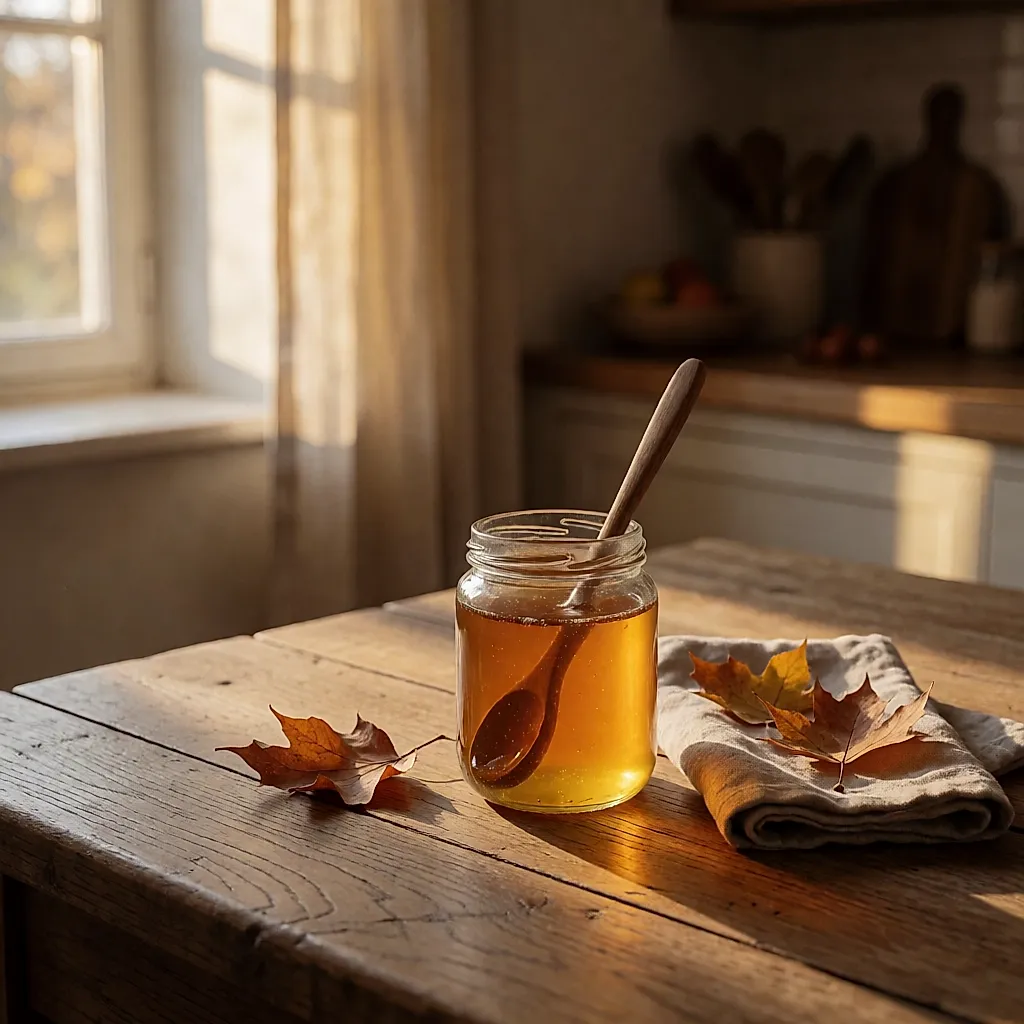
The jar is there, at the back of the cupboard, its surface grainy for three weeks now. You hesitate, you sniff, you wonder whether the honey has 'gone off'. It hasn't — it has crystallised, and that detail is exactly what separates a living honey from a lukewarm syrup.
Crystallisation: the mark of a living honey
A jar that sets is not a failed jar. Honey sugar is a mix of glucose and fructose, and glucose likes to organise itself into small crystals. The richer a honey is in glucose — oilseed rape, sunflower, spring blossom — the faster it solidifies. Acacia, chestnut and lavender, by contrast, stay runny for a long time, without being better or purer: just lazier.
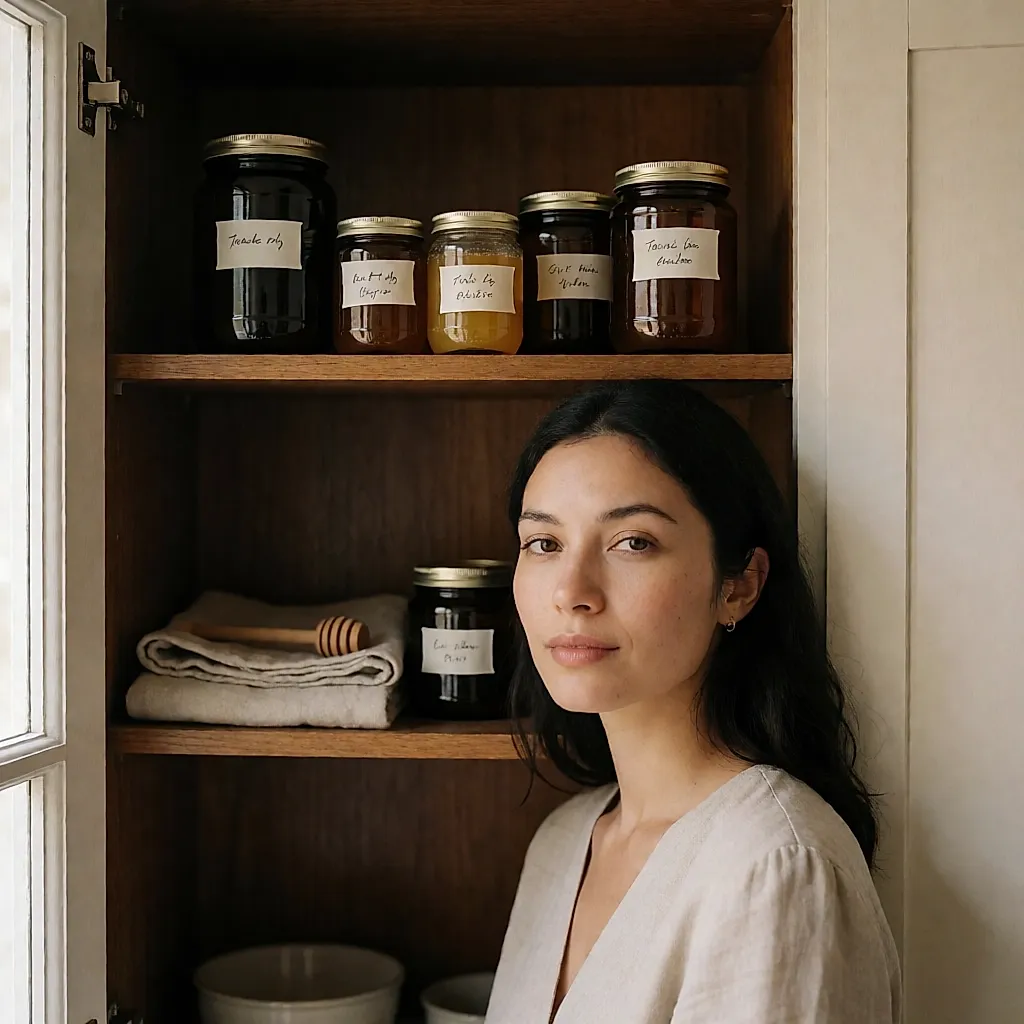
Temperature matters too. In the fridge, crystallisation speeds up; near a radiator, honey darkens and spoils. In practice, keep it in a cool, dark cupboard and accept that it will do its own thing. If it really resists, a warm water bath — never boiling — softens it in a few minutes. Many people also avoid stirring it with a metal spoon, out of superstition or family habit; there's no need to believe it, but a wooden spoon does the job perfectly well.
What the label really tells you
Three words make the price of a jar. Raw — or unheated, not finely filtered — means the honey has not been industrially heated or heavily filtered: it keeps its pollen, texture and aromas. By contrast, a pasteurised blended honey stays liquid for months, whatever the harvest, often at a price that looks like a bargain. It isn't a rip-off; it's a different product. You choose which one ends up in your cup.
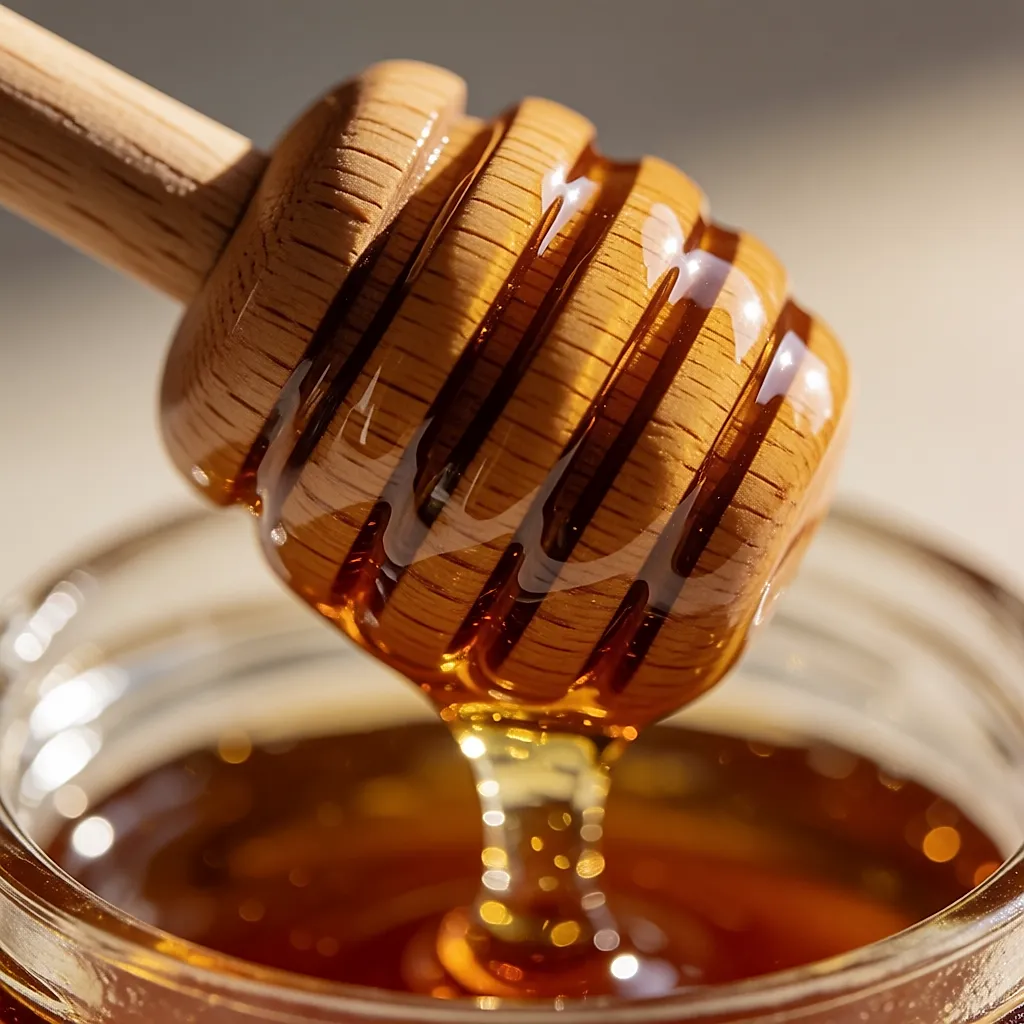
Then you need to decode the rest. Organic certification guarantees a method of beekeeping, not an origin: organic honey can travel a long way. PDO and PGI labels (or the UK's Protected Food Name scheme) lock down both — Miel de Provence PGI and Miel de Corse PDO are among the best known, and they impose a specification covering flowers, area and practices. As for 'harvested in France', that is a voluntary producer statement, not a controlled label: you verify it by asking the question, which is no bad thing. And if the jar says 'blend of honeys originating in the EU and non-EU countries', that's the official wording for saying the provenance is lost along the way.
The evening spoonful
It's 9pm and the thyme and lemon verbena tea is still steaming. Rather than stirring, let the spoonful of honey melt slowly: it sinks, settles at the bottom and gives you one last sip, sweeter than the rest. It's an act of patience, almost a ritual — and a slightly cooled infusion works better than boiling water.

Let's keep a cool head on health: honey is still sugar. It is neither a medicine nor a magic potion, but it is a simple pleasure, with the trace of a season and a landscape in it — which is no small thing.
Do not give honey to a child under one year old: it can contain Clostridium botulinum spores that their digestive system is not ready for. This is the precaution to remember, and it is simple. If you have any questions, speak to your GP or midwife.
Budget and where to buy
As a rough guide, 500g jars often sit somewhere between £8 and £20, depending on origin, flower and year: a small harvest pushes prices up, a generous one calms them down. Many beekeepers sell 1kg jars, which offer better value for quantity. Farmers' markets, your local beekeeper, a CSA scheme or a local food co-op: that's where you'll find out who harvested the honey, when, and from which flowers.
One detail that matters: ask whether the jar is returnable. Some beekeepers take them back for reuse, others take back the wax. And if you buy from a supermarket for convenience, at least read the origin — it is often the only genuinely informative line on the jar.
Sources
- NHS — Botulism
- GOV.UK — Protected food names
- British Beekeepers Association — Honey and beekeeping


Comments
Your opinion matters: rate the article, react and reply to comments.
Comments are moderated; AI-assisted comments are flagged. Text emoticons (8-), :-), <3…) are automatically shown as images.