
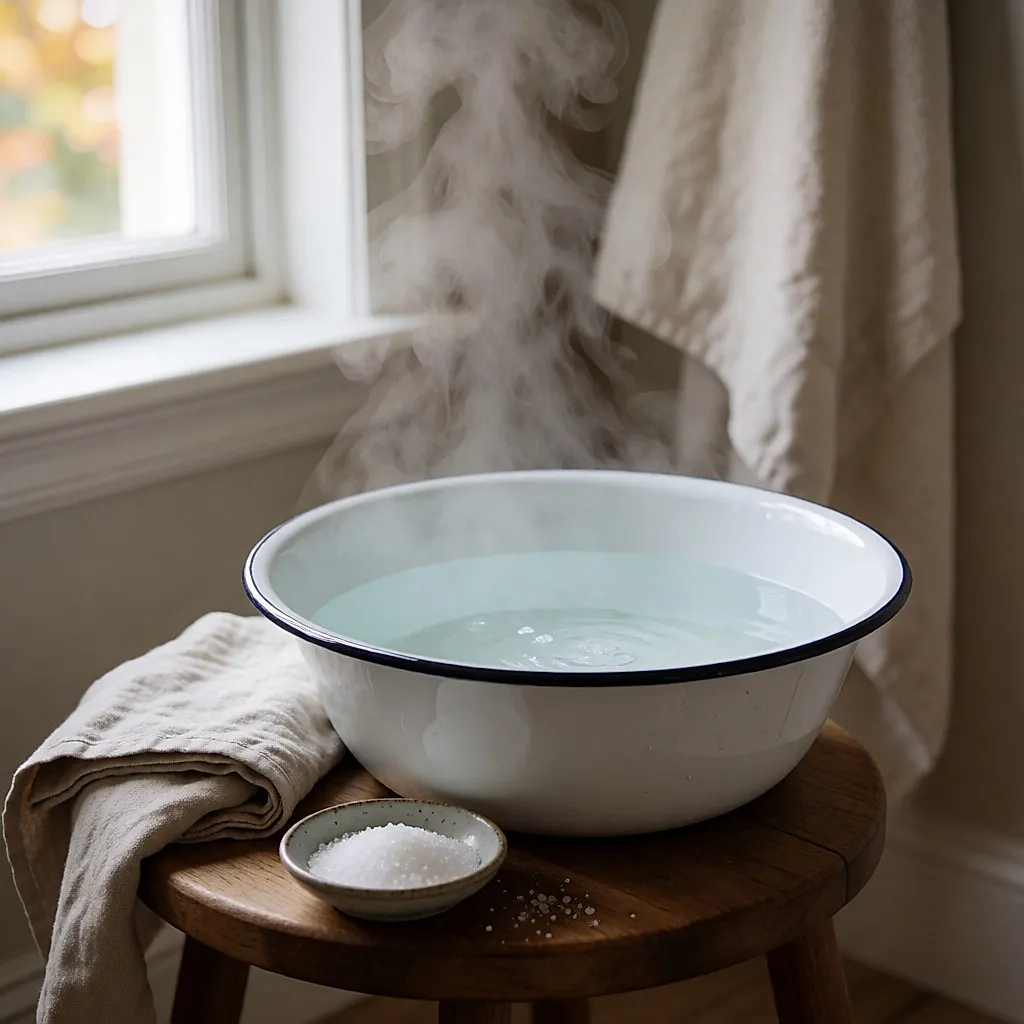
A little history, plenty of warm water
No, it isn't table salt. Epsom salts are magnesium sulfate: white crystals that season nothing and lack sea salt's bite. Their name comes from Epsom, a town in Surrey, England, where a spring whose waters were said to be bitter is said to have been noticed in the early 17th century — visitors taking the waters were already soaking what they could. Since then, the habit has moved from the spa to the bathroom, and the product is now sold by the kilo, without a prescription or any learned talk.

What really happens in a bowl is warm water, a pause in the day and feet you lift out slowly. In practice, people are often advised to stay for 15 to 20 minutes, no longer: beyond that, the water cools, you get bored, you stand up. It is short, and that is exactly what makes it repeatable every other evening when October sets in.
What we know, what remains uncertain
The argument you see everywhere — that magnesium passes through the skin and "recharges" the body — is not established. The available data do not confirm significant skin absorption. In other words, we are not selling you a magnesium cure through your feet.
What can be described without overstating it is the experience: warmth on tired feet, the body slowing down, the sense of relaxation reported by regular bathers. As things stand, it is hard to separate that relaxation from the warmth of the water alone — and that does nothing to diminish the pleasure of the moment. Simply put, if you are looking for an effect on general fatigue or cramps, ask a healthcare professional, not a bag of crystals.
Choosing your salt
The bath-salt aisle mixes things up. You will find sachets where magnesium sulfate sits alongside synthetic fragrances, colourings and foaming agents, and products that merely carry the name. The simplest criterion remains the ingredients: look for a clear mention, ideally 100% magnesium sulfate, or a single ingredient on the label. A scented version is not forbidden — just less versatile, and best reserved for skin that tolerates fragrance well.
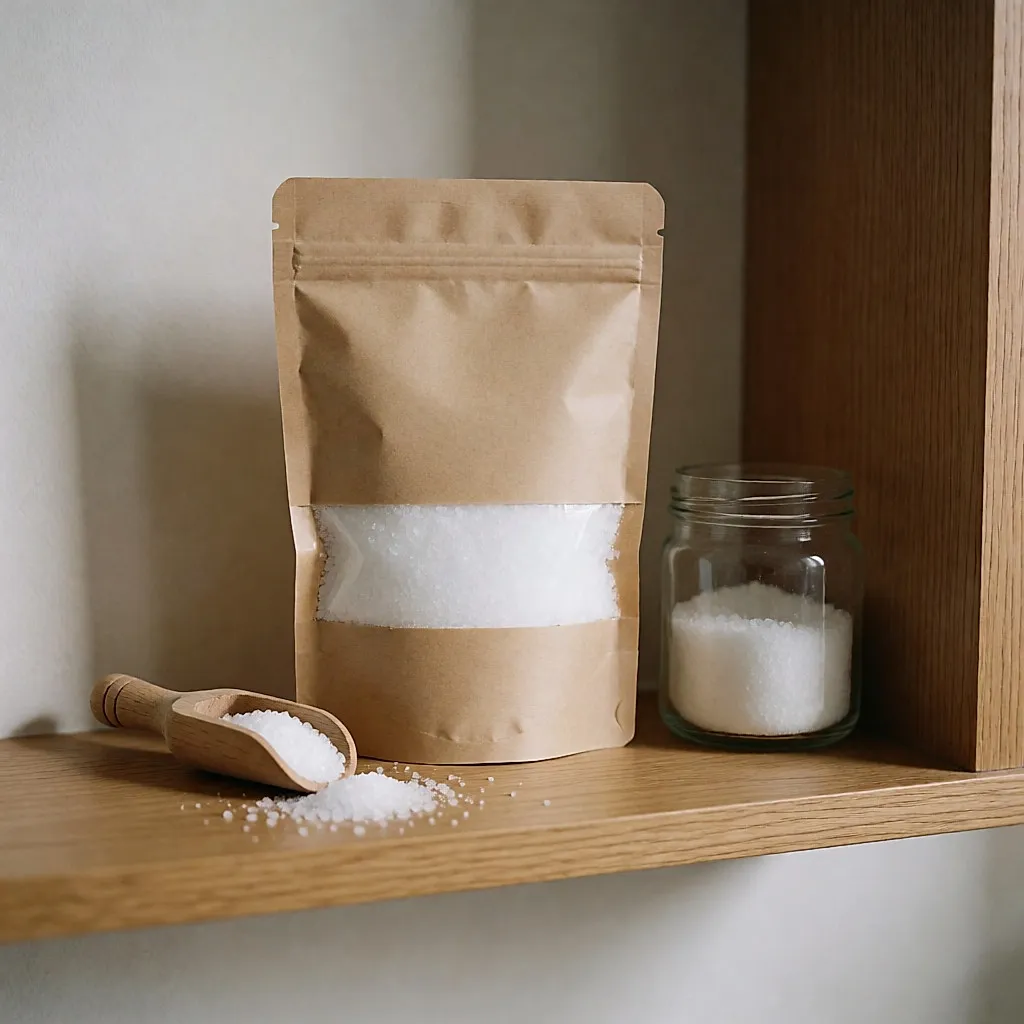
As for the container, a resealable kraft bag has a real advantage: it protects from moisture, stands up in the cupboard, and can be composted or reused. Buying in bulk means paying for the exact weight and limiting packaging — provided the bin is clean and well closed, because the salt quickly takes on moisture there. A plastic tub is not a crime, but it is mainly justified if you keep it for refilling.
The ritual, then the tidying up
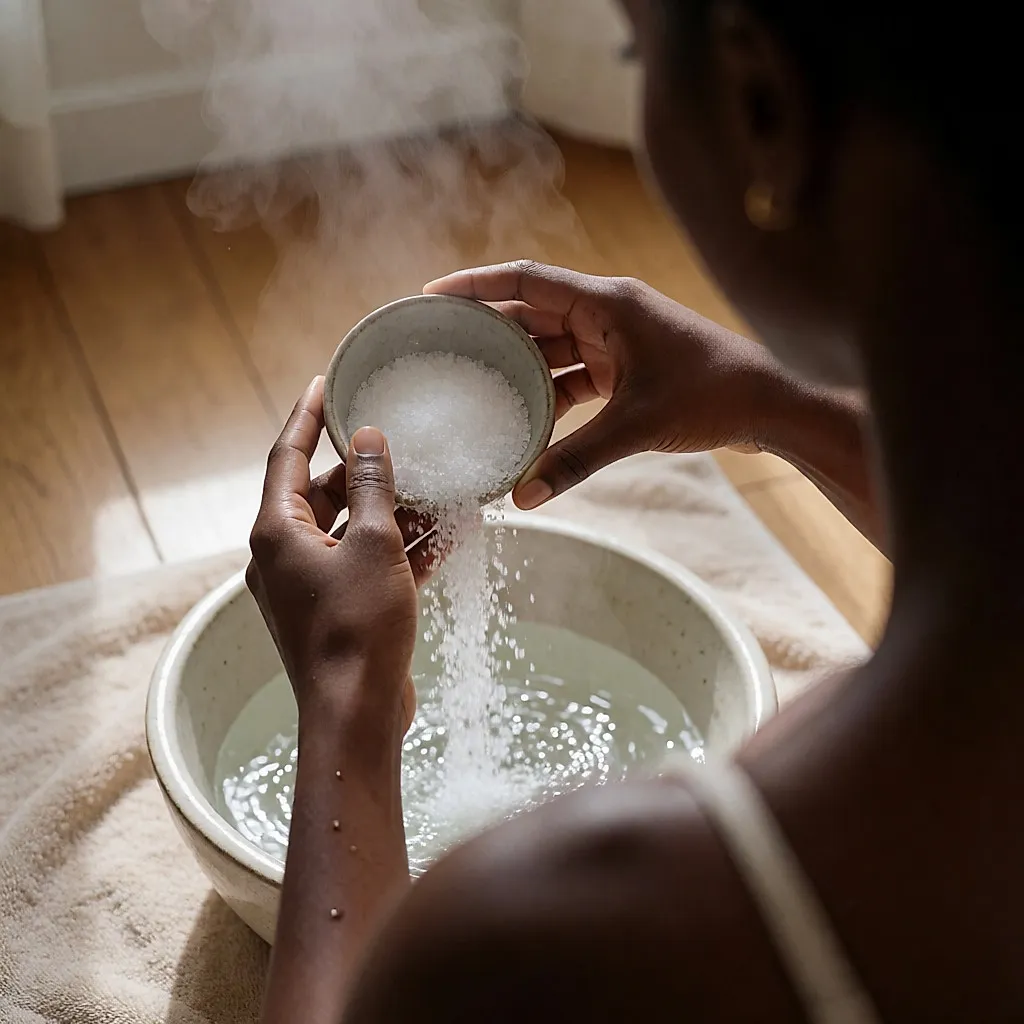
Fill a bowl with hot but bearable water — if you have to pull your foot out sharply, it is too hot. Then add the salt following the pack instructions: proportions vary from brand to brand, and it is better to start light than to overload the water. Settle in, dry carefully afterwards, put on a pair of socks and leave the skin alone.
Storage matters as much as the soak. Go for a dry cupboard, not the dripping shelf in the shower: the crystals clump together in steam and then have to be crushed with a spoon. Reseal the bag after each use, rinse the bowl, and wipe up spills straight away — salty water leaves marks.
If you have diabetes, circulation problems, loss of sensation in your feet, a wound or an ingrown toenail, the heat of a foot soak becomes a risk: you can burn yourself without feeling it. Speak to a GP, pharmacist or other healthcare professional before heating the bowl, and also seek advice if you are pregnant or planning a foot soak for a child. A foot soak is not a treatment.
Budget
The usual range sits at around £5 to £15 per kilo. What moves the price: the purity of the product, whether fragrance has been added, the format — a small 500 g sachet often costs more per kilo than a 2 kg bag — and where you buy it. In bulk, you pay only for what you take, which is handy for trying it before investing in a large format.
Where to find it: pharmacies often stock only a few options but can offer advice; health-food shops, refill stores and larger supermarkets show prices by weight; online has the widest choice. The good habit is to compare the price per kilo rather than per packet — how much you use depends on your proportions and how often you soak, so adjust to your own use.
So tonight: the bowl, water that is barely steaming, and stay there as long as the water is warm and the moment is pleasant, without your phone. The bag goes back to the dry cupboard, and autumn suddenly seems less sharp.



Comments
Your opinion matters: rate the article, react and reply to comments.
Comments are moderated; AI-assisted comments are flagged. Text emoticons (8-), :-), <3…) are automatically shown as images.