

Looking for an activity that does you good without punishing your joints? Swimming deserves a proper place in your week. In water, your body weighs almost nothing — and that is exactly where the benefits begin.
The water supports you, your joints get a break
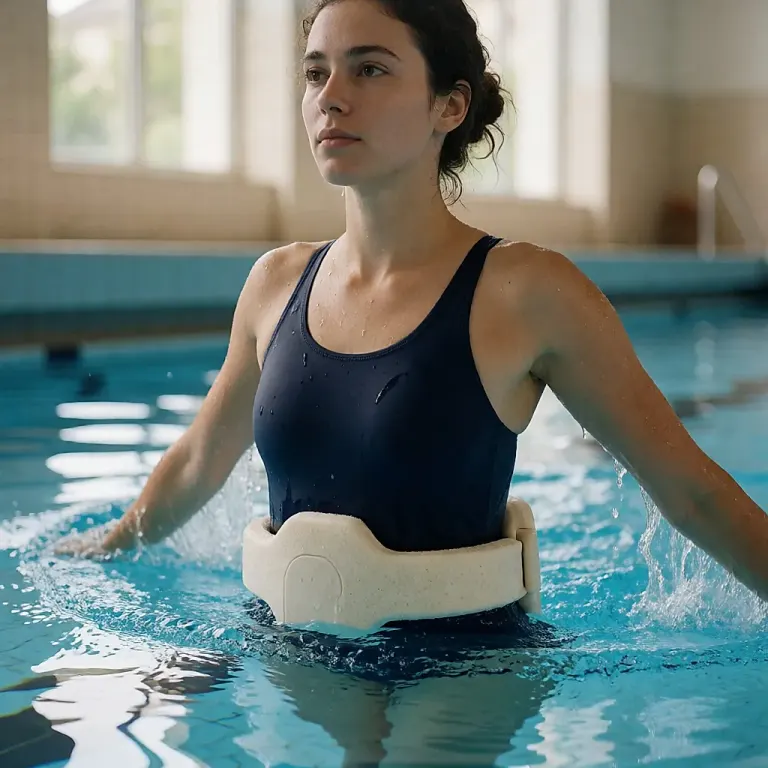
When you run, every footfall sends a shockwave through your ankles, knees and lower back. In a pool, that impact almost disappears: the water's buoyancy supports you and eases the load on your joints. Current evidence suggests that this offloading makes swimming particularly appealing if you have a sensitive back or joint pain. Supported by the water, you feel lighter, and lengths soon become a moment you look forward to.

Heart and lungs working gently
Swimming works the whole body without jolts. Your heart and lungs are working, but at a pace you control yourself: you speed up, slow down, breathe. That is what sets it apart from a harsh, stop-start effort.
What we know, and what we don't yet know: swimming is often well tolerated by people with asthma, not least because the air above the water is warm and humid. Conversely, some heavily chlorinated pools can irritate the airways. If you live with asthma or a respiratory condition, speak to a healthcare professional before you start — a sensible reflex for any return to activity.

Mood and sleep follow
After a session, many swimmers describe a feeling of calm. The body relaxed, the head cleared. In practice, it is one of the easiest sports to keep up long term, because it tires you without exhausting you. And often, sleep comes more easily the night after.

For back health, swimming is often suggested in exercise referral programmes, alongside medical care. It does not replace treatment or rehabilitation: it maintains mobility and muscle tone, which places it more on the prevention side.
You don't need to swim front crawl like a competitor. Start with twenty minutes, alternate with breaststroke, and stop if you are out of breath. Consistency matters more than performance: two sessions a week beat one heroic session a fortnight. And if pain returns with every length, don't play doctor with yourself: a diagnosis is made by a professional, not at the poolside.
What about your shape?
Alongside a balanced diet, swimming helps you use energy and contributes to firmer-looking contours. It does not do everything on its own on the scales: current evidence suggests that it is the combination of regular activity and a suitable diet that really makes the difference.

Budget
Swimming costs little, but a few expenses add up quickly. In the UK, expect around £5 to £8 for a single adult swim at a council-run pool, and roughly £250 to £500 for an annual membership at a public leisure centre: the price depends a great deal on your council and your status. For kit, a chlorine-resistant swimsuit most often sits between £25 and £65, goggles between £10 and £35, and a swim cap between £5 and £15. Prices rise with technical brands and chlorine-resistant fabrics; they come down at supermarkets, sports shops, online and during the sales. Also look out for student, family or resident discounts, common at council pools, and off-peak slots, which can be cheaper.
On materials, some brands offer swimsuits made from recycled polyamide, often from recovered fishing nets. The idea is good, but the weak point remains chlorine, which attacks the fibres: look at the actual recycled content claimed and the durability of the fabric rather than the nice 'eco' logo. A well-cut conventional swimsuit that lasts two seasons will sometimes be a more low-impact choice than a 'green' model that gives up after three months. For a cap, silicone lasts longer; latex is more supple but stretches out faster — it's up to you what matters most.
Sources
- World Health Organization (WHO), guidelines on physical activity for health.
- NHS, information on physical activity and sedentary behaviour.
- Swim England, information on swimming and membership.
- UK Chief Medical Officers, physical activity guidelines.

Comments
Your opinion matters: rate the article, react and reply to comments.
Comments are moderated; AI-assisted comments are flagged. Text emoticons (8-), :-), <3…) are automatically shown as images.