
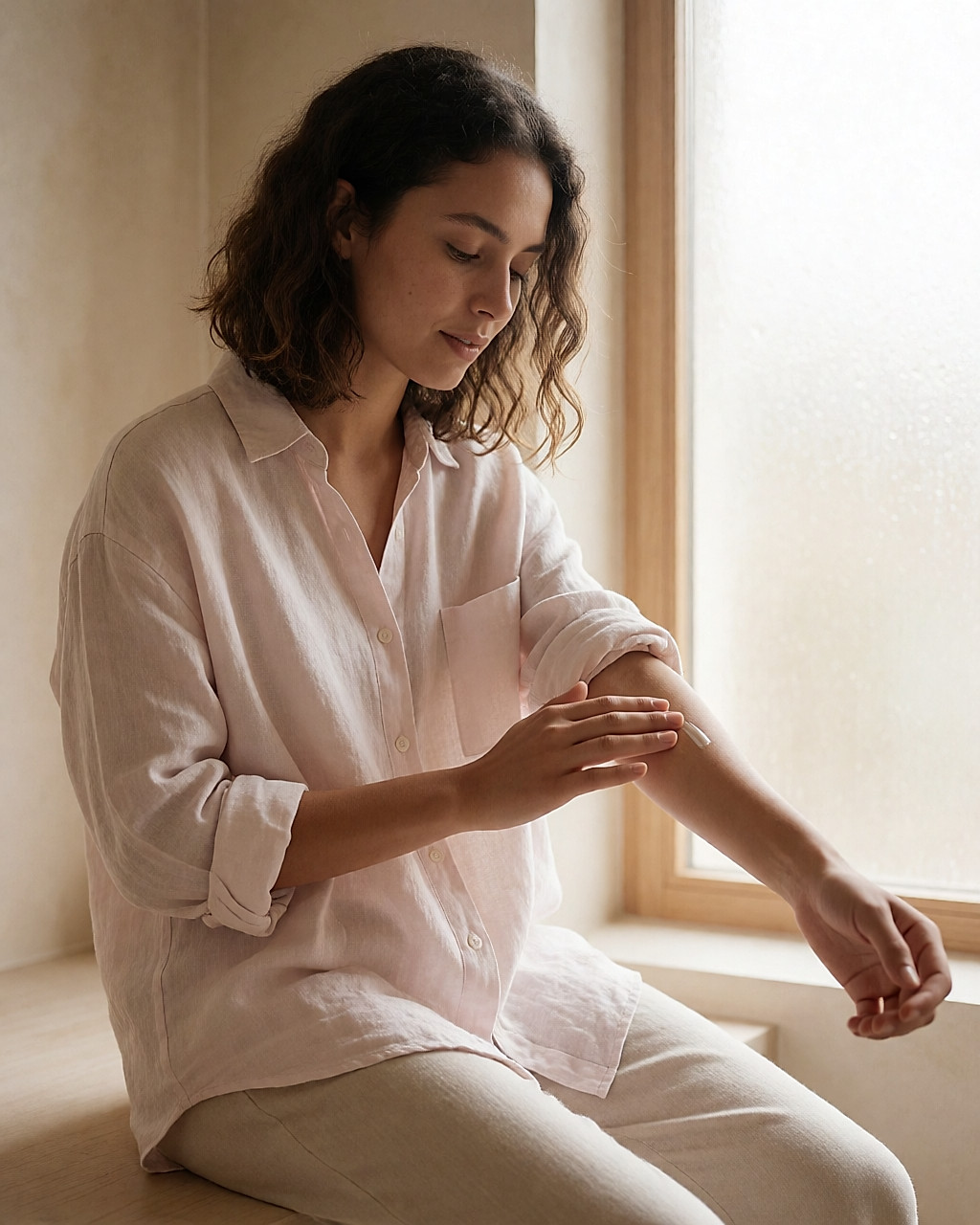
Psoriasis: Gentle remedies to soothe flare-ups
It often starts with a rough patch on an elbow. Or with flakes falling onto your shoulders when you scratch your head, in a meeting, and pretend not to notice. Psoriasis has nothing to do with hygiene, and it isn't contagious — we repeat that because there are still too many awkward glances. It's a chronic inflammatory condition, where the immune system goes into overdrive and speeds up the renewal of the epidermis: three to five days instead of four weeks, hence the build-up of dead skin. In the UK, it's estimated that around 1 in 50 people live with psoriasis, which can affect the scalp, elbows, knees, nails or lower back.
And let's be clear from the start: nothing replaces prescribed treatment. Topical corticosteroids, vitamin D analogues, phototherapy, and for severe forms methotrexate or biologics. Everything below is complementary, never a replacement. But during a flare-up, we often look for gentler steps that soothe and restore some comfort, so it's worth knowing what really helps — and what is folklore.
Hydration: the step that changes everything
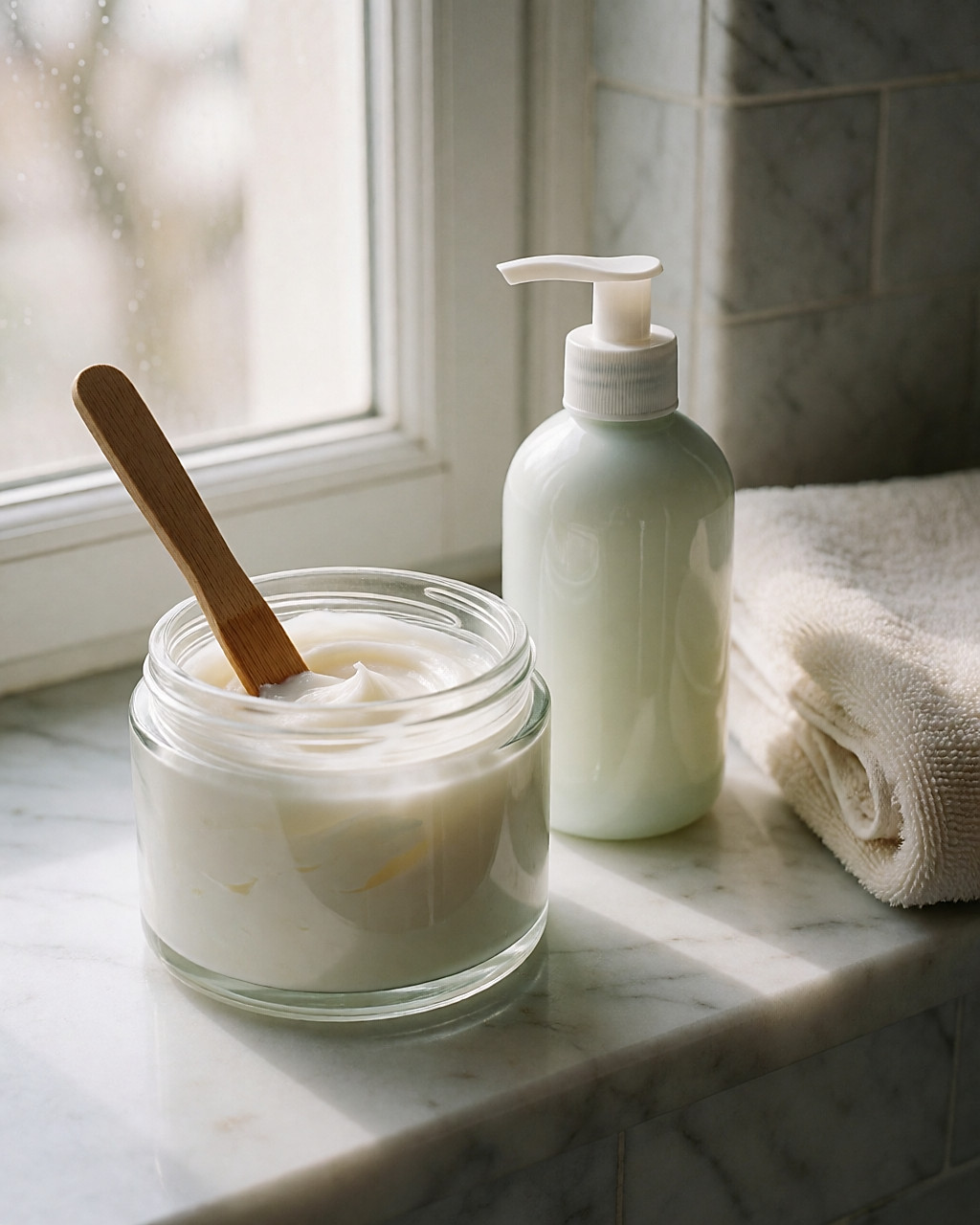
If you take one thing from this article, make it this: moisturise every day. Well-nourished skin itches less and cracks less — and that's huge, because scratching keeps the lesion going, which makes you scratch more. Thick cream, ointment, vegetable oil: the vehicle doesn't matter, as long as you like the texture enough to come back to it every evening. Keeping the tub by the bed, next to the toothpaste: it sounds silly, but it's the difference between a routine and a tub gathering dust.
What is well established, too, is the role of external factors. Stress, fatigue and difficult periods in life are recognised as triggers or aggravators of flare-ups — never the cause of the disease, let's not reverse that. Stopping smoking and limiting alcohol also affect the severity of lesions. This isn't about blame: it's about the levers you can actually pull.
Homeopathy: what you need to know
For a long time, people were advised to take granules chosen according to the area affected — hands, around the nails, chest. The intention was good, and the habit was well established. But in the UK, homeopathy is not routinely funded by the NHS, and there is no reliable evidence that it improves psoriasis plaques. You can certainly talk to your doctor about it; just don't expect it to clear plaques. Saying that isn't disrespectful to anyone — it's simply being honest about the evidence.

Essential oils: diluted, never neat
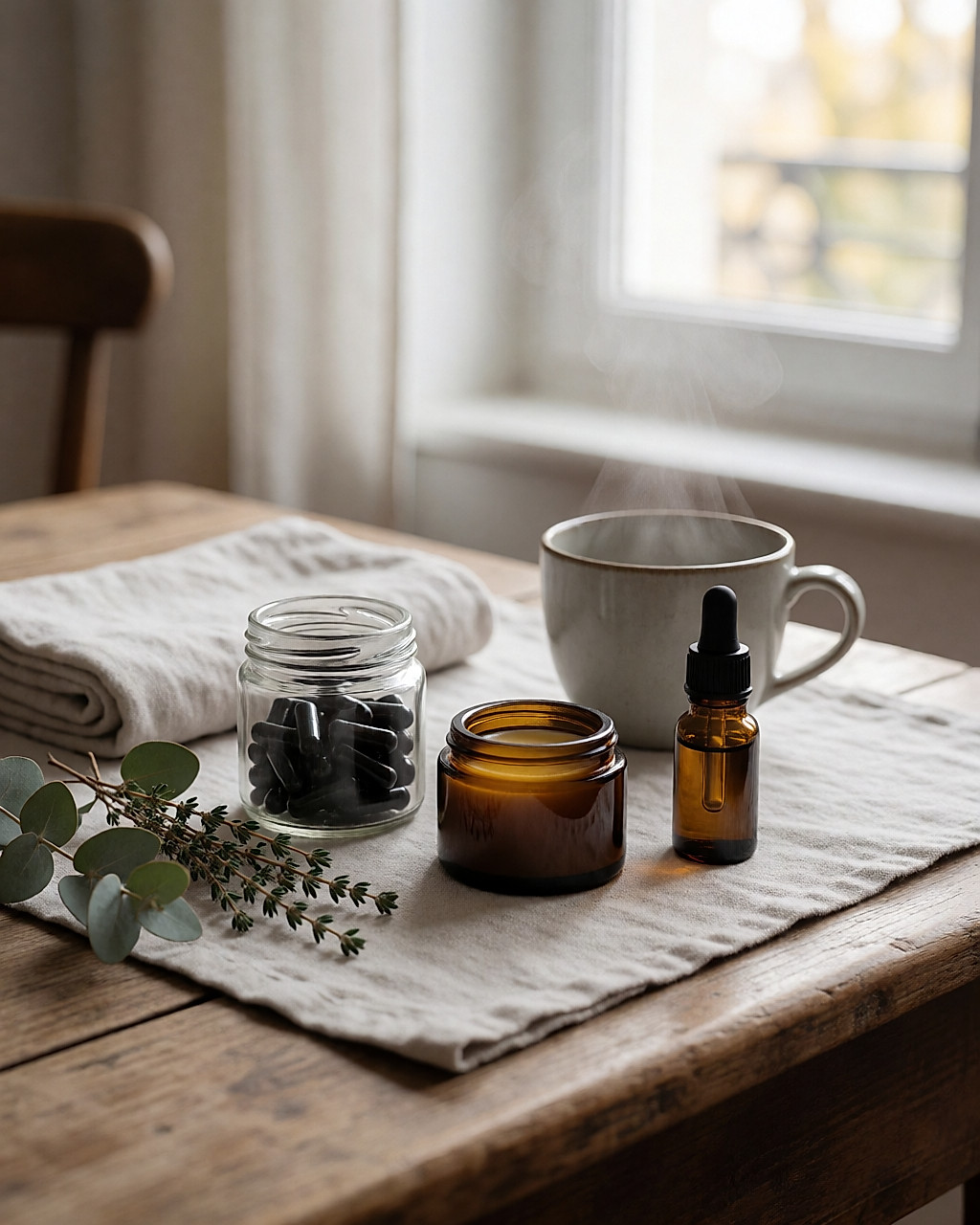
Cedarwood, ylang-ylang, cade: these oils have a reputation for soothing and calming inflammation, and the scent alone can feel reassuring. For psoriasis specifically, good studies are lacking — current data suggest at most a pleasant scent and a caring ritual, which is not nothing. The real safety point is how you use them: an essential oil should always be diluted in a carrier oil, never applied neat or over large areas, and some are photosensitising. If you are pregnant, breastfeeding or using them on a child, speak to a pharmacist or doctor before opening the bottle.

Plants and vegetable oils
Taken orally, burdock, wild pansy or sarsaparilla are traditionally used to 'detox' the skin. That's the kind of claim that's hard to verify, and we'd rather say so than pretend to believe it. Used topically, however, plantain, calendula, sweet almond oil or borage oil have real value — not for the disease itself, but for comfort: they soothe, nourish and give skin back a little suppleness. Again, it's comfort that improves, not the plaques. And that's already a good reason to consider them.
And on your plate?
No diet will cure psoriasis, and anyone who promises otherwise is selling something. That said, current evidence suggests that a Mediterranean-style diet and weight loss if you are overweight may improve symptoms. A gluten-free diet is only worth considering if you also have coeliac disease — otherwise it adds restriction without proven benefit. As for omega-3 and evening primrose oil, trial results remain mixed: we don't make a call, we observe.
Spreading redness, scales, joint pain, unusual fatigue: your first step should be to speak to your GP or a dermatologist. Poorly controlled psoriasis can be accompanied by psoriatic arthritis, and some lesions resemble other conditions. No gentle remedy replaces a diagnosis.
What it costs, concretely
With gentle care, the cost stays moderate — but it can climb quickly when you keep buying bottles hoping to find the right one. In practice, expect to pay roughly: £6 to £20 for a 200–500ml tub of emollient from a pharmacy, or £4 to £12 for basic formulas from a supermarket; £4 to £13 for 100ml of carrier oil (sweet almond, calendula); £4 to £17 for a 10ml bottle of essential oil, more for organic or rare oils; £4 to £10 for 100g of herbal tea. A dermatologist appointment on the NHS is free at the point of use, but you'll usually need a GP referral. Private consultations typically cost £150 to £300. If you're prescribed emollients in England, prescription charges apply unless you're exempt; prescriptions are free in Scotland, Wales and Northern Ireland.
What changes the bill: size, label, brand, where you shop. With emollients, a glass jar or refillable format cuts waste, and a label such as COSMOS Organic or Ecocert guarantees a specific formulation charter — useful, but not essential. A basic supermarket formula can moisturise very well if money is tight, and advice from a pharmacist is free: often more useful than one more bottle.
Finally, remember that what matters isn't the collection of tubs lined up in the bathroom, but the regularity of the ritual. One balm applied every evening will do more for your skin than a shelf of promises. And if flare-ups keep coming despite everything, it's medical follow-up you need to look at — not the next bottle.
Sources
- NHS, 'Psoriasis', nhs.uk.
- NICE, 'Psoriasis: assessment and management', nice.org.uk.
- NHS, 'Homeopathy', nhs.uk.
Food supplements do not replace a varied, balanced diet and a healthy lifestyle.



Comments
Your opinion matters: rate the article, react and reply to comments.
Comments are moderated; AI-assisted comments are flagged. Text emoticons (8-), :-), <3…) are automatically shown as images.