

Hypertonic seawater is also used for rinsing. It is more concentrated, but that does not mean it clears a blocked nose more reliably. The difference comes down to a word printed in small type on the bottle, and it is enough to change the technique, the timing and how long you use it. The question is why the saltiest bottle is not the one to reach for every morning.
Two words, two concentrations
Isotonic seawater has been diluted until it resembles our internal fluids: its concentration is close to that of physiological saline, hence the word 'isotonic' on the bottles. It flows through the nostril without fuss, moistens the passage and helps clear what is sitting there. This is the everyday maintenance option, the one you reach for on a November morning when the tissues have already been out.
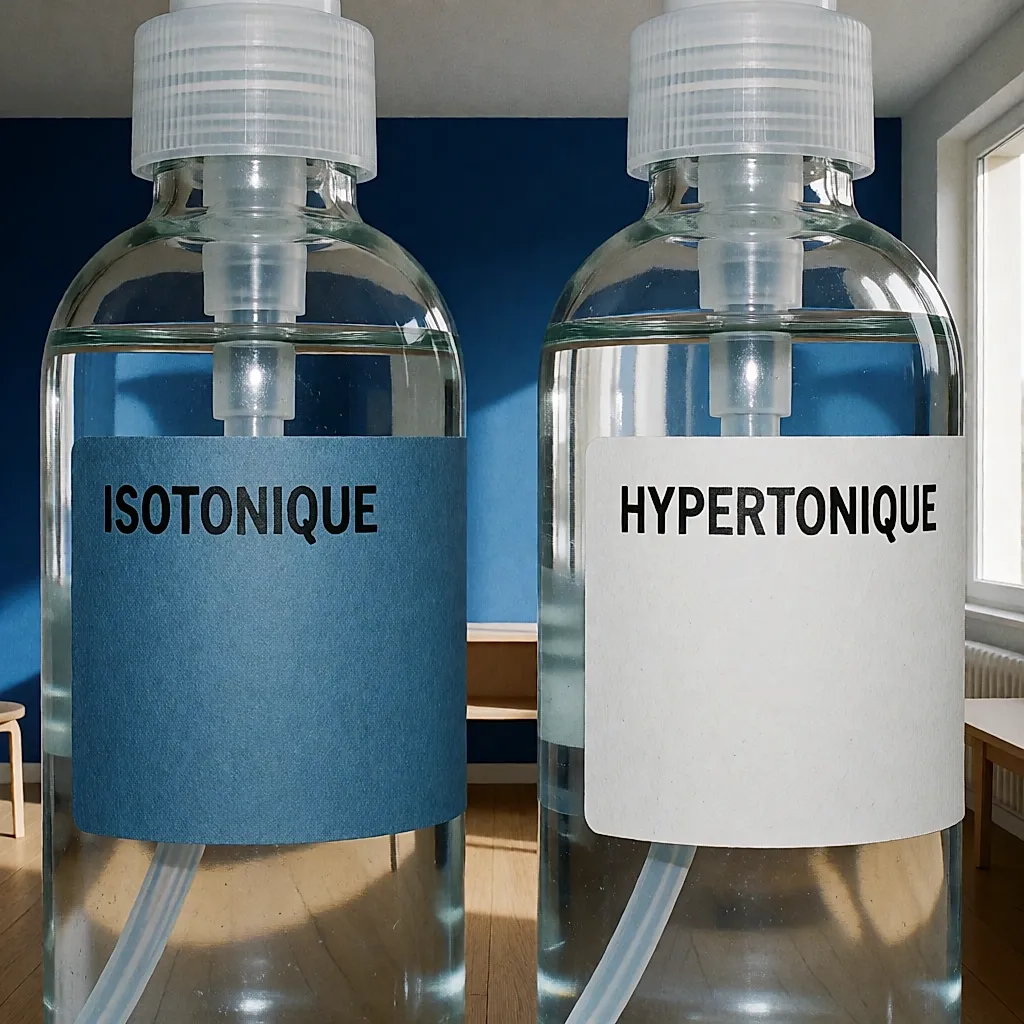
Hypertonic seawater is more concentrated than isotonic, depending on the product. And it stings. In other words, 'saltier' does not mean 'gentler on the nose', nor does it mean 'stronger' in any reassuring sense of the word.
Why 'hypertonic' does not mean 'more effective'
What we know: nasal washing is a comfort measure and is very widely used. In infants it helps clear secretions; it is also one of the measures used alongside a cold in a young child. Isotonic seawater falls into the same category: it makes the day more bearable, and the available data do not allow us to say that it shortens the illness.
What we do not yet know: which concentration really beats the other, and for which profile. The available data on saline nasal washes in upper respiratory infections are limited and heterogeneous: results are sometimes favourable, protocols vary widely and sample sizes are modest. Nothing, therefore, justifies buying hypertonic in the belief that it is the premium version of rinsing.
The technique changes with the bottle
With isotonic seawater, you rinse. One nostril at a time, head slightly tilted, nozzle aimed towards the outer wall of the nose rather than the septum. Let the water come out, blow your nose gently — without the force of a car horn. The aim is to clean, not to force.

With hypertonic seawater, the register changes: the nose is properly blocked, the lining is congested, and this is the bottle you turn to — though the effect is not assured. The stinging is part of the deal, and that is precisely why this bottle does not become part of a routine. In practice, keep it for short periods, and with a baby or young child, ask a pharmacist or GP first.
Rinsing is maintenance. Reacting is intervening. Two verbs, two bottles, and a shelf that at last stops looking like a trap.
Before you buy, read the three lines
The first is concentration: isotonic or hypertonic, spelt out. The second is the indication — a bottle for 'daily washing' and one for a 'blocked nose' do not answer the same question. The third is age and format: sterile single-dose vials, a personal nozzle, never shared, rinsed after use. And for the liquid itself, stick to sterile water or physiological saline: that is the cautious approach for nasal washing.
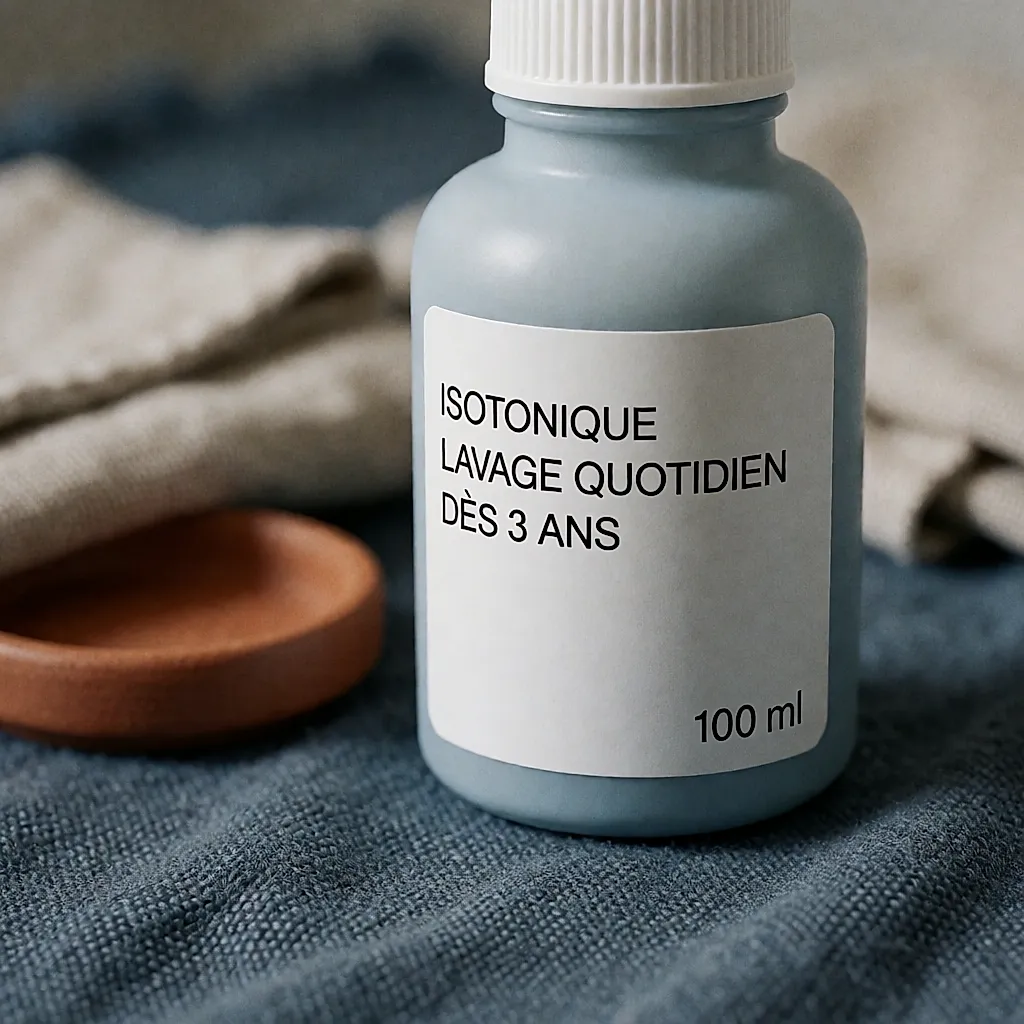
On price, both are sold in pharmacies, health and beauty retailers and supermarkets, for a few pounds per unit. The wording on the bottle does not send the bill soaring, which makes confusion all the easier.
A nose that stays blocked, facial pain, fever, an ear infection, a very young child or a fragile health background: hand over to a healthcare professional. The bottle is a comfort measure, not a diagnosis.
The key point to remember can be summed up in one line: isotonic to rinse, hypertonic for a properly blocked nose — and the second does not become a daily reflex just because it stings more. What it does not replace: advice from a healthcare professional when the nose refuses to settle, and patience, which remains entirely free.
Cost
Expect to pay around £3 to £10 a bottle, depending on concentration, format (single doses or spray), size and where you buy it. They are available from pharmacies, health and beauty retailers, supermarkets and online.


Comments
Your opinion matters: rate the article, react and reply to comments.
Comments are moderated; AI-assisted comments are flagged. Text emoticons (8-), :-), <3…) are automatically shown as images.