

Heavy legs: what can help?
At 5pm, the day is drawing to a close, and your calves seem to have doubled in size. That leaden feeling in your legs is probably familiar: it arrives with the first warm days, settles in after a long time standing, and nothing seems to shift it by evening. It is very common, especially in women, and yet it is not inevitable. With a few preventive habits kept up over time, daily life can really change — as long as you understand what is going on in your legs.

What causes this heaviness?
Venous blood has to travel from your feet back up to your heart, against gravity, and it does not do this on its own. It relies on walking, which activates the calf pump, and on small valves that stop blood from flowing backwards. When these valves weaken, blood pools: this is venous insufficiency. In practice, it is not 'all in your head' — the mechanism is very real, and it develops over time.

Several risk factors add up: heredity, prolonged standing, sedentary lifestyle, heat, pregnancy, excess weight. These all affect venous return, sometimes without you realising, and they deserve to be monitored rather than simply endured.
The habits that really help
Start with a cool shower on your legs, working from bottom to top, with a slightly stronger jet. The cold is a shock for the first few seconds, then circulation gets going again. Conversely, skip hot baths, saunas and long sunbathing sessions with your legs immobile: heat dilates veins and slows venous return.

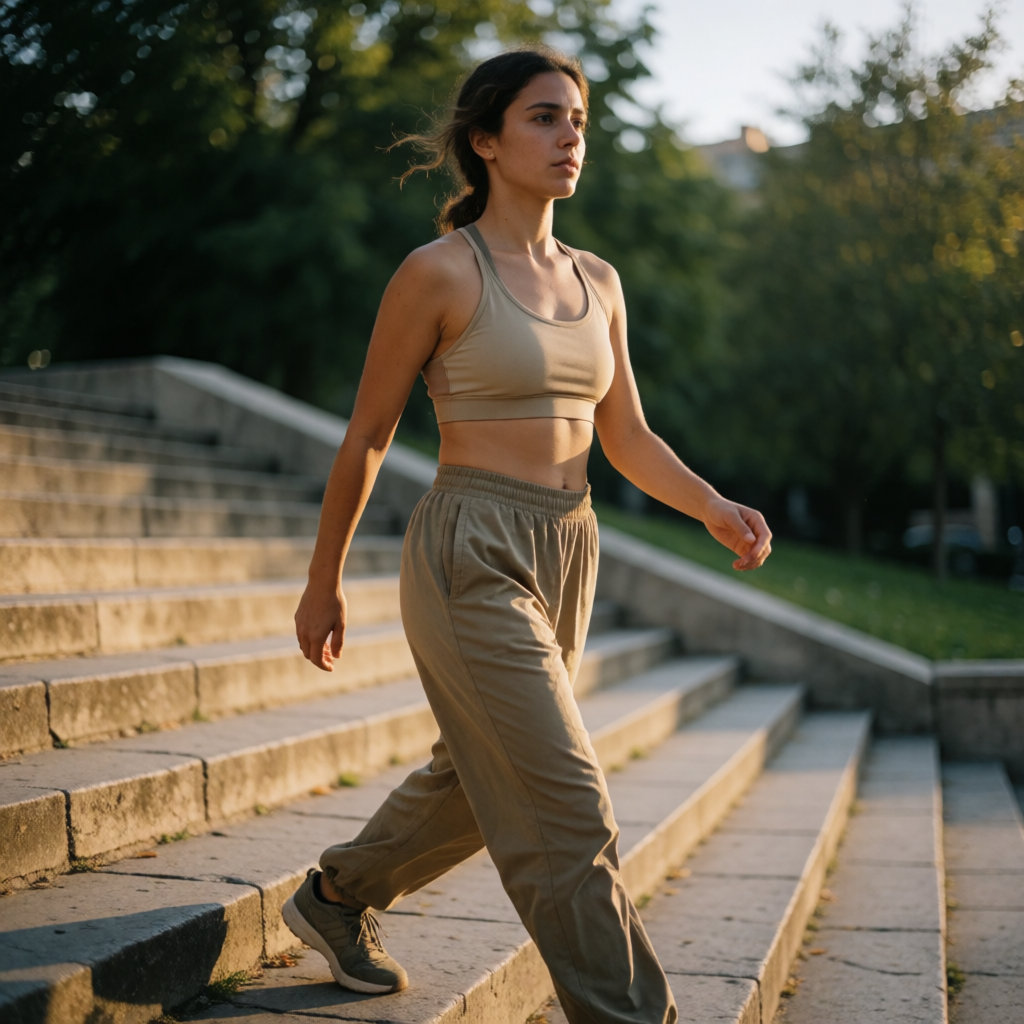
In the evening, raise your legs against a wall for 15 minutes, with your back flat and breathing slowly. While watching a series, it passes easily, and the effect on the feeling of heaviness is noticeable. Also keep the habit of moving: walking remains the best ally, and half an hour a day is often enough. Cycling and swimming are also recommended, and if you work standing or sitting all day, rise up and down on your toes, squeeze your calves, and do a few turns on the spot.
Nothing spectacular, as you will have gathered: consistency matters more than intensity.
What about herbs?
Red vine, horse chestnut, sweet clover, ginkgo, cypress: these herbs are traditionally used for the sensation of heavy legs. Current data suggest a modest effect on perceived heaviness, but not on varicose veins themselves. In other words, they may help you live with the discomfort, without claiming to solve the underlying problem.
Be careful, however, about possible interactions with anticoagulants or other current treatments. In practice, speak to your pharmacist or doctor before starting a supplement, even a herbal one.

When to seek advice?
Swollen ankles that keep the imprint of your finger, tingling, night cramps, veins that become prominent: these signs deserve a medical opinion. A doctor can examine your legs, request a venous scan if needed, and suggest compression appropriate to your case. None of this should be decided alone, and certainly not from a photo seen on social media.
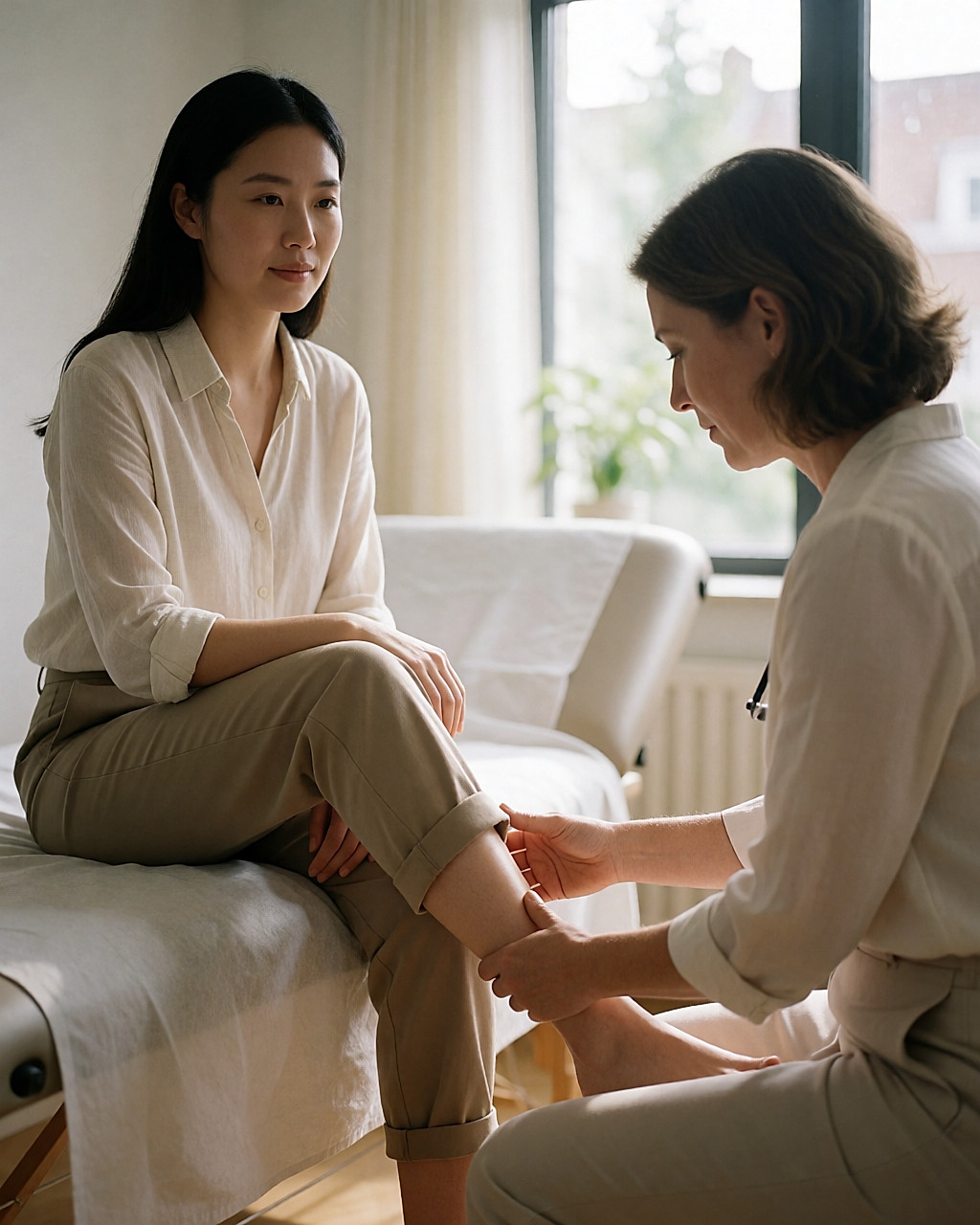
Follow-up matters too: changes from one year to the next are easier to notice when you discuss them regularly with a healthcare professional.
Seek help without delay if one leg swells suddenly, becomes hot, red and painful, if a varicose vein bleeds, or if you have shortness of breath or chest pain. These situations are not covered by the advice in this article.
Budget
Good news: the most effective habits — walking, raising your legs, finishing your shower with cool water — cost nothing. For everything else, here are the typical costs in the UK.
For compression stockings, socks and tights, expect around £10 to £40 a pair from a pharmacy or medical supplies retailer. The price depends on the compression class, brand and size. On prescription, NHS provision may be possible — and measuring ankle and calf is essential: have it done by a professional.
For herbal supplements, expect around £7 to £30 a month, depending on the number of herbs, dosage and format. Choose formulas that state the origin and the part of the plant used. They never replace medical follow-up.
Manual lymphatic drainage or massage costs around £45 to £90 per session in a clinic or spa, depending on the city and duration; physiotherapy sessions may be available on the NHS with a referral. As for a GP appointment, it is free at the point of use through the NHS.
Sources
- NHS — Varicose veins
- NICE — Varicose veins in the legs: the diagnosis and management of varicose veins
- MHRA — Herbal medicines
- NHS — Compression stockings
Food supplements do not replace a varied, balanced diet and a healthy lifestyle.


Comments
Your opinion matters: rate the article, react and reply to comments.
Comments are moderated; AI-assisted comments are flagged. Text emoticons (8-), :-), <3…) are automatically shown as images.