

A little parsley scattered over sliced tomatoes, a sprig of rosemary left in a chicken as it simmers, two mint leaves at the bottom of a mug: three gestures that cost next to nothing and still make a meal taste of something. The trick is knowing when to add them.
Which herbs survive cooking, and which do not
Sort them into two groups once and you will not go far wrong. The first group stands up to heat: rosemary, thyme, sage, bay. Their aromas hold, so add them whole, on the stalk, to a slow-cooked dish and lift them out just before serving. The second group loses its perfume the moment it is warmed: basil, chervil, parsley, mint, tarragon. Add those at the end of cooking, or completely raw.
And the dried version? A jar of thyme or oregano is a perfectly good stand-in when the pots on the balcony give up. Fresh has the sharper perfume. Drying concentrates some notes, but heat also destroys part of the most fragile vitamins.
Pairings that work
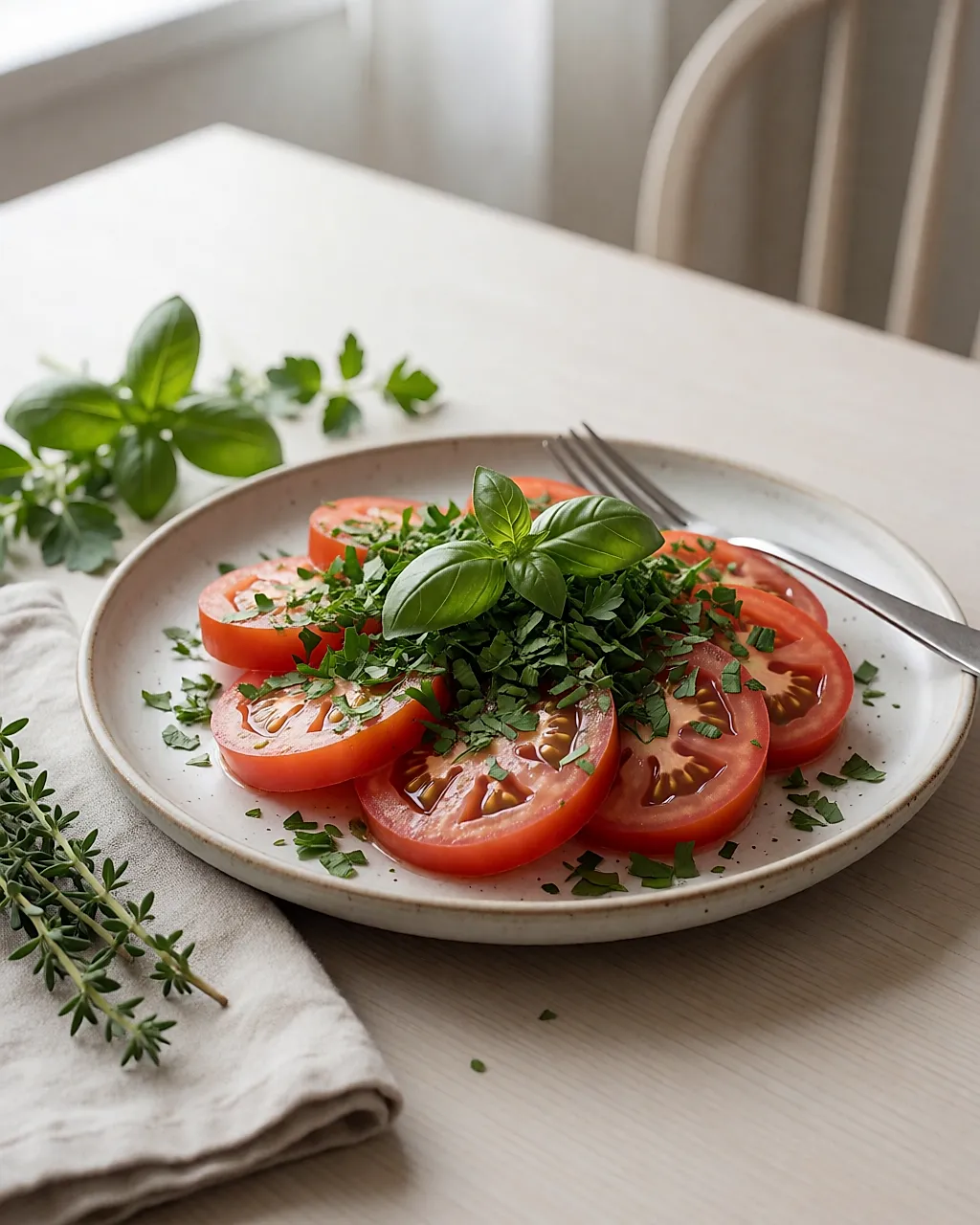
Flat-leaf parsley lifts tabbouleh, a tomato salad, grilled meat. Chopped with garlic into a persillade, it is excellent on sautéed mushrooms.
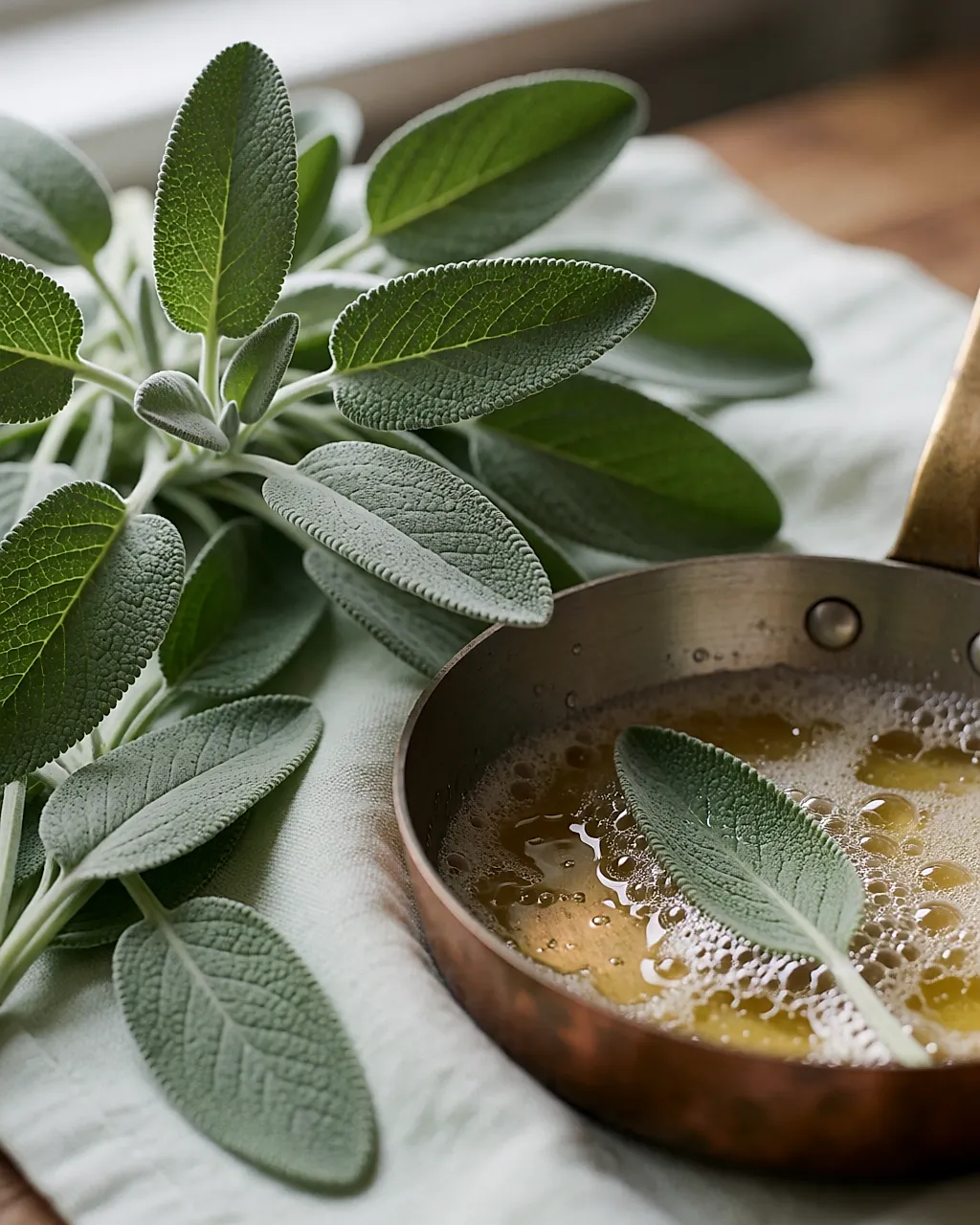
Sage is strong, so go easy: a few leaves are enough for pork, turkey, pasta, eggs and stuffings.
Mint brings freshness to tabbouleh, peas, cucumber and lamb. And to tea, obviously — a classic that never dates.
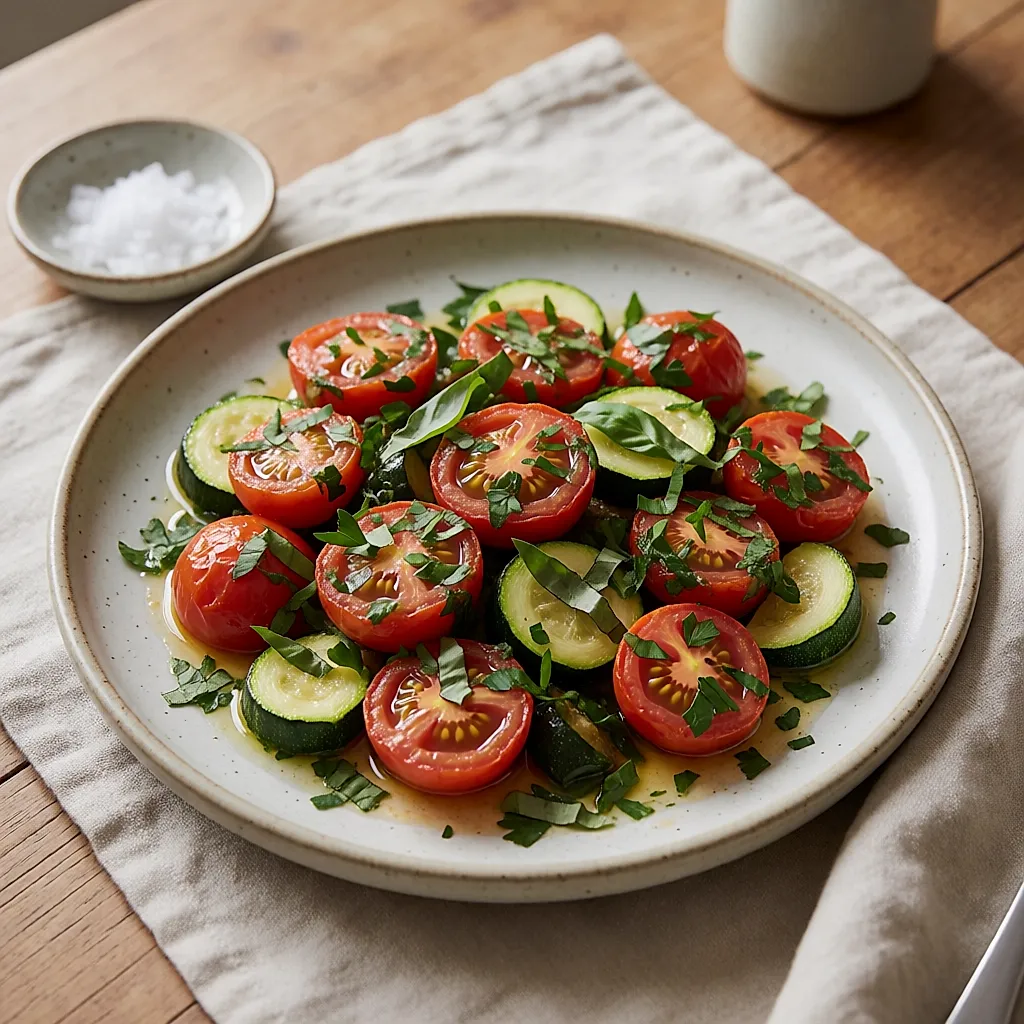
Basil likes tomato sauce, pistou, fresh pasta and seafood. Add it off the heat, or cooking will wipe out the flavour.
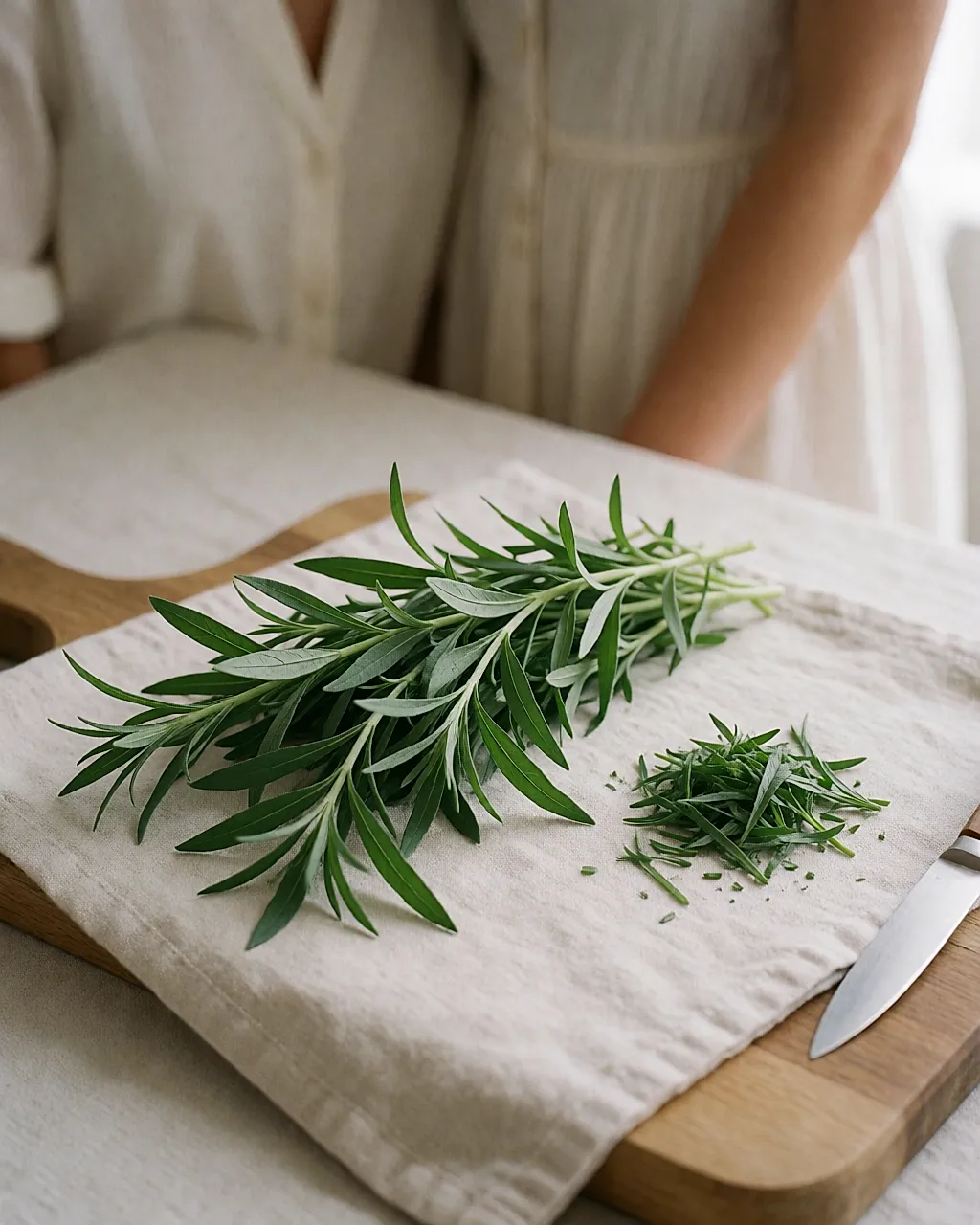
Tarragon goes with chicken, fish, mushrooms and butter. It is also what gives béarnaise its character.
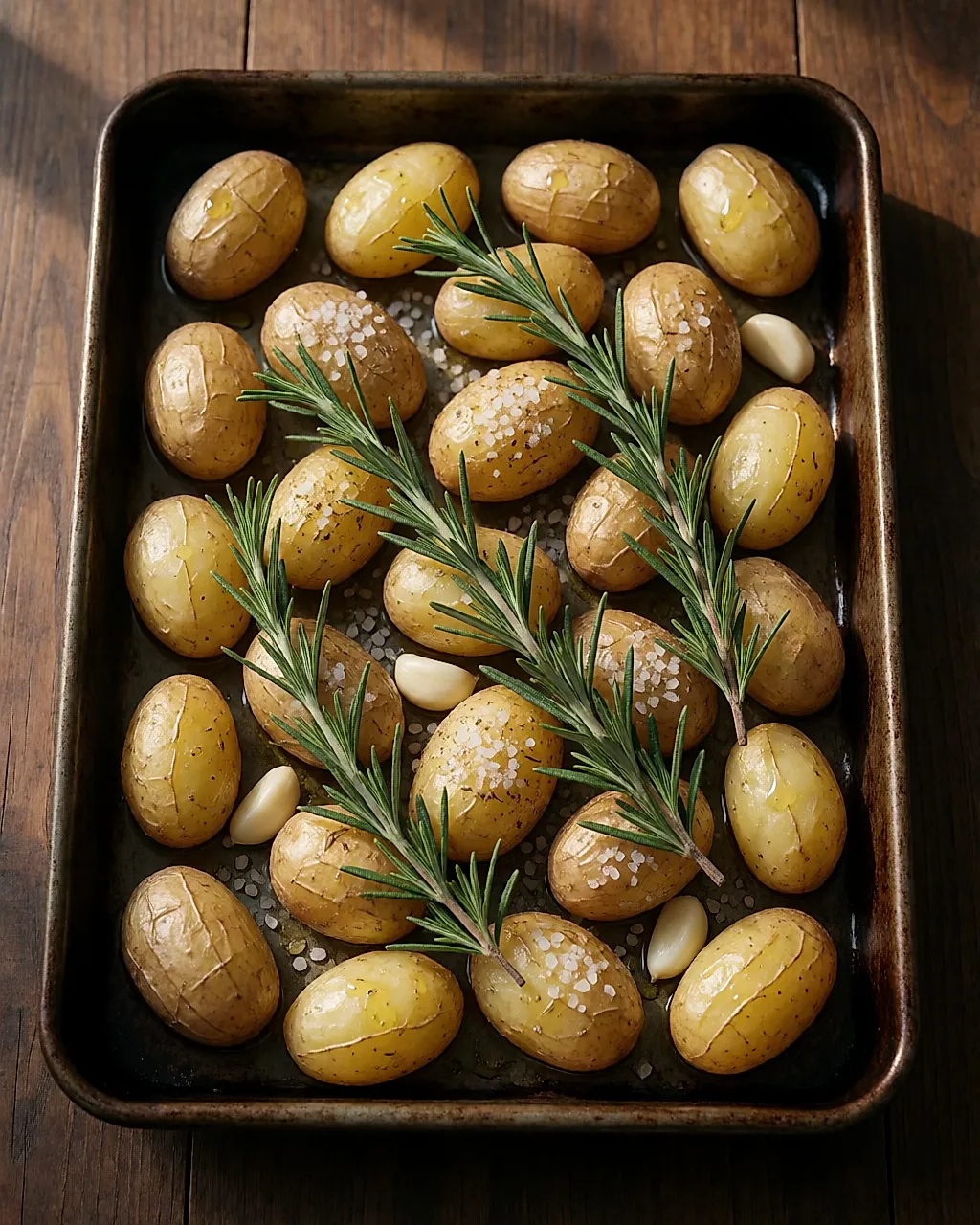
Rosemary suits dishes that are already well seasoned: lamb, pork, roast potatoes, tomato sauce.
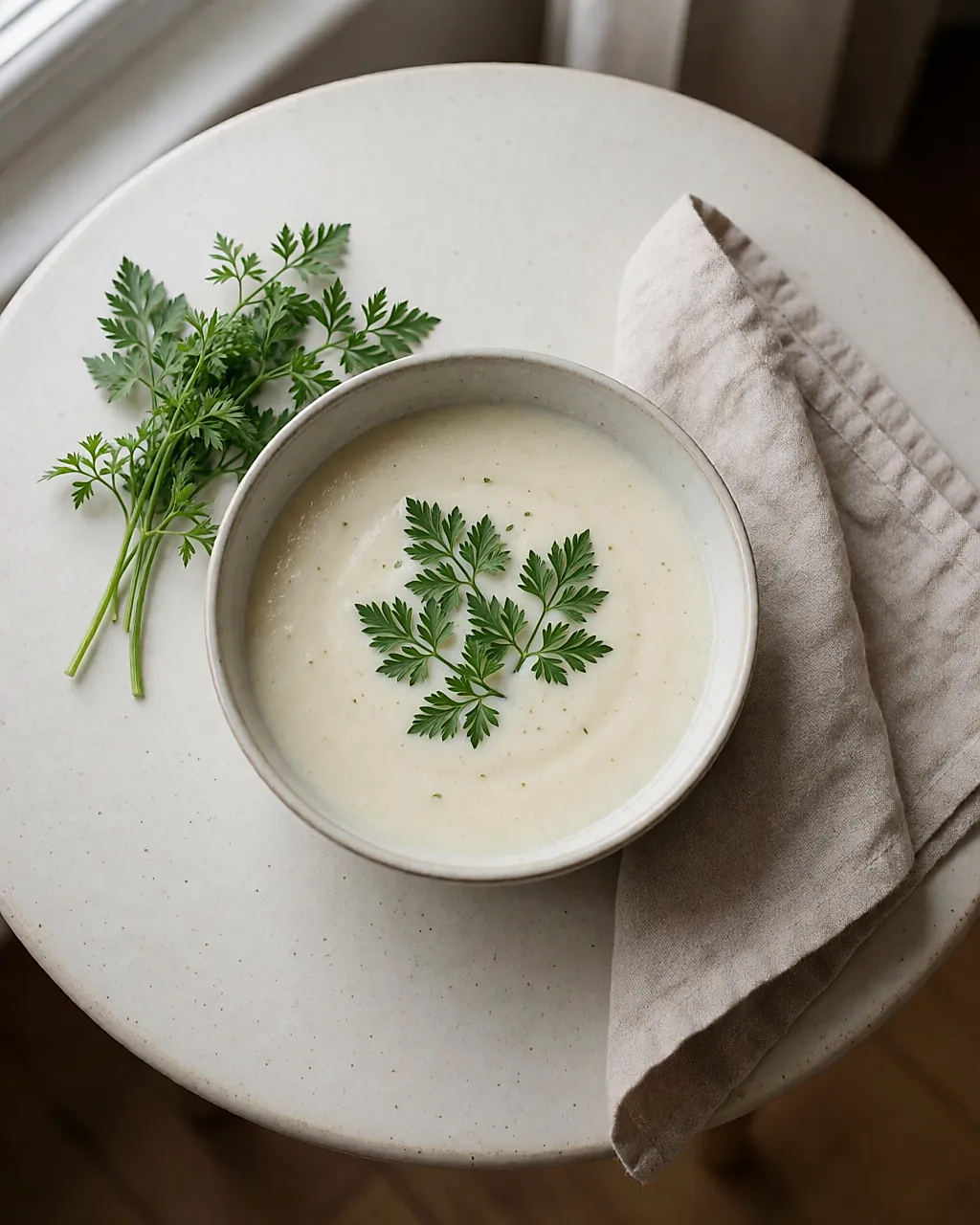
Chervil, all understatement, sits on scrambled eggs, steamed fish, a salad, a bowl of soup. Always at the very last moment.
Keeping a bunch at its best
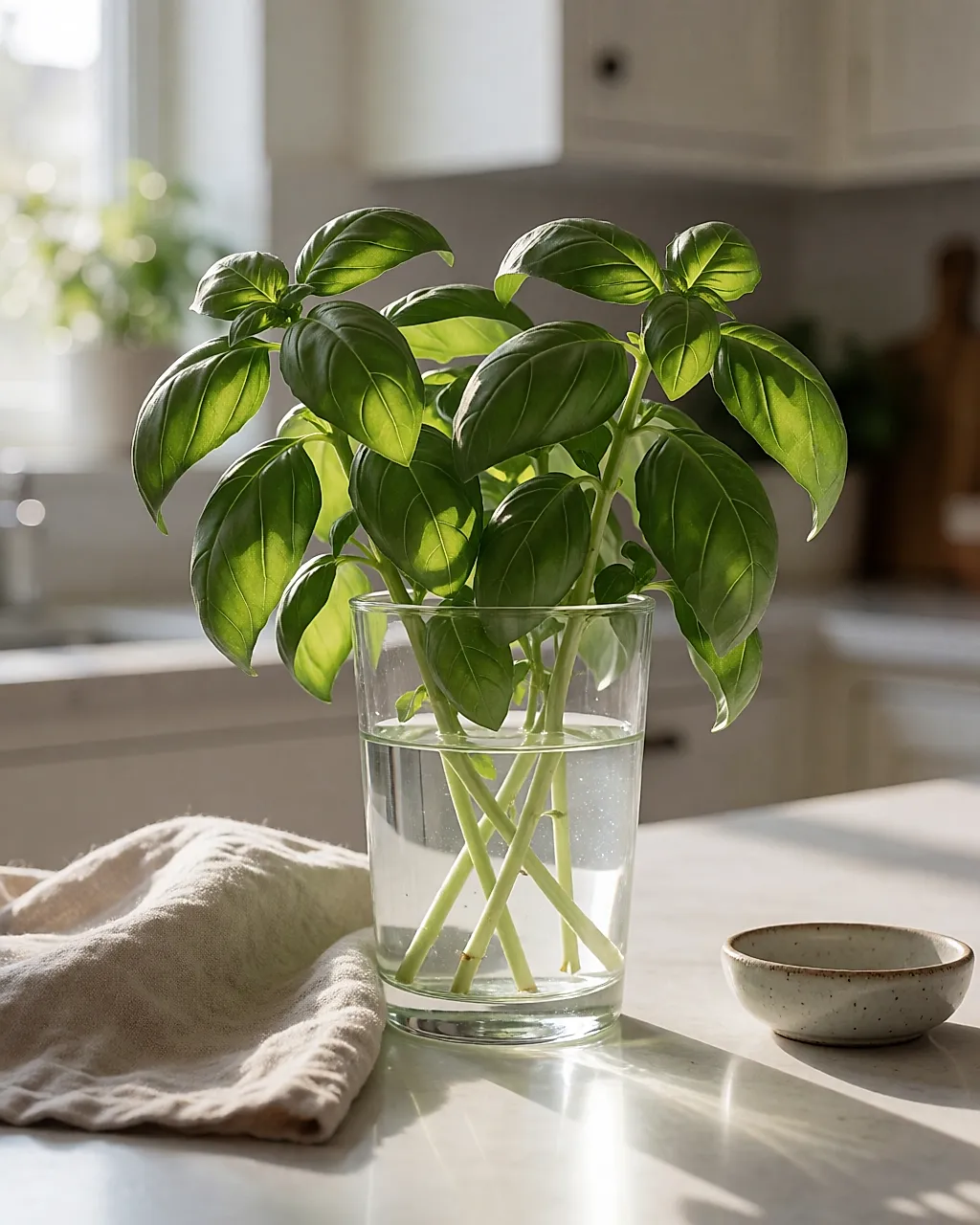
A bunch brought back from the market keeps for a few days with its stems in a glass of water in a cool spot, or wrapped in a damp cloth. One quirk: mint and basil prefer a glass of water at room temperature, because basil copes very badly with cold. To make them last longer, chop them and freeze them in ice-cube trays with a drizzle of olive oil. As for the container, a glass jar or an airtight box beats flat cling film — if only for the end of life of the packaging.
What you will pay
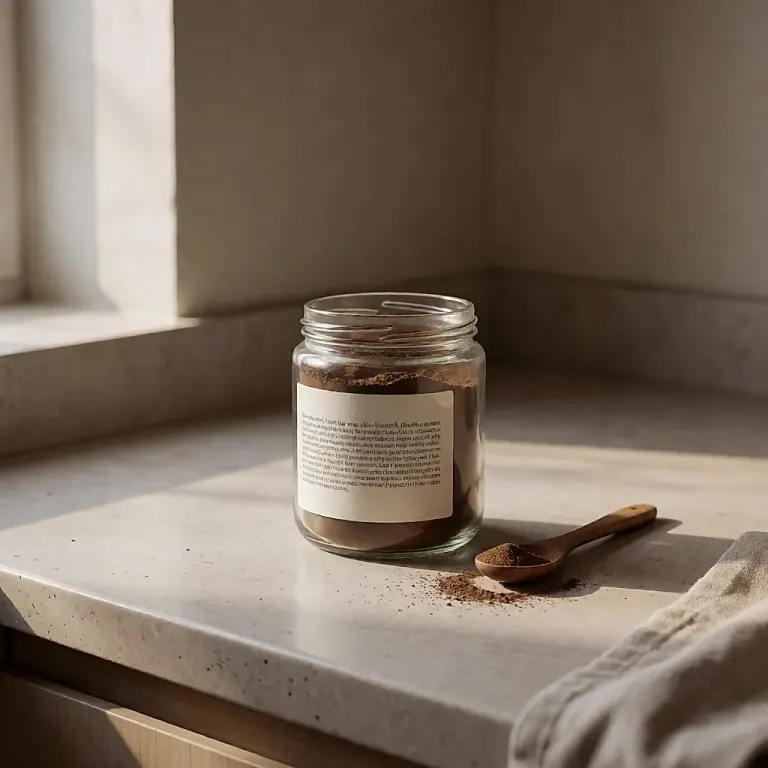
As a rough guide, a supermarket pack of cut herbs costs about £1 to £2, and a larger bunch from a market stall £1.50 to £3. A pot bought at a garden centre or a supermarket usually comes in at £2 to £6, and gives you several weeks of cuttings if you water it regularly. A tray of plug plants or a packet of seed is generally £2 to £5, and a jar of organic dried herbs £2 to £6. Prices move with the season, the growing method and where you shop: market, deli, garden centre, supermarket or online.
What the evidence does and does not show
Herbs supply polyphenols and vitamins, but they remain a seasoning, not a medicine. The current evidence suggests a sprig of parsley does not replace a portion of vegetables. Official prevention advice still centres on eating a varied range of fruit and vegetables, not on how much herb you use.
An essential oil is not a fresh herb. These are highly concentrated extracts: they are not a seasoning, and they are not something to take casually. If you are on medication, pregnant or breastfeeding, speak to your GP or pharmacist before taking one by mouth. In the kitchen, ordinary seasoning poses no particular problem — prevention here is simply a question of variety and moderation.
Sources
- NHS — the Eatwell Guide and healthy eating advice.
- Food Standards Agency — guidance on food and nutrition claims.
- Regulation (EC) No 1924/2006 on nutrition and health claims made on foods, as retained in UK law.
- Regulation (EU) 2018/848 on organic production and labelling of organic products.


Comments
Your opinion matters: rate the article, react and reply to comments.
Comments are moderated; AI-assisted comments are flagged. Text emoticons (8-), :-), <3…) are automatically shown as images.