

In 2026, with Clean Air Zones operating in a growing number of UK cities, energy bills that show no sign of settling down, and durability scores starting to appear on more appliances, the question has shifted: where do you start, without turning your daily routine upside down? The most effective moves are rarely the most visible ones.
For years, going green at home came down to sorting your recycling and switching off the lights when you left a room. You already do all of that, and it counts. It simply doesn't stretch far enough any more.
At home, the savings are in the details
Standby power is the quiet one. Televisions, broadband routers, games consoles and chargers all draw current continuously, even when there's nothing on the screen. A switched extension lead in your media corner lets you cut the lot with one flick at night. A small thing, yes — but a small thing that turns up on the bill every single day.
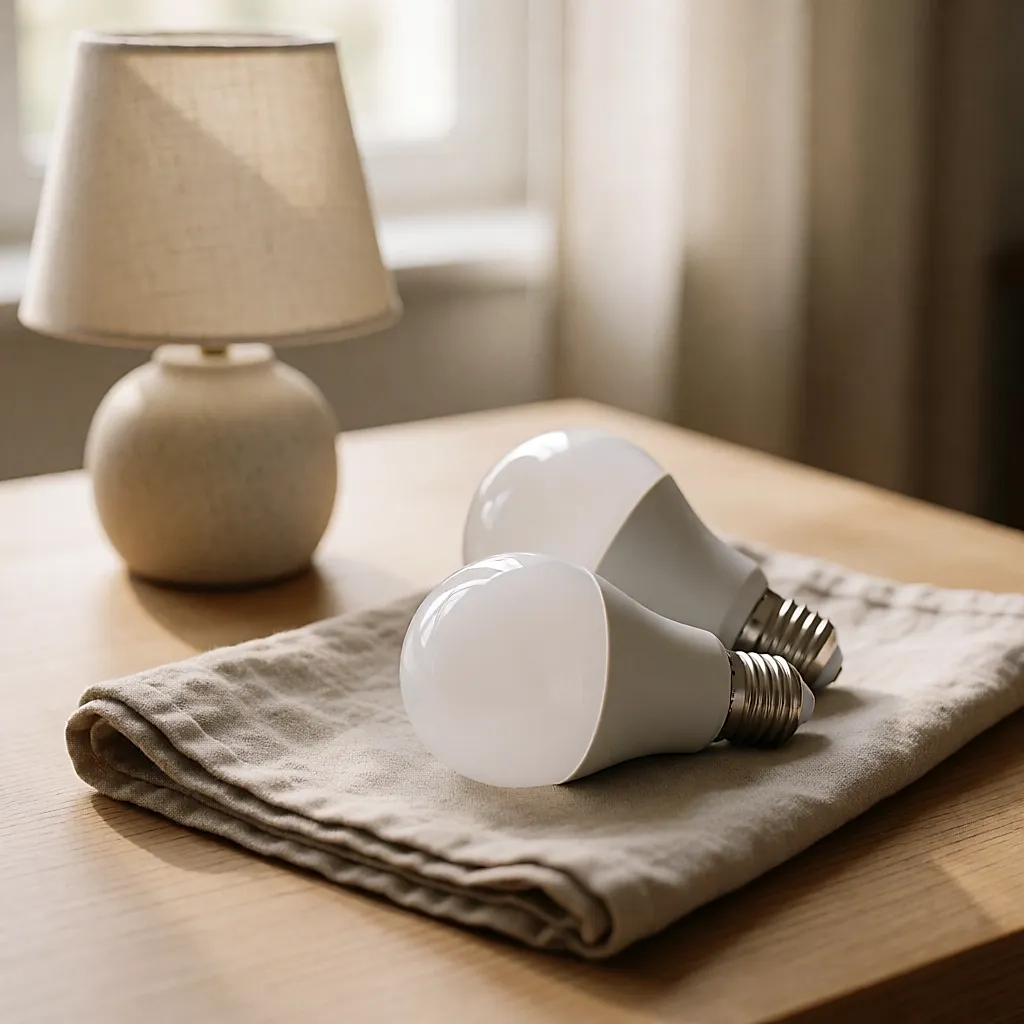
On lighting, LEDs have replaced the compact fluorescents that were once the green option: they use a fraction of the energy of an incandescent bulb and last for years.
Water deserves the same attention. A worn tap washer or a loo that keeps running quietly wastes tens of litres a day, and you'd never notice. For the rest, stick to the basics: showers rather than baths, the washing machine on a low temperature and only when it's full, and line-drying whenever the weather allows. A thermostat set around 19°C in living rooms, turned down overnight, remains one of the best-value adjustments in the house.
And open the windows for ten minutes a day, even in winter: it's genuine prevention for indoor air quality, where pollutants build up faster than most of us assume. If respiratory symptoms keep returning without explanation, talk to a healthcare professional — your GP or NHS 111 — rather than trying to identify the culprit on your own.
Getting around: the heaviest lever
Transport is the largest single source of greenhouse gas emissions in the UK, at roughly a quarter of the national total. Which is why every choice here counts for more than almost anything else.
For journeys of under three miles, walking and cycling — a standard bike or an e-bike, often helped along by council grants or a Cycle to Work scheme — are hard to beat. Beyond that, public transport, the train for longer trips and car-sharing where a car is genuinely needed all bring down the footprint per person sharply.
If you do have to drive, eco-driving makes a measurable difference: gentle acceleration, reading the road ahead so you brake less, a steady speed, tyres at the right pressure. On a new car, the energy label and the CO₂ figures tell you how thirsty the model is. With electric, it pays to think in terms of use rather than principle: it makes most sense when your everyday journeys are short and charging is easy.

On your plate, let the seasons lead
Strawberries in January mean importing fruit grown in a heated greenhouse or flown thousands of miles. Eating with the seasons, favouring local producers and shorter supply chains, cuts transport and often refrigeration — and the flavour doesn't suffer.
Organic is still worth considering, particularly for reducing exposure to synthetic pesticides, as long as it isn't travelling from the other side of the world to reach you. The other big one is waste. Planning your meals, cooking with leftovers and knowing the difference between a use-by date and a best-before date — the one that's about quality, not safety — mean far less ends up in the bin. Cutting back on animal protein without going vegetarian also lightens the environmental bill noticeably.

Cleaning, cosmetics and clothes: the case for less
With household cleaners, some ingredients can persist after water treatment and end up in rivers and waterways. White vinegar, bicarbonate of soda and black soap cover most everyday jobs for a few pence.

For cosmetics and laundry, official schemes such as the EU Ecolabel and certifications like Ecocert set the rules on ingredients, biodegradability and sometimes packaging. It's that framework that makes the difference, more than the word "natural" on the front of the bottle. Watch the dose, too: an over-filled detergent drawer rinses badly and pollutes more. And choose solid, refill or loose where the option exists — that's usually where the packaging saving is clearest.
On the wardrobe front, fast fashion remains one of the thirstiest, most energy-hungry sectors going. Second-hand, repair, and hard-wearing pieces worn for years weigh far less than a constant churn of new ones.
The digital blind spot
Video streaming, cloud storage, frequent phone upgrades: digital now accounts for a significant share of a household's carbon footprint. Manufacturing a phone concentrates most of its impact, which is where refurbished and repaired handsets come in.

Since 2025, France has been phasing in a durability index to replace its repairability index, making it easier to compare appliances before you buy — a scheme worth knowing about, though it isn't a UK requirement. Here, the energy label and the manufacturer's own repair information are what you have to work from. A few simple habits help too: turn off autoplay, download rather than stream on 4G, and keep your devices for longer.
What it costs
None of this demands a big outlay, and often it's the opposite. As a rough guide to current UK prices: a switched extension lead comes in at around £10–£25 from a DIY retailer or online, and an LED bulb at £3–£12 depending on the output. An e-bike sits more like £800–£2,500 from a specialist shop, with local grants and Cycle to Work schemes that vary widely by area — worth checking before you commit. A bike or electronics repair runs £20–£80 depending on the part, at an independent repairer or a community workshop.
Around the house, white vinegar, bicarbonate of soda and black soap stay between £1 and £5 per litre or kilo, in supermarkets, health food shops or refill stores. A certified solid or refillable cosmetic costs £5–£20, in a pharmacy, beauty retailer or online. A refurbished smartphone, finally, lands between £150 and £500 depending on the model and its condition. Over a year, the savings on energy and water are not trivial.
Five habits worth testing this week:
- fit a switched extension lead in your media corner;
- swap one bulb for an LED;
- make one commute a different way, at least once;
- cook a complete seasonal menu;
- put off replacing a device that still works for another year.
None of these habits asks for heroic effort. Added up over a year and across a household, they take the weight off your bills as much as off your environmental footprint.
Sources
- Energy Saving Trust: home energy use, appliances and heating (energysavingtrust.org.uk).
- Department for Energy Security and Net Zero: UK greenhouse gas emissions and transport statistics (gov.uk).
- NHS: indoor air quality and when to seek advice (nhs.uk).
- ADEME (France): durability and repairability scoring for electrical goods (ademe.fr).



Comments
Your opinion matters: rate the article, react and reply to comments.
Comments are moderated; AI-assisted comments are flagged. Text emoticons (8-), :-), <3…) are automatically shown as images.