

When it comes to sleep and to digestion, the firmest certainties tend to concern what is better avoided rather than what ought to be added. November, meanwhile, is the month of lengthening lists: a supplement course, a new pill, a ten-minute routine before bed. So what if you did the opposite? One habit fewer, a two-week observation window, and the right to conclude absolutely nothing.
Subtraction: the move we forget
Adding feels reassuring: you have the sense of doing something, and it flatters you more than an empty box in the diary. Except that stacking three changes on the same Monday muddies the picture — if things improve, there is no saying which change did it. Removing a single habit at a time turns your everyday life into an open-air experiment: you see what shifts, and above all what doesn't.
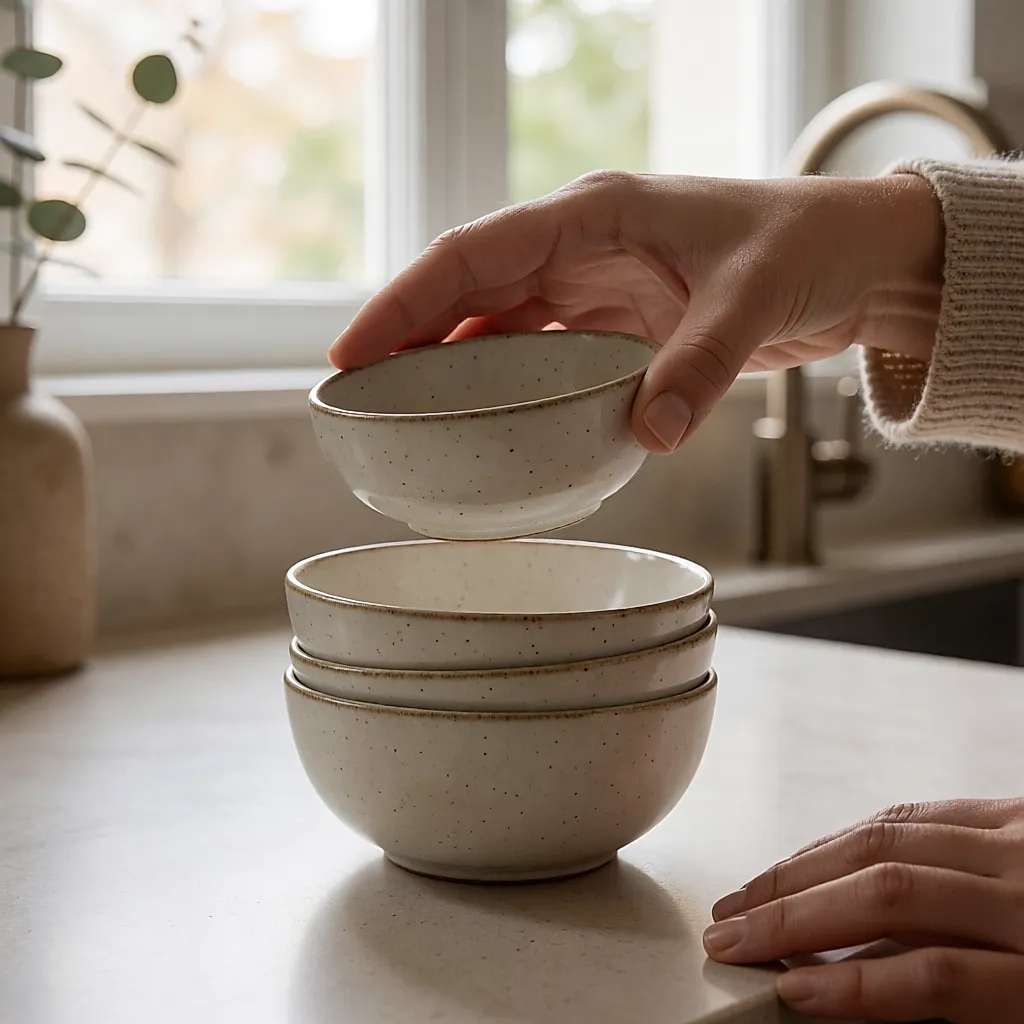
What we do know is that sleep and bowel habits depend on many factors: work patterns, light, diet, physical activity, stress. No single move explains everything. What we don't yet know is the exact share of each anchor in your particular case — and that's fine, because that is precisely what the next two weeks will tell you.
Three firmly set anchors
The mid-afternoon coffee, first. It is the easiest anchor to spot: you roughly know how many cups you've had, and when. If you know you're sensitive to caffeine, it is the obvious candidate — and the experiment costs nothing. In practice, it is better to be cautious about caffeine late in the day, particularly if you are sensitive to it.

Next, screens in bed. Caution still applies: we cannot separate what comes from the light from what comes from the content — a gripping box set doesn't help any more than a news feed. Third anchor: the late dinner. If you are sensitive to meals right before bed, it is an obvious candidate; on weight, though, nothing serious can be claimed, and it would be dishonest to turn it into a rule.
One marker, one thing removed
Pick the anchor that feels most solid to you, not all three. Two weeks is our editorial yardstick, not a rule: it is short — long enough to observe, too short to upend a life. During that period, touch nothing else: not your wake-up time, not your morning coffees, not your exercise. Otherwise it's back to square one, in the fog.

What do you note? Three things, on the fly, with no app and no spreadsheet. How you fall asleep (quickly, slowly, somewhere in between), how many times you wake in the night, and your energy in the first hours of the morning. On the digestion side, frequency and comfort are enough. If nothing has shifted, you can stop the experiment without drawing a definitive conclusion: you can put the habit back without guilt, or keep it in mind for later.
When it is no longer a habit
A habit can be removed and observed. A symptom, however, settles in, worsens, or comes with telltale signs. In practice, sleep difficulties that keep returning, take hold and weigh on your day deserve to be taken seriously — without diagnosing yourself.

On the bowel side, same logic. A recent and unusual change, pain, blood in your stools, unexplained weight loss, a fever, or an alternating pattern of diarrhoea and constipation that takes hold: seek medical advice, rather than cobbling together yet another routine. The same goes for fatigue that doesn't lift despite decent nights' sleep, or for palpitations.
What falls outside the realm of small self-experiments: persistent pain, blood in your stools, unexplained weight loss, fever, sleep problems that have been established for several months alongside daytime fatigue, palpitations. In these cases you don't remove a habit: you see a doctor. And you never stop a prescribed treatment on your own initiative.
One yardstick remains, just one: one habit at a time, two weeks as a guide, three indicators. That is little, and it is already far more than yet another November list. What this method does not replace is the advice of a healthcare professional when a symptom drags on or worries you — and it doesn't replace the pleasure of a 4pm coffee either, if it keeps you company more than it costs you.
Sources
- World Health Organization (WHO), general recommendations on sleep and health, consulted on 6 November 2026.
- National Institute for Health and Care Excellence (NICE), general guidance on the management of sleep problems, consulted on 6 November 2026.
- NHS, general advice on bowel habits and diet, consulted on 6 November 2026.
Food supplements do not replace a varied, balanced diet and a healthy lifestyle.



Comments
Your opinion matters: rate the article, react and reply to comments.
Comments are moderated; AI-assisted comments are flagged. Text emoticons (8-), :-), <3…) are automatically shown as images.