

You come back from a weekend away and open your camera roll. Two hundred shots later, there are three you really like. For me, it is almost always the same — and it is not about expensive kit. Taking better photos comes down mainly to five habits, plus a few moves that also look after your neck, eyes and sleep, because an hour hunched over a screen always catches up with you somewhere.
Light comes before any setting
Before diving into menus, ask yourself where the light is coming from. Straight on and too strong, it blows out your image; too weak, the sensor compensates by raising sensitivity and noise creeps into the shadows. HDR and the exposure slider can rescue plenty of situations, true, but never a backlit scene at 2pm in full sun!
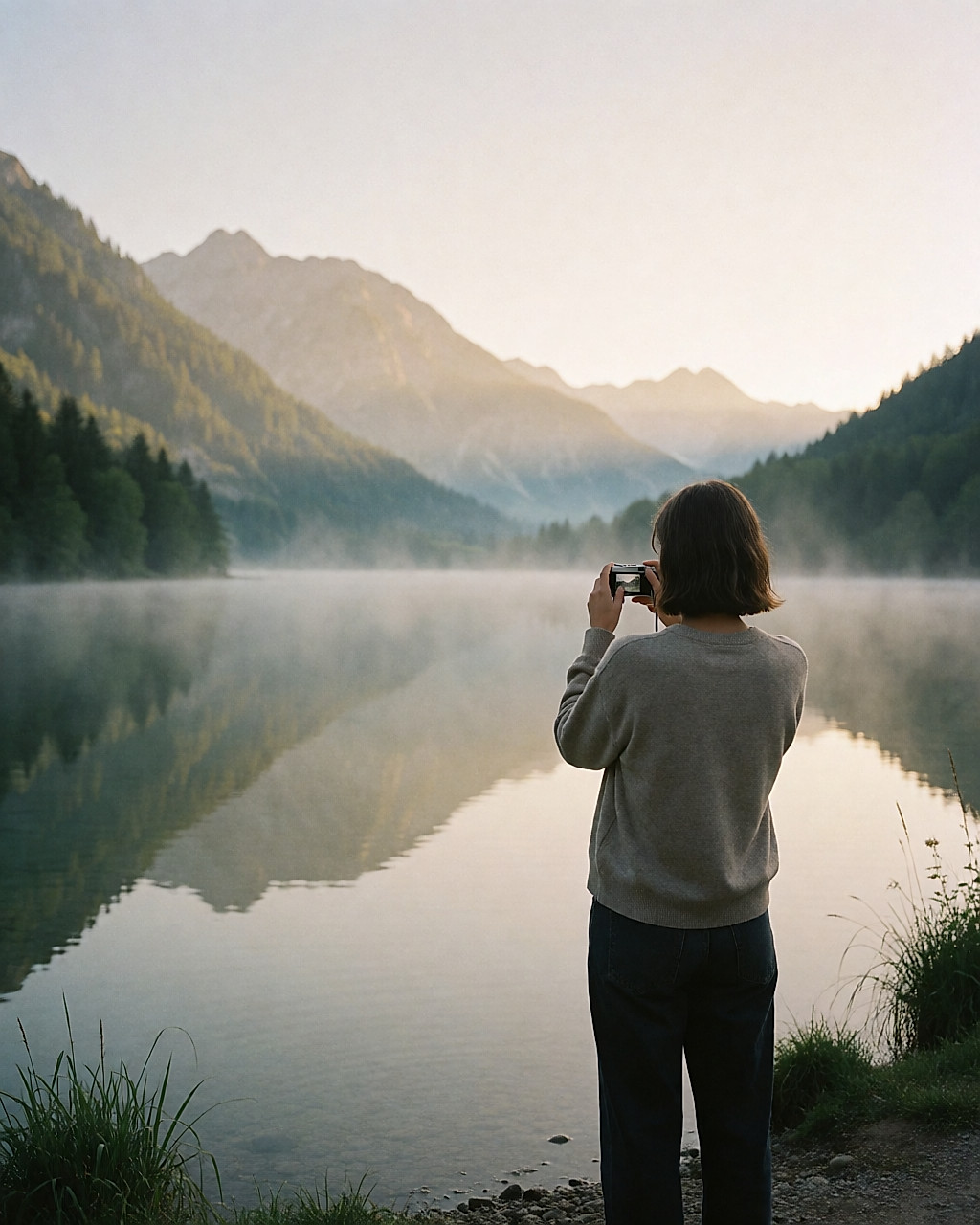
The move that changes everything: put yourself with your back to the window, not your subject. It sounds obvious, yet nine times out of ten we forget when we are framing quickly. And when you can, shoot in the morning — the light is softer, lower, and images are easier to get right without overthinking.
Think about shutter speed, not just your subject
Shutter speed is how long the sensor drinks in light. Short, it freezes someone running; long, it turns the end of an evening into blur — rarely the blur you hoped for. Night modes deliberately lengthen it: two hands on the phone, elbows tucked into your body, or rest it on something. An entry-level tripod will always be steadier than a shaky hand — no need to invest in pro gear for that.
And while we are here, a detail that has nothing to do with photography but matters: raise the screen to eye level instead of looking down. Your neck will thank you, especially if you are shooting for an hour.

Aperture is a matter of intention
On a camera, aperture is written f/1.8, f/4, f/8. The smaller the number, the smaller the sharp area: perfect for a portrait that lifts a face out, less useful for a landscape you want sharp from front to back. The rule of thumb is simple: wide aperture for people, f/8 or f/11 for big spaces. After that, it is up to you what you want to say.
On a phone, portrait mode creates that blur by calculation. The result is often impressive, but check the edges of hair and glasses: that is where the trick shows immediately. Nothing dramatic — you mainly see it when you zoom in. In reality, for a memory shared on social media, no one will notice.

Move beyond full auto, but not on principle
Auto is not the enemy: on a recent smartphone it often does very well, and frankly, for a photo of a meal or a cat, it is more than enough. Switch to manual or Pro mode when the scene resists — a moving subject, mixed lighting, backlight. There you get focus and exposure lock, exposure compensation, and sometimes a raw file that is more flexible to edit.
RAW, however, is heavy — sometimes 25MB per image instead of 3 or 4MB. Before heading away for the weekend, clear your card and transfer anything lingering. Nothing more frustrating than seeing 'storage full' at sunset!

White balance, and screen balance
Under a ceiling light, the photo turns yellow; in shade, it leans blue. Presets — sunny, cloudy, fluorescent — fix this in one go, and a small warm note often flatters a portrait. It is the kind of detail you notice afterwards, wondering why the skin tone looks so odd.
The other white balance to watch is your phone's in the evening. According to France's ANSES, the blue light from screens is not recognised as damaging the retina, but it can shift the sleep-wake rhythm — which does not make it easier to fall asleep when you scroll in bed. There you go, that was the little wellbeing reminder for today.

Two times of day worth remembering: early morning and late afternoon, when the light is low and soft. In backlight, a little flash or a reflector opens up the face. And clean your lens with a microfibre cloth — one fingerprint is enough to veil an image, and a washable square does the job for years where disposable wipes pile up. If headaches or blurred vision persist, that is one for a healthcare professional, not a blog.
Budget
A tripod or mini tripod costs between £15 and £60 on the high street or online; beyond £100, you are into specialist kit. A reflector or small LED costs £20 to £80. For software, editing ranges from a free version to around £60 a year by subscription. An online photo workshop often costs between £0 and £100, a one-day course between £100 and £300 with a photographer or at a school. In-store sensor cleaning is usually charged at between £40 and £90. What changes the bill: the material (aluminium, carbon fibre, bamboo), the warranty, where you buy and whether it is second-hand. For a second-hand camera body, if a repairability score is shown, look at it; and if that body falls into the eligible categories, a repair bonus may apply at a certified repairer.
In the end, remember this above all: the five habits matter far more than the price of your camera. Start with light and stability, and the rest will follow naturally — and your two hundred shots might become fifteen keepers instead of three!
Sources
- ANSES — opinion on the health effects of blue light exposure, 2019.
- French Ministry for Ecological Transition — repairability index for electrical and electronic equipment.
- Service-public.fr — repair bonus for electrical and electronic appliances.


Comments
Your opinion matters: rate the article, react and reply to comments.
Comments are moderated; AI-assisted comments are flagged. Text emoticons (8-), :-), <3…) are automatically shown as images.