
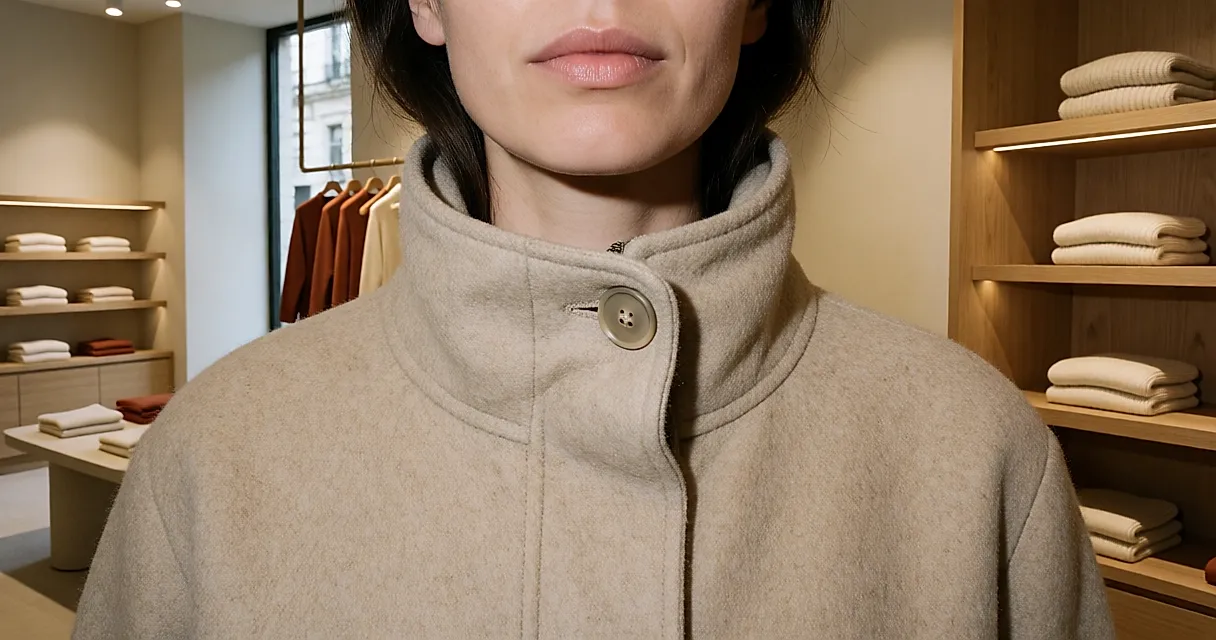
In the fitting room you judge a coat open; on the street you wear it closed for five months. Between the two there is a collar that flops against your neck, a button you can't feel through a glove, and an elbow crease that holds the memory of the day. Trying it on under white light and doing the morning commute are not looking at the same details.
Colour, length, how the shoulder sits: all of it matters, obviously. But a winter coat is first an object you handle — you fasten it, unfasten it to reach your phone, turn the collar up against the wind. Three everyday gestures, three criteria, and a fitting room that finally earns its keep.
The collar is the detail you only see when it's up
Raise it, then. A good collar stands up by itself when you turn it up, without a hand holding it, and it doesn't collapse as soon as you turn your head. If it slumps, it usually lacks structure: lining too soft, no interlining. If it digs into the back of your neck, it's the opposite — too stiff, too high, raw wool against skin.

The five-second check: turn the collar up in front of the mirror, tilt your head left, then right, and see whether it has stayed in place. Is it holding only because your hand is supporting it? That is how you tell a one-season coat from a five-winter coat. Add a scarf on top, because that is where it gets complicated: an already bulky collar plus a thick scarf and you have the neck of an astronaut. The styles that handle this duo best have a tab or a holding button — the collar stays put and the scarf slips underneath. Run your hand inside, too: a viscose or cotton lining lets a collar breathe when you keep it up for an hour.
The fastening, tested with gloves on
This is where the fitting room lies most. A button is easy to manage bare-handed, indoors, in the warm. Go outside, put on a pair of stiff leather gloves and do it again.
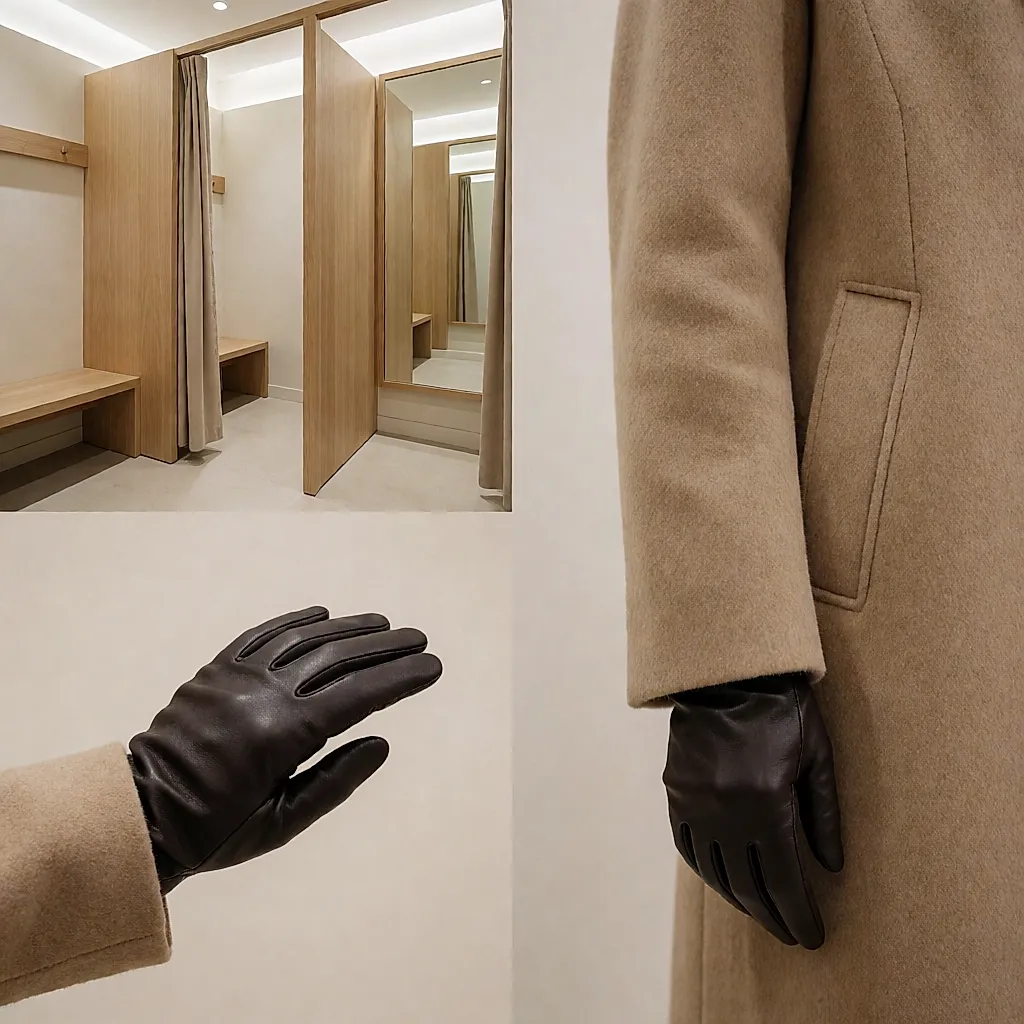
What matters: the size of the buttons first — below a certain diameter, you're into embroidery territory. Then the buttonhole, which should let the button pass without forcing it or gaping. Then the top button, which decides whether you can fasten the coat up to your chin when the wind gets involved. Look at zips and poppers too: a two-way zip can be zipped up from the bottom far more easily than you'd think when a wide skirt or trousers are in the way.
And here's a question: how long would you be willing to stand in a hallway hunting for the first button? In practice, a coat that takes a minute to fasten often ends up open in the street. A shame, since that wasn't the plan.
The fabric, judged at the elbow crease
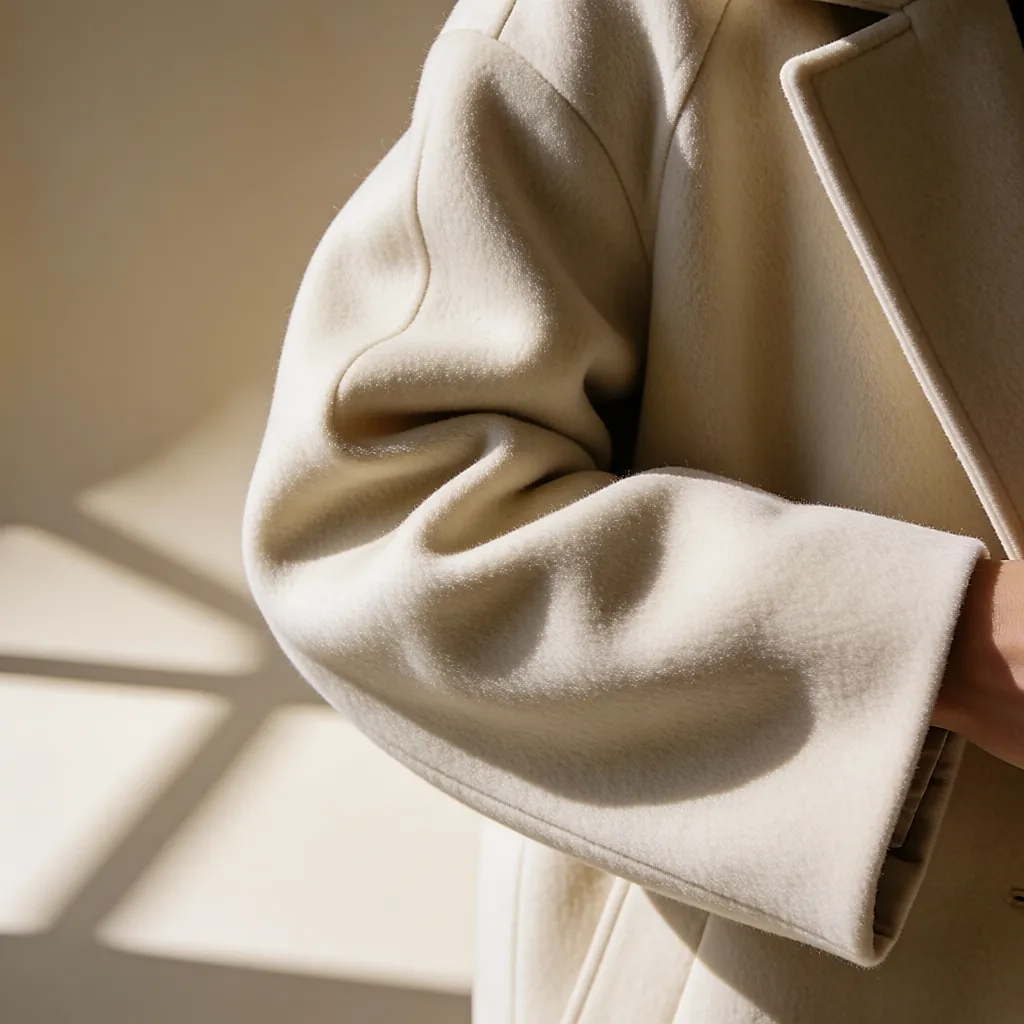
We feel the shoulder in the fitting room; it's the elbow that does the work. Bend your arm, let the fabric crease, straighten your arm, look. A dense wool marks sharply; a soft wool cloth, merino or a cotton blend recovers its place better. This isn't a hierarchy of quality, it's about the life you lead: in an office all day, an elbow crease is no tragedy; if you're rushing from one appointment to the next, you need a fabric that knows how to relax.
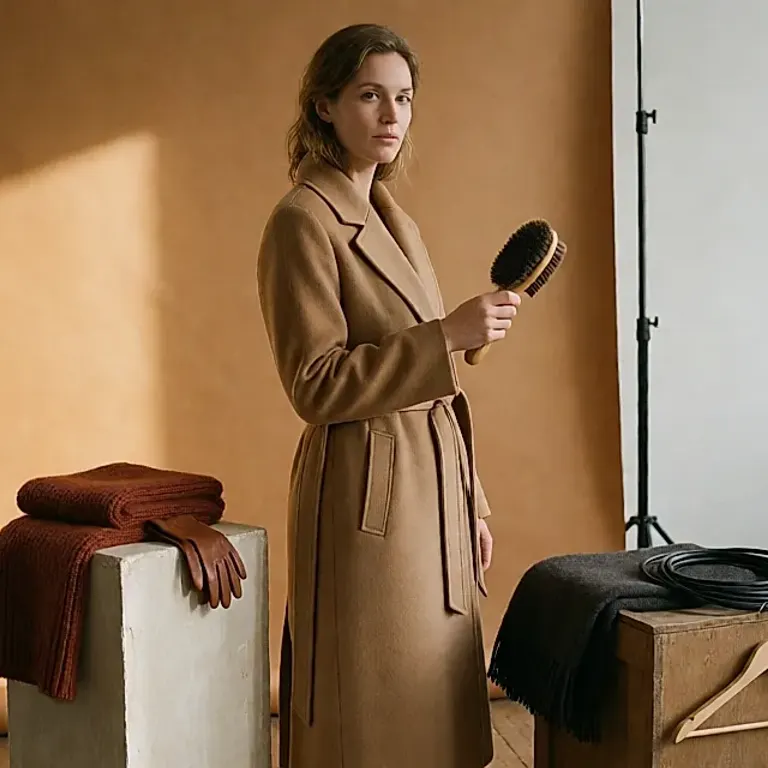
Read the label without being impressed by 'wool' printed in large letters. Look at the percentage, the synthetic content, the origin when it's given. A share of polyamide is common in city coats to hold the shape, but check what makes up the majority: wool holds warmth better, brushes clean and can be repaired. And the habit worth every purchase — a brushed coat, aired overnight on a hanger, worn for several winters, remains the most understated piece in the wardrobe.
Three things to do in the fitting room, before you even look at the price: turn the collar up and turn your head; mime doing up the buttons with your hands in fists (that's the glove effect); bend your arm and hold the pose for a few seconds to see whether the fabric keeps the mark.
Budget
Coats you can wear fastened fall into three price groups. Under £150 — high street, fashion chains — you'll find decent cuts, but often a soft collar and a majority of synthetic fibre: that's where you should spend the most time testing the construction rather than dithering over colour.
Between £180 and £350, you're into the middle market: majority wool, more generous buttons, a proper lining, sometimes alterations included. Above £400, you're mainly paying for the density of the wool cloth, European manufacturing and a cut that ages better.
In charity and vintage shops, expect £20 to £80 for a wool coat, plus a visit to the seamstress or tailor — often £15 to £30 for a hem, a few pounds for buttons sewn back on. It's often the best-value calculation of the season, provided you're willing to put in the trying-on session.
The good buy isn't the prettiest coat in the fitting room. It's the one you pull on without sighing, that closes with gloved hands, whose collar holds when it needs to and whose fabric remembers you without resentment. You may already have one in the wardrobe: a brush and two buttons are sometimes enough to give it back its five months.

Comments
Your opinion matters: rate the article, react and reply to comments.
Comments are moderated; AI-assisted comments are flagged. Text emoticons (8-), :-), <3…) are automatically shown as images.