
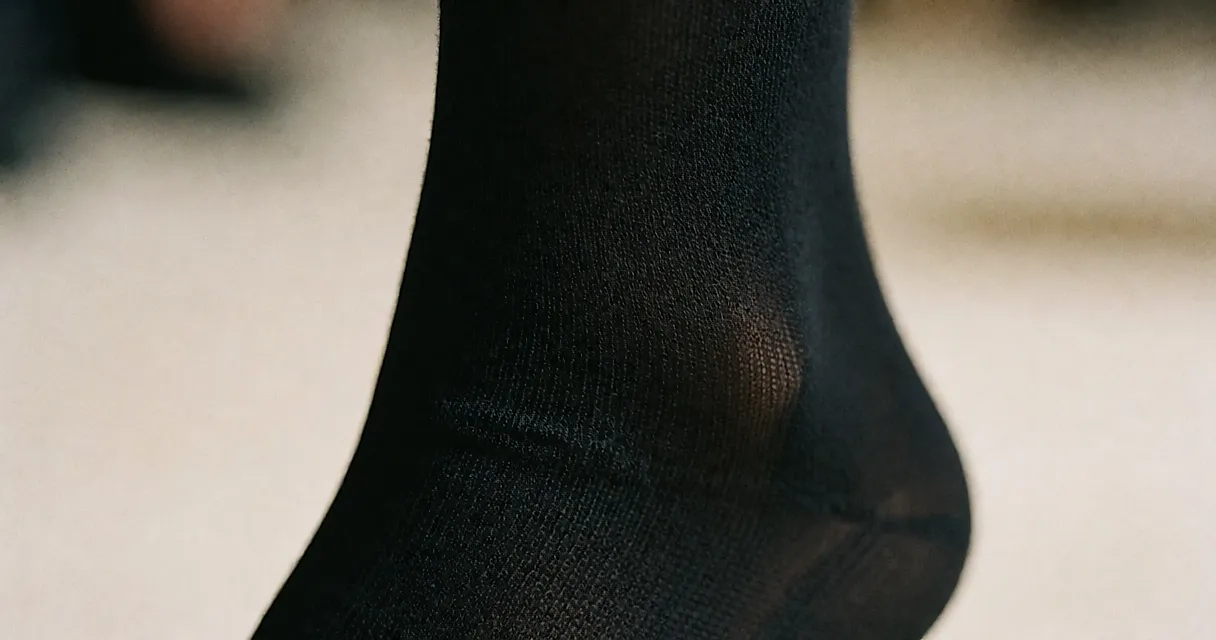
Two pairs of 20-denier tights side by side on the bed: the same claim on the packet, the same promised sheerness, and yet one will make it through the evening intact while the other shows a ladder at the heel. It is not luck, and it is not a personal curse. The number printed on the label tells only part of the story, and three details really decide whether a pair survives — details you can spot on the shelf without a magnifying glass.
Denier measures the yarn, not the strength
Denier is a fineness guide: it describes the yarn used, and therefore how sheer or opaque the tights are. The lower the number, the finer the yarn and the more the leg shows through; the higher it goes, the more the fabric covers. That is honest textile information, but on its own it says nothing about strength.
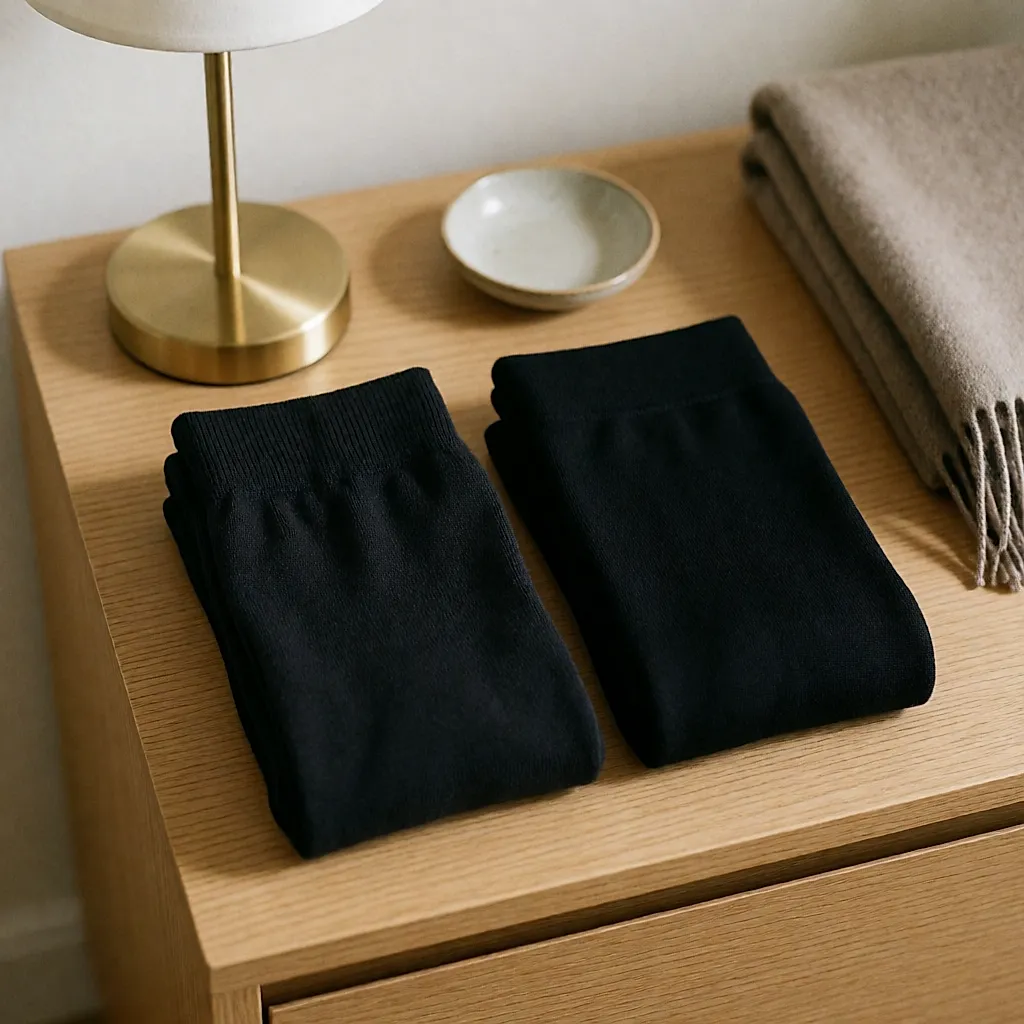
Two pairs labelled 20 denier can come from completely different constructions: one with a tight knit and a neatly finished toe, the other with a loose stitch and a rushed foot. That is why a sheer pair can outlast a thick one. And why you can find 40-denier tights that ladder on the first stair. Denier sets the look; it makes no promises about durability.
Look at the knit in daylight
Take the packet, open it a little, hold the tights in front of you and stretch them gently between your fingertips in daylight. A tight knit stays dense and even, with no holes that widen at the slightest pull. A loose knit opens into diamonds and lets light through in large patches — a sign that it will give sooner when caught by a nail or a grain of sand.
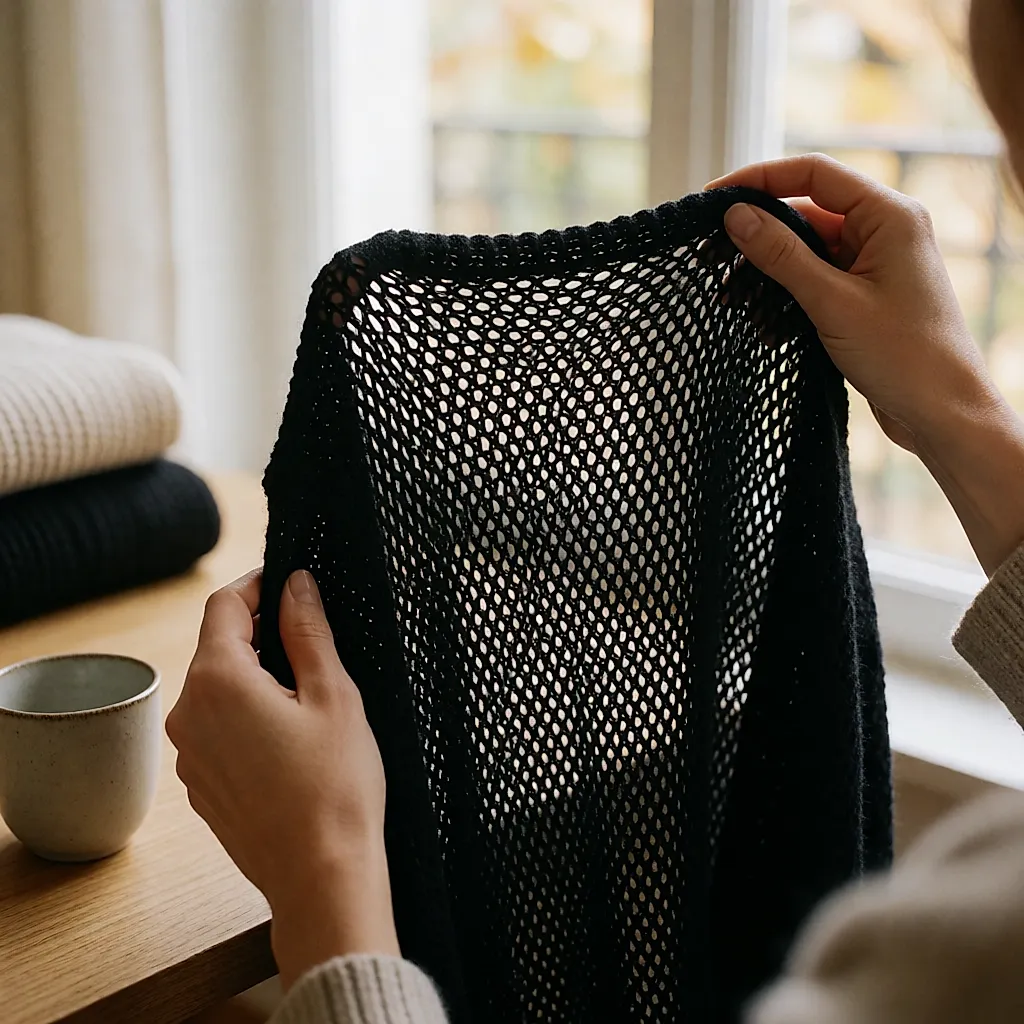
The same test works for opacity: a finely knitted pair can look more covering than a thicker pair whose knit gapes. It is a 20-second check. And honestly, it is worth doing in the shop, between trying things on, rather than after three washes.
The toe and waistband: the two areas we overlook
The toe is the end of the foot — the most heavily used area, the one that carries your weight, rubs inside shoes and gives way first. Check whether it is reinforced and how far up the reinforcement goes: a discreet reinforcement stops before the toes and hides in a sandal; a wide one protects more but shows. That is about use, not quality.
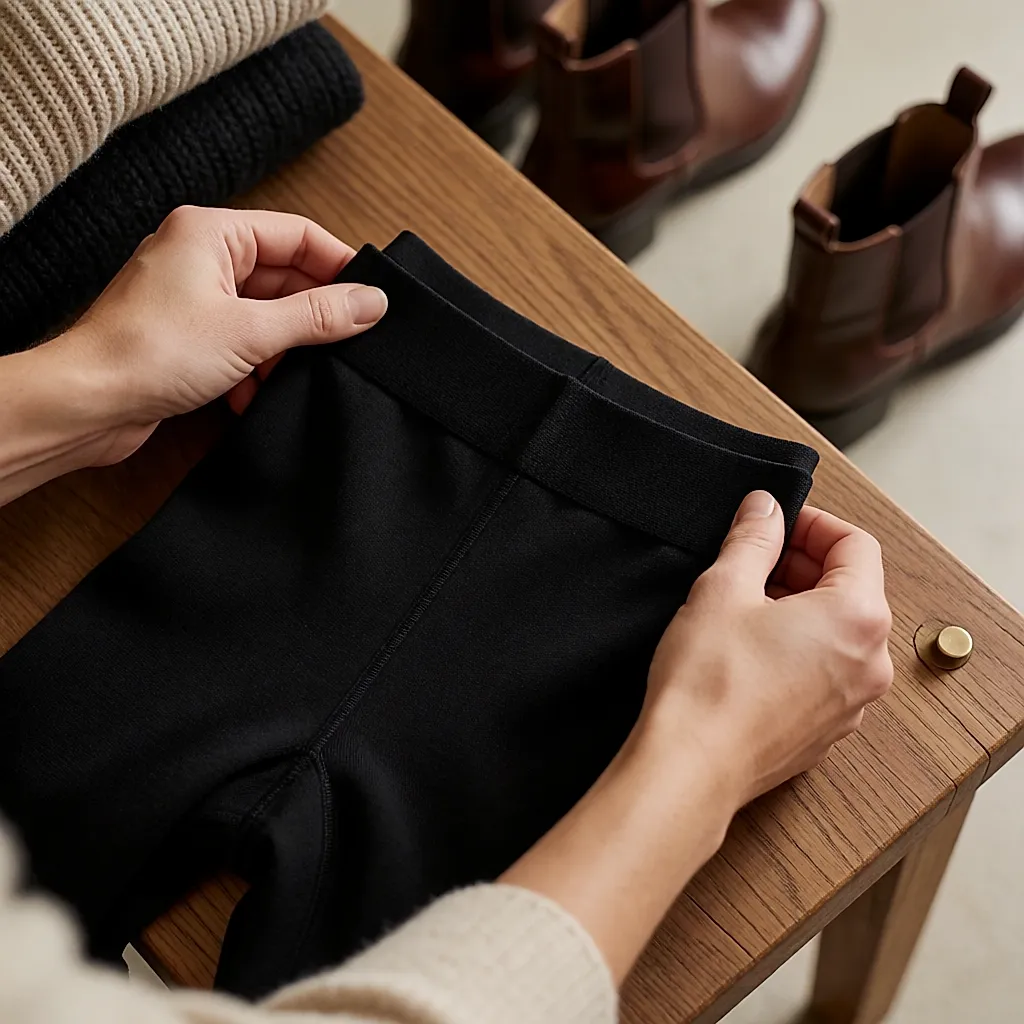
The waistband comes next. Stretch it between your hands: if it rolls, if the elastic is thin or the seams pull, you will spend the day hitching it up. A wider, flatter waistband holds without marking; it is the detail that decides whether tights are clothing or a minor ordeal.
The three things to check before you buy — stretch the knit to judge its density, look for a reinforced toe, and test how supple the waistband is. And when washing: by hand in a mesh bag, in cold water, without fabric conditioner, dry flat. This is not fussiness: careful washing can help a pair last longer.

What to pay
Prices vary enormously for what looks like the same promise on paper — expect roughly £4 to £10 a pair in supermarkets or multipacks, £12 to £25 in a lingerie chain or hosiery specialist, and £25 to £50 and up at premium labels. What changes the price: how tightly the knit is made, the work in the waistband, whether there is a well-finished reinforcement, the foot size, and the colour (nude shades take more nuanced dye work).
Where to find them? Supermarkets for emergency pairs you accept you may sacrifice, lingerie chains for the middle ground, specialist brands for styles you keep for several winters. And the haberdashery or repair service: a ladder repair or small mend often costs less than a new pair and extends the life of a favourite.
Choose the right pair for your day
If your everyday life is the commute, the office, stairs and plenty of walking, put the budget into a tight knit and a reinforced toe, even if you have to give up total sheerness: between two pairs of tights, the one you are not hoisting up every ten minutes wins. For a dinner or an occasion, sheerness becomes a legitimate pleasure again — simply accept a more fragile pair and keep a spare in your bag.
Tight budget: a multipack of 10-denier tights from a supermarket, saved for short days. Mid-range: a pair at £12 to £25, with a firm knit, reinforced toe and wide waistband — the real everyday workhorse. If the budget stretches: a premium pair treated as a wardrobe piece, hand-washed, that will see you through several seasons. And remember: the pair that lasts is not the thickest one — it is the one you looked at for two minutes before you reach the till.
Comments
Your opinion matters: rate the article, react and reply to comments.
Comments are moderated; AI-assisted comments are flagged. Text emoticons (8-), :-), <3…) are automatically shown as images.