
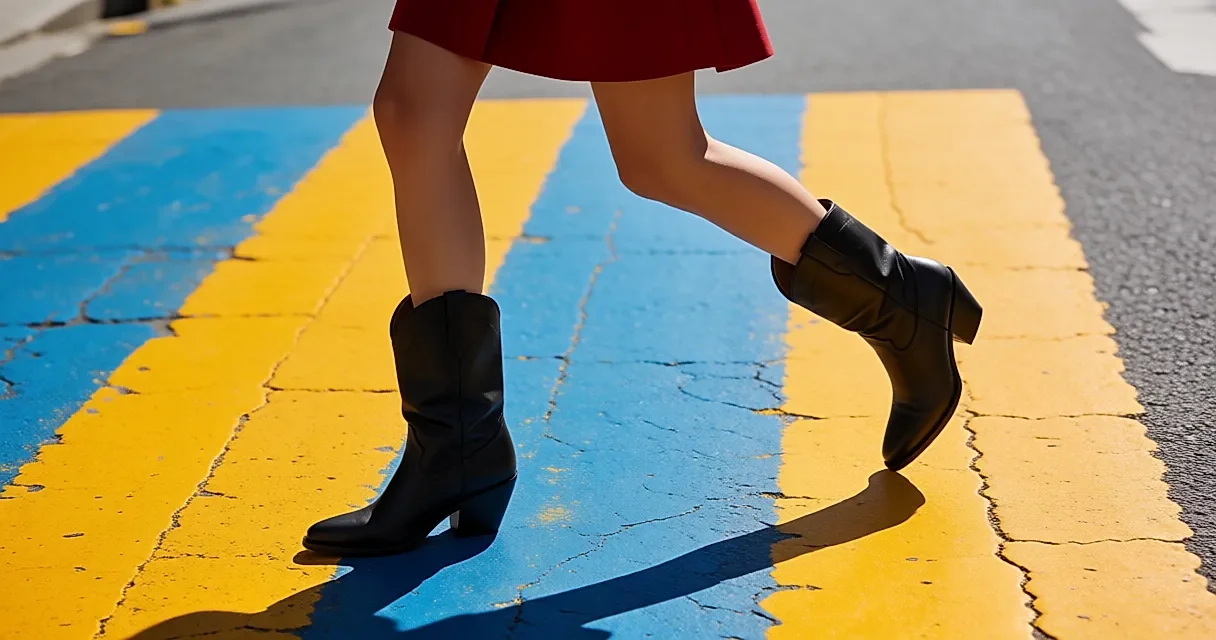
The heel of a western boot is not planted in the middle of the sole: it sits further back, cut at a slant towards the front, and it is the first part to hit the ground. That detail was originally designed to keep the foot steady in a stirrup, and you feel it with every step on Tarmac. You love the look; you are less keen on that first step down from the kerb, when the heel suddenly decides to show off.
What the heel shape does to your stride
A western heel is a wedge: higher at the back, sloping forward and slipping under the arch of the foot. On a horse, the idea is clever — it catches the stirrup and stops the foot sliding. On a pavement, the same shape behaves differently. The contact patch on the ground shrinks to a narrow strip set far back: the heel strikes firmly, then the foot rolls a long way forward.
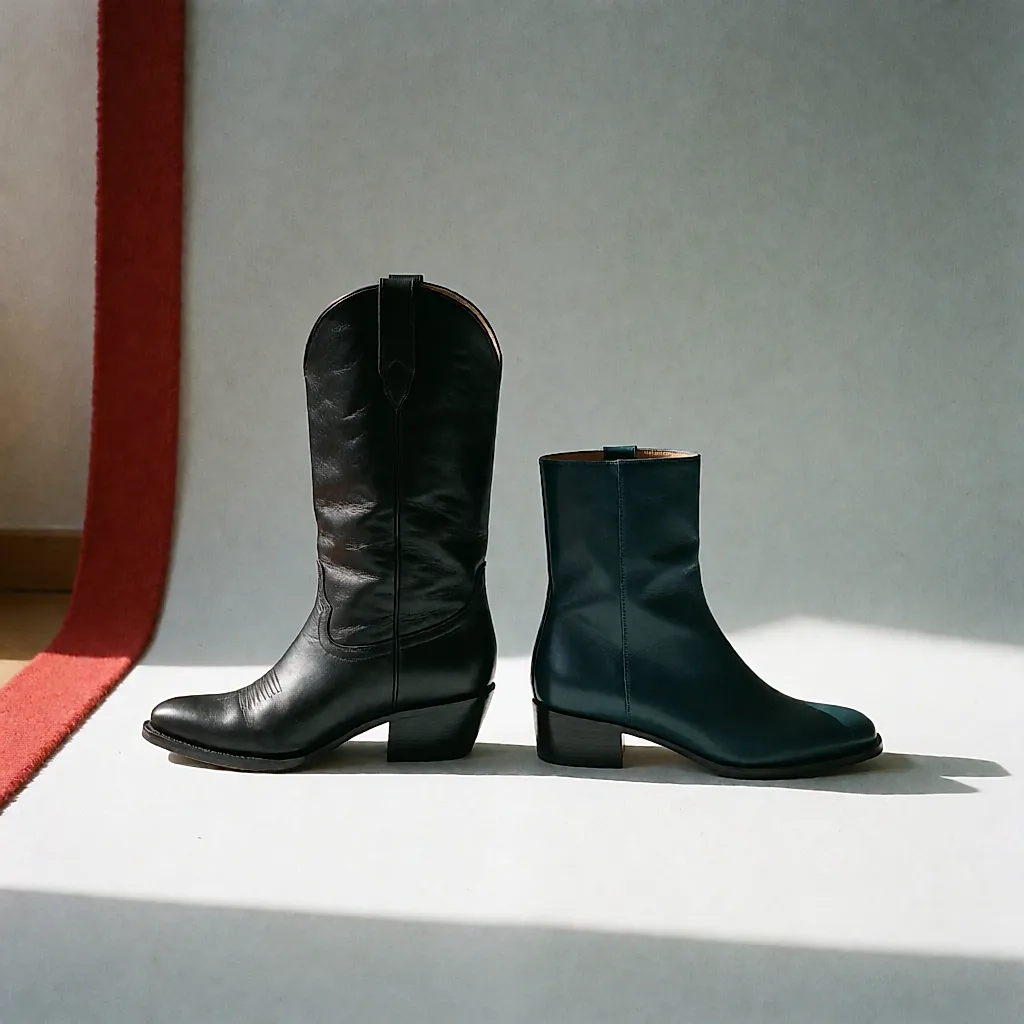
The result is that you do not walk as you would in a square-heeled ankle boot. Your stride shortens, the sound changes, and your calves find new work as soon as there is an incline. Is that a deal-breaker? No — provided you do not buy an 8 cm heel to cover six kilometres a day. A stirrup heel is a riding heel, not a running heel: the higher it goes, the more the pair should be kept for days spent sitting down and short journeys.
What really causes trouble on pavement
The sole is often the real weak point. Many pairs, including some under £150, come with a smooth leather sole: very chic, very slippery on the tiled floor of a cafe. The fix is simple and inexpensive — have an anti-slip half-sole fitted by a cobbler. It is a routine alteration, it also protects the original sole, and it makes the boot noticeably safer on wet pavement.
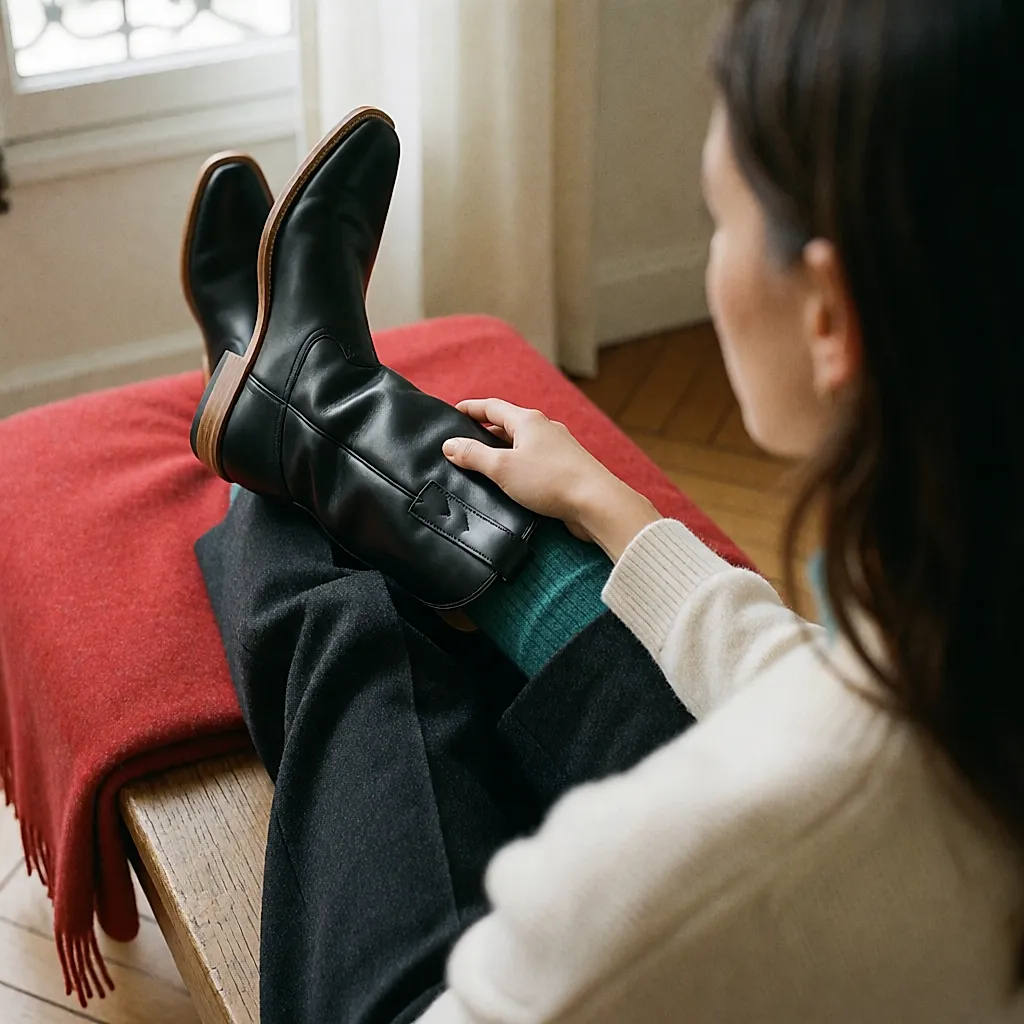
Then the shaft deserves an honest look. A western boot comes up high, often above the ankle, and a stiff shaft at the first try-on will not magically soften. If you have a wide calf or a high instep, try plenty of pairs before you commit: some run wide, others grip like a vice. And weight? A boot that is too heavy ends up at the back of the wardrobe, whatever its charm.
Wearing them with jeans or a long skirt
This is where the boot changes roles. With straight or slightly flared jeans, it slips underneath and barely peeks out: the look stays city-ready, and you forget the rodeo. With a long skirt, the heel does the work — it shows, announces itself and lengthens the silhouette. A cognac leather pair with raw denim, or black with a wool midi skirt that hangs well, and the full country look disappears.
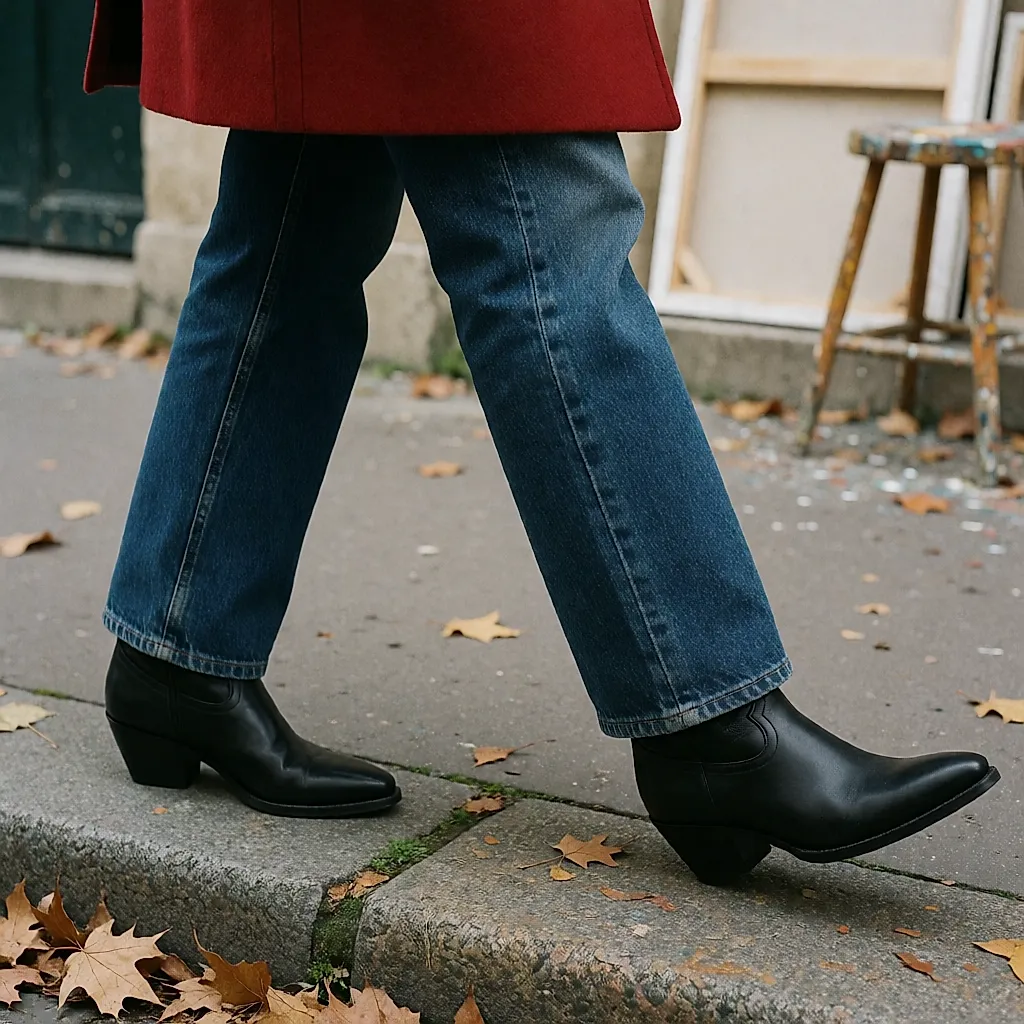
How do you avoid the fancy-dress effect? By not piling on the signals. No big buckle belt, no fringed shirt, no hat: the boot alone tells the story. Treat it like any other statement piece — a clean coat, a simple jumper, a material that works with the leather. And check that the shaft height does not cut your leg at the wrong point: under jeans it should disappear; under a skirt it should stop cleanly.
What to check in the fitting room before you pay
Three things, in this order. The sole: flexible under your thumb, stitched rather than simply glued if the budget allows, and thick enough to absorb the shock of the heel on concrete. The shaft: press the shaft at the calf and bend the boot — if it does not move a millimetre, you will pay for it in blisters. Look at the pull tabs too: stitched ones do a job; decorative ones will give up.
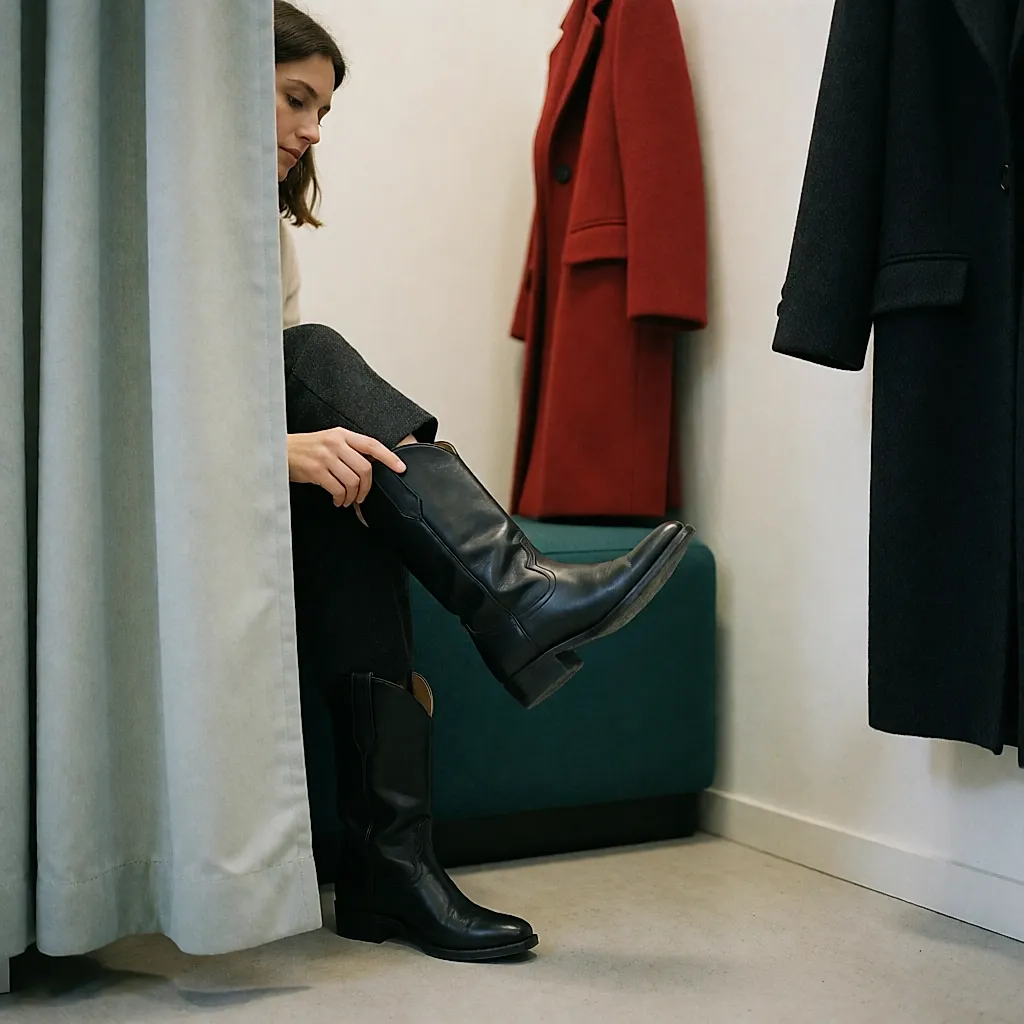
Then height. In practice, city-focused pairs often come in around 4 to 5 cm: enough to give the silhouette some curve, little enough to walk to the station. Try them at the end of the day, with the sock you will actually wear — and take ten steps on the shop's tiled floor, not three.
The hallway test: take ten steps, then listen. If the heel clacks like a pair of flip-flops on tiles, the sole is too hard for everyday wear. A crisp, flat sound is a good sign; a clatter like clogs is a warning that complaints are on their way.
How much to spend, and what they are for
As a rough guide, expect around £40 to £90 for a decent second-hand pair from a charity shop or an online resale site — second-hand leather is often already softened, which is no bad thing. New, a full-grain leather boot often sits between £120 and £250 depending on the brand and country of manufacture; above £300 you are into proper bootmaker territory, with a more precise fit and a sole that can be repaired. Add £25 to £50 at the cobbler for the half-sole and maintenance.
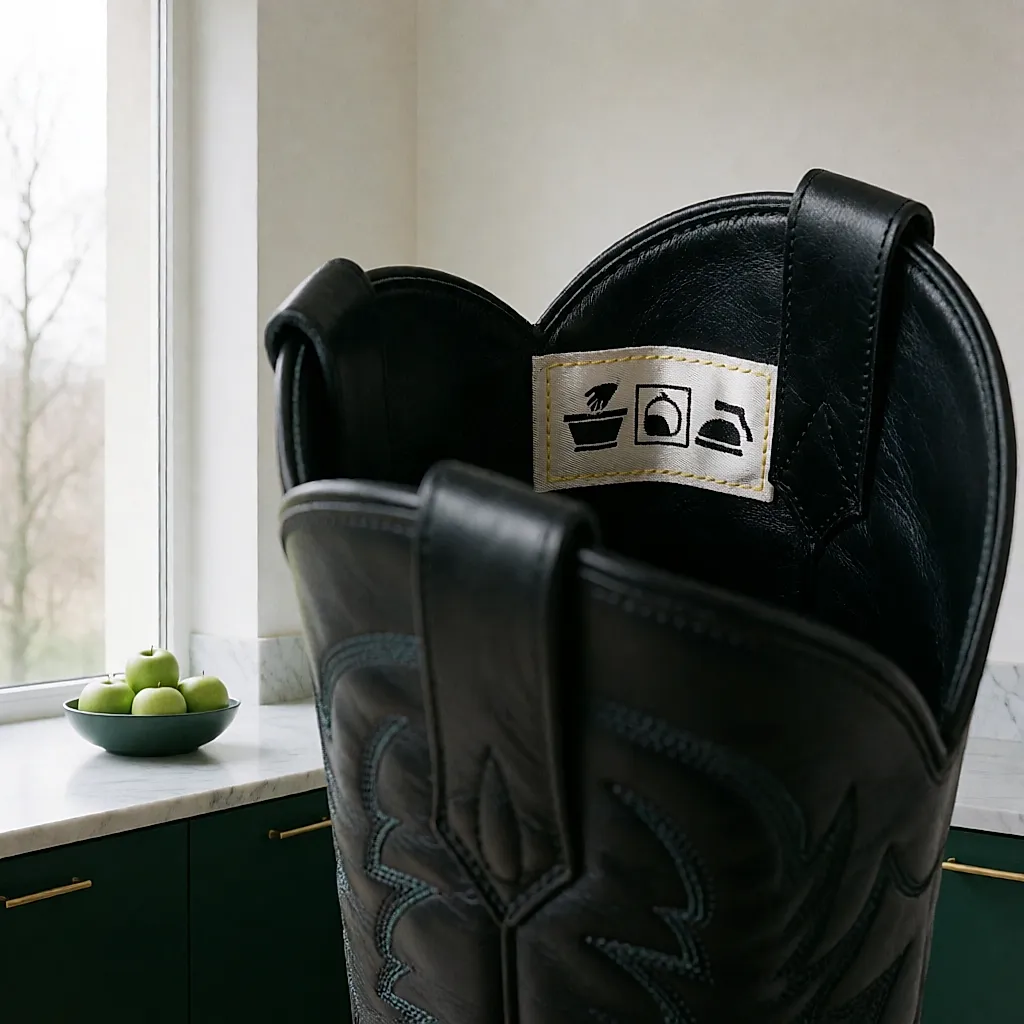
When it comes to material, keep it simple: leather, ideally vegetable-tanned, a leather lining rather than textile, and a sole that can be replaced. Check the share of synthetic materials on the label: that share can affect how well the boot lasts. And the habit that beats any purchase: look after them, have them repaired, keep them.
Then the final choice. For a first pair, aim for a 4 to 5 cm heel, a soft shaft and plain leather: you will wear them with jeans, a long skirt and a coat, and forget they came from another continent. If money is tight, second-hand does the job very well. And if you walk a lot, keep the tall, pointed version for Sundays — your heels will thank you.



Comments
Your opinion matters: rate the article, react and reply to comments.
Comments are moderated; AI-assisted comments are flagged. Text emoticons (8-), :-), <3…) are automatically shown as images.