
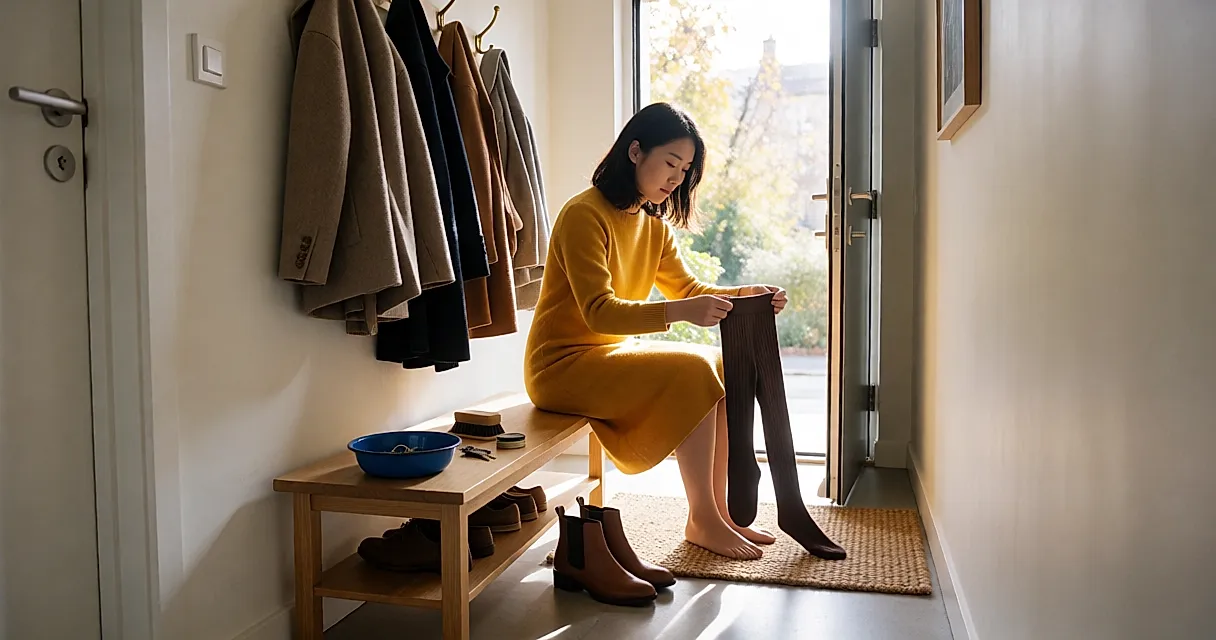
Tights don't wear out the way socks do. They rarely give way under the foot; they go almost always where you stretch them. The heel is the last thing to let go. The waistband is what fails without warning: one thread goes, a seam gapes, and the pair is ready for the bin before it has seen a single properly cold day. Though it's worth being clear about what you're asking of them — to last a full day, to cover your legs, or simply not to let you down in a meeting?
The weak spot isn't where you'd expect
You know the move: two hands, a good hard tug upwards, and the waistband takes it. It's the waistband that absorbs the daily tension, far more than the foot. A narrow band, an elastic that twists, a seam that prints through your jumper: all signs that it's working too hard. A flat waistband, wide enough, spreads the load instead of concentrating it on a single thread — the detail nobody looks at in the shop and everyone regrets all winter.
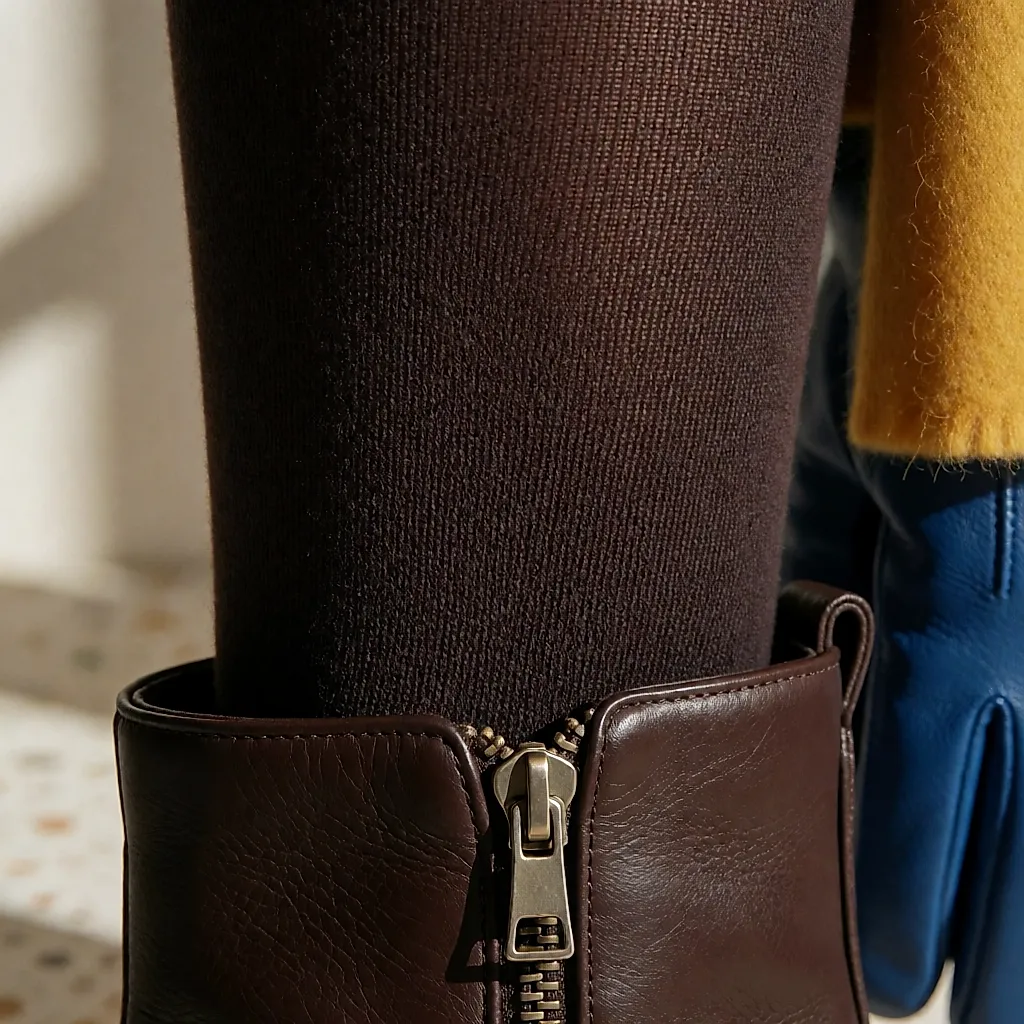
The coat plays its part too, and nobody asks much of it. A slippery lining, a zip yanked up in one movement, keys in the pocket, a bag rubbing against your hip: your tights put up with all of it without complaint, then give way quietly. On the footwear side it isn't the heel that does the damage, whatever the folklore says, but the top edge of the boot, a buckle, a zip, the Velcro you adjust ten times a day. Add the crotch seams, often the finest and the first to ladder: that's your actual front-runners.
Getting the size right matters more than you'd think
Tights that are too small don't hold better: they pull. You think you're buying support, but you're buying tension — at the hips, at the waistband, along the seams. And the thread doesn't know you were aiming for elegant; it only knows it's being stretched further than intended. Better to buy your size, or even one size up if you're between two, and accept that a well-chosen pair shouldn't be noticeable at all.
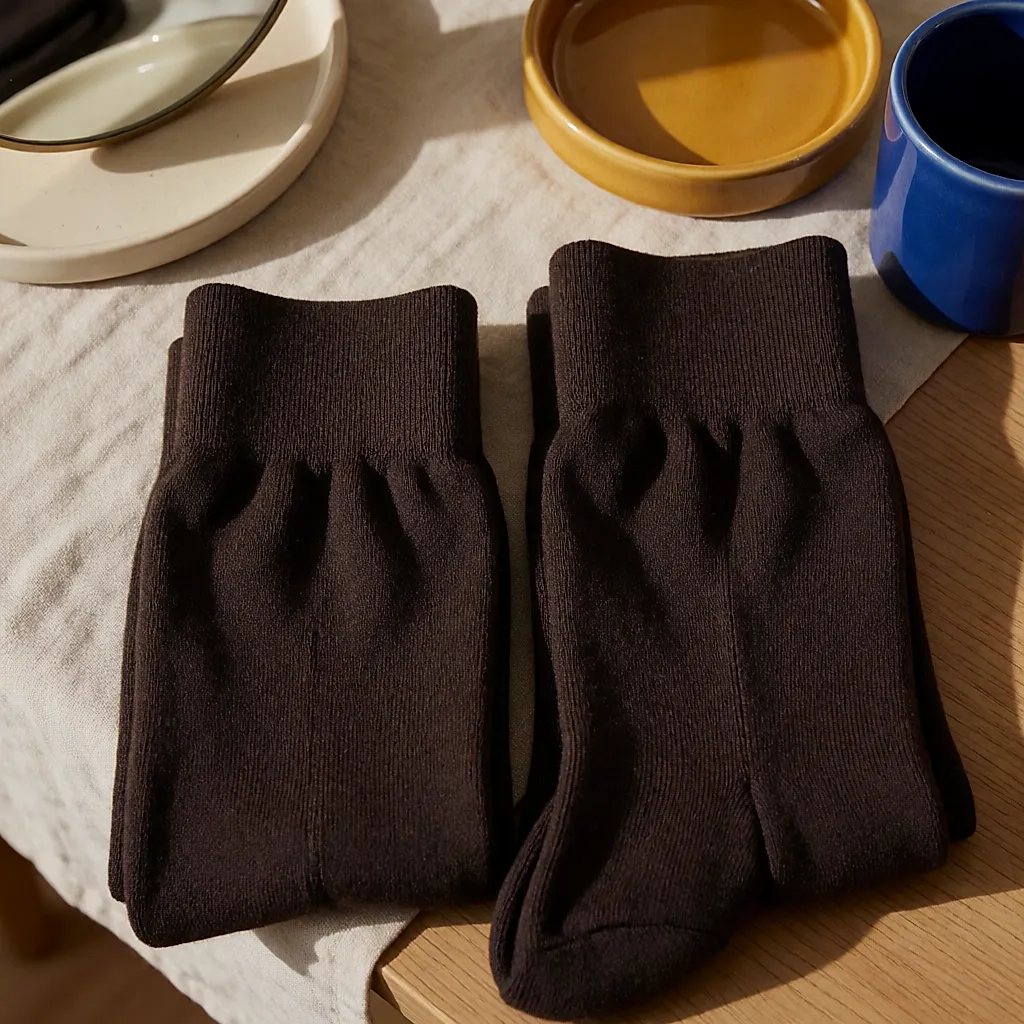
Body shape matters as much as the number on the pack. Tall, petite, defined hips or a narrow waist: brands don't cut to the same block, and some now print height and weight on the packet, which saves you the stretch between two pairs of the same size. If you have to choose, go for the pair that doesn't dig in at the waistband rather than the one that feels tightest. Nothing is ever gained by tightening further.
What to check before you buy
Denier tells you the density of the knit, not that it's indestructible. In practice, 40 denier works for in-between weather, 60 to 80 gives you an opaque leg for grey days, and beyond that you're into warm-tights territory, almost a stocking. For winter, a merino wool knit or a well-woven organic cotton holds up better than a shiny fabric bought blind — and check the synthetic fibre content on the label, without making a drama of it: it's usually what supplies the small percentage of stretch.
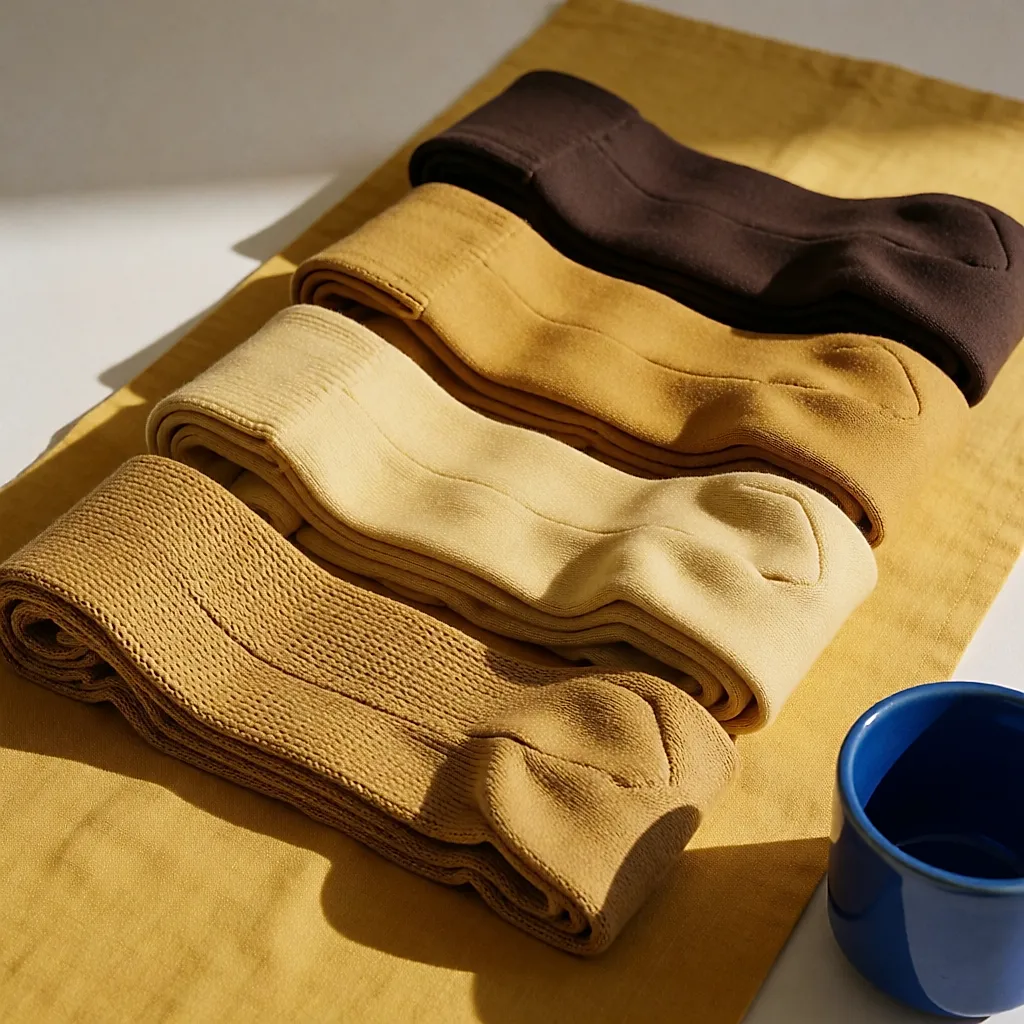
Next, look at the construction: flat seams, ideally invisible under a dress, a discreet reinforcement at the toe (where toenails do their worst), and a waistband that doesn't roll when you sit down. A plain, matte pair with a dense knit doesn't look any less dressed-up than a patterned one — it just lasts longer.
Three checks before you cut the label off: the waistband stays flat when you fold it over itself, the crotch seam doesn't gape when you give a gentle tug, and the foot doesn't distort when you put it on dry. Unsure about size? Go up one.
Two habits that make a pair last longer
The first is washing. A laundry bag — or a knotted pillowcase — protects your tights from the zips and buttons sharing the drum. Delicates cycle, inside out, low spin, and no fabric conditioner: in practice it softens the fibres and the pair ends up bagging at the waistband. Thirty degrees is plenty, and a gentle detergent does the rest.
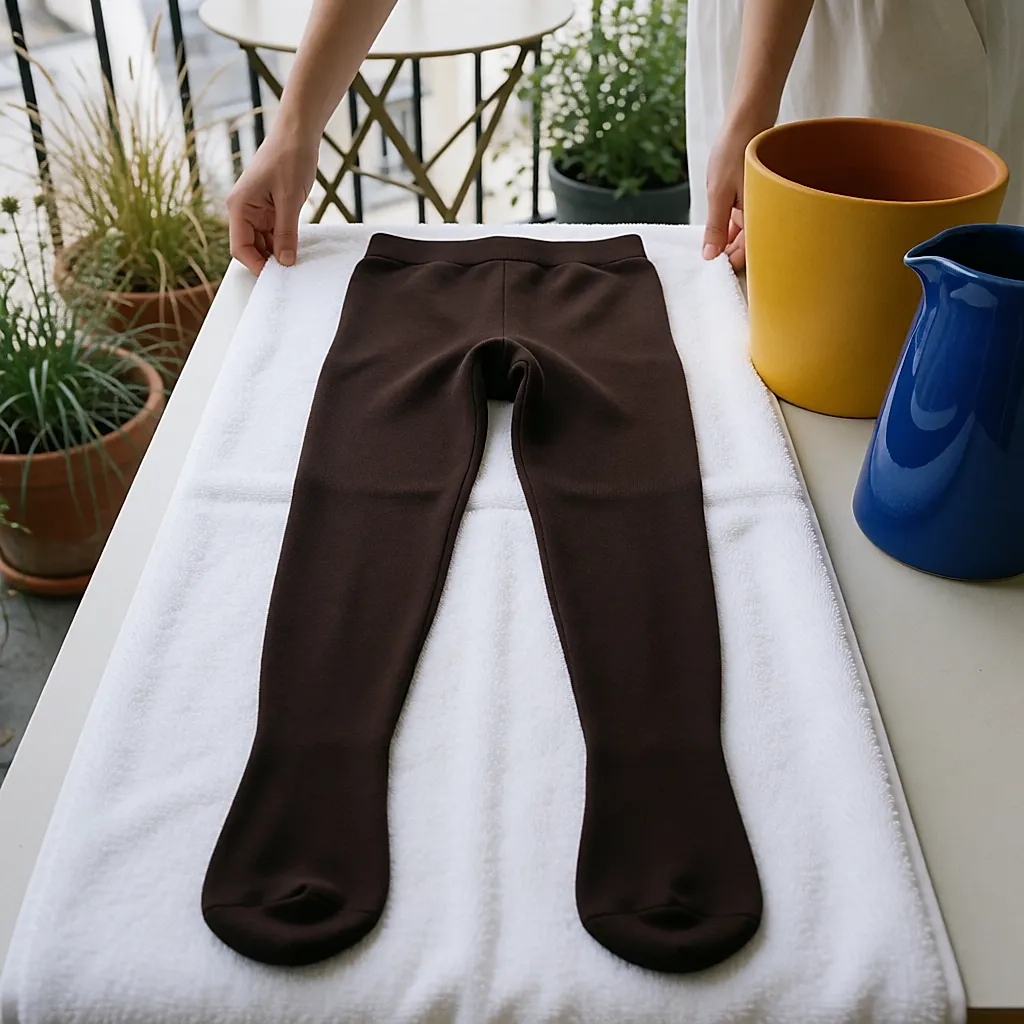
The second is drying. Never on the radiator, never hung by the waistband: the weight of the water stretches the very part that needs to hold its shape. Lay flat on a towel, out of direct sunlight. And if you have the space, rotate two or three pairs rather than one, letting each rest between wears — the knit recovers its shape, and you get weeks more out of them.
So there's the plan: a flat waistband, an honest size, a laundry bag, drying flat. Nothing life-changing — just enough to reach the end of winter with the pair you started with. And on the day a thread does escape anyway, remember it rarely comes from the heel — at least you'll know where to look.
What to pay
Expect to pay around £4 to £12 for a basic pair from a supermarket or online, £12 to £25 from a hosiery or lingerie brand, and £25 to £45 for merino wool or a more technical knit. The price depends on the fibre, the density (denier), the length, the finishing (seam-free, reinforced) and where you buy it; a very fine pair will also need replacing more often. You'll find them in supermarkets, department stores, hosiery and lingerie retailers, and online.

Comments
Your opinion matters: rate the article, react and reply to comments.
Comments are moderated; AI-assisted comments are flagged. Text emoticons (8-), :-), <3…) are automatically shown as images.