

A wool cardigan that comes out of the drawer after six months still has that faint musty smell at the collar — and sometimes, in the fold at the shoulder, a hole the size of a grain of rice. Clothes-moth larvae love animal fibres: wool, cashmere, silk, alpaca. They like a piece that carries traces of sweat or skin oils even more. In other words, you don't wash wool because it is dirty; you wash it because it is appetising.
The trap of the 'clean' jumper
A jumper worn for two days doesn't smell. You fold it, put it away and promise to wash it at the end of the season — except the end of the season is precisely when you can no longer see anything. By then the fibre has kept what the eye misses: a film of skin oil at the collar, a trace of sweat under the arms. These residues can attract the larvae.

The method itself is not technical. Follow the care label without negotiating: in practice, a wool cycle at 30°C, a gentle spin and a pH-balanced wool detergent are enough for most knits. The most delicate pieces — fine cashmere, angora, very soft wool — are better hand-washed in lukewarm water, without rubbing. There is no need to wash the whole wardrobe: focus on what has been worn against the skin, collars, cuffs and pieces that have spent eleven months in a box.
Drying is where things go wrong
Wool still warm from the wash, folded into a drawer, is a disaster waiting to happen: damp, dark, quiet. Three ingredients that suit moths perfectly — and the musty smell comes with them. Dry it flat, on a bath towel on the floor, changing the towel after a few hours: that is the safest way not to distort a knit. On a hanger, wool stretches; on a radiator, it felts.
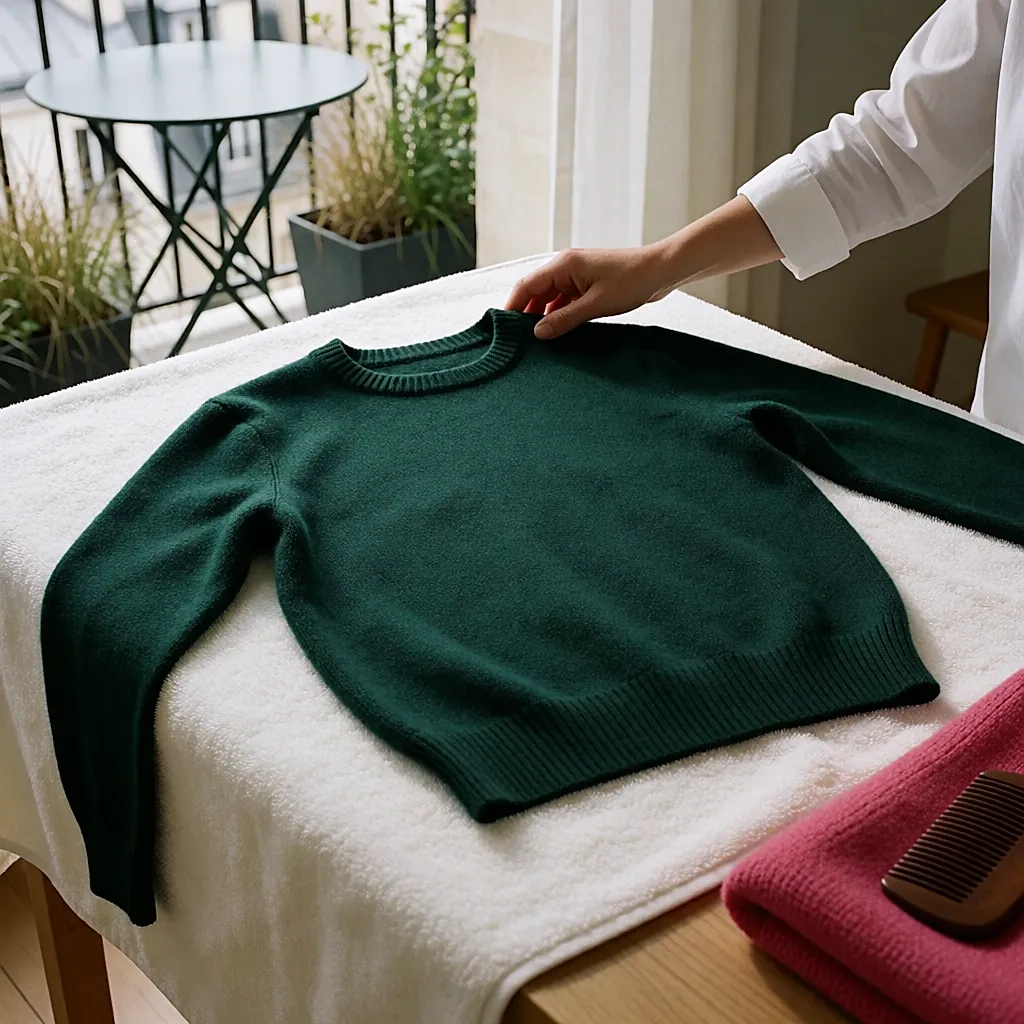
For anything that cannot be washed — a wool coat, a structured tailored jacket, a blazer — airing does the work. Leave it outside for an hour or two, in the shade, in dry weather, then give it a once-over with a soft brush to remove dust and lint. A structured piece can also go to the dry cleaner's once before the change of season: it isn't cheap, but it can revive a piece that has had years of wear.
The end-of-season ritual in four steps: wash what has touched the skin, dry flat, air what cannot be washed, fold in cotton. Ten minutes that are well worth it for a cashmere knit.
Choose a breathable cover, not a sealed bag
Plastic has one very simple flaw: it lets nothing through, neither air nor residual moisture. Condensation builds up inside the bag, and wool quietly goes mouldy in its cocoon. Even vacuum bags, handy for saving space, require a perfectly dry piece and flat storage — for a knit, the space you gain is often paid for in sharp creases.
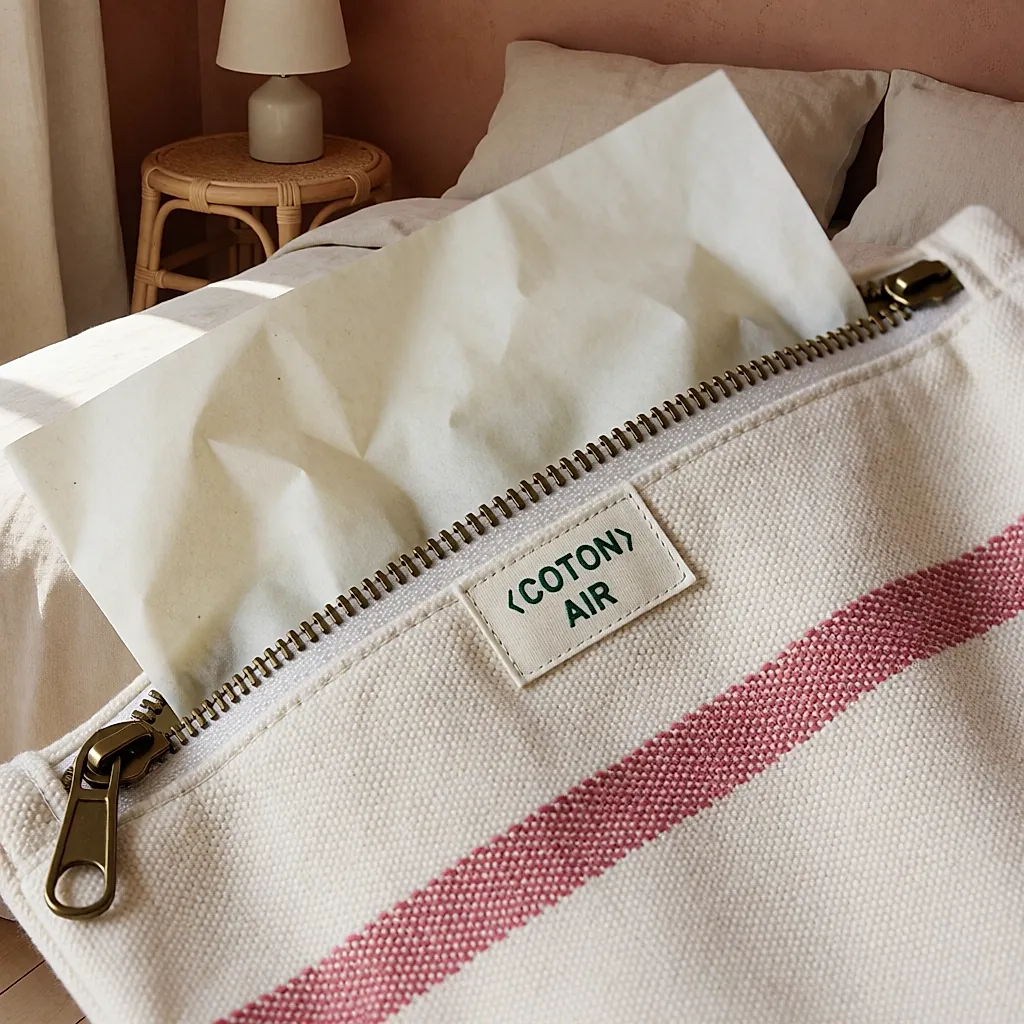
A cotton or linen storage bag, with a closure that lets a little air circulate, costs less than a jumper and can last for years. If you don't have one, a cotton pillowcase works very well, or a clean cardboard box that is never sealed tight. Don't cram things in: a half-full bag is quicker to check than one puffed up like a cushion. Slip acid-free tissue paper into the folds rather than hanging a heavy knit on a flimsy hanger that marks the shoulder.
Repellents mask smells; they don't block moths
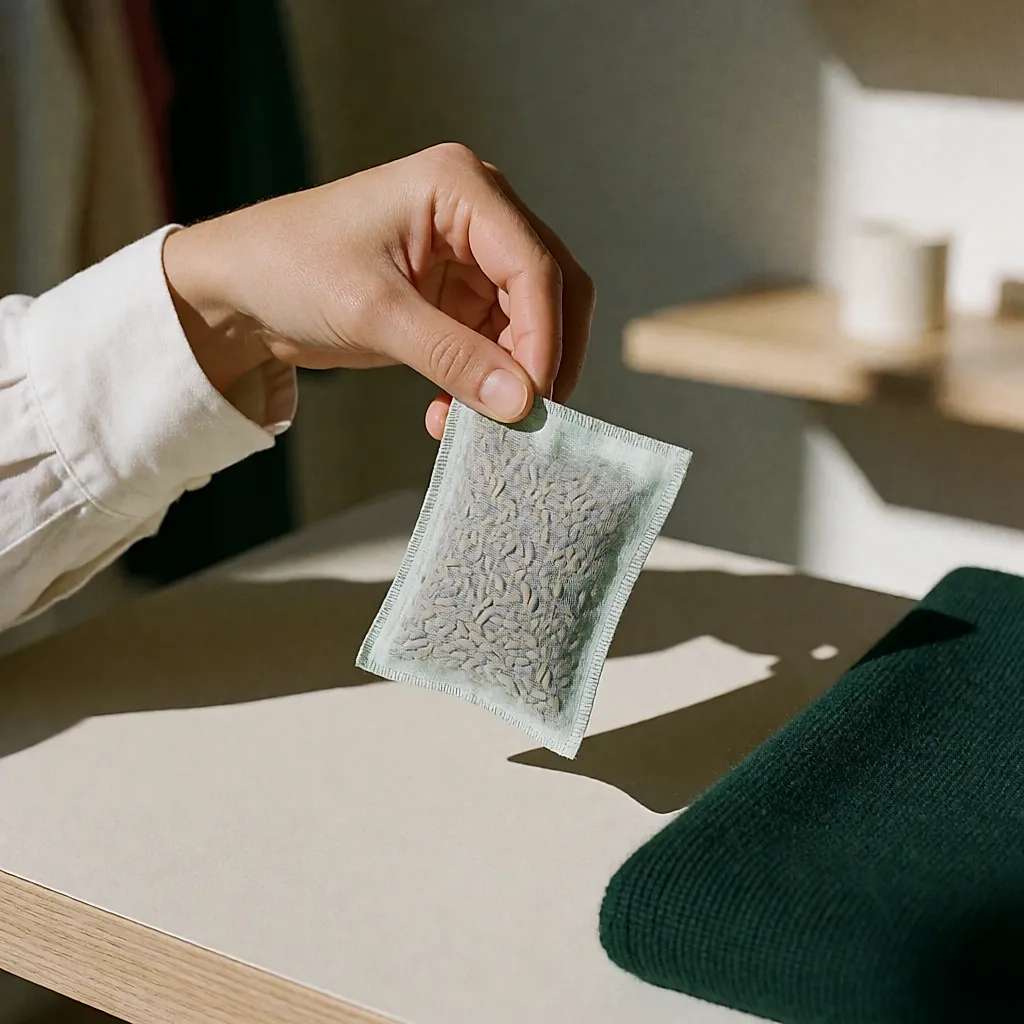
Lavender sachets, cedar wood, impregnated pads: these scents have their uses, provided you know what you are asking of them. They mask odours and make the cupboard slightly less welcoming; they do not kill larvae and never replace clean storage. A sachet that has lost its scent does nothing at all — it is decoration. Does a lavender sachet bought last year still smell of anything? Breathe it in before putting it back to work.
Nothing, however, replaces inspection. Vacuum the bottom of the wardrobe, the rails, the corners and under the bed: eggs are most often laid in dark, undisturbed areas, though not only there. Put a holey piece aside straight away, in a sealed bag, until you decide whether it goes to the seamstress or is beyond saving.
Budget: what it costs to kit out a wardrobe
Expect to pay around £8 to £25 for two cotton storage bags, depending on size and finish; £5 to £15 for three or four lavender sachets; and £6 to £15 for a pack of acid-free tissue paper. Dry-cleaning a wool coat costs about £12 to £30, depending on the city and the piece. There is also a zero-cost version: pillowcases, reused moving boxes, and a few drops of essential oil on a cotton pad if you like the idea — but you will need to refresh it often, so don't count it as a barrier.
It isn't a sachet that will save your cashmere; it's the quarter of an hour spent washing it, drying it flat and folding it into a breathable cover. Do it now, while knitwear season is setting in: in three months, you won't remember which jumper was worn and which stayed in the wardrobe. Your wool, on the other hand, will remember very well.



Comments
Your opinion matters: rate the article, react and reply to comments.
Comments are moderated; AI-assisted comments are flagged. Text emoticons (8-), :-), <3…) are automatically shown as images.