

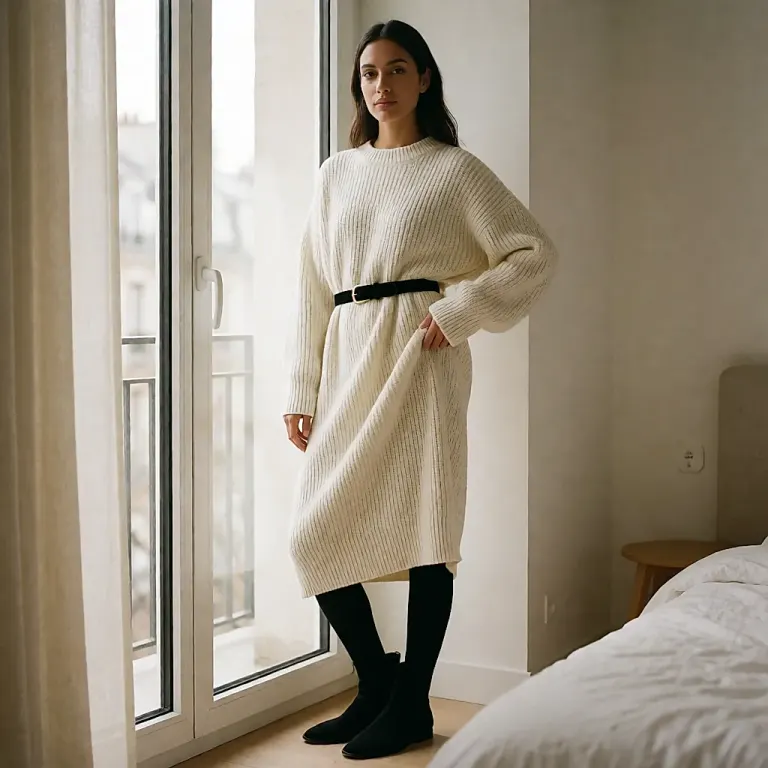
Wool dress, pleated skirt, velvet shorts: you've got the outfit side sorted. What trips you up every winter is the bottom half. You know the moment at the bus stop in January when you realise the sheer tights you bought in October aren't up to it. Tights, leg warmers, gaiters and leggings long ago left the purely functional accessories rail and became proper fashion pieces. And autumn/winter 2026 is heading the same way.
What denier actually tells you about tights
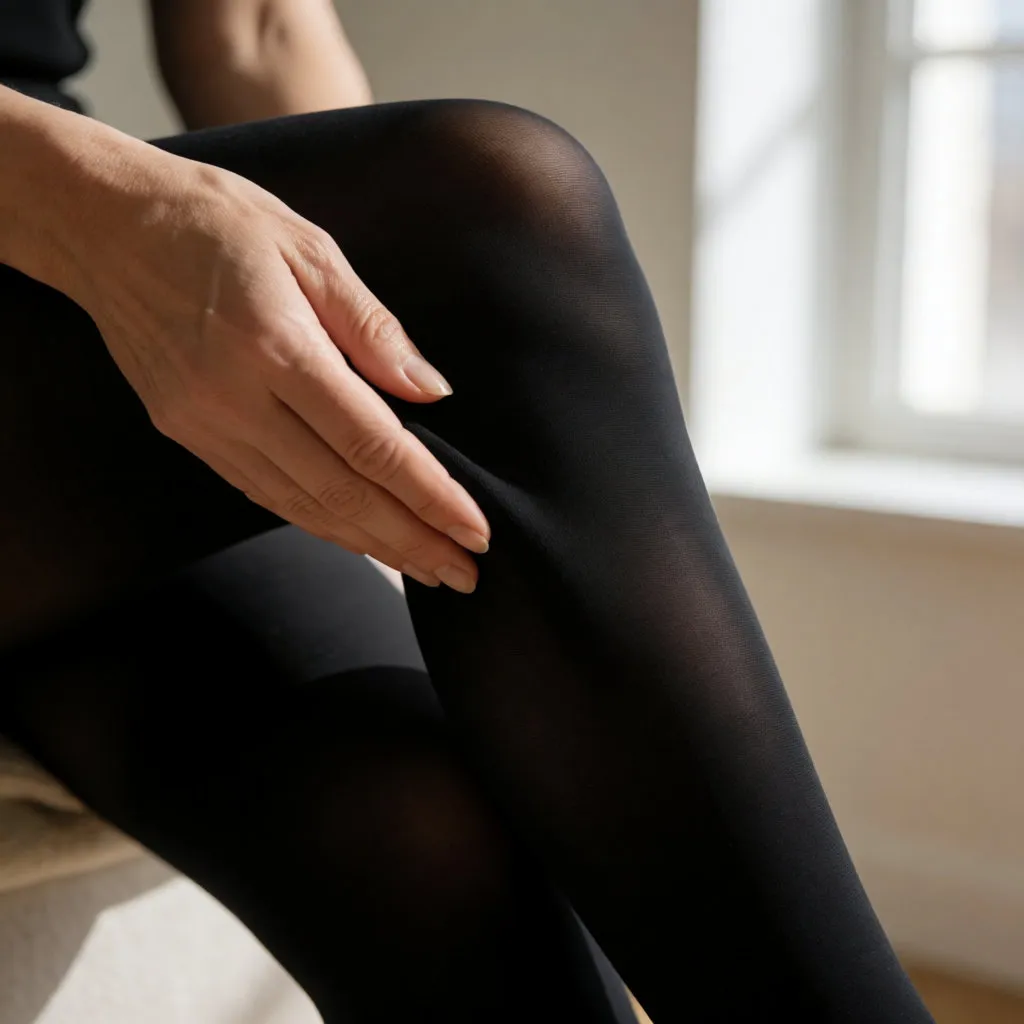
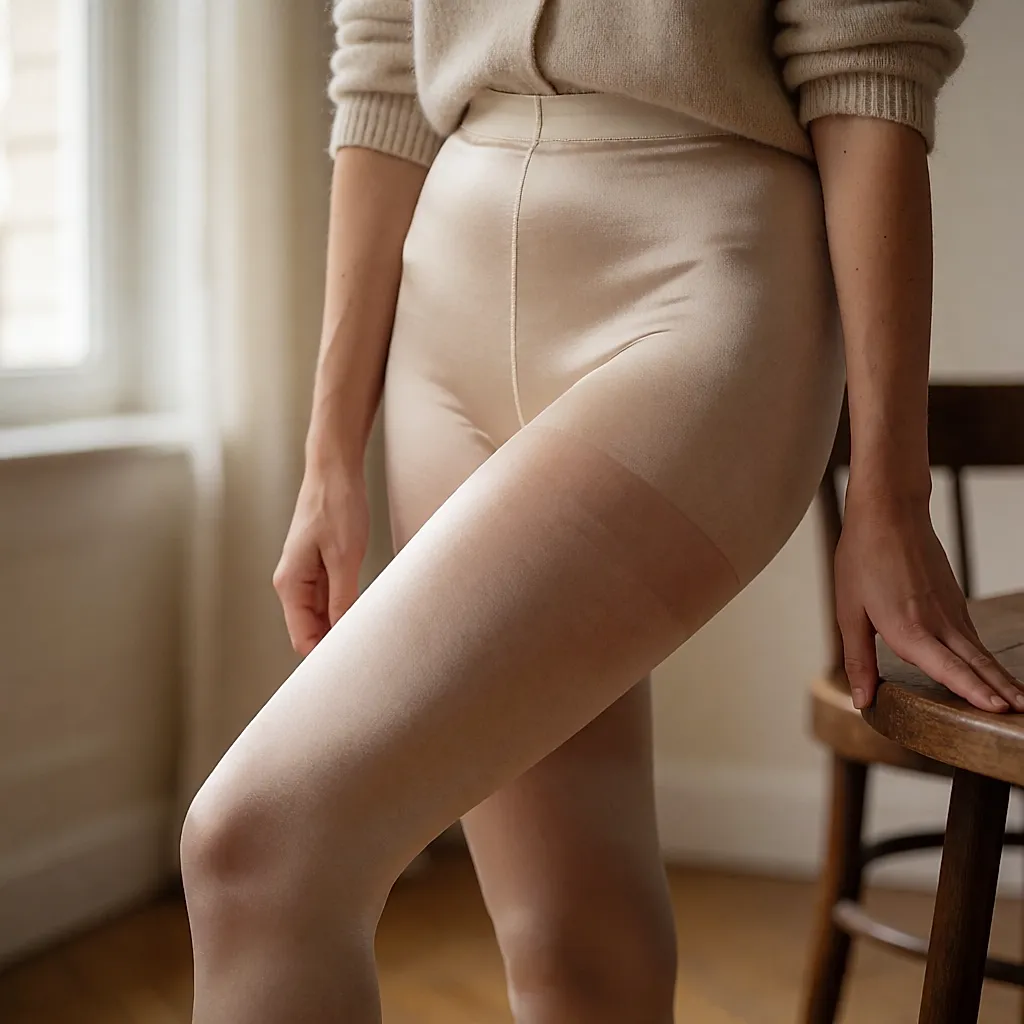
Denier measures the fineness of the yarn. But what does it actually change? Under 20 denier you get a near-sheer veil. Between 40 and 60 denier, a semi-opaque pair can even out the look of the leg. Above 80 denier, you're into opaque territory: the kind that genuinely insulates. For January, a useful rule of thumb is 100 denier or more, or a pair that blends merino wool, cashmere or cotton with polyamide and a touch of elastane; that combination is what gives stretch and keeps its shape.
As for finishes, matte black is still hard to beat, but the choice has widened: satin finishes, a subtle sheen, cable knits that mimic a jumper, lace trims, a graphic back seam. Enough to add interest to an all-black outfit without breaking its coherence.
On the material front, recycled yarns, such as regenerated polyamide made from waste, can also appear in some ranges. It's worth looking closely when comparing two pairs: from one blend to another, the drape and how well they last can vary considerably.
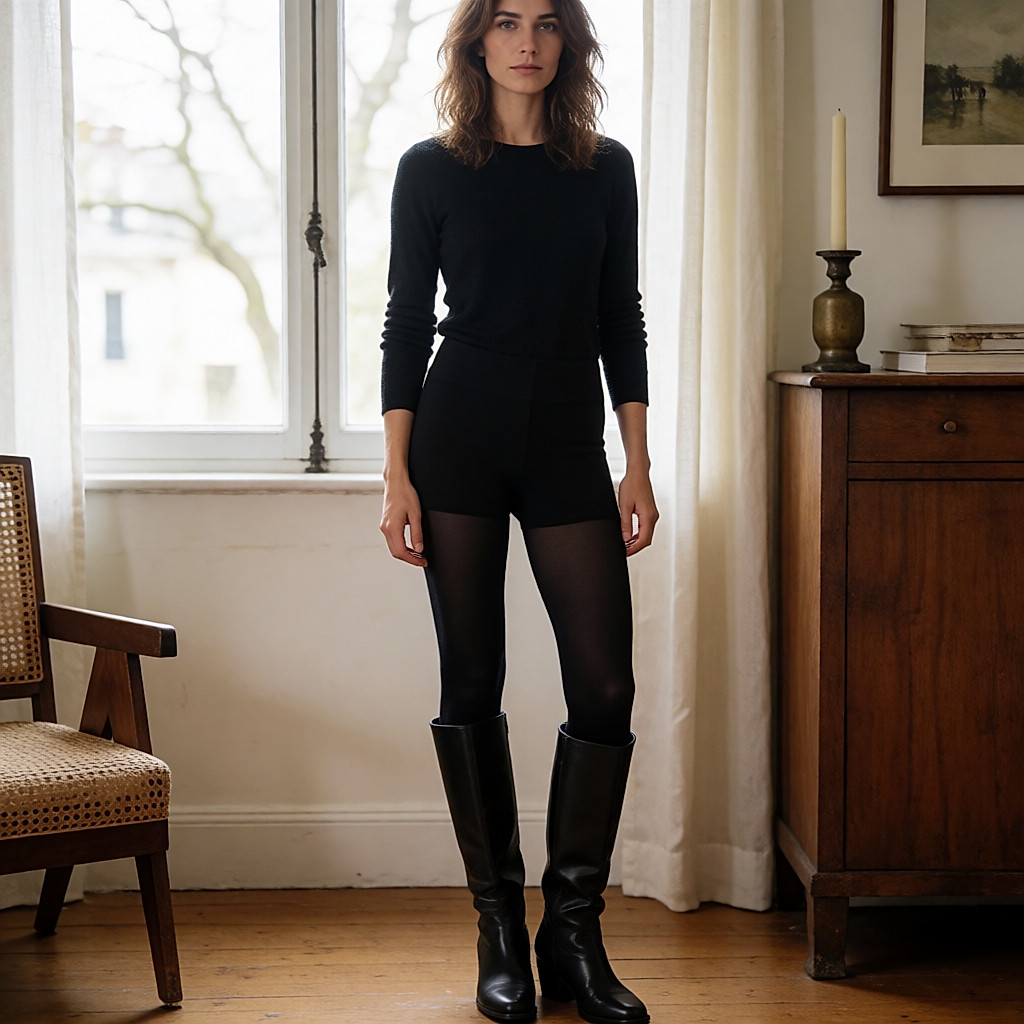
Leg warmers and gaiters are back
We'd filed them away with memories of dance class. Now they're back, carried by the balletcore look and renewed interest in 2000s silhouettes.
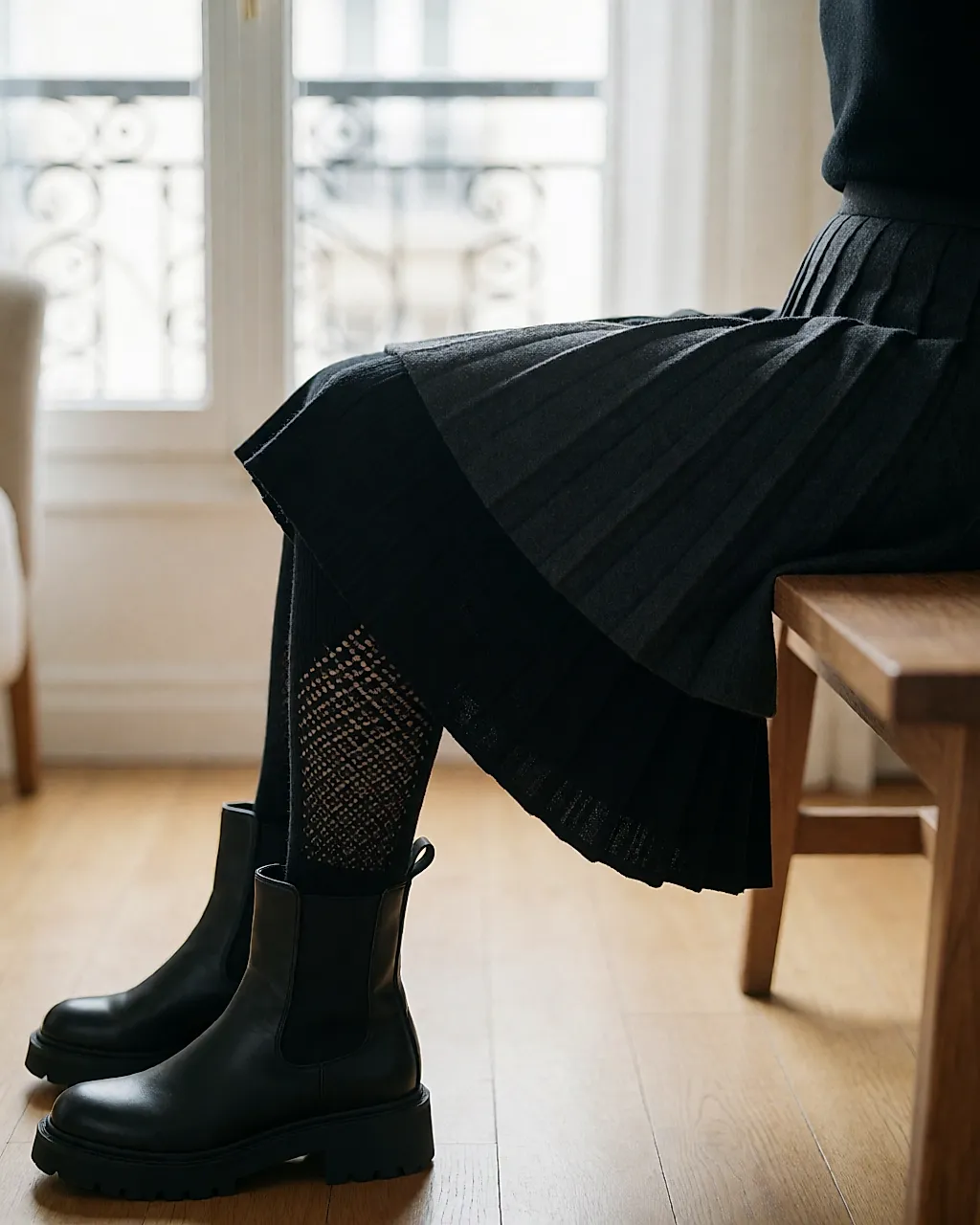
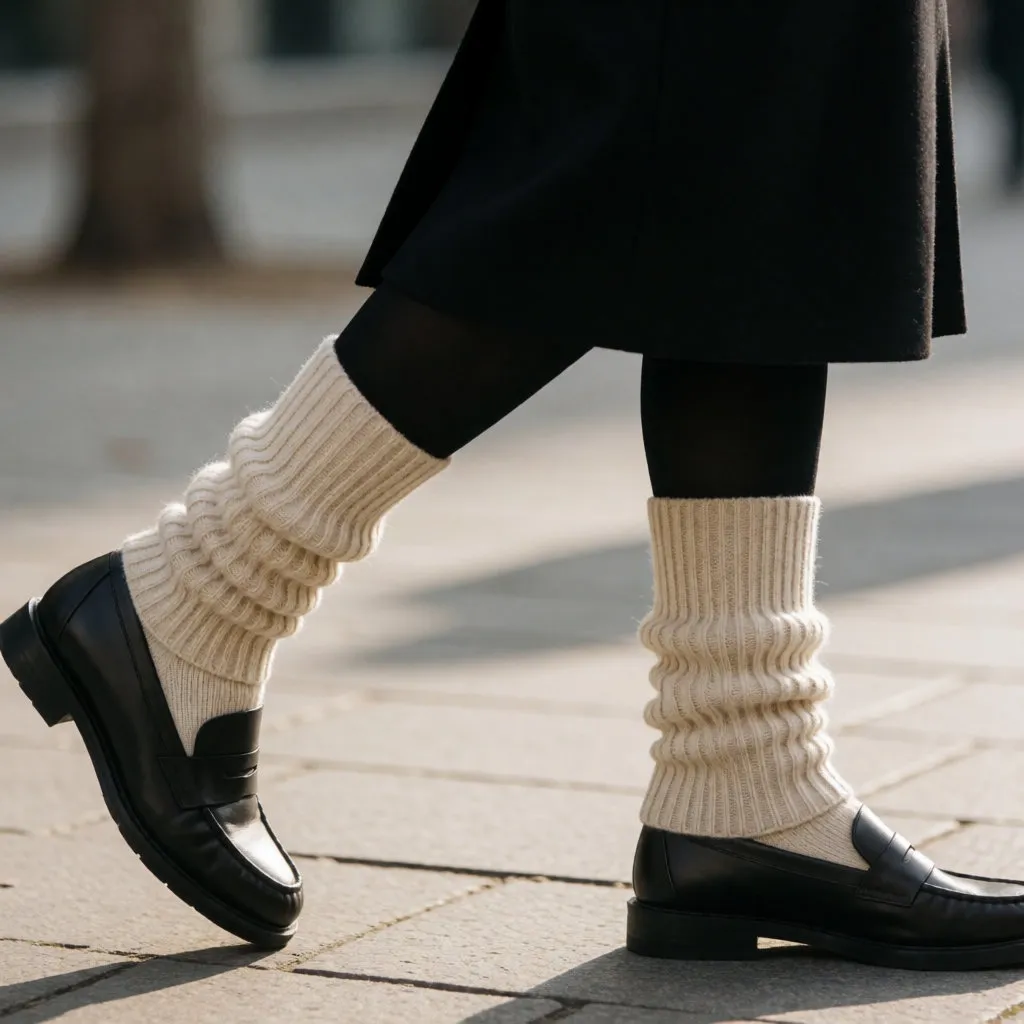
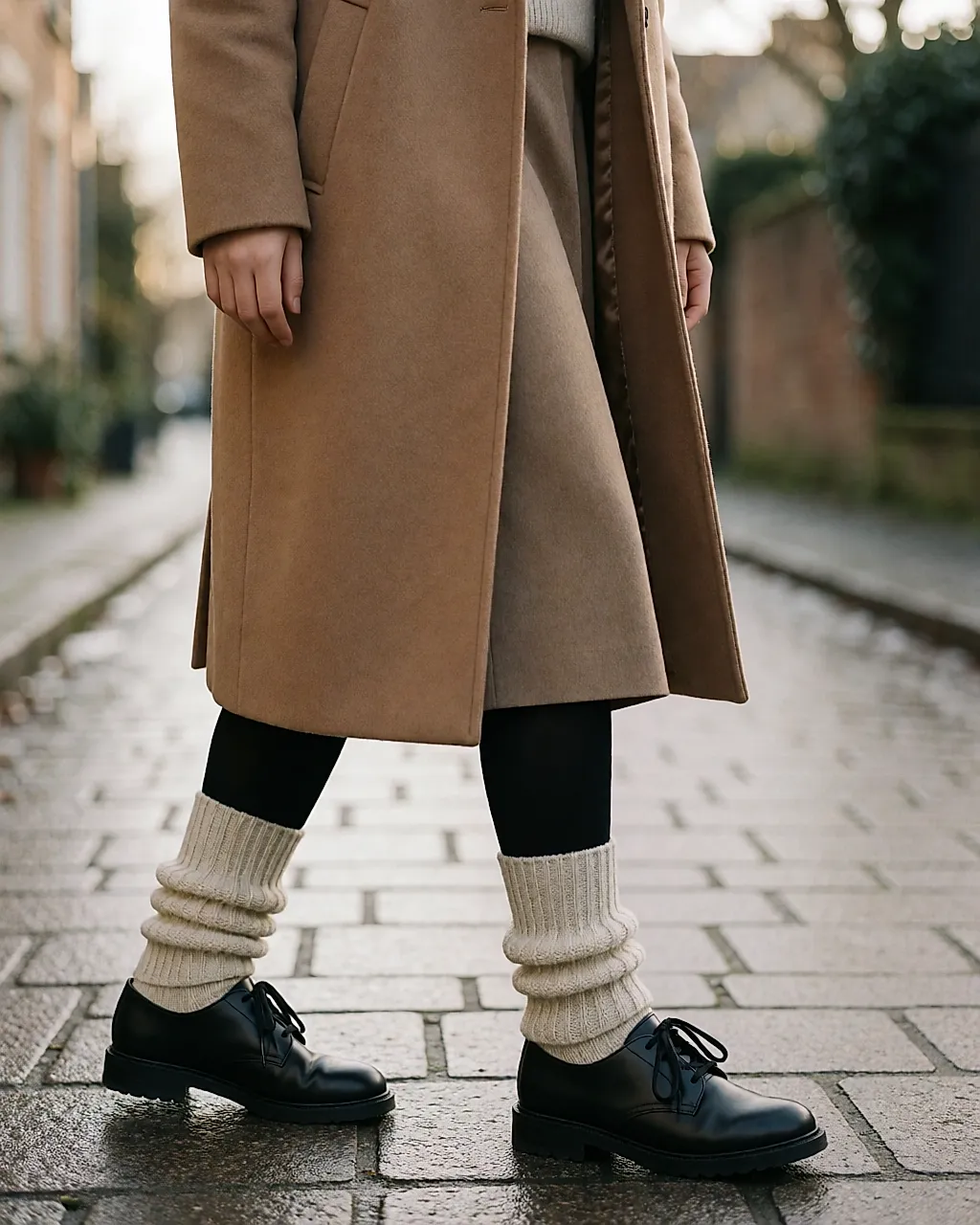
Ribbed wool leg warmers go over sheer tights (the easiest layering move of winter) and work with Derby shoes, loafers or block-heel ankle boots. Gaiters are shorter, often with a stirrup, and sit over trousers or tights, showing just above the boot: ideal for keeping your ankle warm without giving up on skirts.
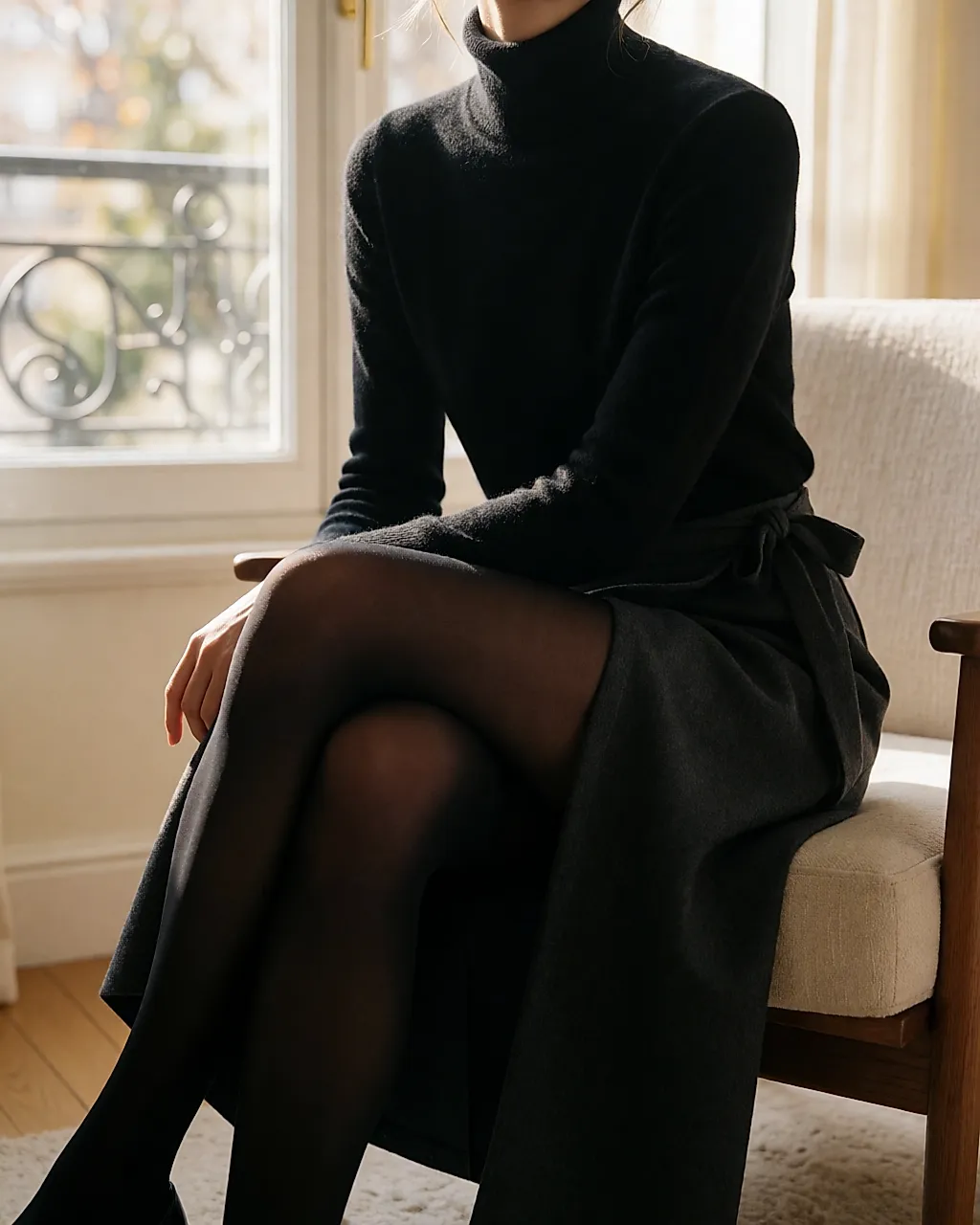
For materials, look for boiled wool, rib knit, fleece and various cosy blends. Natural shades such as ecru, camel, grey marl, khaki and terracotta are easy to mix and tend to last better from season to season than saturated colours.
Leggings, from gym kit to everyday
Leggings have finished their transformation. In rib knit, velvet, vegan leather or thick jersey, they work with a long tunic, an oversized blazer or a shirt dress. The cycling-short version pairs with a loose shirt and tall boots.
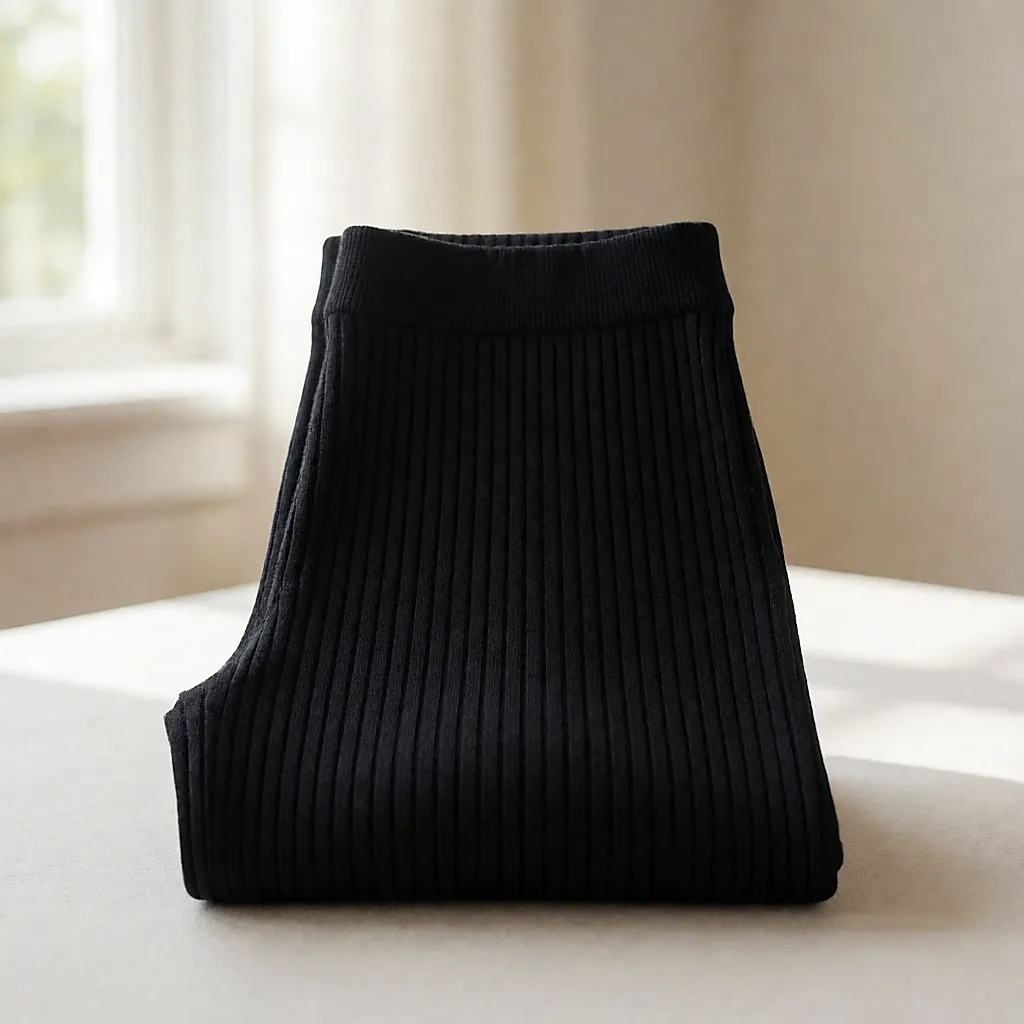
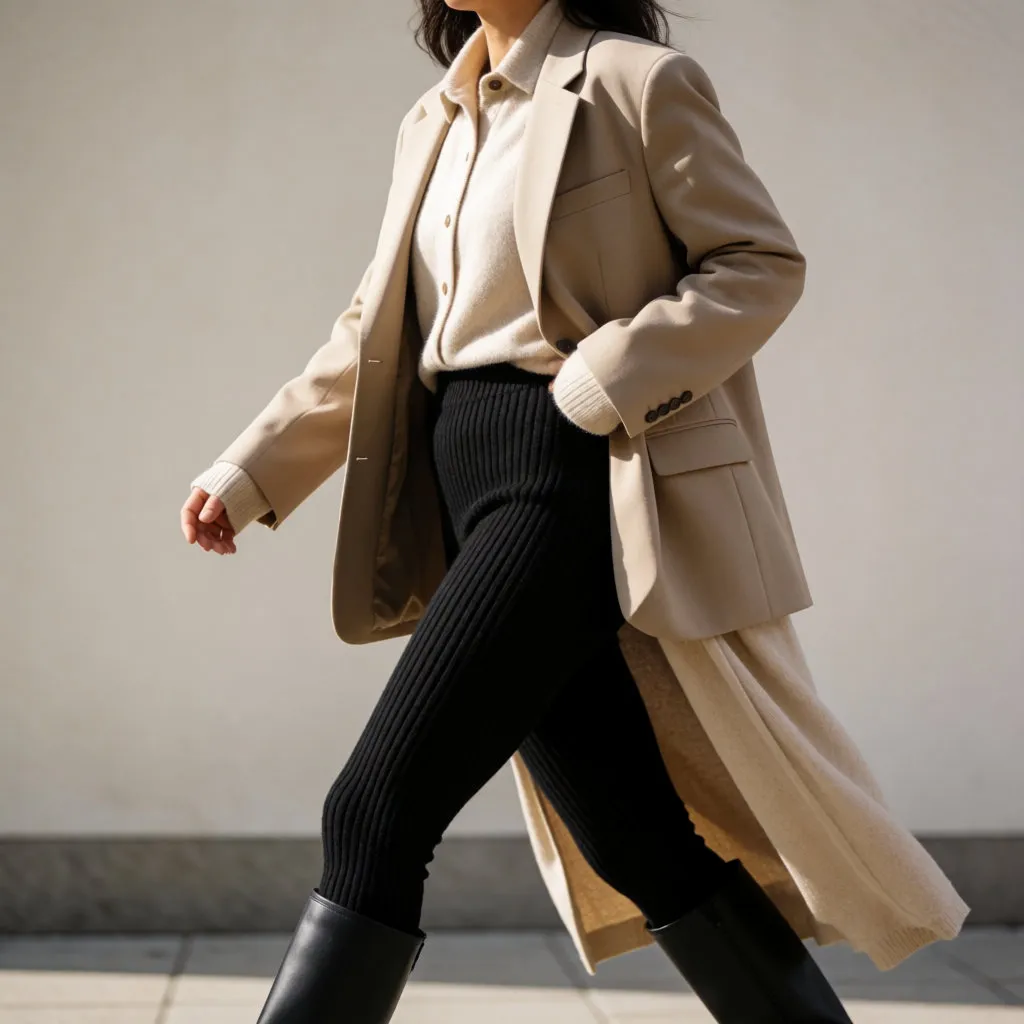
Before buying, test opacity by crouching and check that the waistband holds. Those are the two weak points of styles that are too thin, and the flaws you regret on the very first outing.
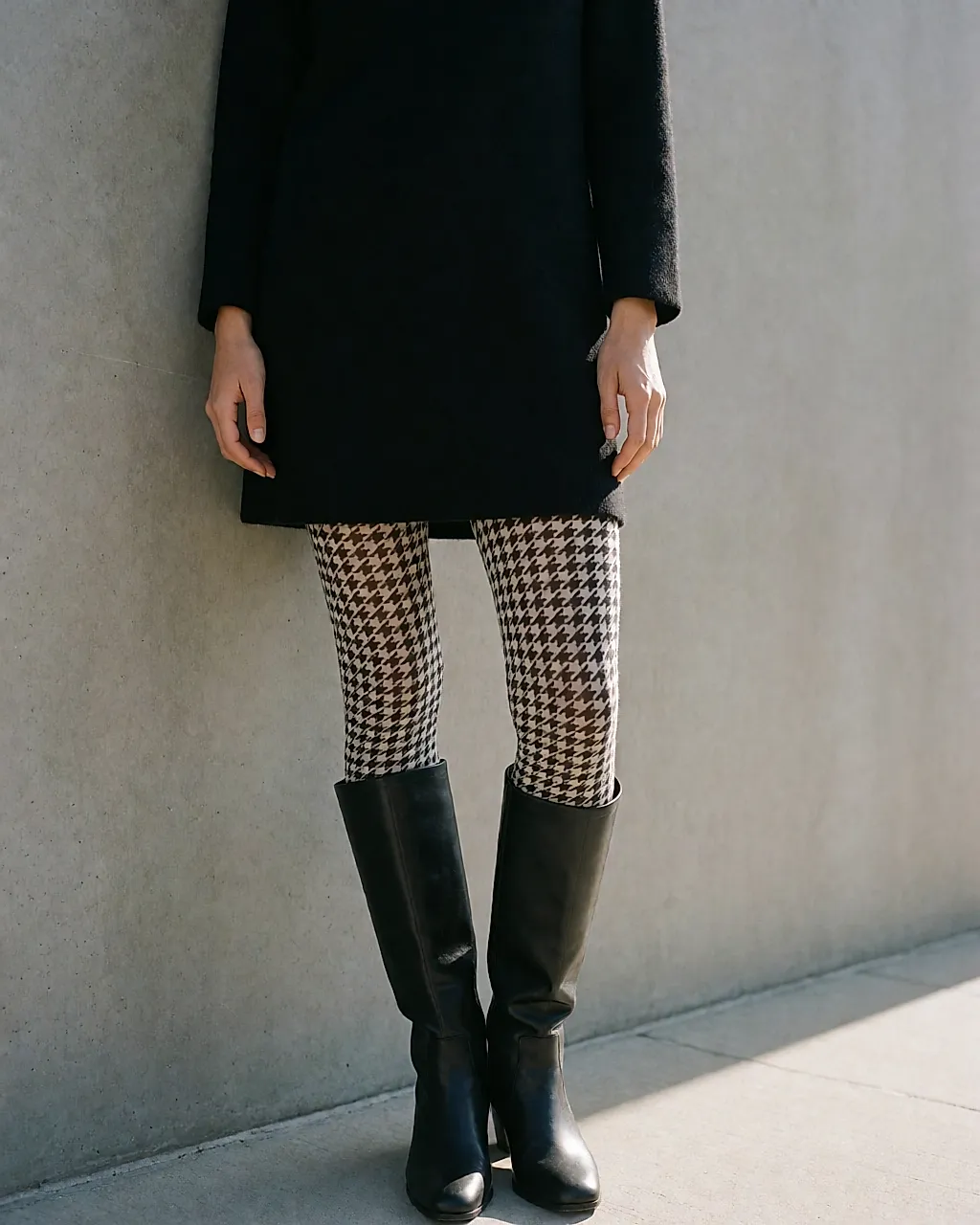
Patterns that do the work
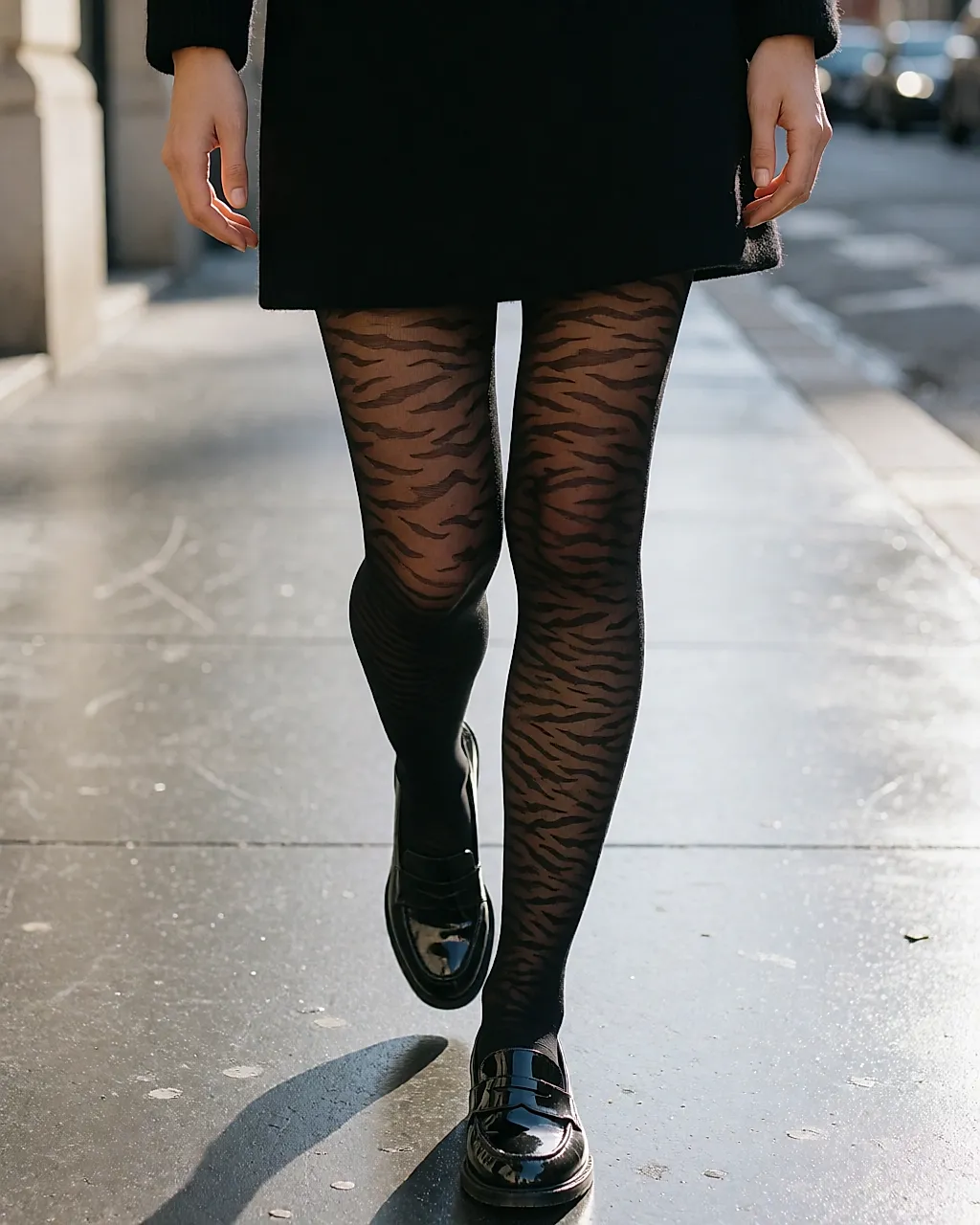
Houndstooth, polka dots, chevrons, tennis stripes and reworked animal prints: retro patterns are back in force on tights and are enough to transform a minimal outfit. The rule that works is still simple: one graphic element, everything else black or plain. And an all-black outfit, precisely, becomes something else entirely in three seconds.
For dressier occasions, lace and baroque scrollwork remain reliable, provided you choose placed motifs (at the lower leg or as a panel) rather than repeating them all over. It's more flattering and wears better over time.
Three questions to ask before you pay
Will the material survive three washes without stretching or pilling? Does the waistband stay put without rolling over? Does the length stay stable over repeated wear and across seasons? In practice, wash at a low temperature and use a protective laundry bag. Two minutes of checking can save a lot of disappointment.
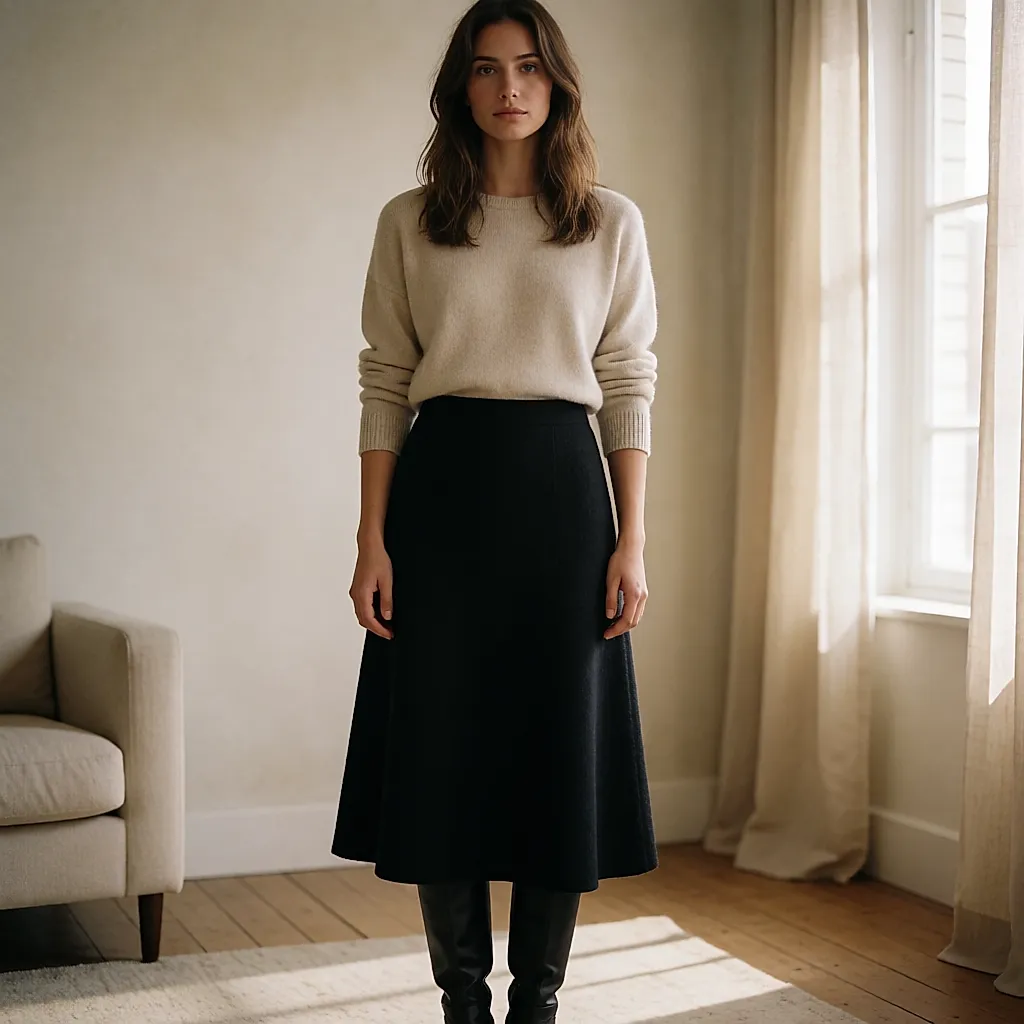
What to spend
On price, the ranges below are rough guides for the UK; the differences are real, but they don't always reflect quality. For basic opaques in a simple knit, expect around £3 to £8 on the high street or online. At £10 to £25, you're moving to a denser yarn, often more hard-wearing. From specialist brands, expect £25 to £60; that's where you pay for the knitting and for durability. Beyond that, you're into statement-piece territory.
For leg warmers and gaiters, budget £10 to £25 for synthetic knits and £25 to £60 when wool is the main fibre. Leggings sit at £15 to £40 in thick jersey or rib knit, and £40 to £90 in velvet, vegan leather or branded technical leggings.
Where to find them? High-street stores and general online retailers for basics you replace often, hosiery and lingerie brands and smaller designers for more considered knits, and charity shops or resale sites for wool leg warmers; you can sometimes do better there than buying new. Price depends above all on the range, the fibre mix and where you buy. And think about care: wash at a low temperature in a protective bag, and a decent pair can last several winters.


Comments
Your opinion matters: rate the article, react and reply to comments.
Comments are moderated; AI-assisted comments are flagged. Text emoticons (8-), :-), <3…) are automatically shown as images.