

A rail on wheels, two mirrors borrowed from the halls, a blue tarpaulin on the floor marking out a changing area. On campus, second-hand is no longer picked out from a scroll of photos alone: it gets tried on in a corridor, a hanger in each hand, often for the duration of a student clothes swap. Good news for the wardrobe, less good for the pile of returns that used to build up by the front door.
Returns aren't part of the deal
Buying from a retailer online usually means having an exit route. Here, the door is shut: between private sellers, once the money has changed hands, a return isn't the norm. That isn't a footnote in the small print; it changes the whole gesture. You try things on for longer, you think out loud, you ask the person next to you in the corridor what they reckon.
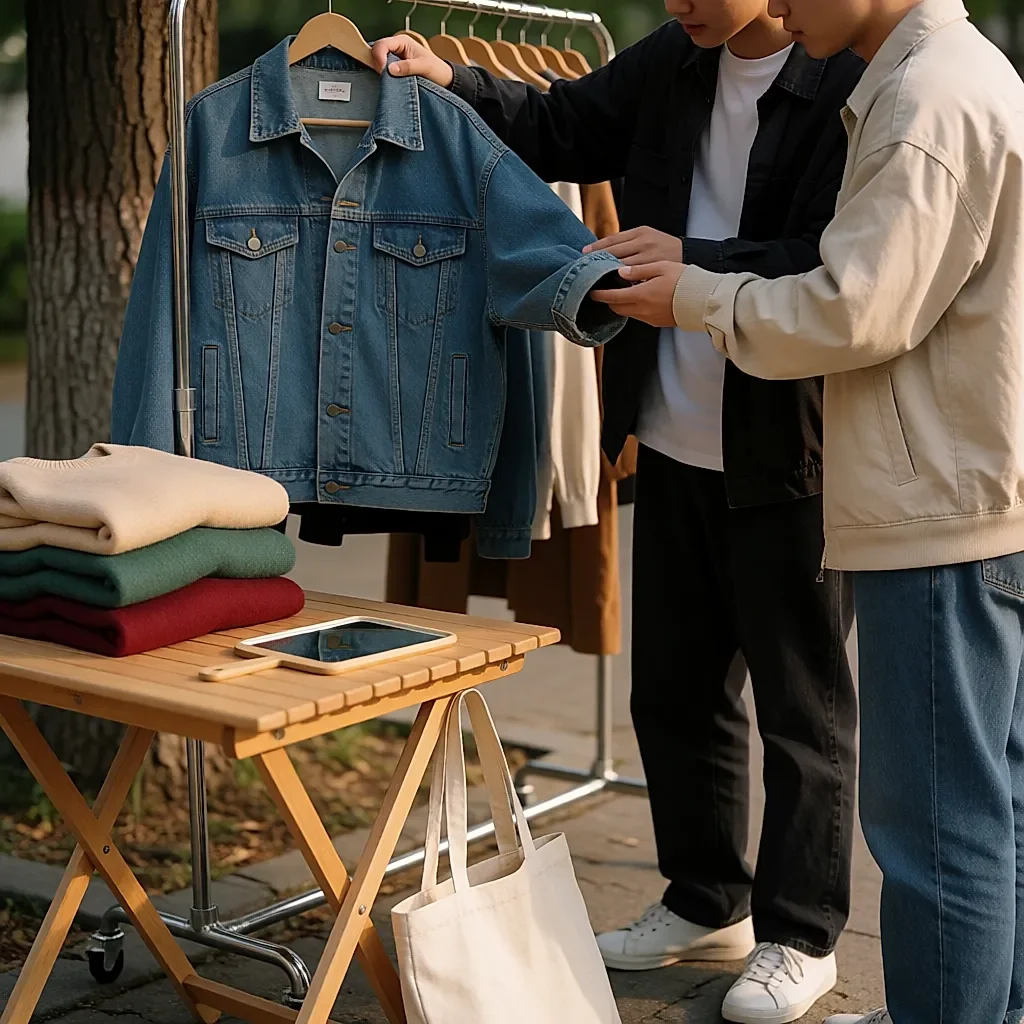
And the classic "I'll take it, I'll see how it goes" dies on the spot. The upshot: doubtful pieces go back on the rail far more easily, and trying on becomes a genuine test of silhouette. A jacket seen on three different people never tells the same story — that's part of the point of a shared rail.
On campus, the rail doubles as a fitting room
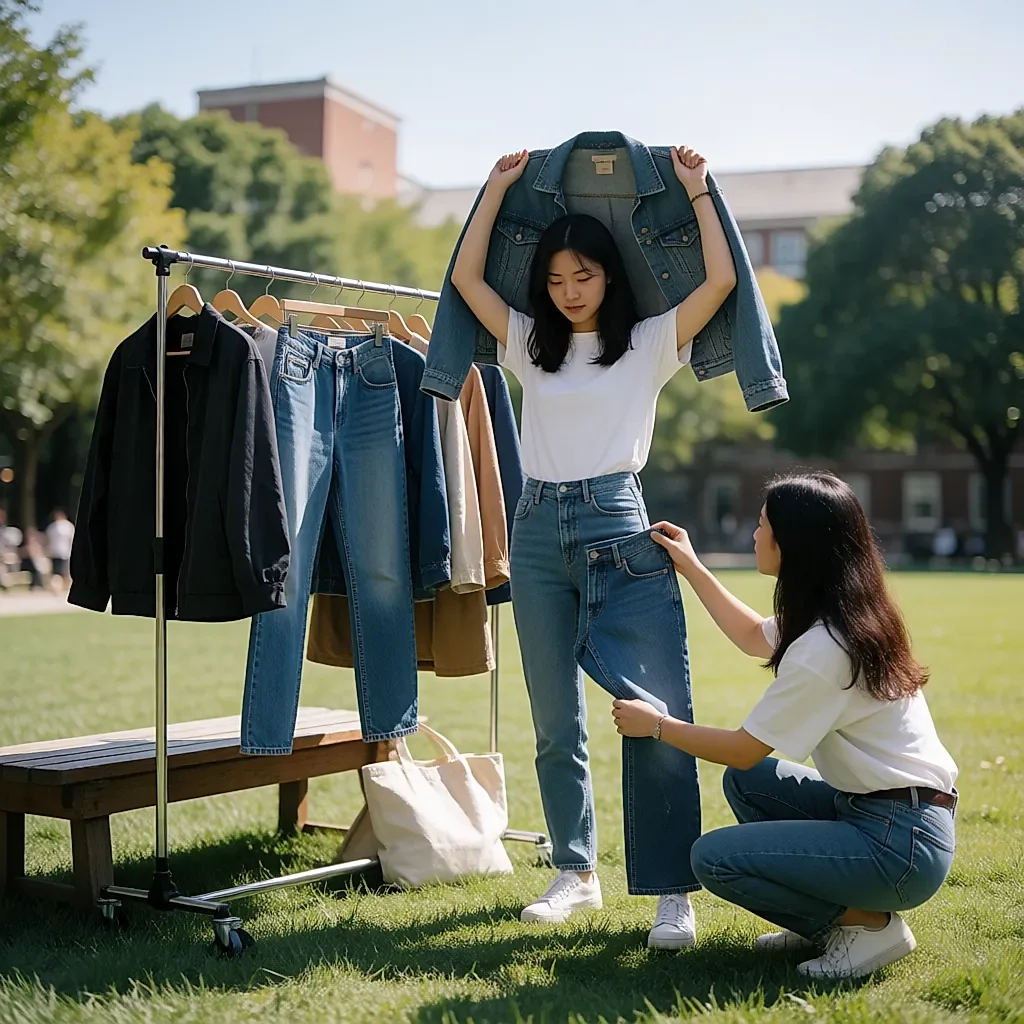
Trying things on standing up, especially once the clothes swap turns into a campus event, lets you do what a photo never does: raise your arms, squat, take three steps, sit down. You judge the cut in motion, not on a static mannequin — and jeans, which are less forgiving than we are, deliver their verdict in ten seconds. In the mirror borrowed from the halls, the shoulder has the final say before the label does, and the drape settles the argument.
What the price doesn't cover
On price, the range is wide and depends mostly on the venue, the city and how well the stock has been sorted: a few pounds for a piece at a student clothes swap or a nearly-new clothes sale, more at a vintage kilo sale, and more again in a carefully curated second-hand shop or a consignment boutique for something mid-range.
The real budget includes what people forget: the price of a hem, a simple take-in or having a stain removed at the dry cleaner's, all of which need working out before you pay. A cheap coat plus an alteration is still a good find; a piece that cost a few pounds and never gets worn is a wasted purchase. And once you build alterations into the starting price, the sums look rather different.
The try-on checklist, for real
- Turn it inside out: seams, lining, buttons, zip.
- Raise your arms, sit down: does it pull at the shoulder?
- Check the wear nobody thinks to photograph — cuffs, collar, crotch seam, soles.
- Smell it. A wash doesn't fix everything.
- Price up the alteration before you say yes.
In the end, trying things on in person restores an obvious truth: a second-hand piece isn't bought on the strength of a description; it's worn. If you've got five minutes and a mirror, start with the clothes swap at your uni or in your neighbourhood — that's where the budget goes furthest. And if it doesn't exist yet, suggest it: a rail, two hangers and a tarpaulin are all it takes.

Comments
Your opinion matters: rate the article, react and reply to comments.
Comments are moderated; AI-assisted comments are flagged. Text emoticons (8-), :-), <3…) are automatically shown as images.