

Tights have a habit of laddering where you're not looking: at the tip of your big toe, against the edge of a heel, on the strap of a bag you set down too quickly. And since nobody enjoys binning a tenner on a Monday morning, we hoard survival tricks. The most persistent one? A night in the freezer, after which the knit supposedly becomes indestructible. Time to file that myth between the bread and the peas.
Old wives' tales, put to the test
The idea has the ring of a workshop secret: the cold would set the knit, tighten the yarn, give the nylon a boost. Trouble is, a pair of tights isn't a stick of celery. It's yarn that has already been stretched, knitted and set in a factory, and a night in a domestic freezer doesn't remake it. The next day your tights are identical to the pair you put in, only colder and therefore stiffer — that chill is about all the freezer gives them.
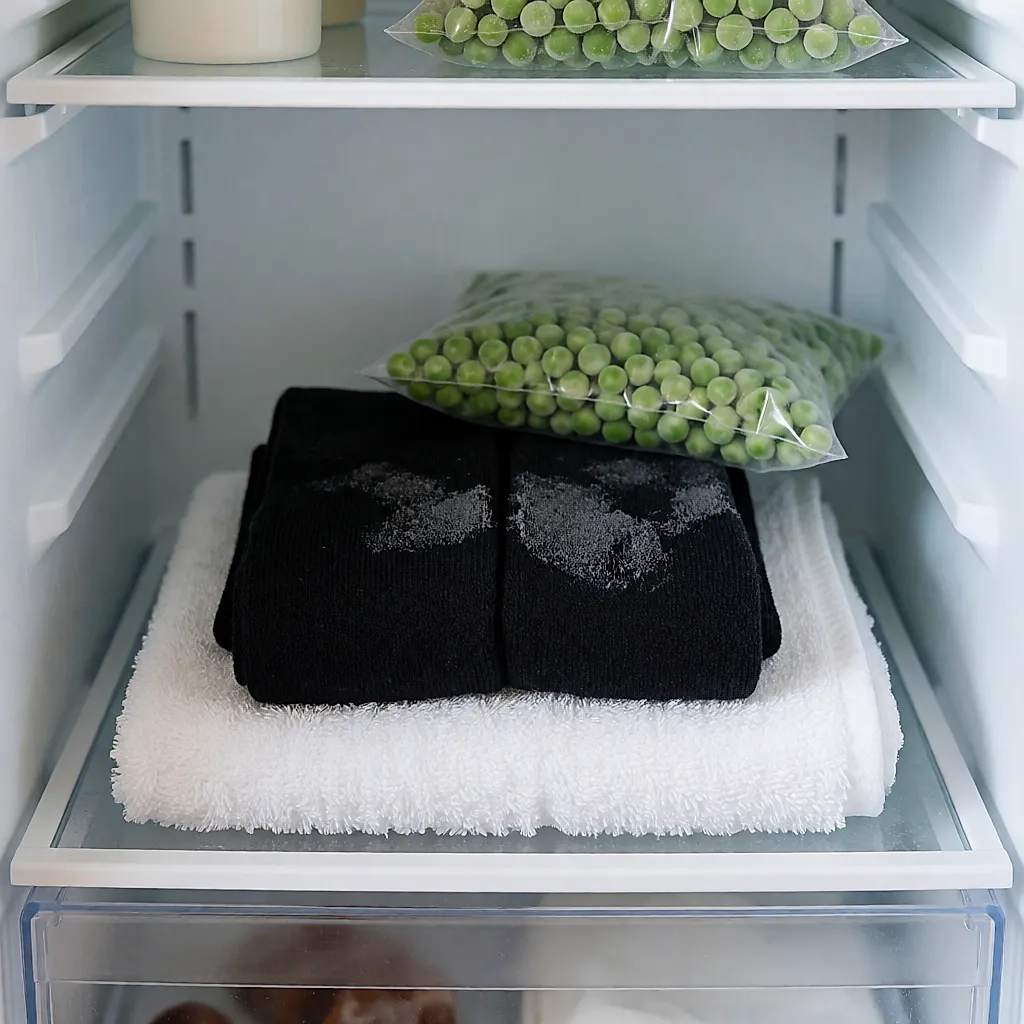
So why do we still believe it? Because the trick is free, it seems harmless and it feels like doing something. The other remedies follow the same route: a veil of hairspray on a new pair can leave a tacky film that attracts dust, and a dab of clear nail polish on a snag can hold the knit for a few hours — enough to save an evening, not a season. Neither will make your tights stronger. As for care, the packets talk about gentle washing, a laundry bag and drying flat — never about freezing.
The one lever we all ignore: the size chart
The real lever is on the back of the packet. Many tights print a grid that crosses your height in centimetres with your weight. In practice, if you're between two sizes, take the one that matches your height, especially if you have a long torso: tights that are too short pull, ride up in the wrong place and wear out their knit before January.
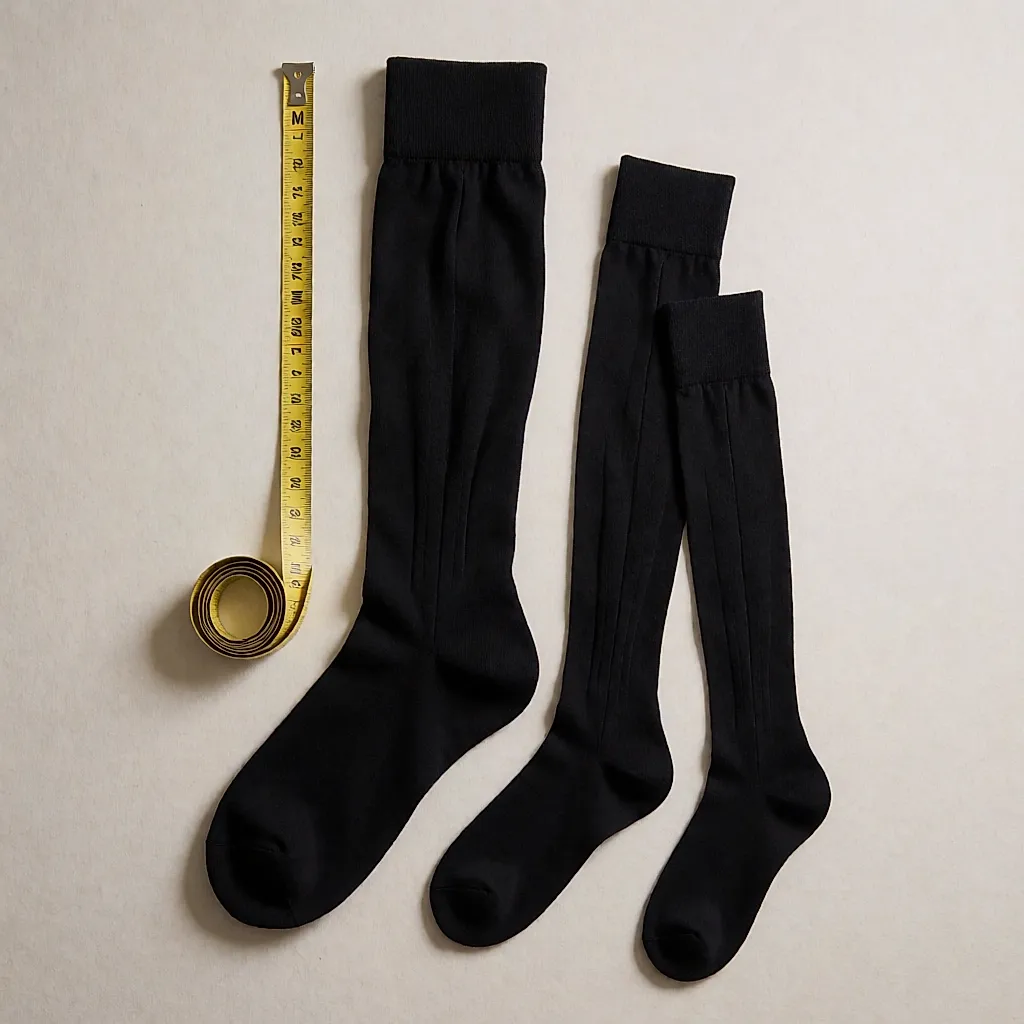
A pair that's too big isn't more comfortable either: it wrinkles at the ankles, you tug at it to pull it back up, and that tug is exactly what causes snags. Too small and it pinches; exactly right and you forget you're wearing it. Silly question: when did you last look at a size chart?
The putting-on technique
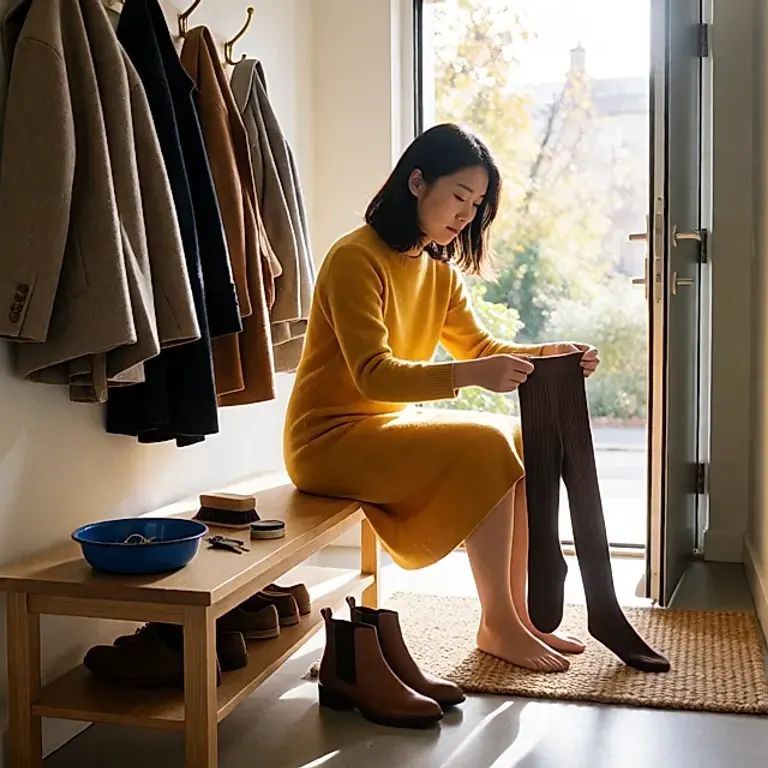
How you put them on matters more than the freezer. You sit down, roll each leg down towards the foot, put one foot in, then smooth upwards from ankle to knee to thigh, and start again on the other side. Take your time rather than hauling them upwards like a theatre curtain.

And above all, don't haul on the gusset. That reflex — grabbing the waistband with both hands and yanking it up in one go — stretches the knit exactly where it works hardest and where it will give out next. Let the tights settle, then adjust by smoothing. Details that count: filed nails, no rings, and nothing scratchy in the next drawer along. Picture the scene?
The four-step routine: roll each leg down towards the foot; smooth from ankle to knee without pulling; let the gusset settle on its own; keep a spare pair at your desk — it saves a meeting.
What a pair of tights actually costs
Expect to pay roughly £4 to £10 for a basic opaque pair from a supermarket or online, often sold in packs of two or three. In hosiery and lingerie departments, a 40 to 60 denier pair with a waistband that stays put tends to sit between £10 and £20. And for January, £25 to £45 for merino wool, a warmer choice when the cold sets in.
The calculation isn't the one you'd expect: three pairs at £7 that ladder within a month cost more than one pair at £18 kept for two winters. Does that mean you should always pay more? Not necessarily. A repair service, meanwhile, can re-knit a ladder for a price that may exceed the tights themselves: worth it for a wool pair, rarely for a 20 denier.
The basics are the ones you keep
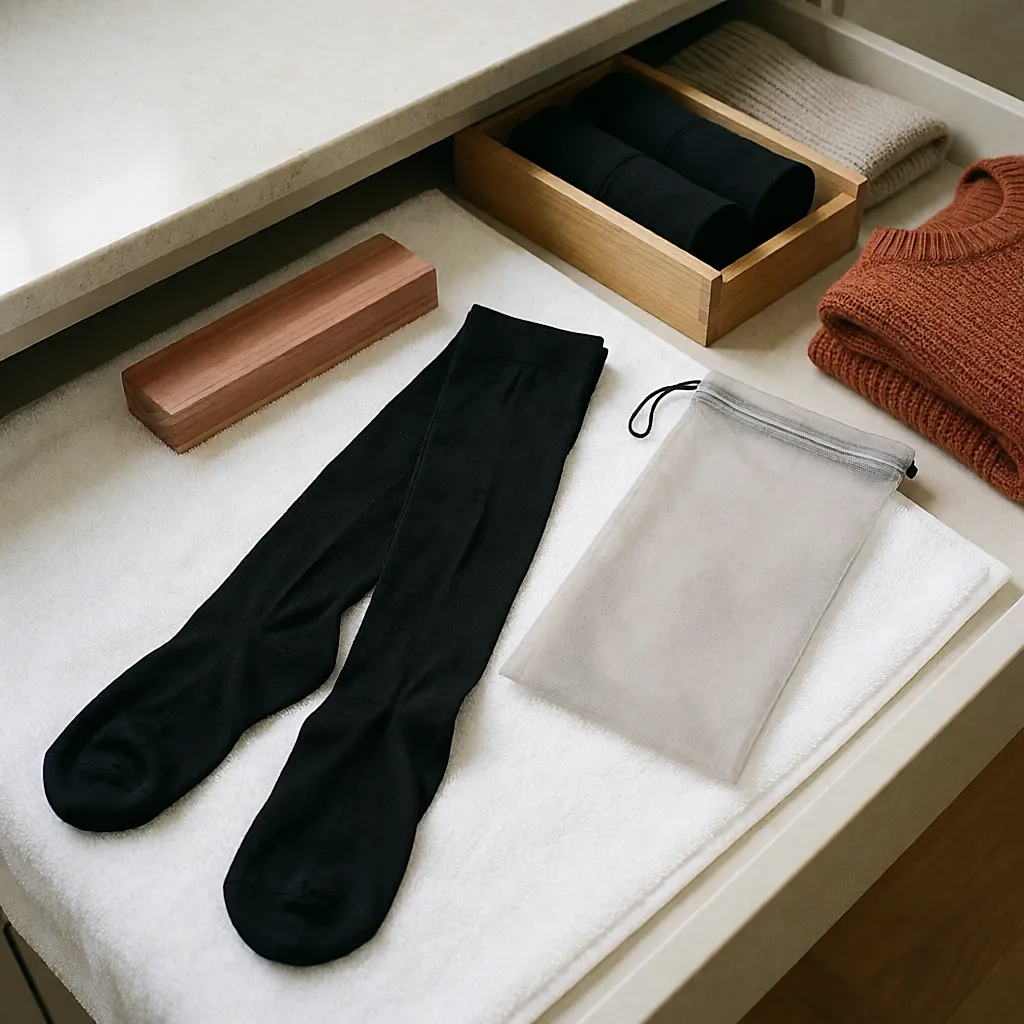
Restraint here doesn't mean going without: it means washing more gently. Hand wash or a delicate cycle, in a laundry bag, dry flat, store away from zips and buckles. One warning for the road: many opaques are made from polyamide and elastane, so it's worth hanging on to the pairs you own rather than buying three new ones every winter.
Verdict: the freezer won't save a pair, hairspray won't either, and the most reliable everyday levers are the right size and two patient hands. The rest belongs to locker-room legend, which we're allowed to cherish — as long as we don't count on it to save money. In front of the rail, the right pair starts with the size that matches your height, not the one promising the earth.

Comments
Your opinion matters: rate the article, react and reply to comments.
Comments are moderated; AI-assisted comments are flagged. Text emoticons (8-), :-), <3…) are automatically shown as images.