
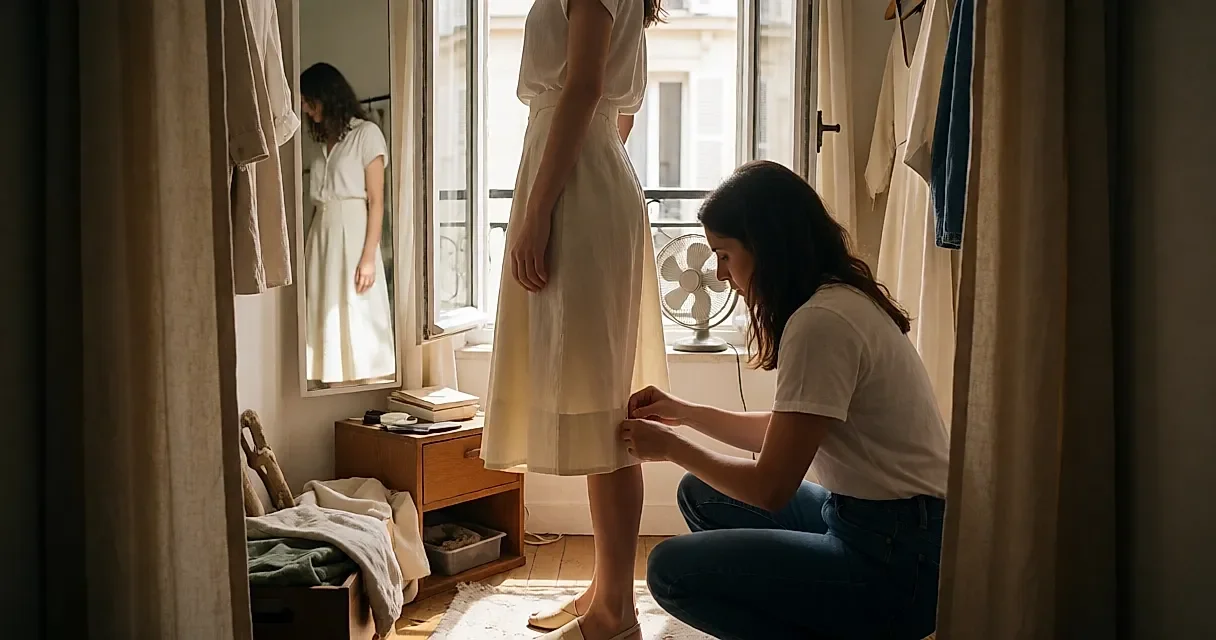
Take 10cm off a fluid skirt and it is a bit like changing one word in a sentence: it still makes sense, but the rhythm is different. On the hanger, the alteration looks simple: cut, sew, put back. In practice, on a piece that relies on its drape, every centimetre you remove shifts the balance between length, fabric weight and the way the hem finishes the skirt. Sometimes what was meant to free up the silhouette is exactly what takes away its style.
The hem is more than a simple edge
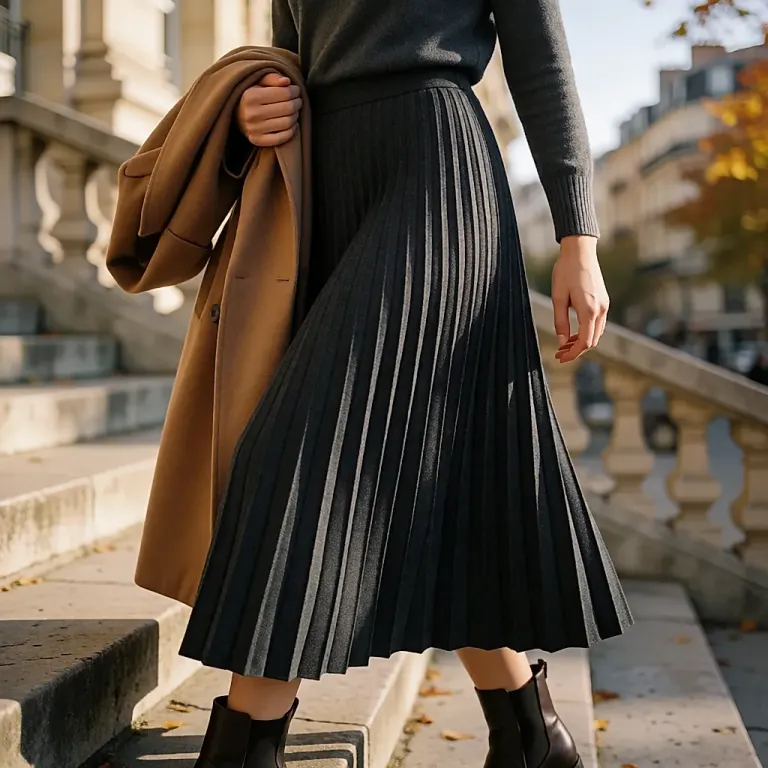
With a fluid skirt, movement doesn't come from volume alone. It comes from the way the fabric falls and follows your stride. A midi skirt in lightweight linen or silk that floats around the calves can become a very sensible office skirt once it is taken up to the knee. This isn't a hard-and-fast rule – the cut, weight and lining all matter – but it is the first trap: you focus on the length and forget the overall look.
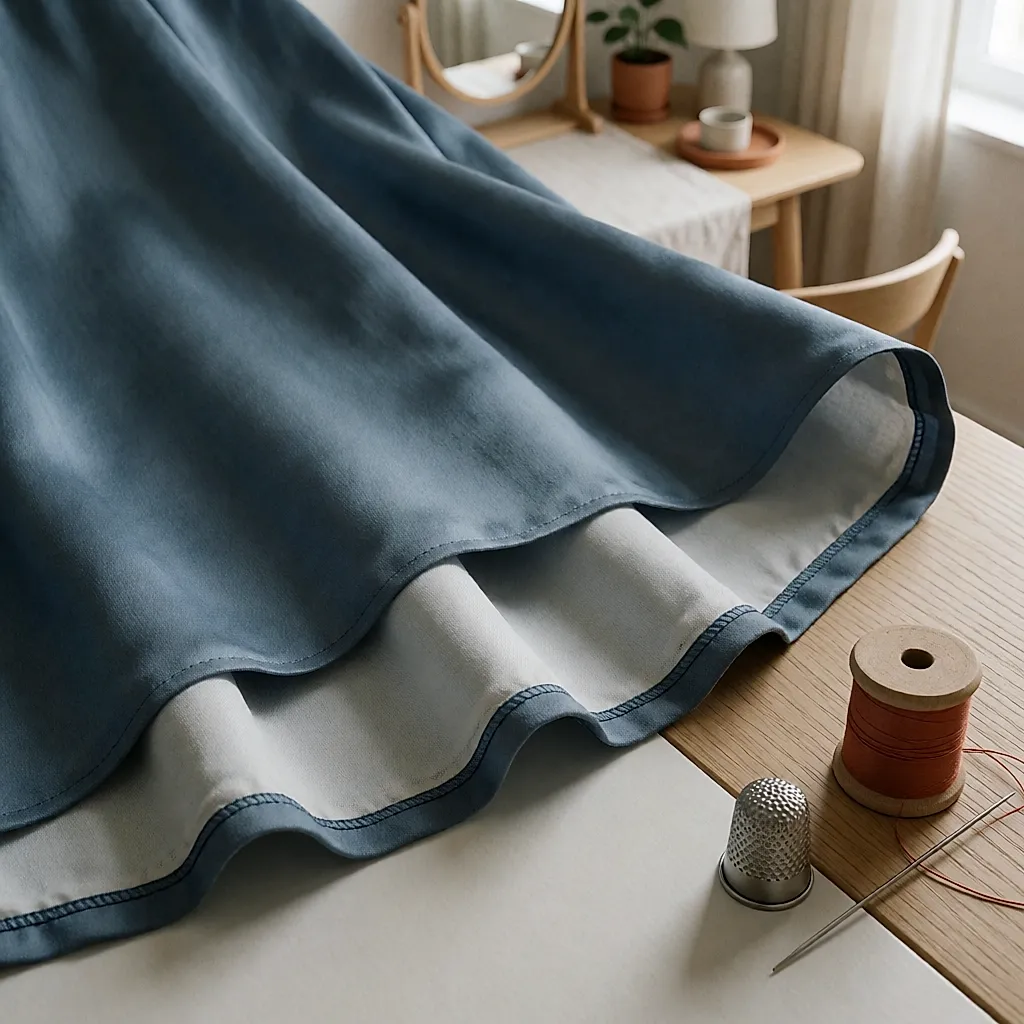
The second trap is the hem itself. A deep hem can make the lower edge feel heavy; too fine a finish can produce an edge that curls or floats. The original hem, by contrast, was designed for that skirt, its fabric and its weight. Removing it without thinking can mean taking out the small invisible weight that made the fabric fall straight. That is why the finish deserves your full attention before you reach for the scissors.
Ask to keep the original hem
The question that often saves the alteration is simple: can you keep the original hem? In practice, the seamstress unpicks the existing finish, trims the skirt to the length you want, then reattaches that same hem. You keep the look, thread, weight and drape of the lower edge. It won't work every time: there needs to be enough fabric, and the finish has to be robust enough to be moved. But it is worth asking before you accept a new hem.
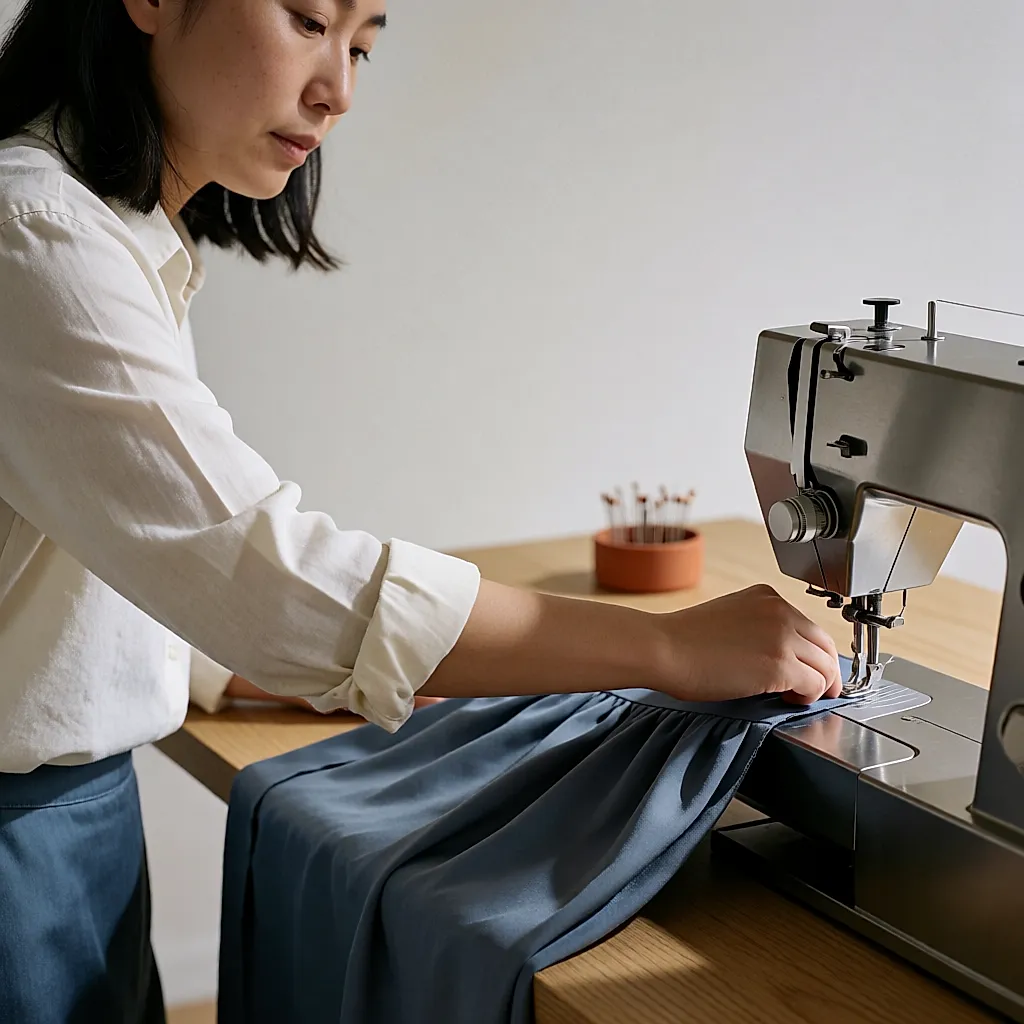
If the original hem can't be saved, ask which finish suits the fabric. On a fluid skirt, a very fine rolled hem or a discreet hem allowance will often look better than a thick hem. And if the skirt is lined, say straight away that the lining needs to follow: too long and it pulls, too short and it shows. It is the kind of detail you don't see on the hanger and notice immediately when you walk.
Before you cut, pin up the length you have in mind, walk, sit down and look at the skirt in a full-length mirror. If the hem starts to cling or you have to keep pulling the fabric down, the length is probably not right.
Cost depends more on the work than the centimetres
An alteration isn't priced by the centimetre. Which makes it a little less simple. Unpicking an original hem, reattaching it, adjusting a lining, dealing with a vent or a slippery fabric: every step changes the time it takes. So ask for a quote beforehand, and check what it includes: unpicking, cutting, reattaching and the final press.
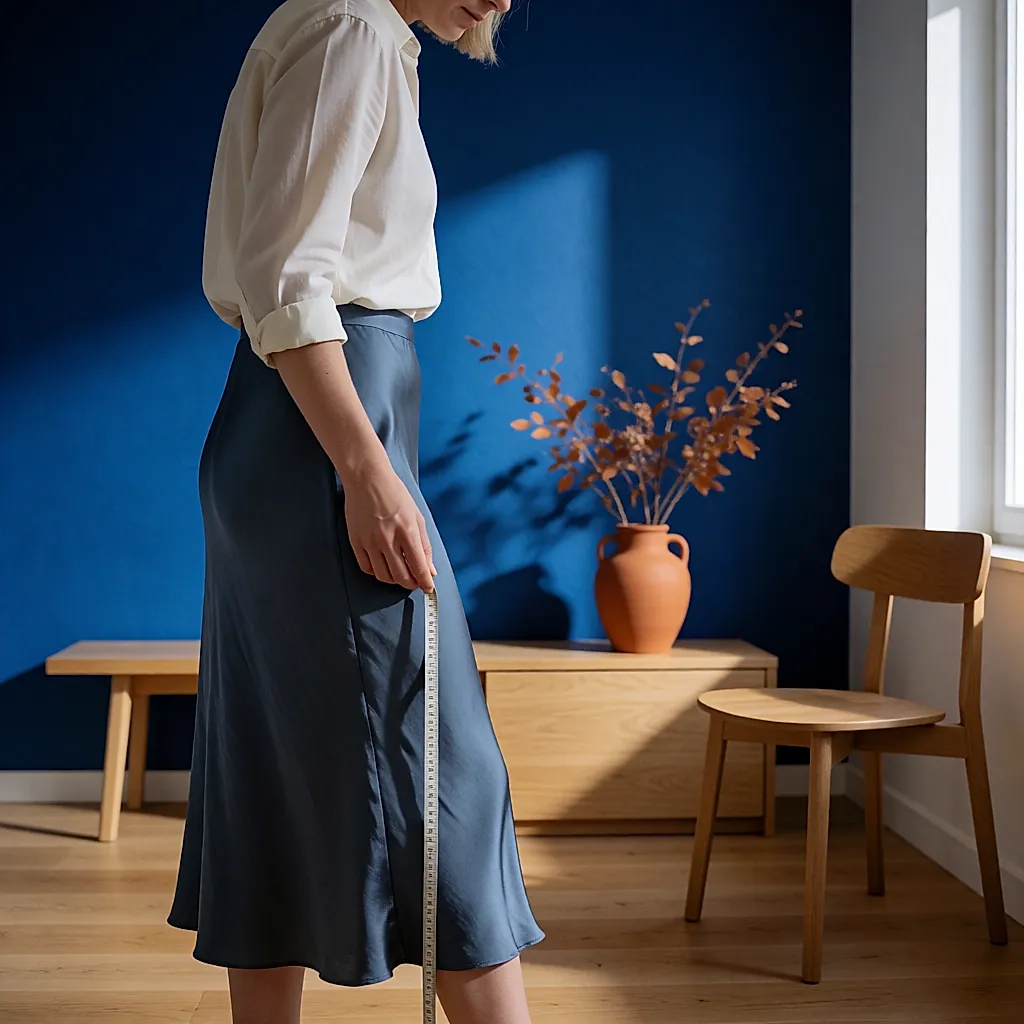
The length you are aiming for matters too. Taking up 2cm to tidy a tired hem is very different from a 10cm transformation that may require you to rethink the skirt's proportions. If the seamstress suggests simply 'cutting and sewing it back', ask how she plans to finish the hem. That is where the difference lies between a skirt that still moves and one that falls in a straight line.

What it costs
As a rough guide, expect £15 to £30 for a simple hem on an unlined skirt, £30 to £70 if you keep the original hem or the skirt is lined, and £40 to £80 for a delicate fabric that needs hand-finishing. In a big city, rates can be slightly higher; a local seamstress or independent alterations studio often offers the best value.
Where should you go? An independent alterations studio, a local seamstress, a dry cleaner with an alterations service, or a department store's alterations desk. Always ask the price before you leave the skirt, and give the length you want while wearing shoes close to the ones you will actually wear with it. A skirt also needs to be judged with the heel or trainer that will go underneath it.
Sometimes the right decision is not to cut
After the fitting, if the skirt rides up, stiffens or stops moving when you turn, listen to your instinct: you no longer want to wear it. That is the signal to walk away from the alteration. A fluid piece needs to keep a little ease; if it becomes too short or too restrictive, it loses exactly what you bought it for.
It isn't a failure, and it doesn't mean the skirt is ruined. Sometimes a piece has already found its length, or is better resold to someone who will wear it as it is. Before you cut, the right question isn't 'how much shorter do you want it?' but 'will you still want to wear it once it is shorter?' If the answer is hesitant, leave the hem alone. It is often the most elegant alteration of all.

Comments
Your opinion matters: rate the article, react and reply to comments.
Comments are moderated; AI-assisted comments are flagged. Text emoticons (8-), :-), <3…) are automatically shown as images.