
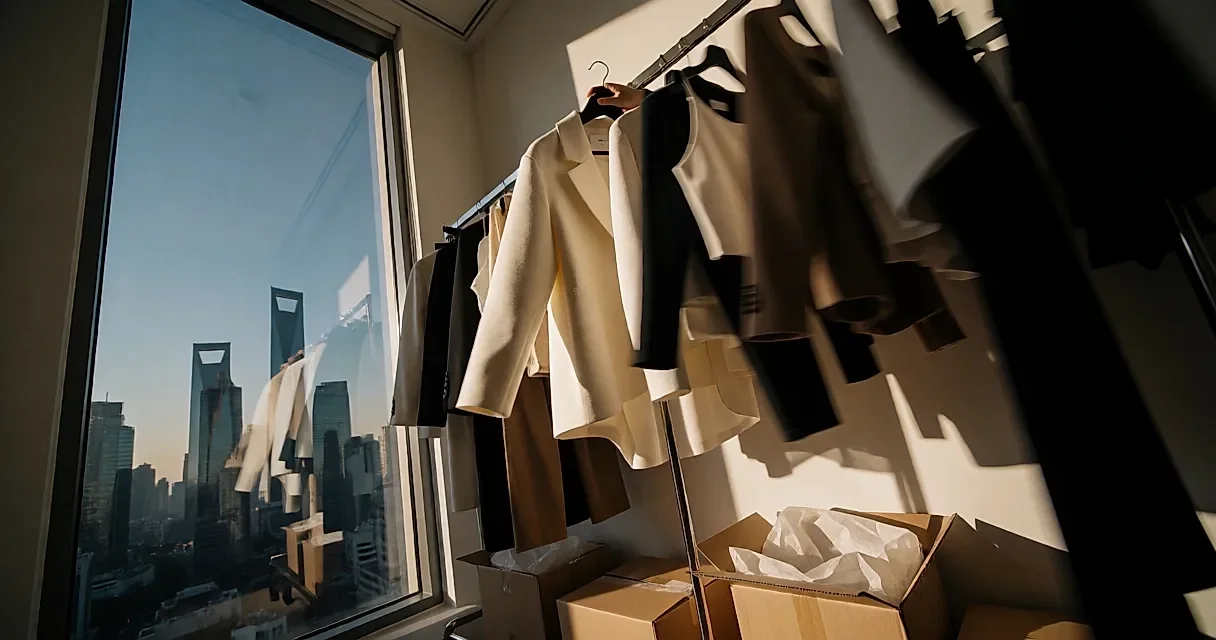
Shanghai is no longer just the till for international fashion groups; it has become the stage. Collections are shown there, campaign images are made there, store formats are trialled there before being exported elsewhere — or not exported at all. And that shift eventually shows up on our rails: the pieces that land here aren't always the ones that sold best out there.
A showcase first, a shop second
For a good decade, opening an address in China often passed for a strategy. The big groups — LVMH, Kering, Hermès, Chanel, Prada, Moncler — opened several stores across the country. The pace has changed: now the effort goes into the event, and the store becomes a studio. A presentation, an exhibition, an evening: the city's first job is producing the images that then travel everywhere else.
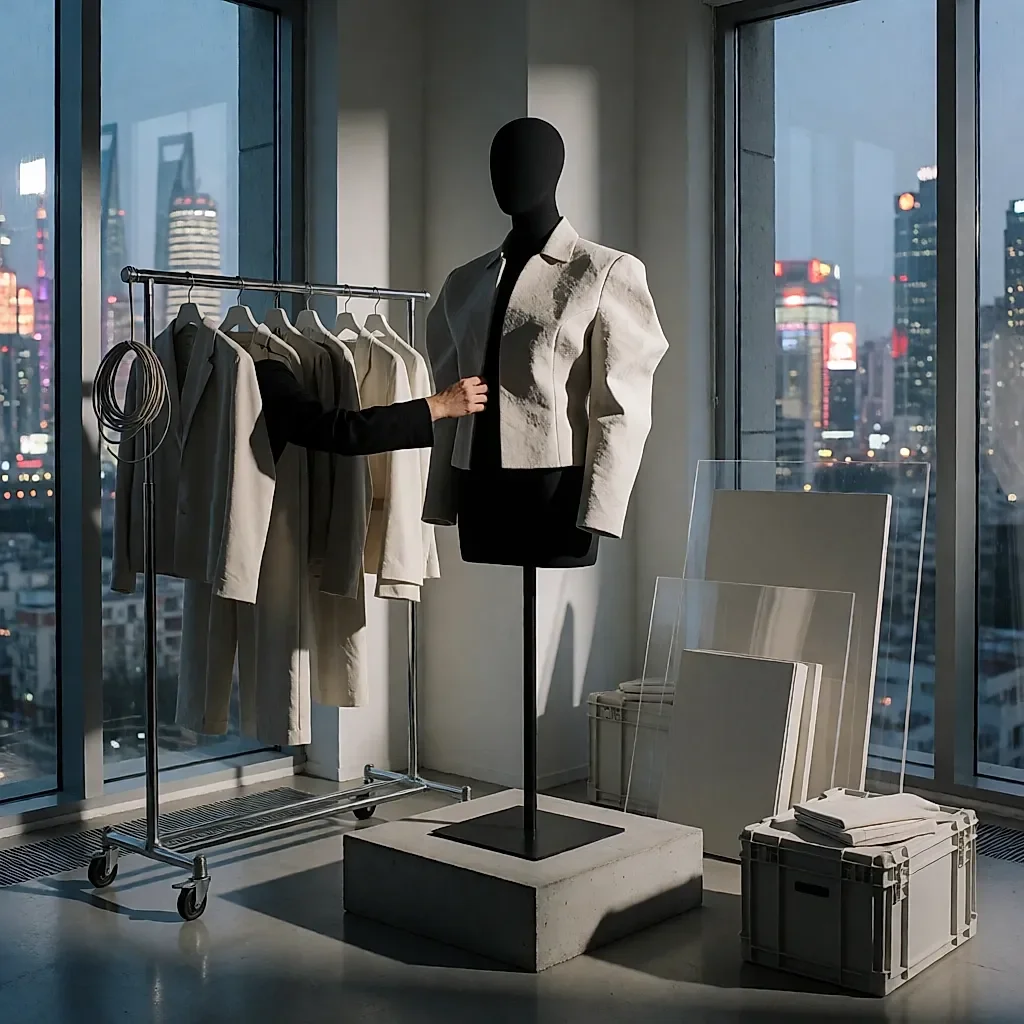
That is not a cosmetic detail. A showcase that sells less is still a showcase, but its job changes: it validates a silhouette, a set, a way of wearing something before any of it is rolled out. Hence the question doing the rounds in buying offices: does a piece made for the image really deserve a full production run?
The format moves before the clothes do
Before the cuts change, the formats do. Limited capsules, local editions, pop-ups lasting a few weeks, private appointments: houses are testing ways of selling that are lighter than a flagship and more flexible than a seasonal collection. The statement piece hasn't gone anywhere, it has changed status: a photographed object of desire, rarely the basic that actually fills a wardrobe.

The result is two-speed wardrobes: a heavily worked silhouette on one side (volume, drape, fabric), and a more commercial line on the other, quieter, carrying the turnover. You may have noticed it without quite putting words to it — the coat that stopped you in a window wasn't always the one that came in several sizes and colourways.
What actually makes it onto our rails
What reaches Europe is the filtered version of all that. The image pieces first, in reduced quantities, often in the big cities only. Then the capsules that went down well over there, picked up here in a different setting, sometimes without anyone quite knowing where they came from. Then the tailoring lessons: more defined shoulders, reworked sleeves, more fluid wools, designed for a wearer who isn't dependent on air conditioning.
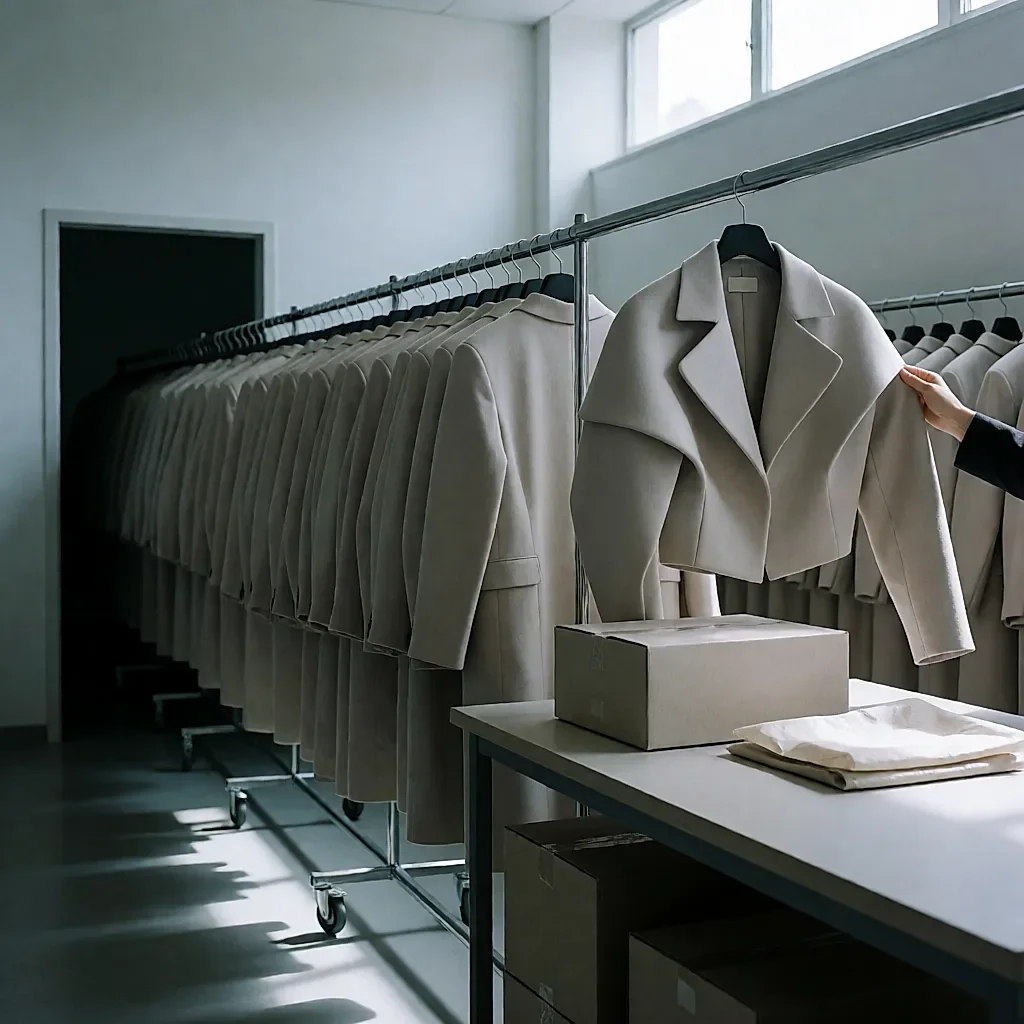
The side effect is a European wardrobe that is sometimes more spectacular than it used to be, and harder to live in day to day. A sculptural sleeve, a slippery silk: gorgeous in a picture, less straightforward with a laptop bag on your shoulder. Is that a problem? Only if you buy without knowing what you're buying.
Three signs a piece was designed for the window
- The fabric favours effect (very bulky bouclé, very fluid silk) over how it holds up in daily wear.
- It comes in only one or two colourways, the ones from the presentation.
- It needs something to hold it together: a pin, a belt, a layer underneath.
None of these is a fault. They simply tell you the piece needs a plan for wearing — and often a second fitting.
What it costs, and where to look
At the houses named above, a main-line wool coat usually sits somewhere between £800 and £2,200 depending on the house and the length; entry-level knitwear from the same world, around £220 to £450. Treat those as ballpark figures, since pricing shifts with house, stockist and season. Capsules and limited editions often cost more than the main line, with no clear logic to it: compare like with like, same piece, same fabric, before you commit.
And not everything happens in store: brands' own sites, department store concessions and resale all change the equation. On an image piece that rarely gets worn, buying secondhand often brings the bill down — provided you're willing to wait for the right size to turn up. If you want something to wear three times a week, this isn't your wardrobe: these are clothes for occasions.
What has really changed, in the end, isn't taste — it's circulation. Shanghai shows, Europe receives a selection, and the sorting falls to you: whether the image piece earns its place in your week, or whether the quieter, more commercial line does the job better. The best shop window, after all, is still the one you wear without thinking about it.


Comments
Your opinion matters: rate the article, react and reply to comments.
Comments are moderated; AI-assisted comments are flagged. Text emoticons (8-), :-), <3…) are automatically shown as images.