

A pair of suede ankle boots has a way of catching the light and holding the eye. You love them for their soft, understated nap, for the way they soften raw denim; you dread what a shower can do to them. And yet it all comes down to what you do beforehand: suede doesn't respond well to last-minute panic. It needs preparing.
Suede isn't fragile, it's porous
Suede is leather with the flesh side left on, sanded to that soft, velvety nap. The surface is a little too fond of water: it absorbs it, holds on to it, then leaves a darker water mark that shows up before anything else. It's not irreparable, but it's not pleasant either.
Hence the case for treating it in advance. A protector spray won't turn a boot into a wetsuit — let's be clear — but it slows absorption and buys you time to react, rather than watching the mark take hold faster than you can react. On a new pair, it's worth the investment, and it costs far less than a trip to the shoe repairer.
Two coats, then patience
The rule is three words: clean, dry, patient. Use a crepe brush — or a soft brush kept just for suede — to lift dust and that grey film, including along the seams. If the suede is damp, even slightly? Wait, somewhere airy and away from the radiator. Protector clings poorly to a greasy or soaked surface, and that's how you waste a whole can for nothing.
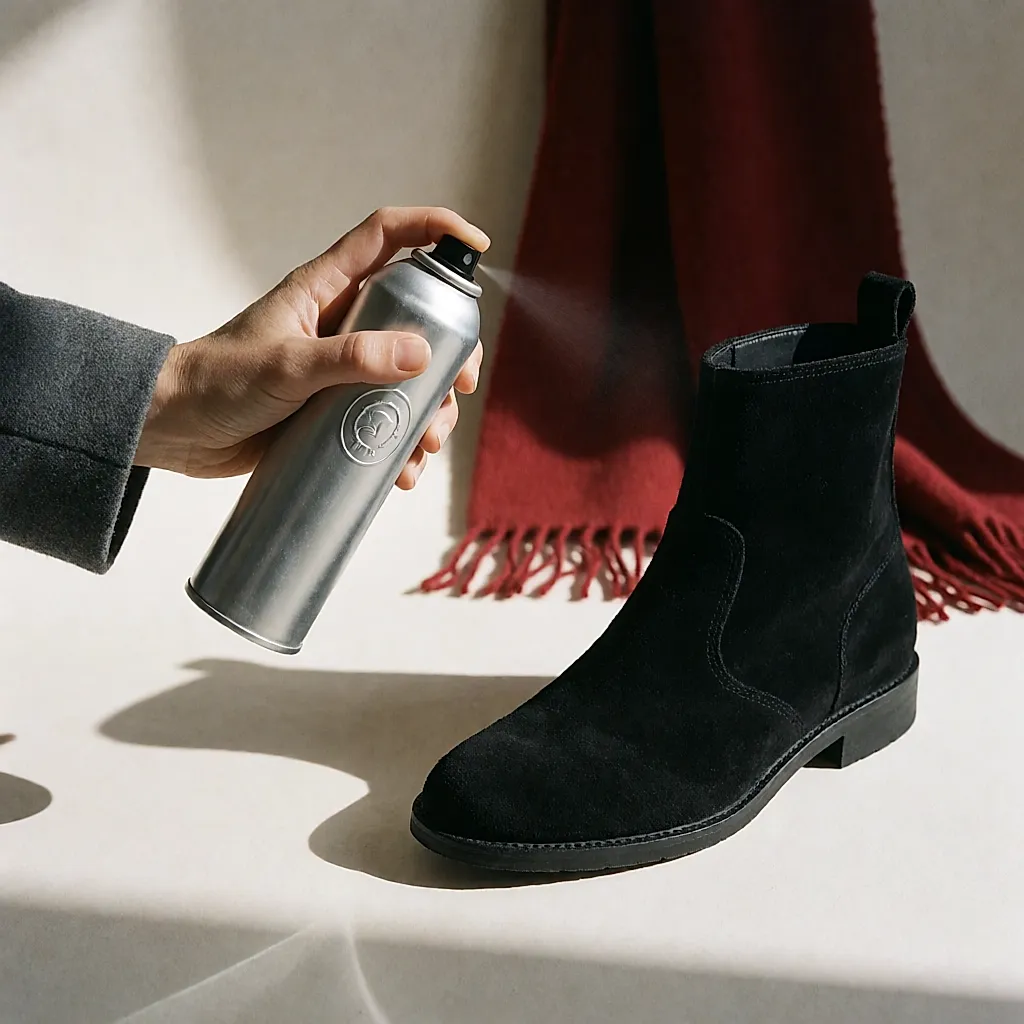
Then spray in light criss-cross passes, about 20cm from the material, in a ventilated room. One first coat, then let it dry completely. In practice, apply thin layers according to the instructions and let each one dry between passes. Once you've finished, wait until the suede is completely dry before the first outing. It's slow, it's frustrating, and it's exactly the delay that saves you from nasty surprises.
The habits that do more harm than good
The natural reflex — rubbing straight away with a damp cloth — is the first one to unlearn. Soaked suede can harden as it dries, lose its nap and spread the mark rather than contain it. Blot, don't rub, and leave it to dry in the air.
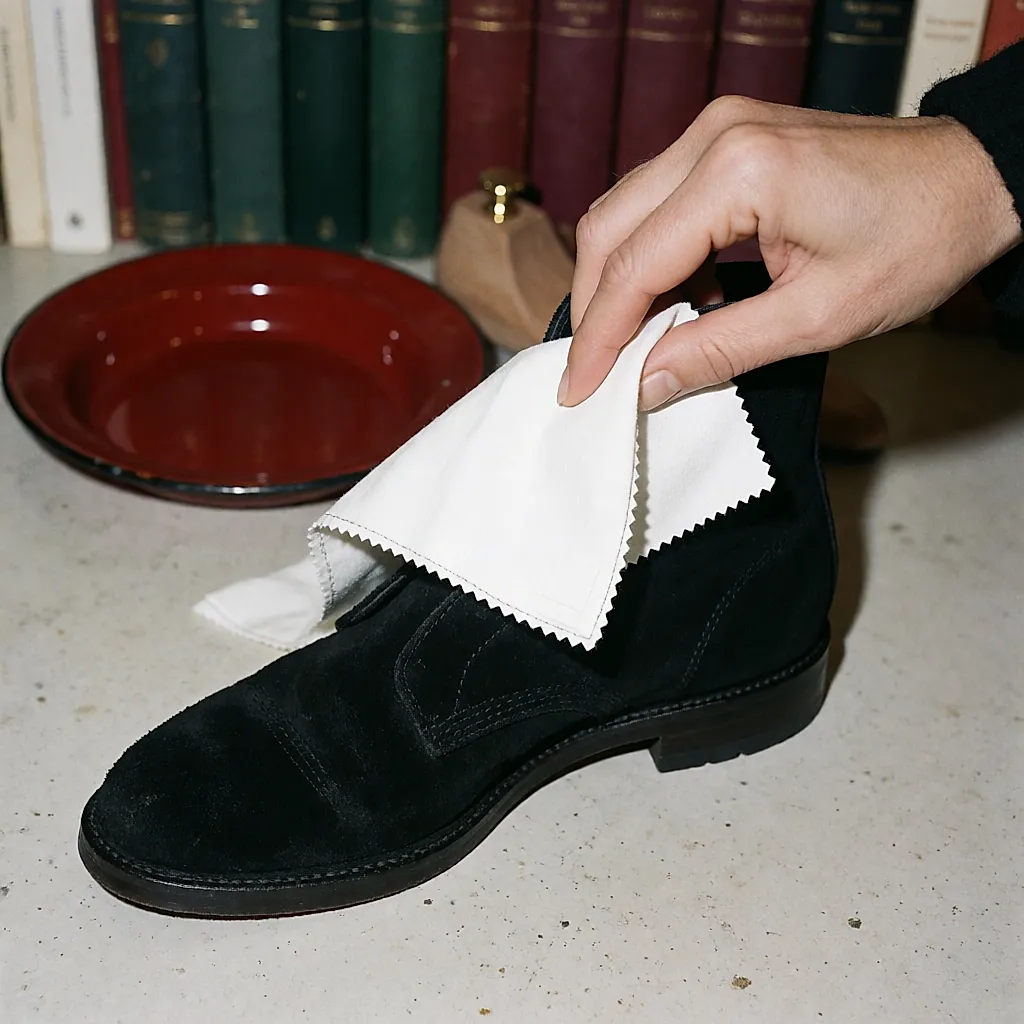
The second trap is heat. The radiator that seems like a good idea on a November evening, the hairdryer on full blast, the washing machine out of laziness — leather dislikes both rough treatment and baths, and it makes you pay with cracks and stiffness. As for road salt, it leaves stubborn white marks: a barely damp cloth followed by natural drying is better than a generous rinse.
When the mark is already there
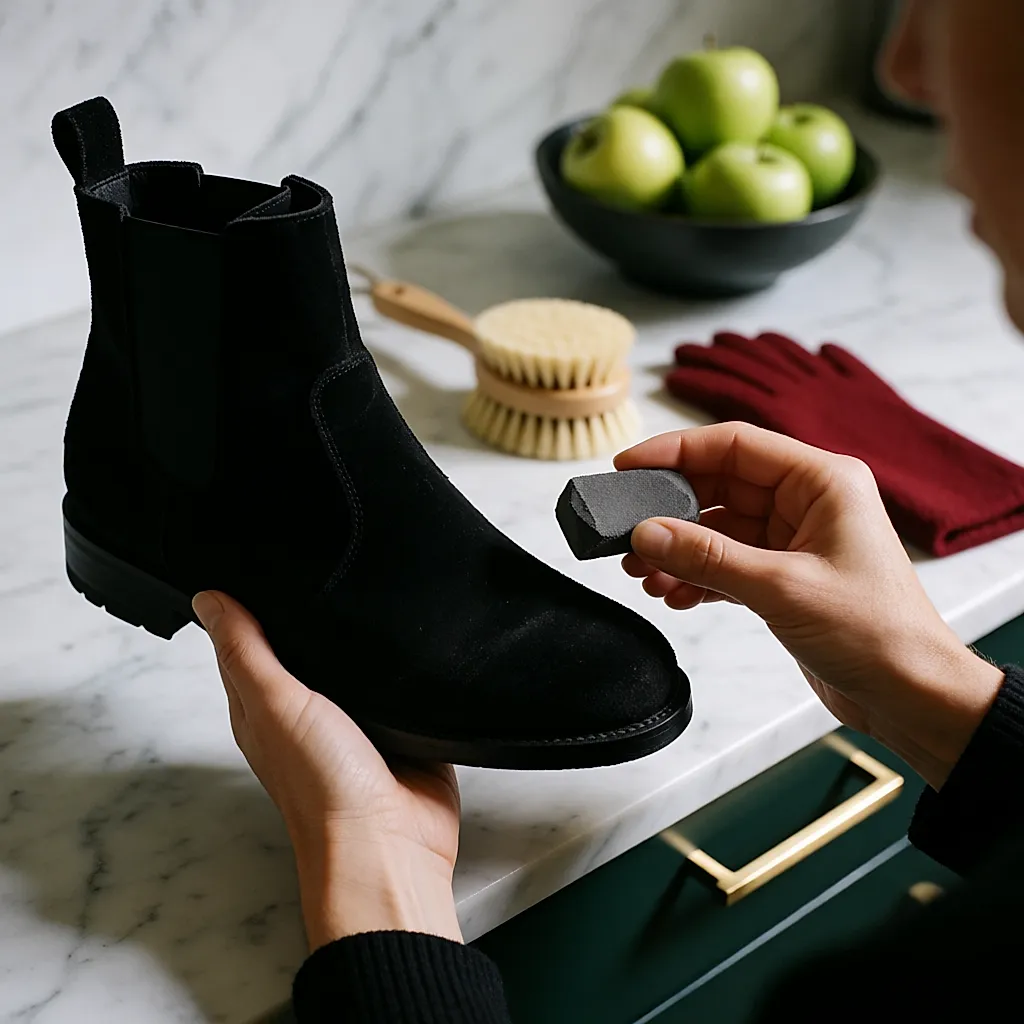
For a pair that's already marked, the order changes: brush dry, use a suede eraser on the grainy areas, and if the trace clings on, the shoe repairer remains your best friend. Expect to pay £20–£45 for a full clean, depending on the pair and the city — sometimes more than a preventive treatment, often less than a new pair.
And then there's the more personal decision: wearing them anyway. A suede ankle boot that has lived a little gains a patina that new ones don't have; some marks tell of a gig, a walk under the trees, a Sunday that went on longer than planned. If the mark stops you wearing the pair, it's no longer serving its purpose. If it annoys you without stopping you, a quick brush and you own it — that's part of having style, too.
In the first few minutes: use a clean, dry cloth, blot without rubbing, leave to dry at room temperature, and don't apply heat. Once dry, a pass with a brush is often enough to put the nap back in order. The rest is a job for the shoe repairer — or part of the patina.
What protection costs
A can of protector spray costs roughly £7–£18 from a high-street shoe shop, supermarket or shoe repairer, and one can easily last several seasons for one pair. Add a crepe brush (£4–£10) and an eraser (£3–£7): the full kit costs about as much as lunch, and it'll come out again year after year. For pale or very supple pairs, having the treatment done by a shoe repairer (roughly £12–£25) remains a good compromise if you don't feel confident with the can.
As for the formula, look for a clear ingredients list and, where available, a water-based version rather than a solvent-based one — the room where you spray it will thank you. And always check that the label says 'suede and nubuck': some products for smooth leather darken the material and leave it stiff and cardboard-like.
One calm truth remains: a suede pair should be protected when all is well, not on the evening when the sky has already made its decision for you. Two coats, a night's wait, a cloth you don't wet — and you're left with shoes that go with you without demanding attention. Suede then keeps its best quality: a nap that gains patina, and the look of never having had to hurry.

Comments
Your opinion matters: rate the article, react and reply to comments.
Comments are moderated; AI-assisted comments are flagged. Text emoticons (8-), :-), <3…) are automatically shown as images.