
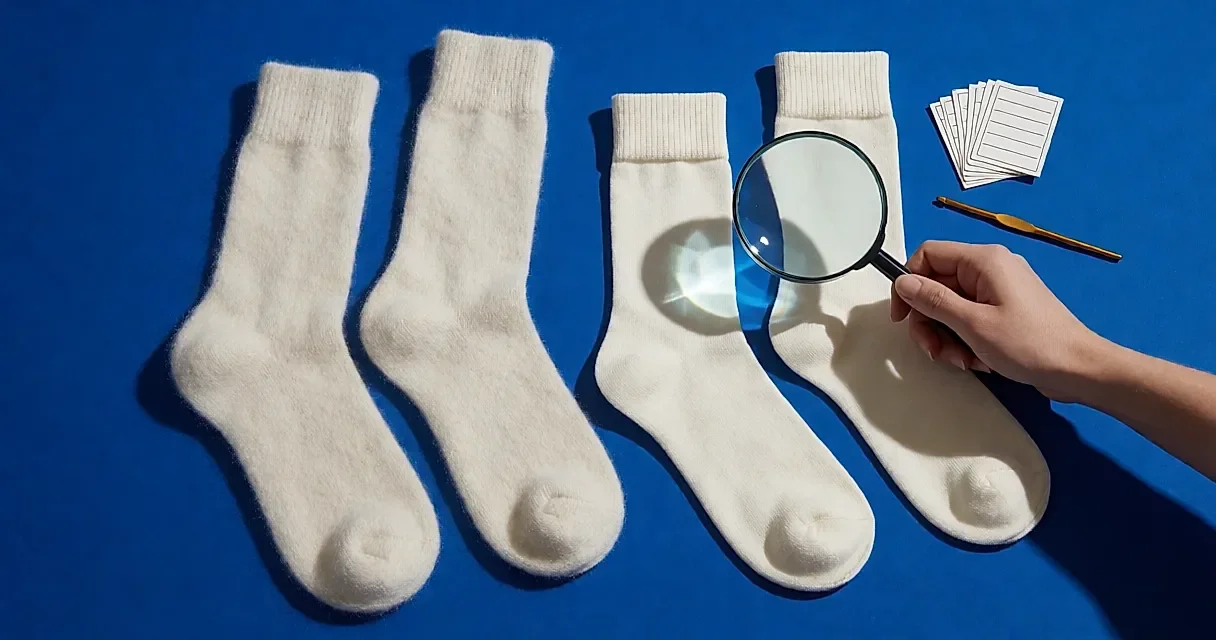
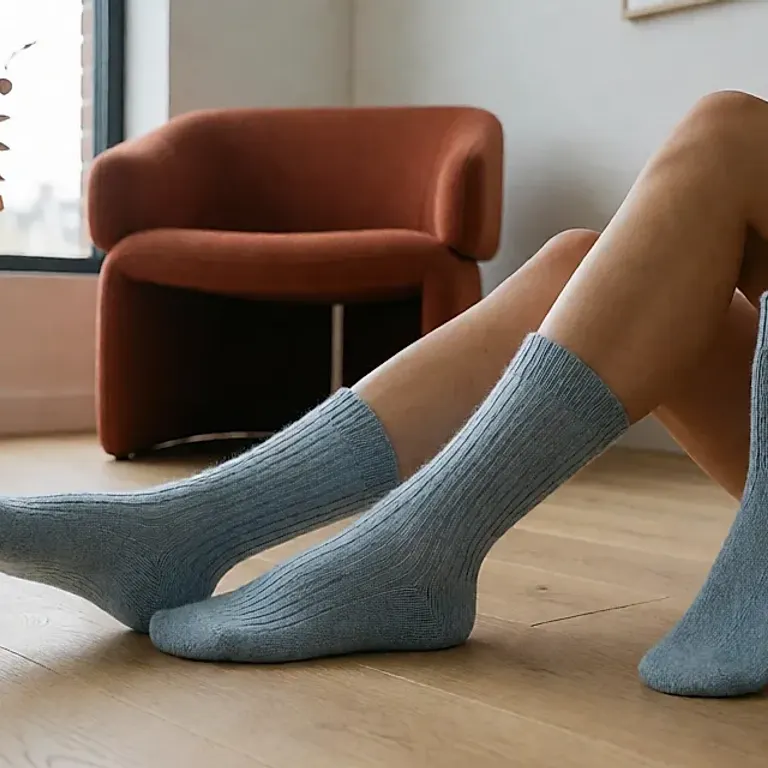
On the label, every pair promises warmth. In the real world, that promise is decided somewhere else. Warmth starts with the fibre, and how the sock sits on your foot deserves as much attention as the word "cosy" on the packet. Not all fibres are equal, especially when synthetic content takes up most of the label.
Wool versus acrylic: check the fibre first
Lay two pairs side by side on the bed: same colour, same "warm" claim on the packet, similar price. One lists 70% wool, 25% polyamide, 5% elastane. The other, 85% acrylic, 10% polyester, 5% elastane. The first traps still air in the crimp of its fibres and absorbs some moisture without that cold, damp feeling. The second takes up sweat less well: moisture sits on the surface, and the chill can set in sooner.
The word "wool" on its own isn't enough either. A thick, coarse wool is warm but can itch the moment it sits against skin. Merino wool, which is finer, stays soft and slips under trousers without drama. You won't always see fibre fineness on the label; the percentage, however, has to be there. So read the composition before "cosy", before the fireside photo, before anything else.
Room in the shoe matters too
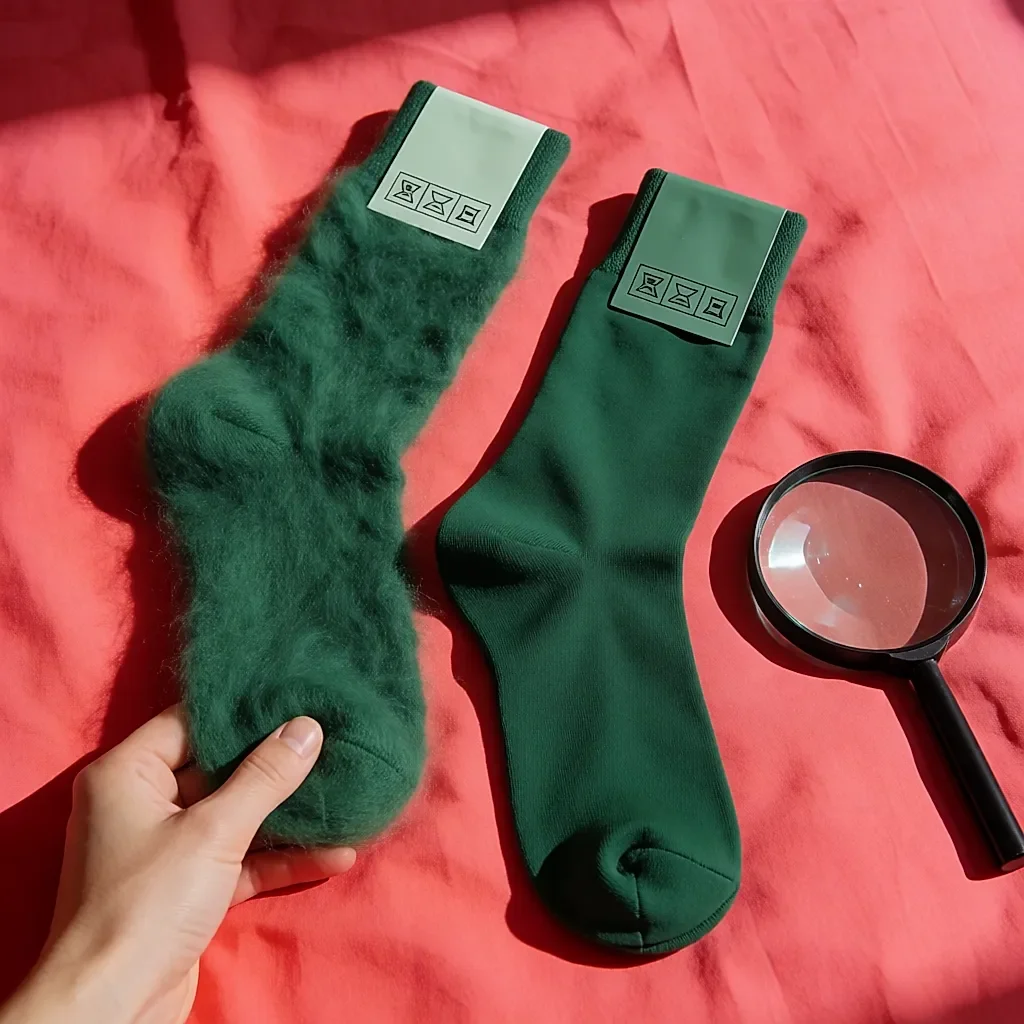
A very thick sock inside a snug boot can compress the foot and increase rubbing; toenails can suffer. You don't need a cushion: you need a pair in your size, free of wrinkles, with a knit that doesn't flatten inside the shoe. A fine, well-knit wool sock often does a better job than a chunky looped one in a court shoe.
What a genuinely warm pair costs
On the high street, expect to pay somewhere around £5 to £10 a pair, often with a hefty dose of acrylic or polyester. For a pair that is mostly wool, budget more like £15 to £30, depending on how fine the fibre is, how much wool is in the blend and where you buy: a sports shop, a specialist online brand, a haberdashery, a recycled-wool label. Fine merino tends to sit between £25 and £35.
What moves the price? Fibre fineness, the gauge of the knit, the wool content and European manufacturing when it's stated. Above all, compare the wool percentage with how much room the synthetic fibres are given: that's where the real difference in warmth lies. Buying second-hand, whether in a charity shop or online, check the composition on the label before you take it home.
Two pairs, not twelve
A drawer full of average pairs is no substitute for two good ones worn in rotation. Alternate them: rotation is what puts the least strain on the knit.
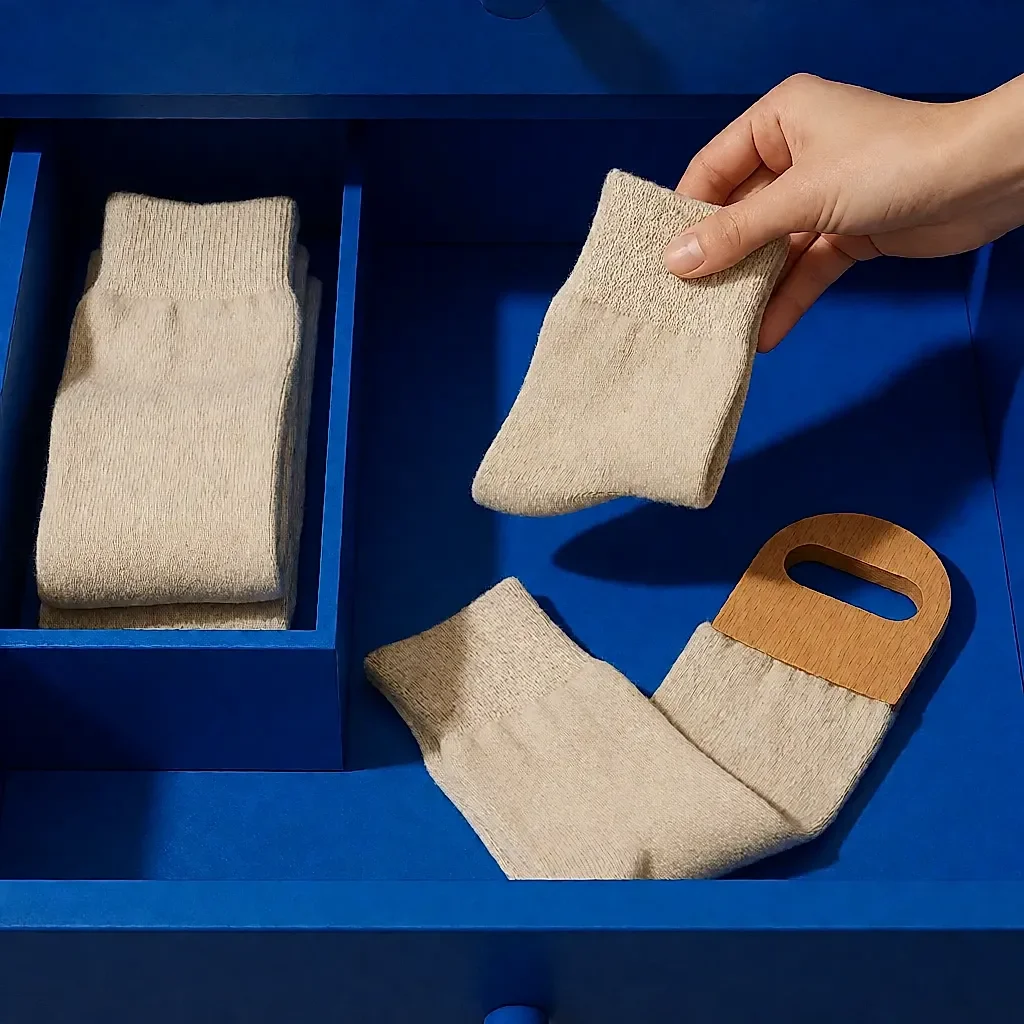
And if your budget only stretches to one pair, put it into the composition and a style that stays put on the foot. The rest is usually well-packaged marketing.

Comments
Your opinion matters: rate the article, react and reply to comments.
Comments are moderated; AI-assisted comments are flagged. Text emoticons (8-), :-), <3…) are automatically shown as images.