
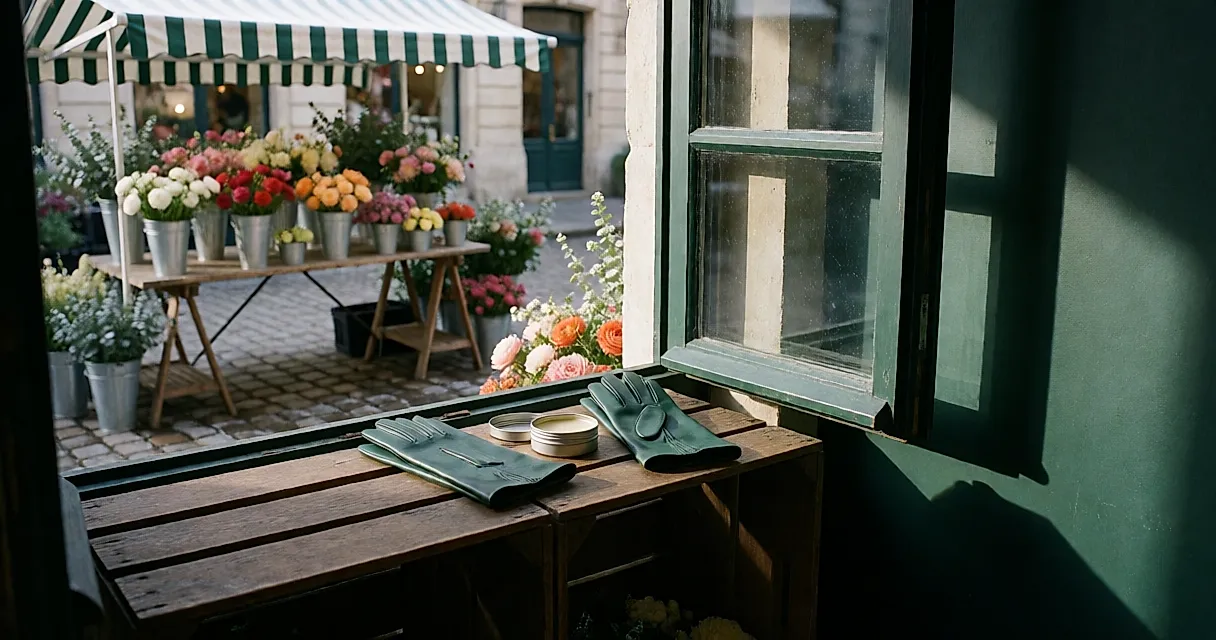
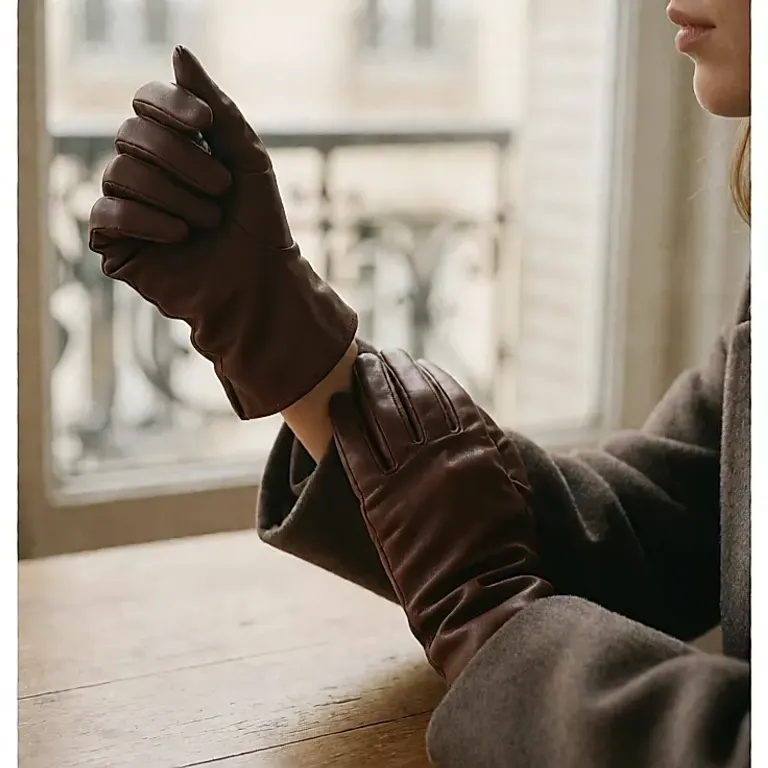
A leather glove doesn't so much wear out as dry out. Take the pair you inherited from some long-ago winter and dig out again in November: the seams are still holding, but the leather has gone the texture of a Ryvita. You pull them on with a sigh and decide you'll have to buy new ones, when all they actually need is a little grease and a night of patience.
Leather has no oils of its own
A glove is tanned skin, and skin without oil eventually tightens, pales in the creases and loses its drape. You know the symptoms: the pair that creaks as you open it out, like an old purse, knuckles that leave marks, an inside gone scratchy. Nothing is broken; everything is thirsty.
The difference from a bag or a pair of brogues? Thinness. A glove works every time you open your hand — stretching, folding, rubbing against your cuffs. It's the piece of the winter wardrobe that takes the most punishment in the thinnest material. Hence the annual date: one conditioning session per winter, before the first frosts, rather than a panicked replacement.
Clean first, condition second
The order isn't negotiable. Condition a dusty pair and you seal a layer of grime under the balm; the leather goes grey from the inside. Take a clean old cotton T-shirt, dampen it slightly and wipe over the whole surface; a soft old toothbrush will get into the seams and the gaps between the fingers. No detergent, no soaking — a gentle leather soap only if the pair has really lived, otherwise the cloth is enough. Then let them dry in the air at room temperature.
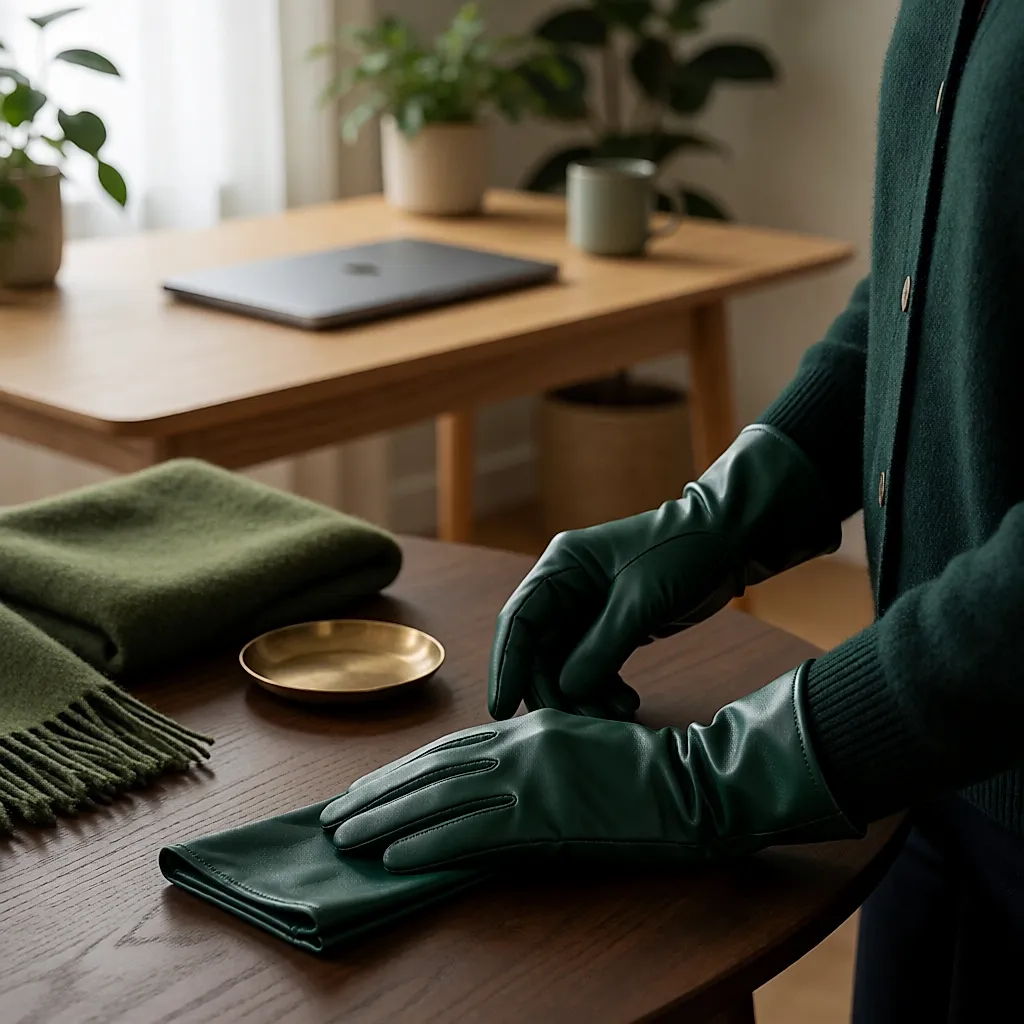
Now the step that counts: a pea-sized amount of balm per glove, warmed between your palms to loosen it. Massage in small circles, working it into the palm and into the creases across the back of the hand. And here, hold back — a thin layer, not a buttering. Excess product leaves a tacky film that picks up dust and marks pale coats.
As for what's in the tin, keep it simple: a grease or balm based on beeswax, neat's-foot oil or tallow, in a glass or metal pot, with a short ingredient list. Some products based on silicone or petroleum derivatives mainly form a film on the surface. A vegetable-tanned leather, which costs more in the first place, particularly appreciates this kind of gentle care.
One night, well away from the radiator
Then leave them to work. Gloves laid flat on a cloth in a room at normal temperature, for a whole night. Not on the radiator — heat dries the leather instead of letting it drink — and not in a plastic bag, where damp gets trapped.
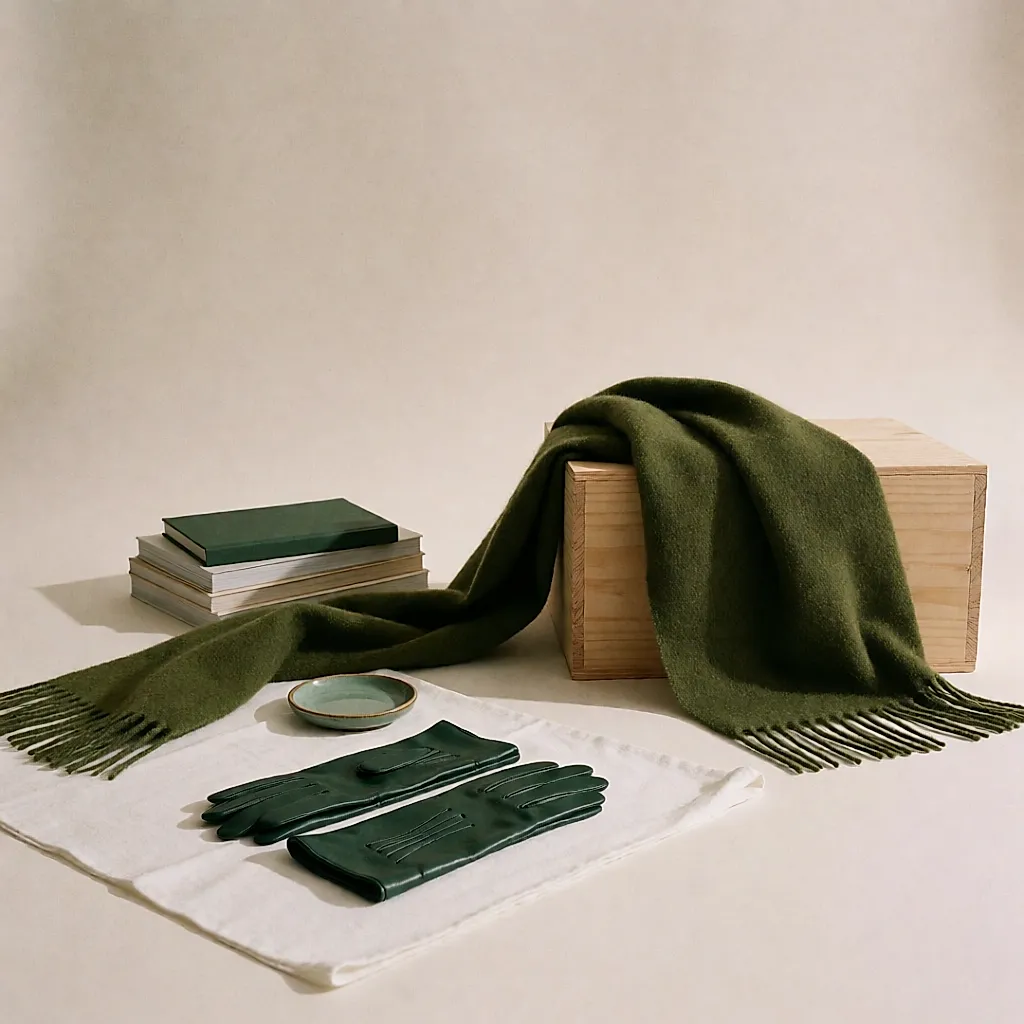
Next day, a dry cloth lifts the excess and the pair is supple again. One detail that makes all the difference: never condition the lining (wool, cashmere, silk). The balm settles in the fibres, the lining goes scratchy and the wool loses its warmth. Feed the outside; leave the inside alone.
The thumb is the diva of the pair
It's the first area to give way, and it's no accident that every cobbler's repair starts there: the thumb seam takes every movement of the hand, every pocket rummaged in, every key turned. Get into the habit of checking it once a winter, easing the two edges gently apart so you can see the thread.
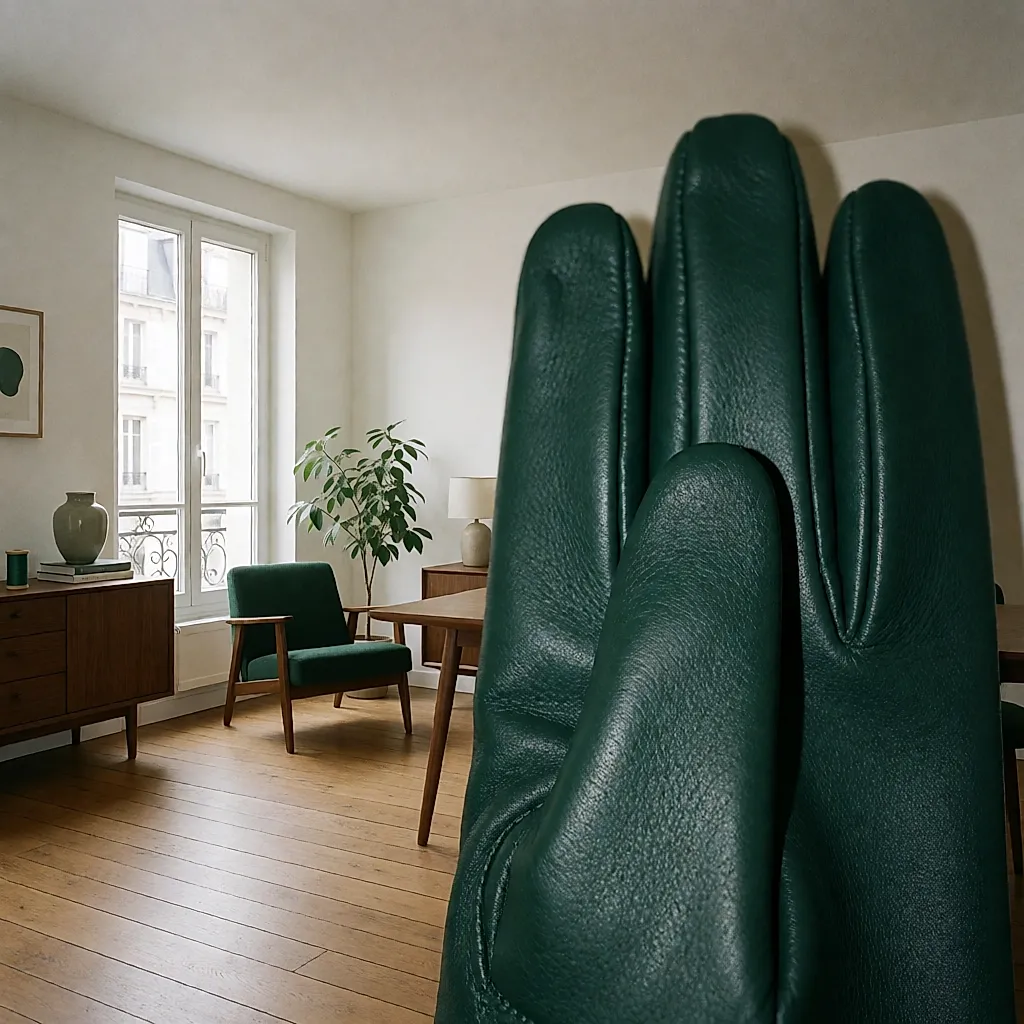
If the stitches are going pale or starting to fray, get them to a repairer before the split opens. A few pounds for a repair against the price of a new pair — the maths does itself. A thread that gives way in January, in the street, with a phone to pull out of your pocket: that's how a glove is lost for good.
The three signs of a thirsty pair — the leather feels cold and stiff, it pales when you fold it, and the inside scratches. Two out of three? The conditioning can't wait until the end of the month.
What it costs
Expect somewhere in the region of £8–£20 for a decent pot of grease or balm, from a hardware shop, a cobbler or a saddler — and that pot will last several winters of gloves, even used generously. A seam repair at a cobbler usually comes in at £5–£20 depending on the town and the work involved; a full conditioning job handed to a professional rather than done at home sits at £15–£30.
A new pair starts at around £40 in basic lined leather and climbs quickly past £150 for soft hides, vegetable tanning or a cashmere lining. What moves the bill: the town, the fineness of the leather, the lining and the label. The best bargain is usually the pair forgotten at the back of the drawer — as long as you give it its night of balm.
And if you really do have to buy, go for a pair slightly on the large side rather than snug, soft leather rather than patent, and check how much synthetic fibre is in the lining: a wool lining keeps hands warm, while a synthetic lining can be less breathable and trap moisture, which may speed up wear. There you have it. All that's left is to find the pair at the back of the drawer and grant it its night's rest — it will repay you until spring.

Comments
Your opinion matters: rate the article, react and reply to comments.
Comments are moderated; AI-assisted comments are flagged. Text emoticons (8-), :-), <3…) are automatically shown as images.