
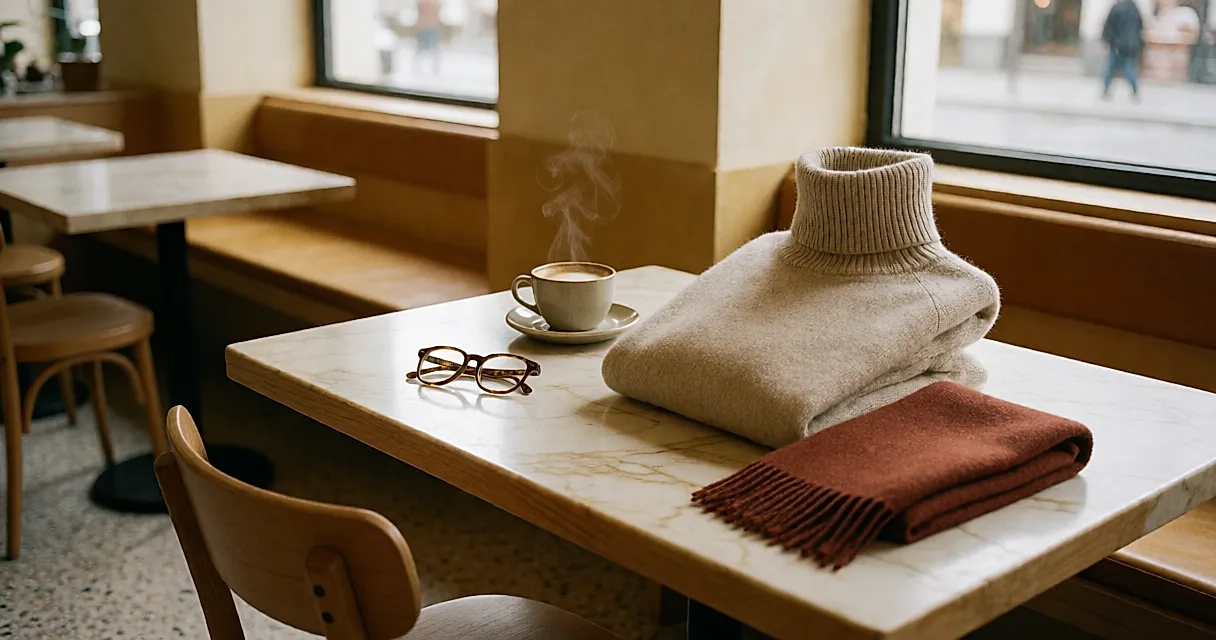
A scarf ties, gets left on the back of a chair, catches in the car door. A high neck doesn't come off: it holds its own, or it gives you a hard time. The whole difference comes down to a detail most of us never check in the shop — the fastening.
The fastening decides, not the height
You think you're choosing a height: 12cm, 18cm, funnel neck versus roll-neck. In reality, what decides whether you'll wear a piece for three winters or three days is how it does up. A collar buttoned to the chin opens into a V at lunchtime; a zipped collar keeps its shape without any fuss, but lets you adjust it to suit your mood. Buttons or zip, then — the real question is not the one you thought you were asking.
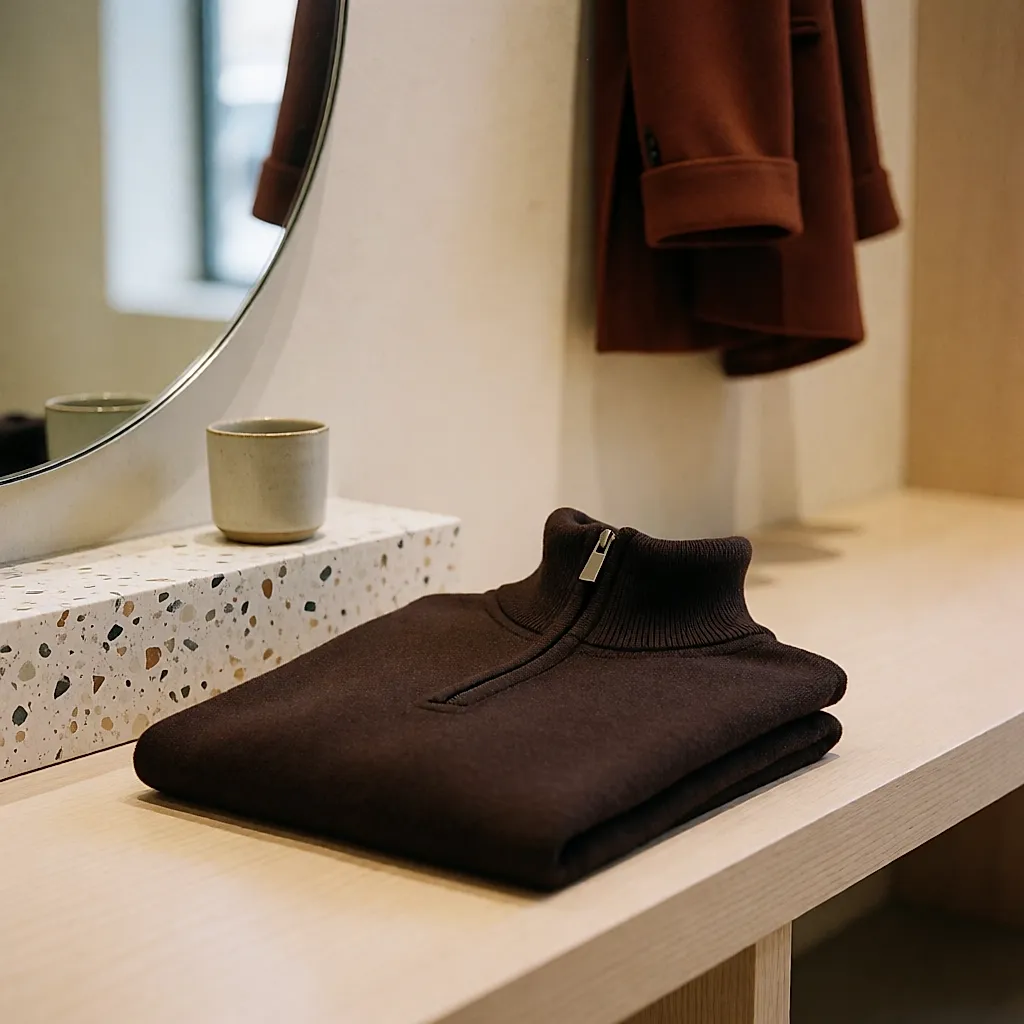
The second detail is the lining, or the double knit. A high neck in a single knit that droops looks like a tired flower by the second hour; lined or tightly knitted, it stands up on its own, which is exactly what you ask of it. When it comes to fibre, check the synthetic content before the price tag: merino wool, cashmere, recycled wool — these last the day and breathe.
What a scarf can do, and what a high neck does better
The most concrete advantage isn't warmth, it's the silhouette. A scarf wrapped three times is charming outside a cafe, less so when you have to get a coat over it, then a bag, then the coat on the other side. A high neck slips under a coat without a scarf and makes layering lighter without taking away warmth.
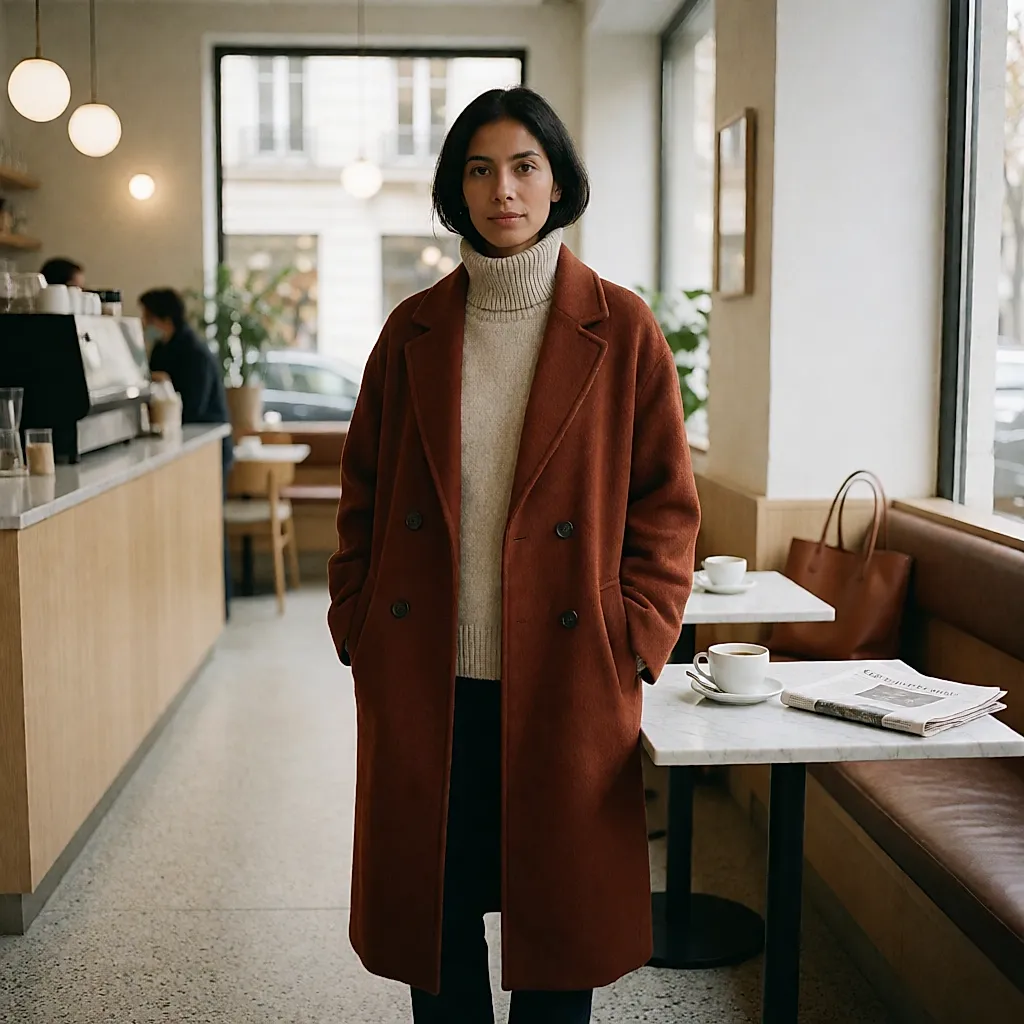
The compromise? A scarf can be adjusted to the millimetre; a high neck can't. If your face is cold but your neck isn't, a scarf still wins. If your back is cold and your neck gets exposed every time you bend down, a closed collar does the job a scarf never quite manages. And in the evening, in a restaurant, the top stays on when the scarf is already folded over the armrest.
Three things it interferes with
A high bun, a sleek ponytail: with a collar that comes up to the chin, putting your hair up becomes a decision you have to make before you walk out of the door. The ends end up flattened, your neck sits at an odd angle — it's silly, but it sets the tone for the morning.
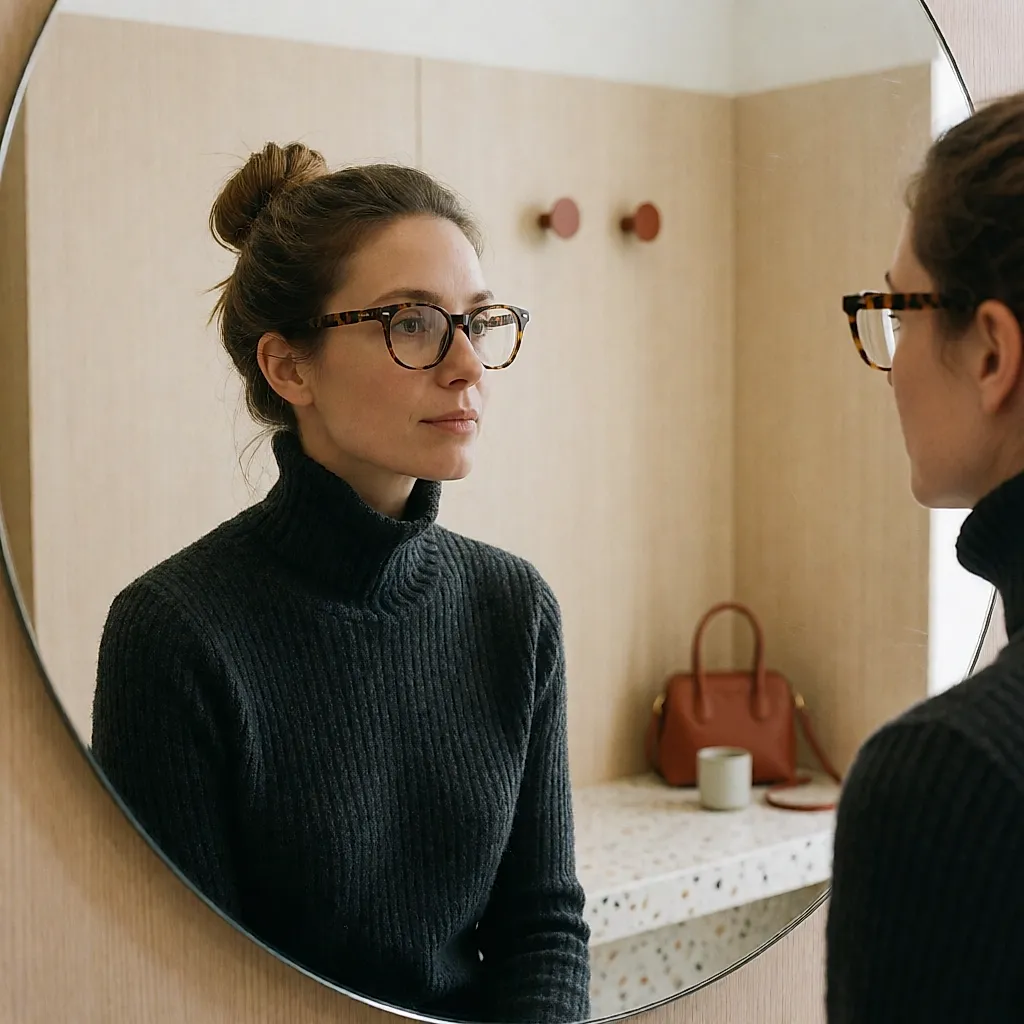
Then glasses, which you find hooked on the collar, then in your hair, then not at all. And headphones, whose cable catches on the neck opening. Then make-up: a wool collar absorbs foundation and leaves a pale mark on your chin by three in the afternoon. Nothing dramatic; just worth knowing before you commit.
Where to try it, and what to ask of it
In the changing room, three movements are enough. Turn your head firmly to the left, then to the right: if the collar loses its shape, or you have to pull at the knit to see behind you, it won't last the day. Raise your arms as if you were hanging up a jacket: a well-cut collar doesn't ride up to your ears.

The third test is the one we forget — the door. Go through the changing-room door pushing it with your shoulder, hands-free: if the collar gapes with every movement, you'll spend the winter holding it with one hand.
The test that beats all others: let go of the collar and step back from the mirror. If it holds its shape without being held, it's yours; if it slumps, opens or twists, move on to the next piece. Keep your coat and scarf beside you while you try it on: that's what the piece will have to live with, not just the mirror.
Budget: what the prices tell you
As a rough guide, expect to pay around £30 to £70 for a decent high-neck knit — cotton, recycled wool, a blend — from a supermarket clothing range, online or from an accessible knitwear brand; online usually gives you the widest choice of sizes. Expect £90 to £220 for a fine merino or a decent cashmere, from a specialist shop or second-hand if the first owner looked after it.
Second-hand is often the best find: a high neck rarely wears at the elbows, and good-quality knit is easy to spot by the collar lining. For care, wash it less often and cold — felting is unforgiving, unlike jeans, which forgive everything, including what you never asked of them. And check the fibre content before falling for the colour: a pretty shade never rescues a knit that droops.
That leaves one question, and it settles things better than any argument: in the mirror, can you turn your head without holding your coat with one hand? If you can, you've just gained a scarf every time you head out. If you can't, keep the scarf — it's prettier than a collar that makes you walk like a robot.



Comments
Your opinion matters: rate the article, react and reply to comments.
Comments are moderated; AI-assisted comments are flagged. Text emoticons (8-), :-), <3…) are automatically shown as images.