
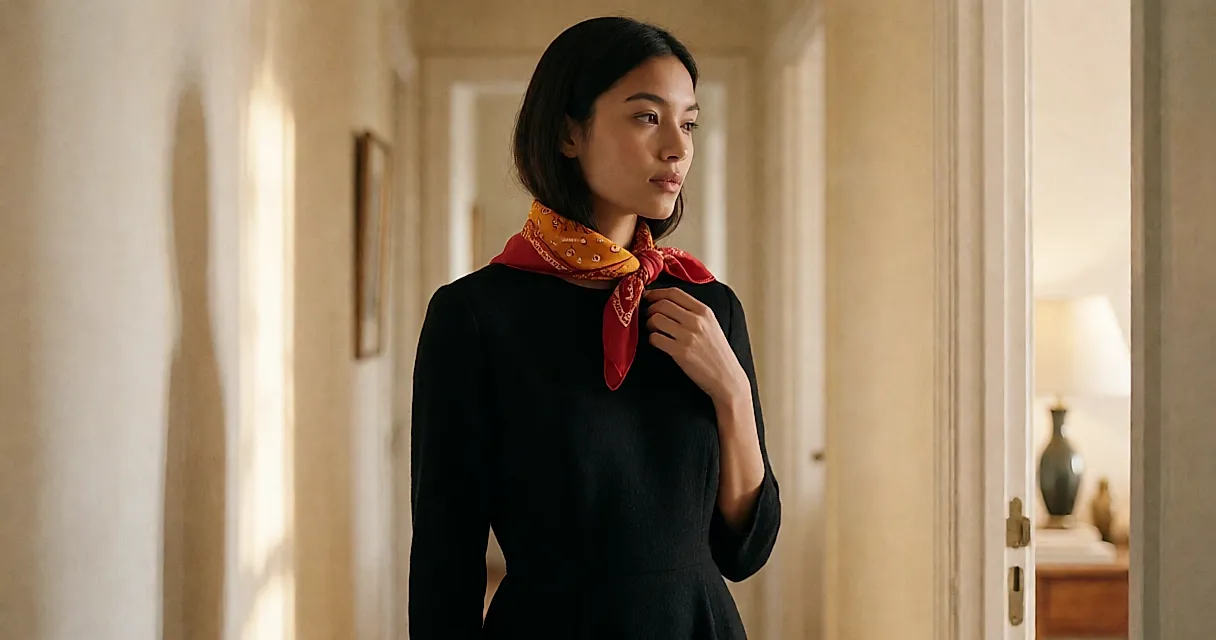
'Cocktail, come as you are,' says the invitation—and there you are at the wardrobe, facing the black dress that has already seen three New Year's Eves. What exactly is it missing? A little colour; a pattern that turns heads without shouting. A bandhani scarf is just the thing: a hint of India, jewel-bright dots, and a far more serious history than its confetti-like appearance suggests.
A cloth with history
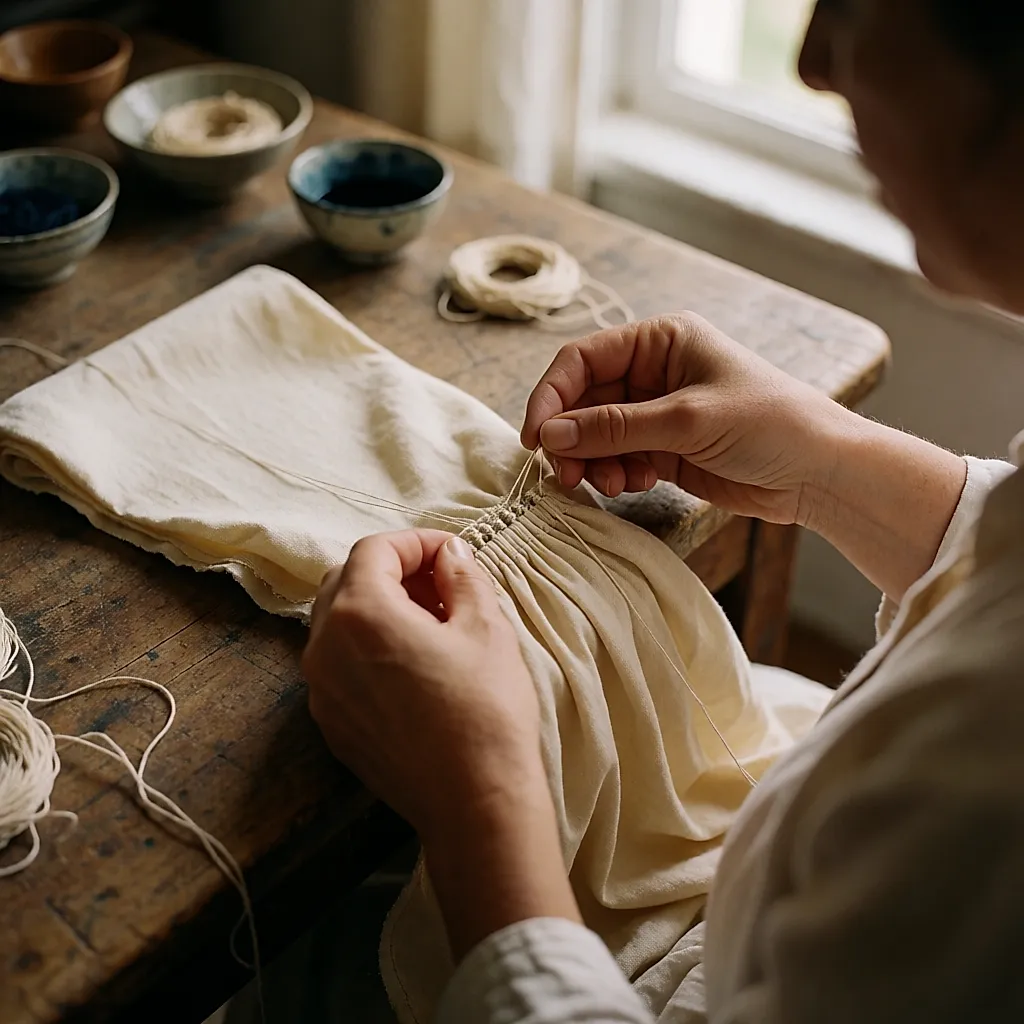
The name comes from bandhan, 'to tie'. The principle is as old as the trade routes of Rajasthan and Kutch: pinch the fabric, bind it with thread, knot it, repeat—then plunge the cloth into the dye bath. When the ties come undone, each one has left a small pale dot ringed with colour. In other words, what looks like a print is actually a map of knots tied one by one, by hand, often in artisan families where the gesture is passed down.
There, bandhani is not a festive-season accessory: it is worn for Navratri, for Diwali, for weddings, in shades of red, saffron and yellow that speak of celebration. Our December parties simply give it a different backdrop. And, frankly, it is a fair swap.
What it does for a winter outfit
Take the all-black look everyone lives in come January. Tie a bandhani scarf at the neck and the silhouette wakes up: the dots create rhythm, the eye catches, and the outfit becomes a statement without having to change the dress. The scarf also works as a headband, tucked into the neckline of a wool coat, or rolled into a belt at a defined waist.
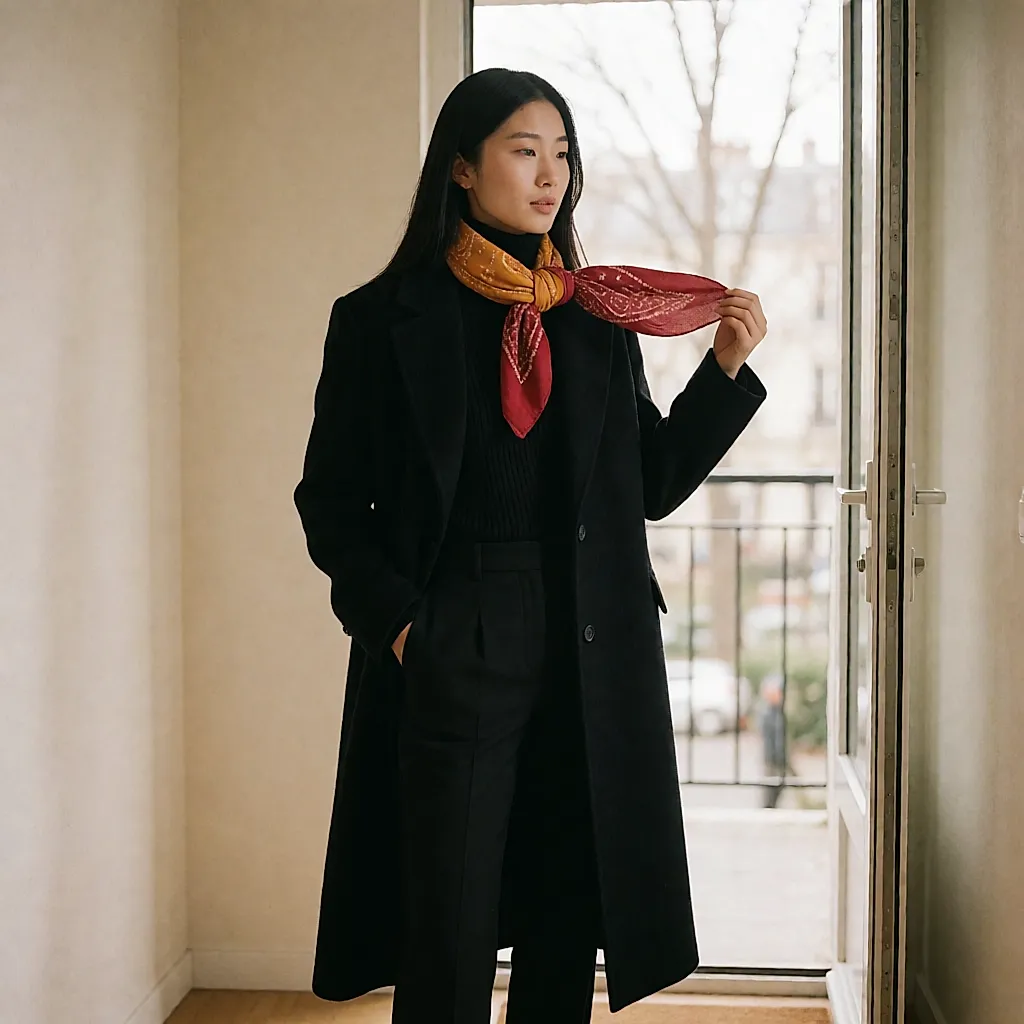
One caveat, though: if the outfit is already heavy on print, sequins and jewellery, bandhani starts to shout. It likes a calm background—solid colours, matte fabrics, clean cuts. It is a fabric for contrast, not competition. More of a head-to-toe minimal dresser? A small square, worn close to the neck, is plenty.
Silk or cotton?
Silk has the most fluid drape, a discreet sheen across the dots, and that dressed-up quality that rescues an impromptu dinner. The trade-off is that it marks easily, dislikes tap water and perfume sprayed from 20cm away, and you have to accept it: a silk scarf lives with a few cloudy marks.
Cotton and muslin are more matte, more straightforward and easier to live with—a cold-water rinse, dry flat, done. This is the version to try over a Monday blazer as well as a Sunday-night coat. Either way, check the label: if the synthetic fibre content climbs, colour retention and handle change, and the fabric breathes less.
How to spot real bandhani by eye and touch
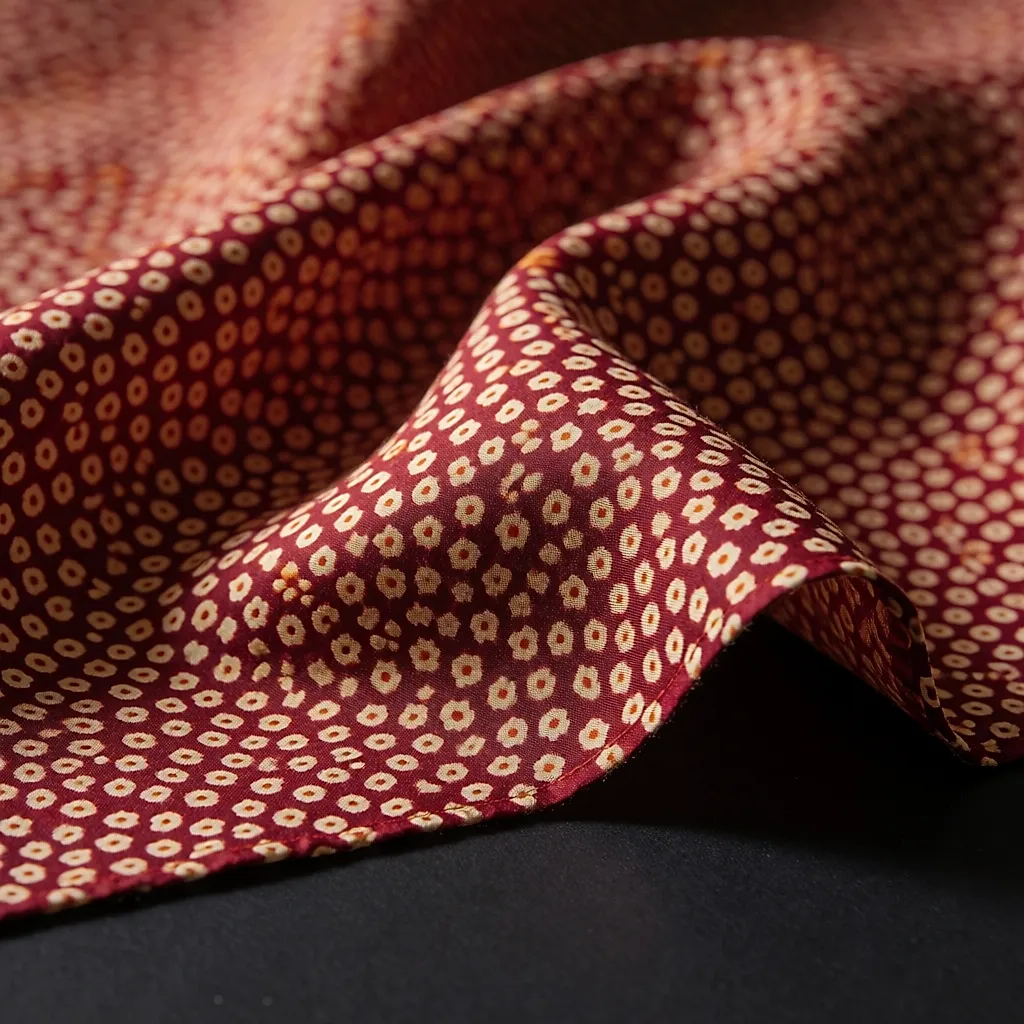
Start by turning the scarf over. On a true bandhani, the reverse of the fabric keeps the marks of the ties—small reliefs, an imperfect regularity. A print is too neat: the dots repeat to the millimetre, without the slightly living breath of handwork. Count the dots, too: the more there are, and the tighter they sit, the more time the piece took—and the more the price makes sense.
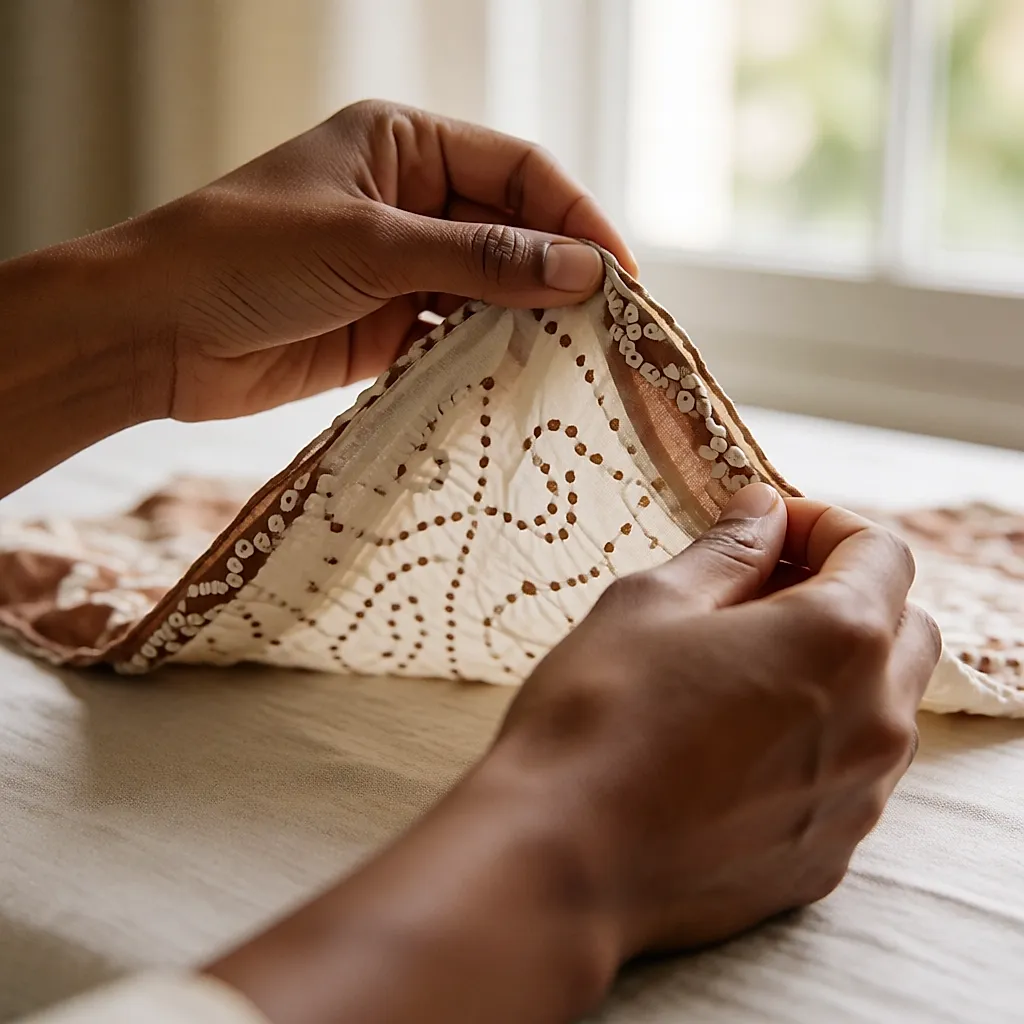
Can a printed pattern do the job? Yes, if you simply want a hit of colour for one season and the budget won't stretch. But you are then buying an Indian print, not a bandhani—and that is fine, as long as you know it.
The wrist test: roll the scarf to about 3 cm thick. A fine silk stays supple and light; a good cotton does not break into stiff creases. If the fabric rustles like paper, there is probably synthetic in the mix.
Budget and where to find one
As a rough guide on the UK market, expect to pay around £25–£60 for a medium cotton or muslin scarf, and £80–£250 for a large, hand-tied silk piece; exact prices shift with retailer and import costs. Above that, you are into collector territory or an unusually large format. Below £20, be wary—there is a strong chance it is a print.
Where to look: Indian textile and craft shops, makers' markets and some concept stores stock them, with the advantage of being able to feel before you buy—ideal for judging the knotting. Online, pieces often come straight from India: factor in customs charges and delivery times, which are far from decorative when the party is in ten days. Indian fashion houses also include bandhani in their collections, at couture prices.
The real test is this: a scarf you will keep for ten years rather than three sequins you shove to the back of a drawer in January. Wear it, untie it, store it flat—and let the party last a little longer than the night.

Comments
Your opinion matters: rate the article, react and reply to comments.
Comments are moderated; AI-assisted comments are flagged. Text emoticons (8-), :-), <3…) are automatically shown as images.