
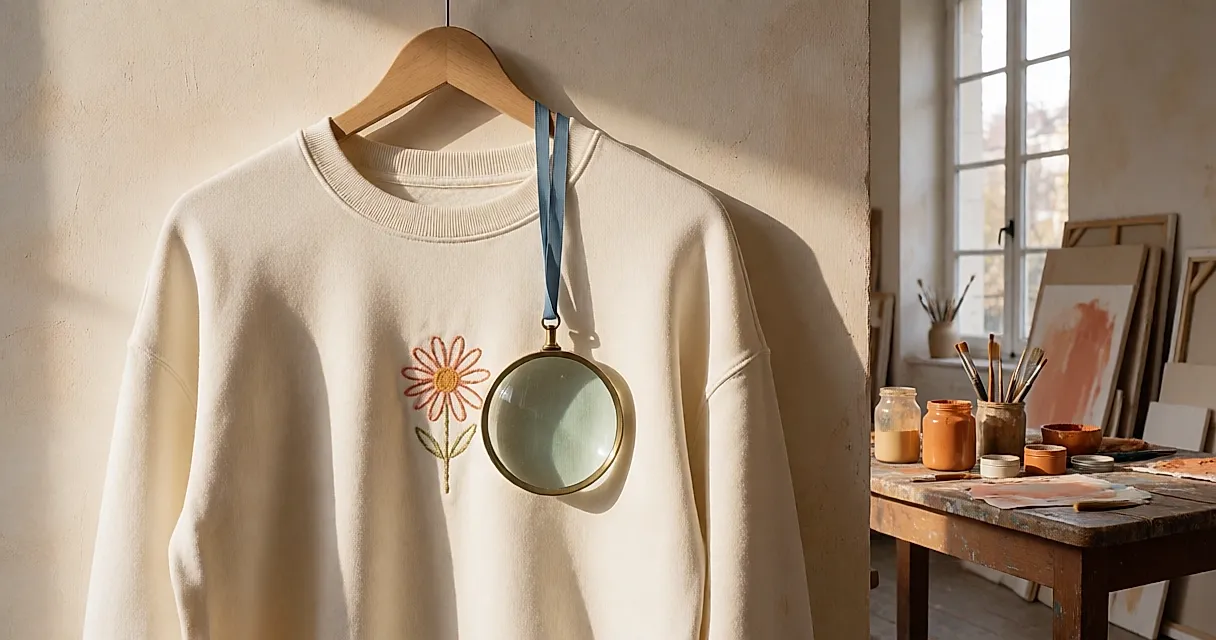
A cream sweatshirt whose embroidered daisy has slightly uneven stitches, and beside it the same motif printed to the nearest millimetre, without a single bump: the first looks like a drawing made for you, the second like an image made for everyone. On embroidered, jacquard and screen-printed pieces the two now meet — and the eye hesitates. So how do you know what you're looking at? A few clues can help, as long as you look a little closer.
Because yes, AI can earn its keep: a festive motif in three clicks, without an illustrator, a studio or the usual lead time. Except that the eye has learned. The light too even, the folds too clean, that way of drawing a hand with five and a half fingers: synthetic polish can now be surprisingly easy to spot—sometimes as obvious as a bad print. And a fashion label dislikes nothing more than being spotted for the wrong reason.
Spotting the hand behind the image
The first thing to check is the credit. A name, a portfolio, a living illustrator's account that posts work and draws other things too. A complete absence of credit on an image presented as artisanal should make you suspicious; a "brand studio" credit may be honest, but it doesn't tell you who held the pencil. A good sign: a named credit printed on the care label, the product page or the caption of the post — "illustrated by...", with the illustrator's name and sometimes the year. It's concrete, checkable, and helps separate a signed image from an anonymous file.
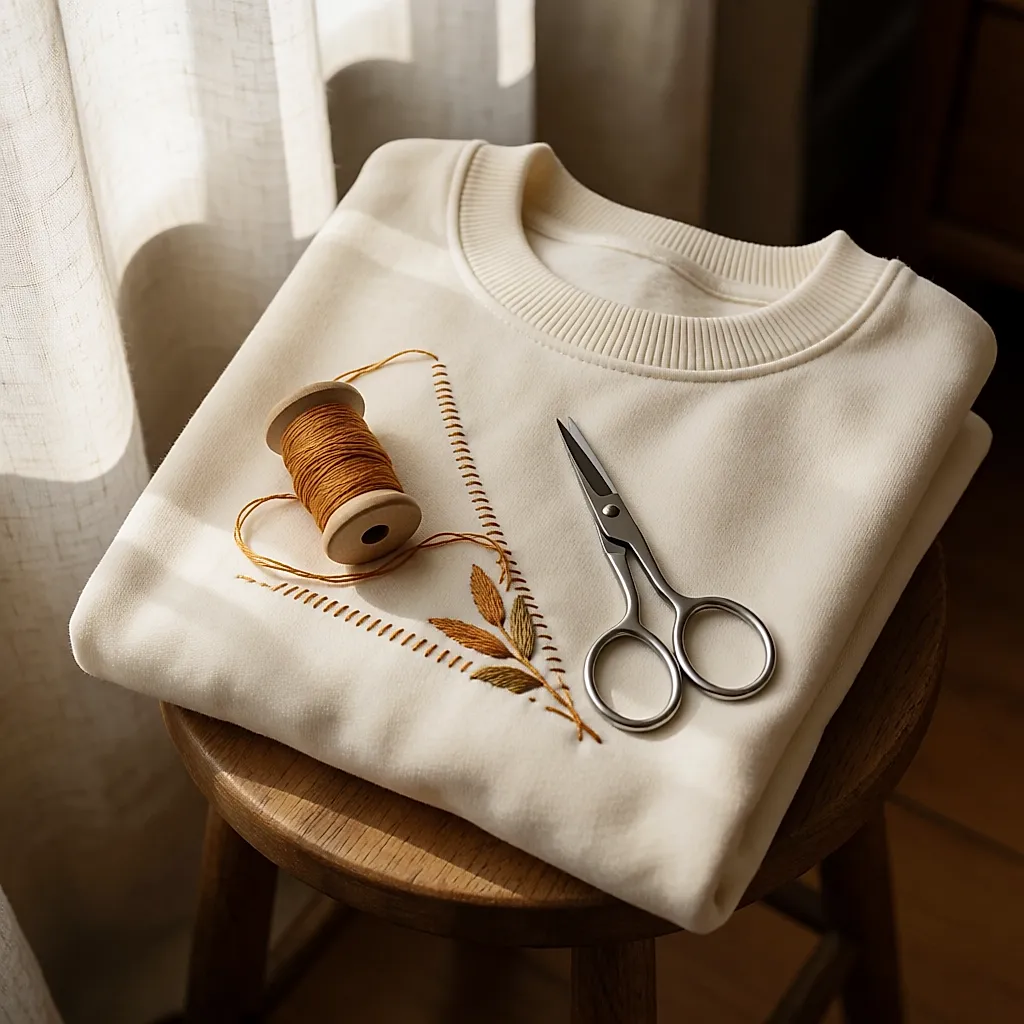
Next, look for evidence of making: preparatory sketches, work-in-progress shots, video of a hand at the screen-printing table or the embroidery machine, colour variants. An illustrator is usually happy to show the mess. Look, too, at the consistency of the line from one image to the next: most of us have drawing tics — a way of rounding cheeks, placing shadows, drawing hands. AI can vary without logic, and few illustrators redraw hands differently for each visual for fun.
The real giveaway is small imperfections: a line that bleeds, a stitch that skips, a patch of base cloth left bare. A real drawing is almost perfect, never quite. An "artisanal" image with not a single rough edge, lit like a studio set in a way ink could never manage, should raise a question.
Three questions before you call it hand-drawn — Is there an illustrator's name in the credit? Can you see a stage of the work (sketch, ink, colouring)? Do the details hold up when you zoom in: fingers, seams, folds, text inside the image? Three yeses are a strong clue—not absolute proof.
Spotting a drawing on a garment
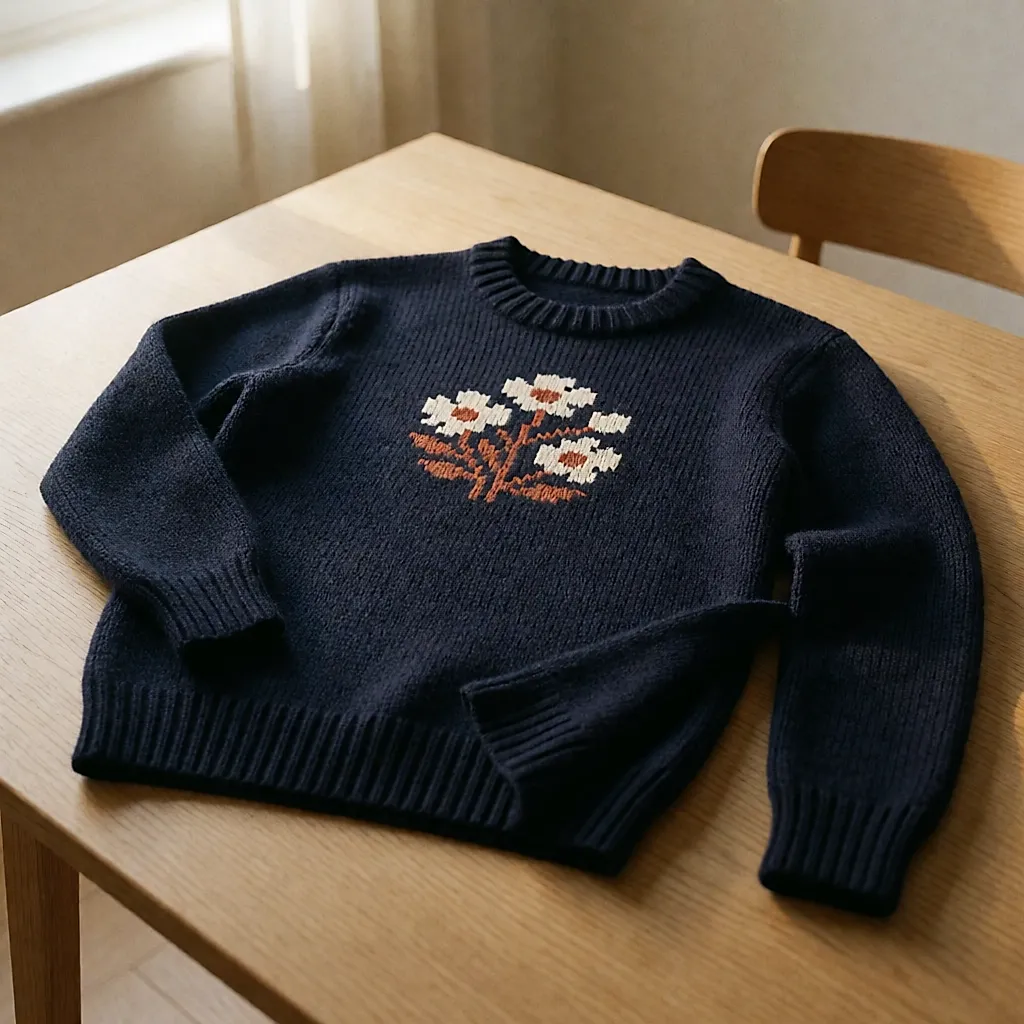
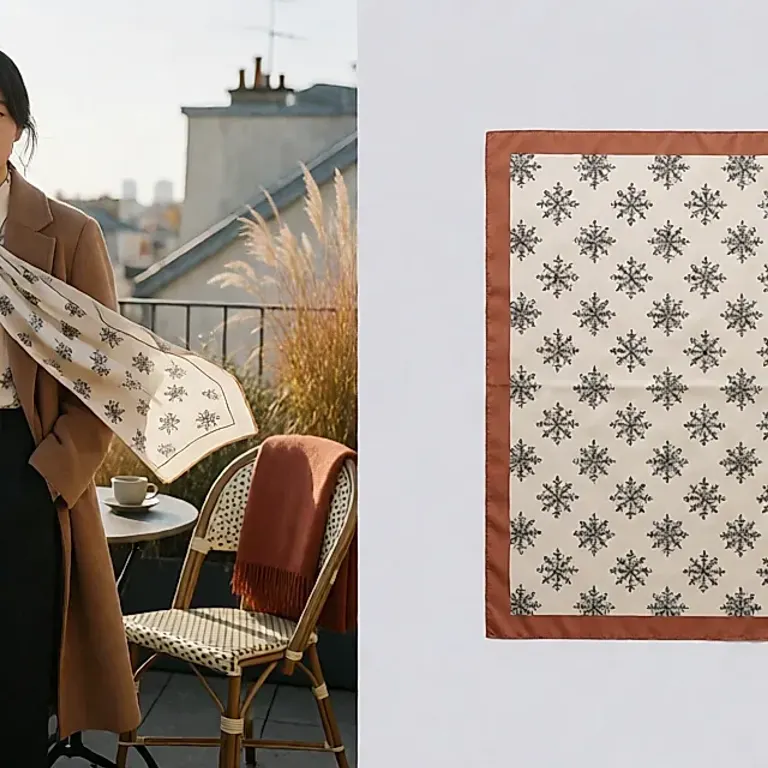
The question isn't only about paper. A silk scarf printed with a naive line, a jacquard beanie with hand-drawn motifs, a cotton tote carrying an ink illustration: the texture of the base changes everything. Screen printing drinks the ink, embroidery lifts the fabric under your finger, jacquard changes pattern when the knit stretches. Nothing gives it away like a smoothed image sitting on another smoothed image.
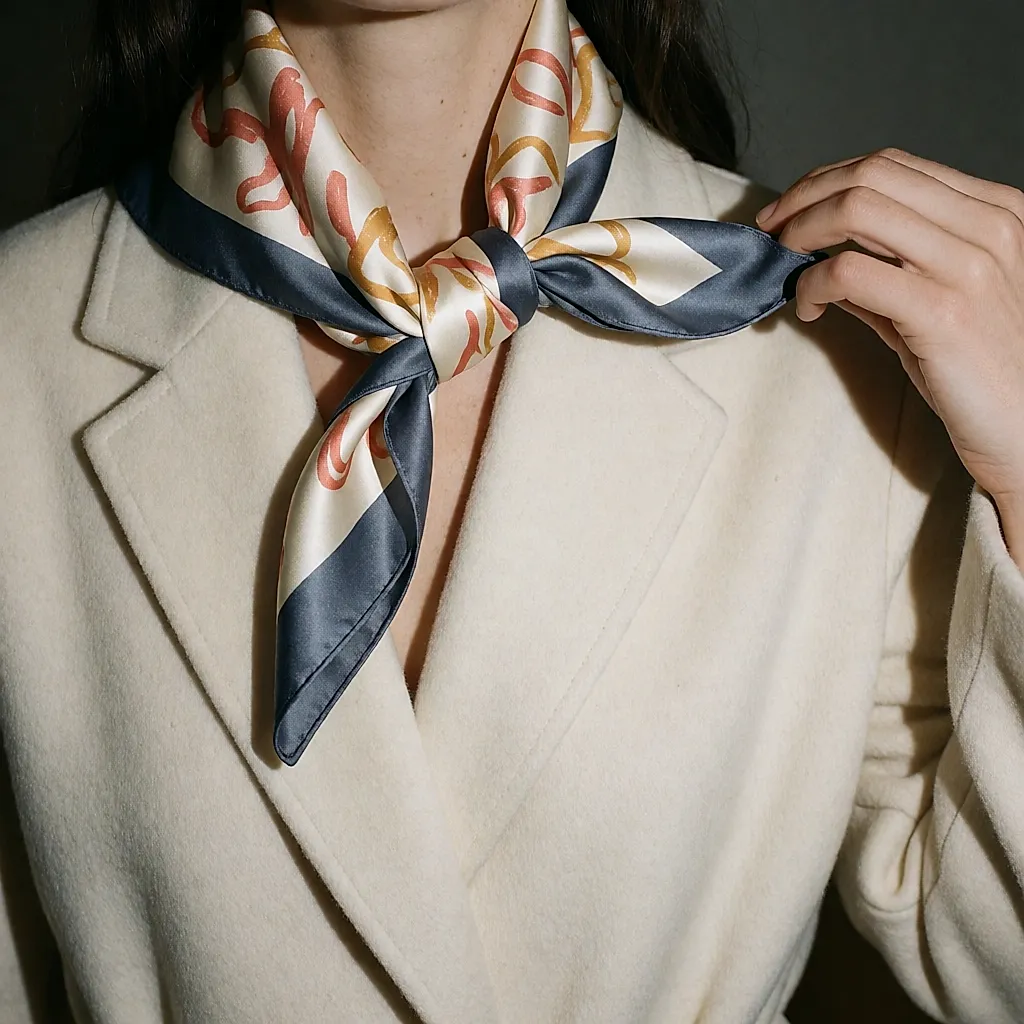
On the body, illustration doesn't forgive guesswork: a badly placed motif breaks the drape, a print that's too heavy weighs down a simple cut. The wardrobe rule still applies — one piece, one drawing, one natural fibre that lets the skin breathe. The rest is judged in the hand, not on screen.
What it costs
On the rail, a hand-drawn motif is paid for in labour first. The ranges below are a rough guide for the UK, and they vary with the illustrator's reputation, the technique and where you buy. Expect roughly £35 to £80 for a small-run screen-printed T-shirt, £80 to £180 for a hand-embroidered sweatshirt, and up to about £270 for a jacquard piece drawn by the illustrator. An exclusive motif bought by a brand is often negotiated by the day or for a flat fee, rarely as a percentage of the retail price. On paper, a printed card costs from around £2.50 to £7, and a signed print from £25 to £80.
Where to look? The illustrator's own site, but also brands that credit their illustrator on the product page, illustration fairs and makers' markets. For clothing, an illustrated silk or cotton scarf runs from about £50 to £160: the price moves with the material, the size and the print run. These figures are no substitute for the seller's price tag or a quote.
One habit worth keeping
Many of us keep, somewhere at the back of our minds, a campaign image — the one that made us want to wear an illustrated piece rather than yet another plain one. This year, look at the credit before the colour, and choose a piece with a signed motif over yet another generic one. And if you like a drawing, tell the illustrator: that's the kind of compliment that gets passed on, unlike a file.
Comments
Your opinion matters: rate the article, react and reply to comments.
Comments are moderated; AI-assisted comments are flagged. Text emoticons (8-), :-), <3…) are automatically shown as images.