
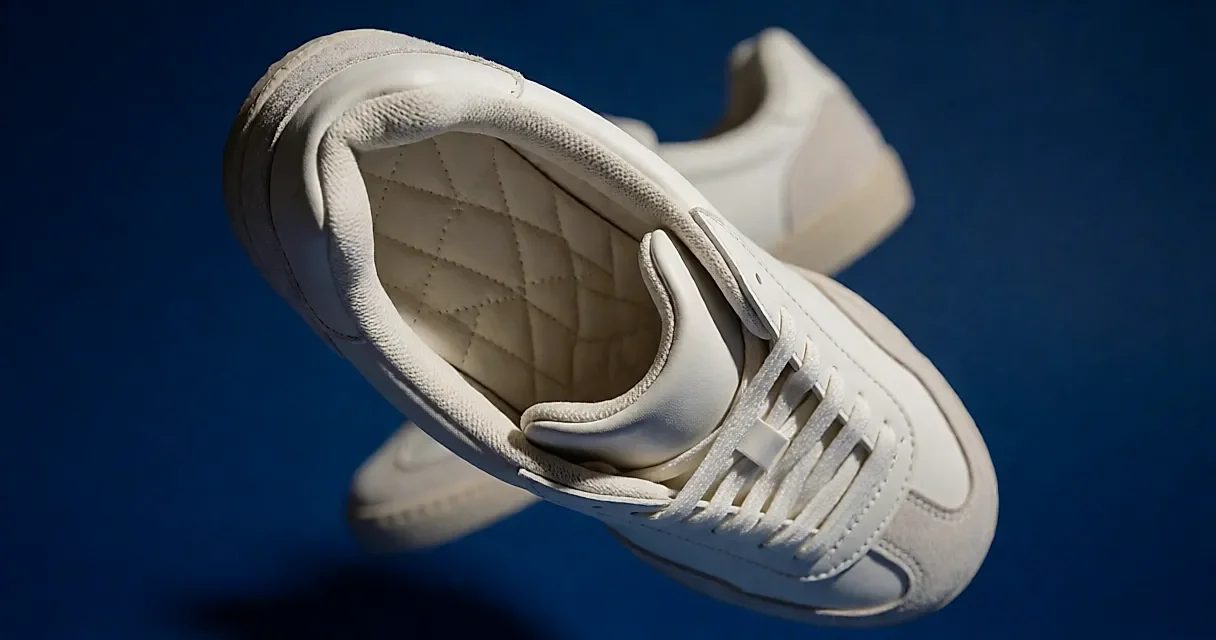
Two pairs of the same retro trainer, same colourway, same low profile, side by side on the shelf: one at around £70, the other at around £115. To the naked eye, twins. The difference comes down to one simple move — sliding a finger under the insole to see whether it lifts. It sounds daft, but that's exactly where the real question hides: are you paying for a silhouette, or for a pair you can genuinely wear all day?
A comfort reissue, or just a new colour?
Retro silhouettes rarely leave the shelves — Adidas's Samba and Gazelle, New Balance's 574 and 990, Nike's Cortez and Air Max 1. Season after season brings a fresh run of colourways. A recolour is the same shoe in a new shade of pink; a so-called comfort reissue keeps the original lines but reworks the inside: the shape, the foam, the insole, sometimes the lining.
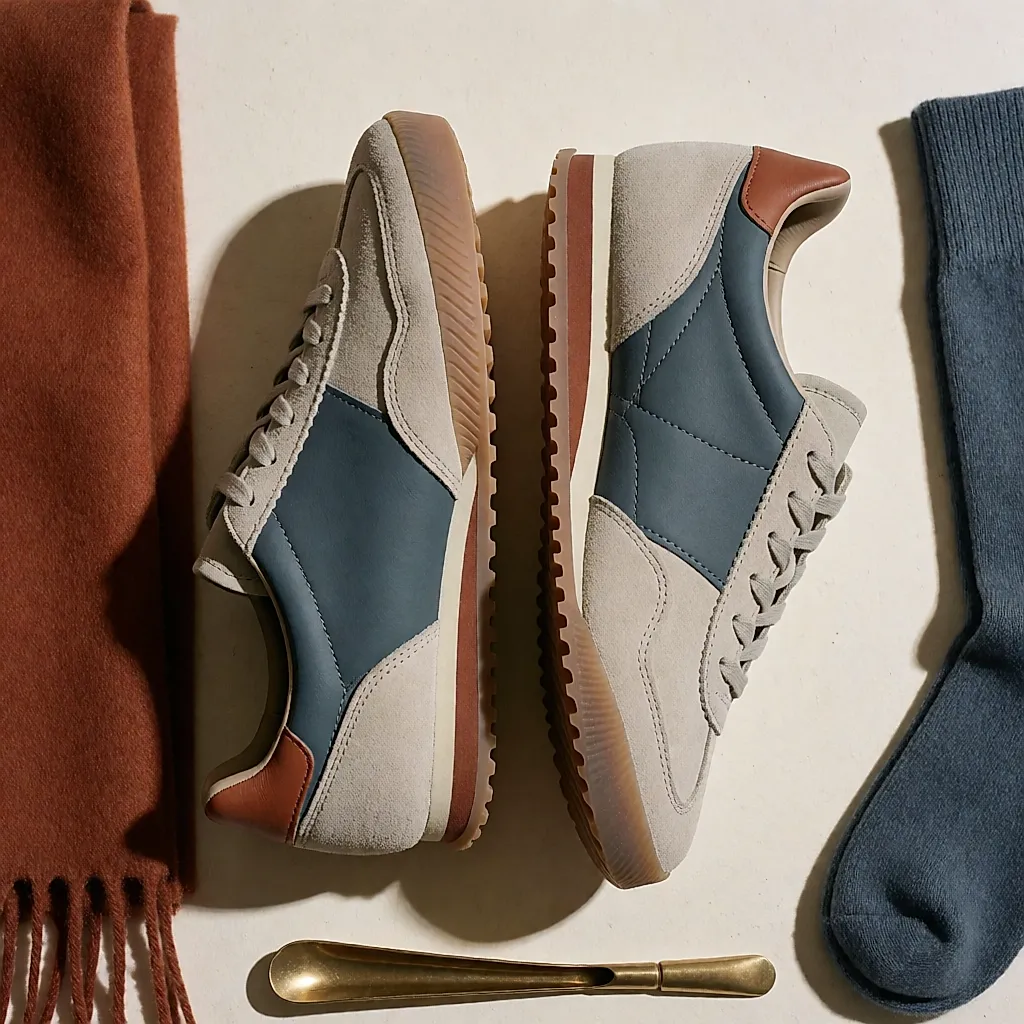
Except nothing on the box necessarily says so. The label may give you a name, a size and a country of manufacture, but it won't necessarily mention "wider fit" or "removable insole". The good news: the whole check takes about thirty seconds in store, once the shoe is in your hand.
Cushioning: where the extra money goes (sometimes)
An original retro is usually built on a flat vulcanised sole: very pretty, very thin, and more or less silent on cushioning. Comfort versions sometimes add a thicker midsole and specific cushioning technology — foams such as Boost or Fresh Foam, an air unit such as Nike Air. These aren't brochure talk: they can make a real difference to how the shoe feels. One caveat, though — those technologies aren't necessarily the ones used in the retro models mentioned above. Nor is there any universal hierarchy: a very soft foam will win some people over and tire others out, depending on their build and the miles they're asking of it.
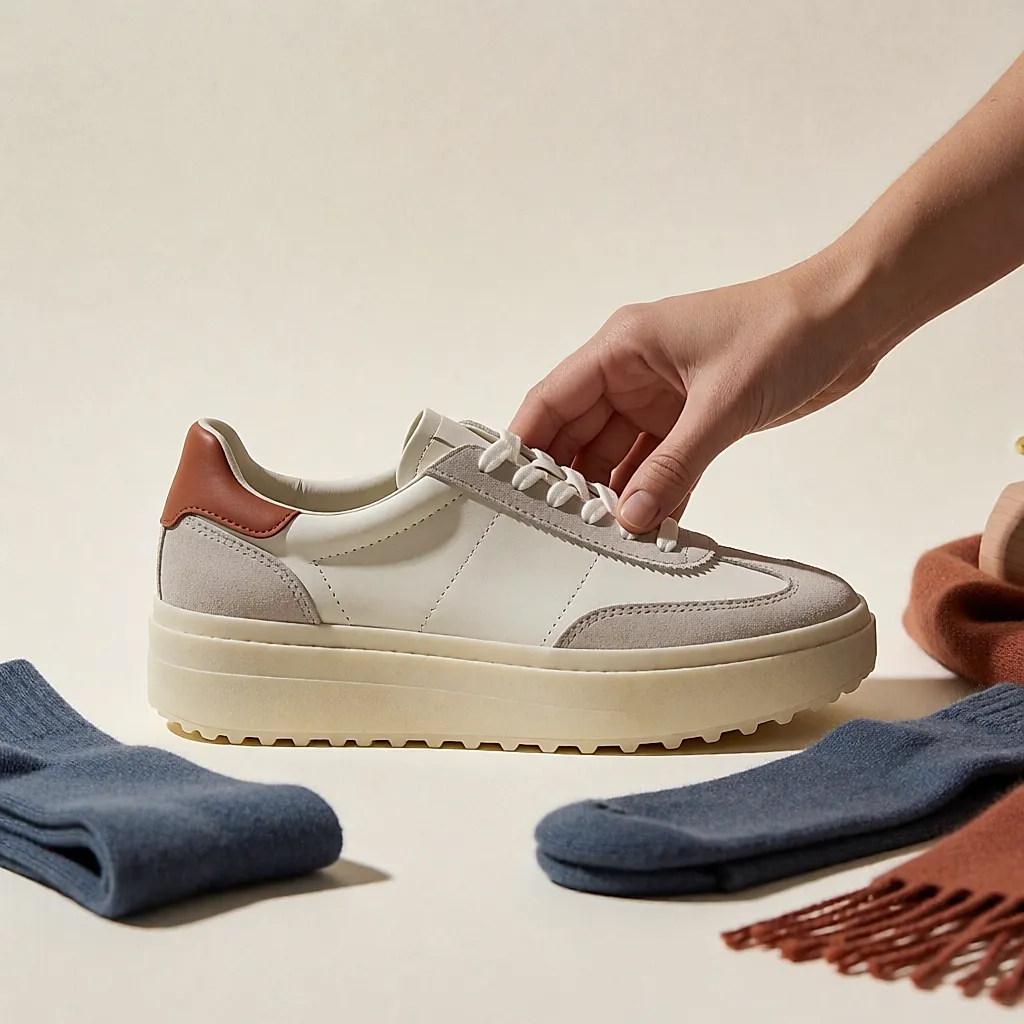
And foam has a life. It compresses with wear, faster or slower depending on its density. A collapsed midsole is generally beyond repair; the part you can rescue most easily is the insole. Which is why it's worth checking which of the two pairs has one that lifts.
The ten-second insole test
Lift it gently with your fingertips. Look at the thickness: a thin felt pad glued to the bottom, or a properly moulded insole a few millimetres thick? Then look at what's underneath — a clean seam, a flat surface, enough room to take an orthotic if you wear one.
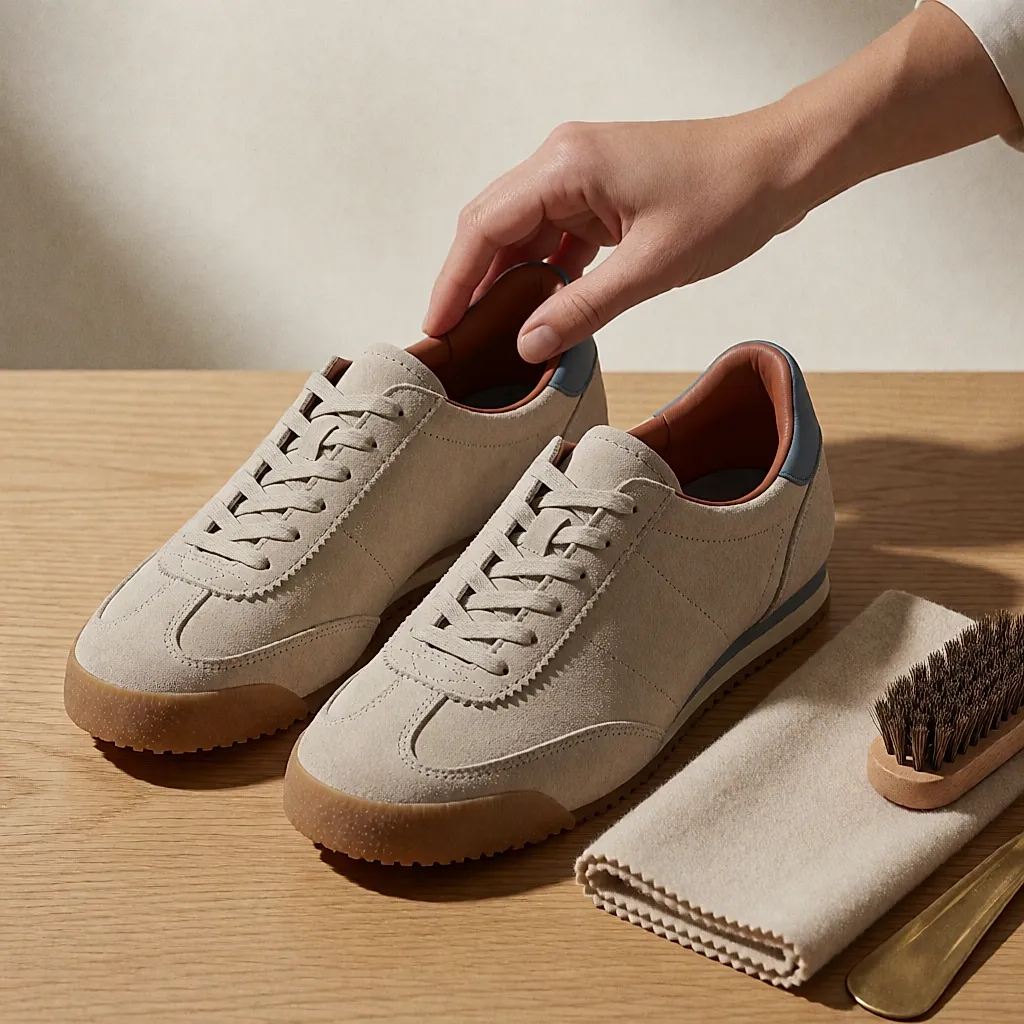
A glued-in insole isn't a dealbreaker, but it does close doors: you can't replace it when it wears out, take it out to dry after a downpour, or slip your own insoles underneath. On a pair costing around £115, a removable insole can add a decent stretch to how long they last.
Width: what the photo can't show you
Low-profile retros tend to come up narrow — a useful rule of thumb rather than a law, but it explains plenty of disappointments once you get home. Hence the case for trying them on at the end of the day, when your feet are slightly wider than they were at breakfast and closer to the truth. And with the socks you'll actually wear, not the paper-thin pair handed to you in the shop.
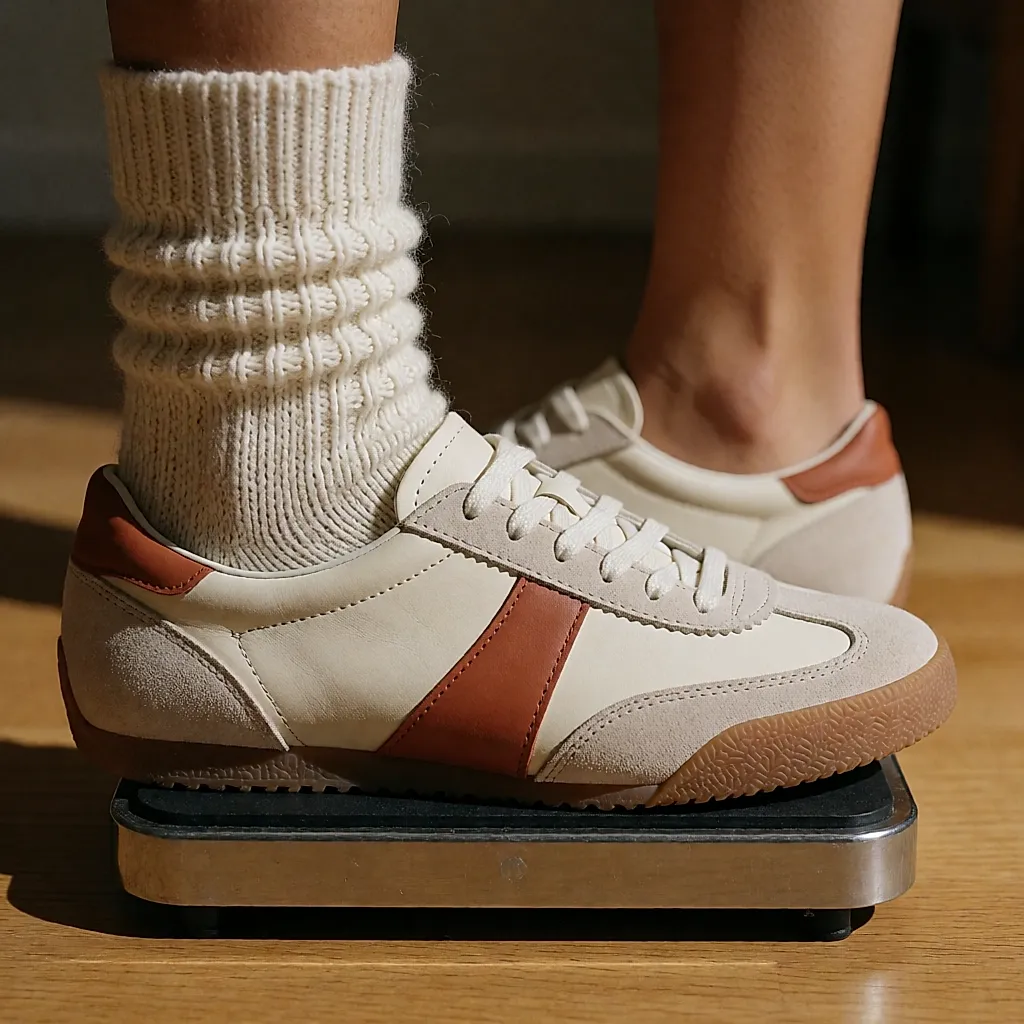
One more thing: a thick insole takes up volume. If your feet are wide, taking it out can be enough to buy yourself room; if they're narrow, it becomes your best friend. Leather and nubuck give slightly with wear; synthetics give far less. And sizing up to gain width is rarely the answer: your foot may slide and your heel may float.
Five minutes well spent in the shop
Stand up and walk twenty steps or so on the hard shop floor rather than on the carpet. Your heel should hold without slipping, the front shouldn't pinch your toes. Then go up on your toes: if the sole flexes cleanly where your foot flexes, that's a good sign. Finally, press your thumb into the toe, level with your little toe — the upper should give a little, not cave in against your thumb.

And if it's already rubbing at the heel on the shop's parquet, it's unlikely to feel better on the pavement: a pair that hurts in the fitting room rarely breaks in — it often ends up at the back of the wardrobe.
What to budget
Expect to pay roughly £55 to £80 for a canvas or synthetic reissue, £90 to £130 for a leather retro with a removable insole — the bracket this piece is about — and £150 to £190 for full-grain leather assembled in Europe, which often comes up wider and can last longer. The colourway counts too: end-of-season shades drop in price fast, while collaborations shoot up.
Where to look? Brands' own sites for sizes and product specs, multi-brand retailers to compare several fits in one go, outlets and resale sites for older colourways. A second-hand pair in good condition is often a very good buy, provided you check the state of that all-important insole — the test can work on photos too, if the insole is visible.
The finger test: with the insole lifted, slide your hand under the heel. A soft, even hollow usually means there is foam under the heel; a hard, flat feel suggests you're on a shell. And if the insole won't lift at all, you have your answer.
Really, the question isn't "Is this pair in fashion?" but "Can I forget I'm wearing them until this evening?" Tight budget: canvas, a soft sole, and accept that you'll replace them more often. Mid budget: leather, a removable insole, width checked in the shop. Bigger budget: full-grain leather and European assembly, to keep the pair for several seasons. In all three cases the move is the same — finger under the insole before the card comes out.

Comments
Your opinion matters: rate the article, react and reply to comments.
Comments are moderated; AI-assisted comments are flagged. Text emoticons (8-), :-), <3…) are automatically shown as images.