
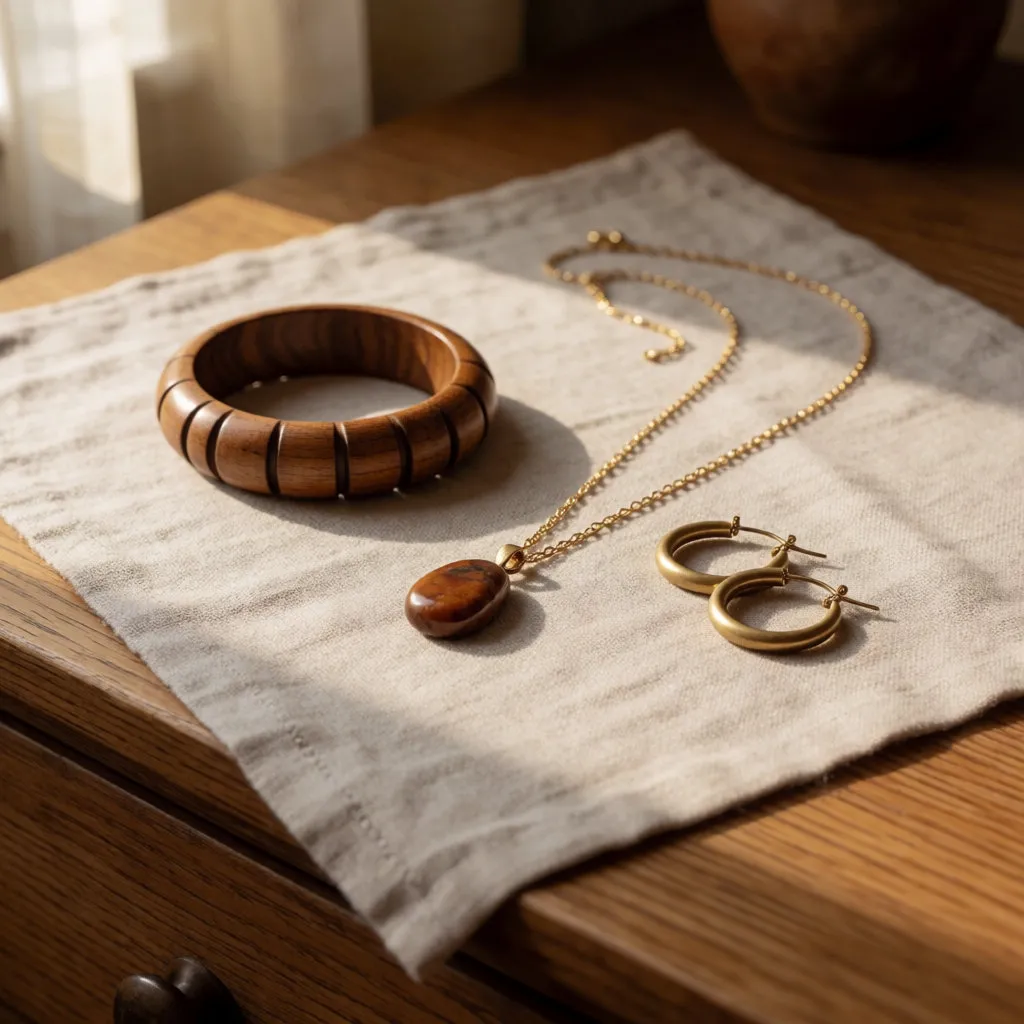
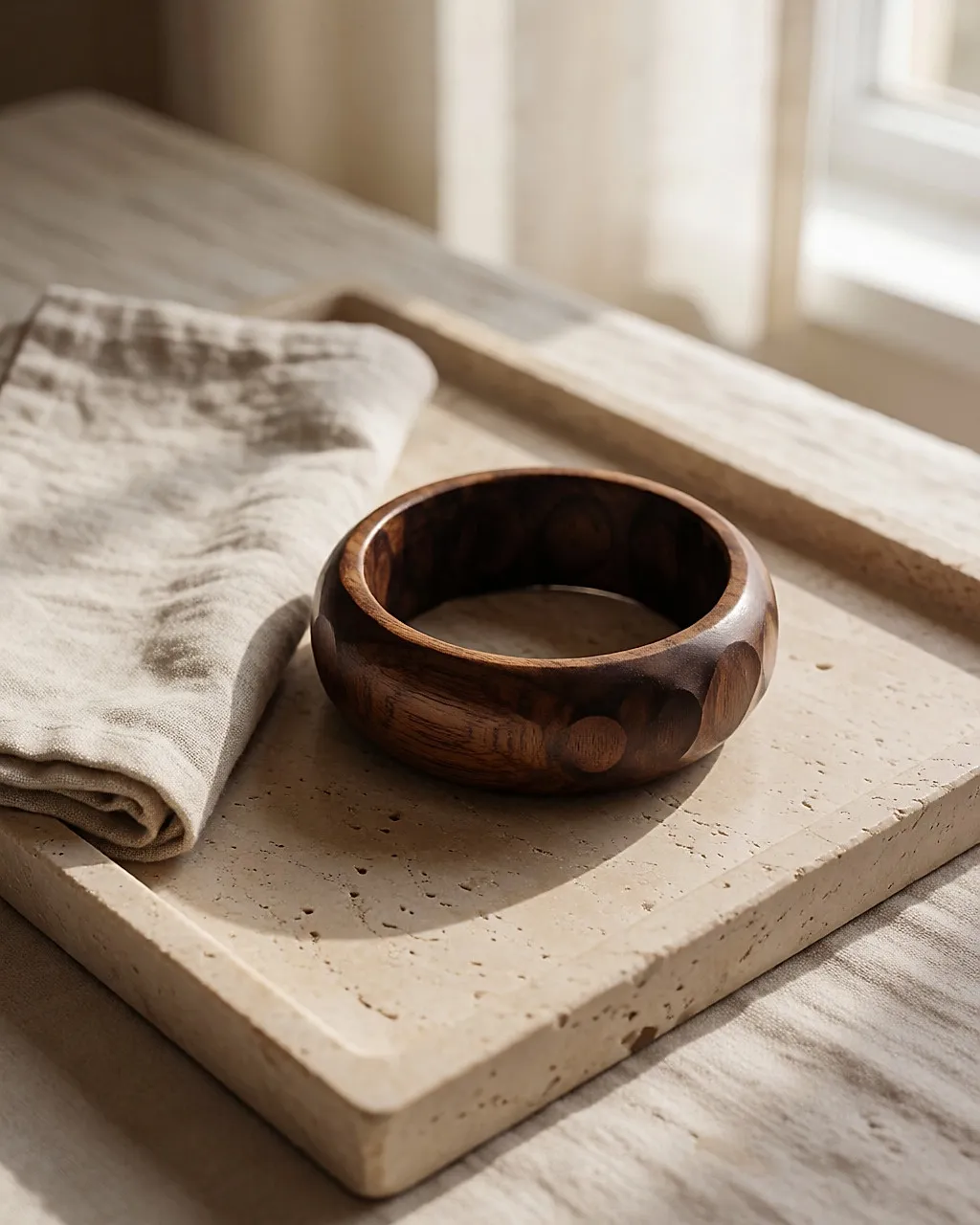
You wore it twice, that wooden bracelet, before putting it back at the bottom of the drawer. Too colourful, too travelled, not quite you — or so you thought. Three summers on, ethnic inspiration is back in force on autumn silhouettes, and the piece that once felt too loud is now exactly what a head-to-toe block colour is missing. Worn well, a statement piece like this pulls an outfit together in ten seconds and gives it depth. So the question isn't whether ethnic is chic: it is. The real question is how to style it without looking like a market stall.
Material before style
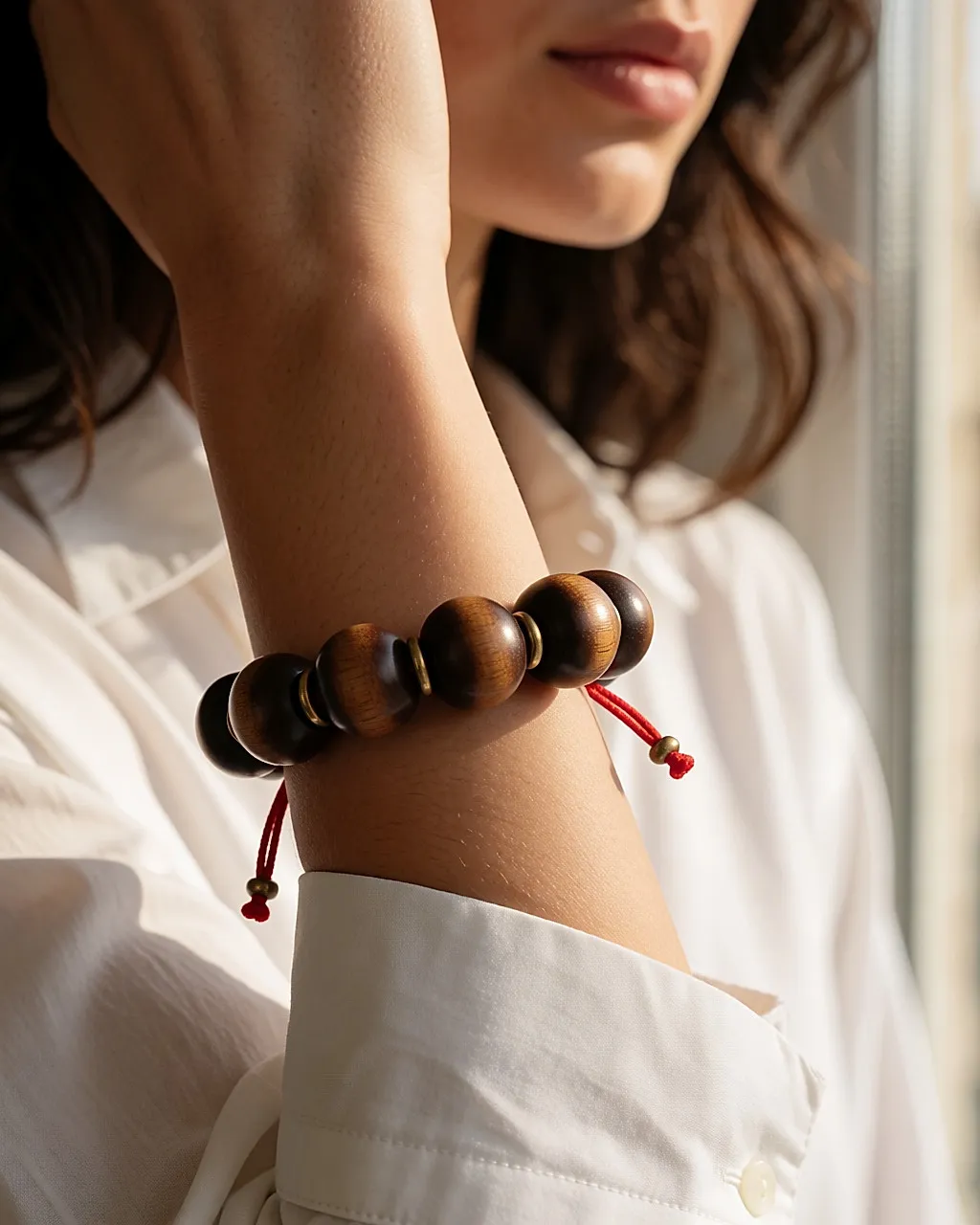
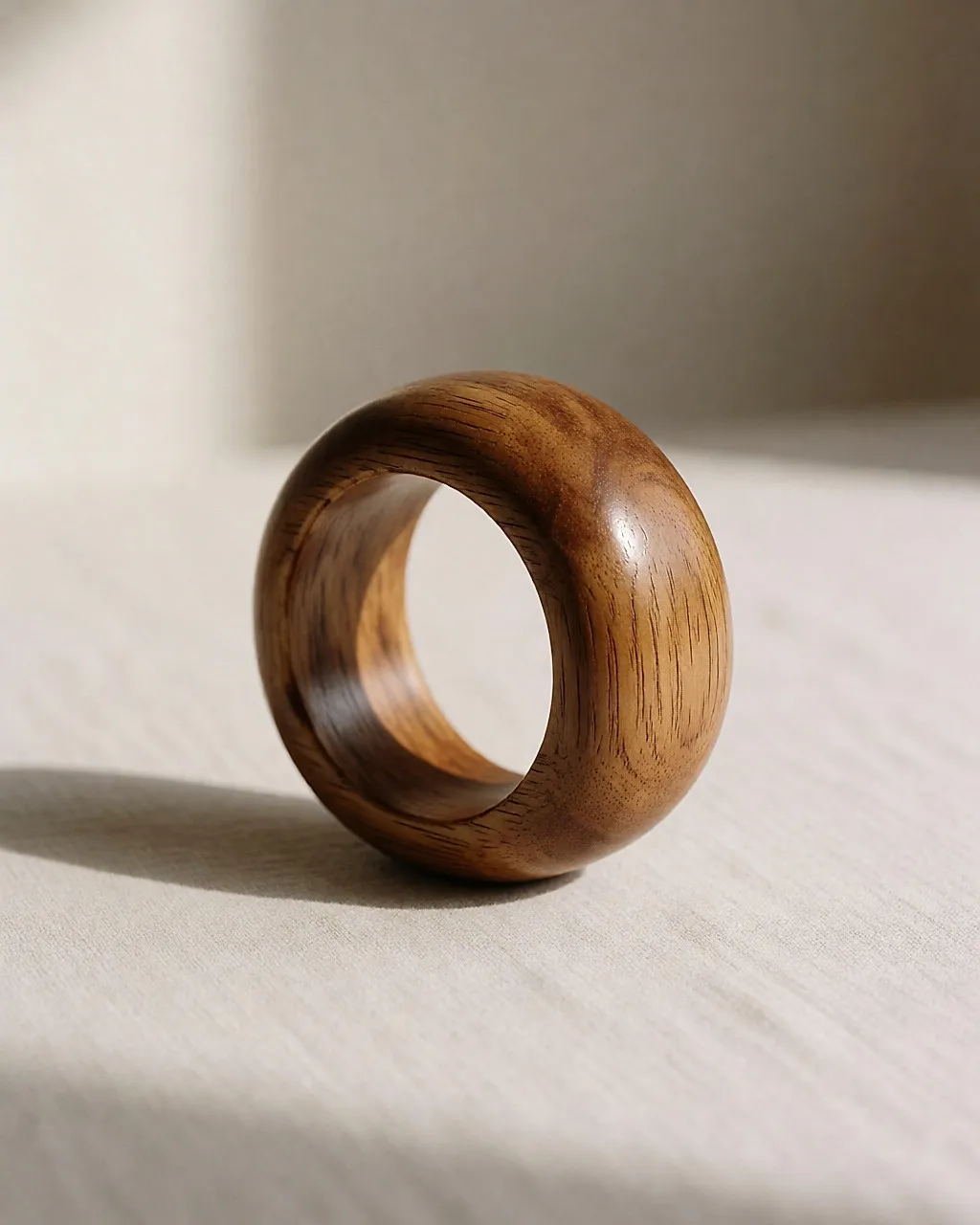
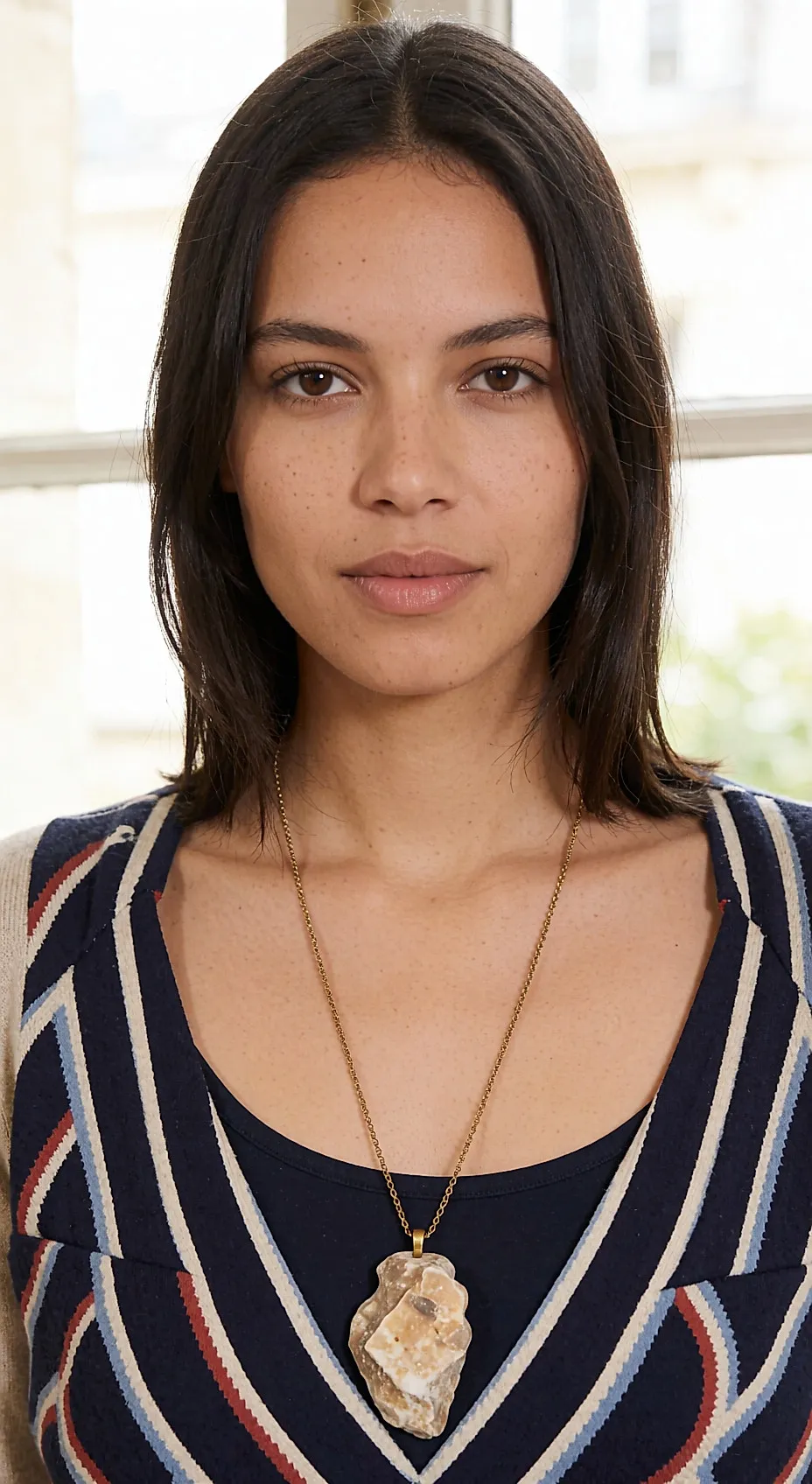
Before colour comes the drape and the texture. A turned-wood bracelet doesn't behave like a plated chain, and a raw stone catches the light where polished metal bounces it back. These materials build volume against a deliberately sleek wardrobe: a poplin shirt, a plain knit, raw denim — nothing that competes with the accessory. That contrast is what makes the whole thing work.
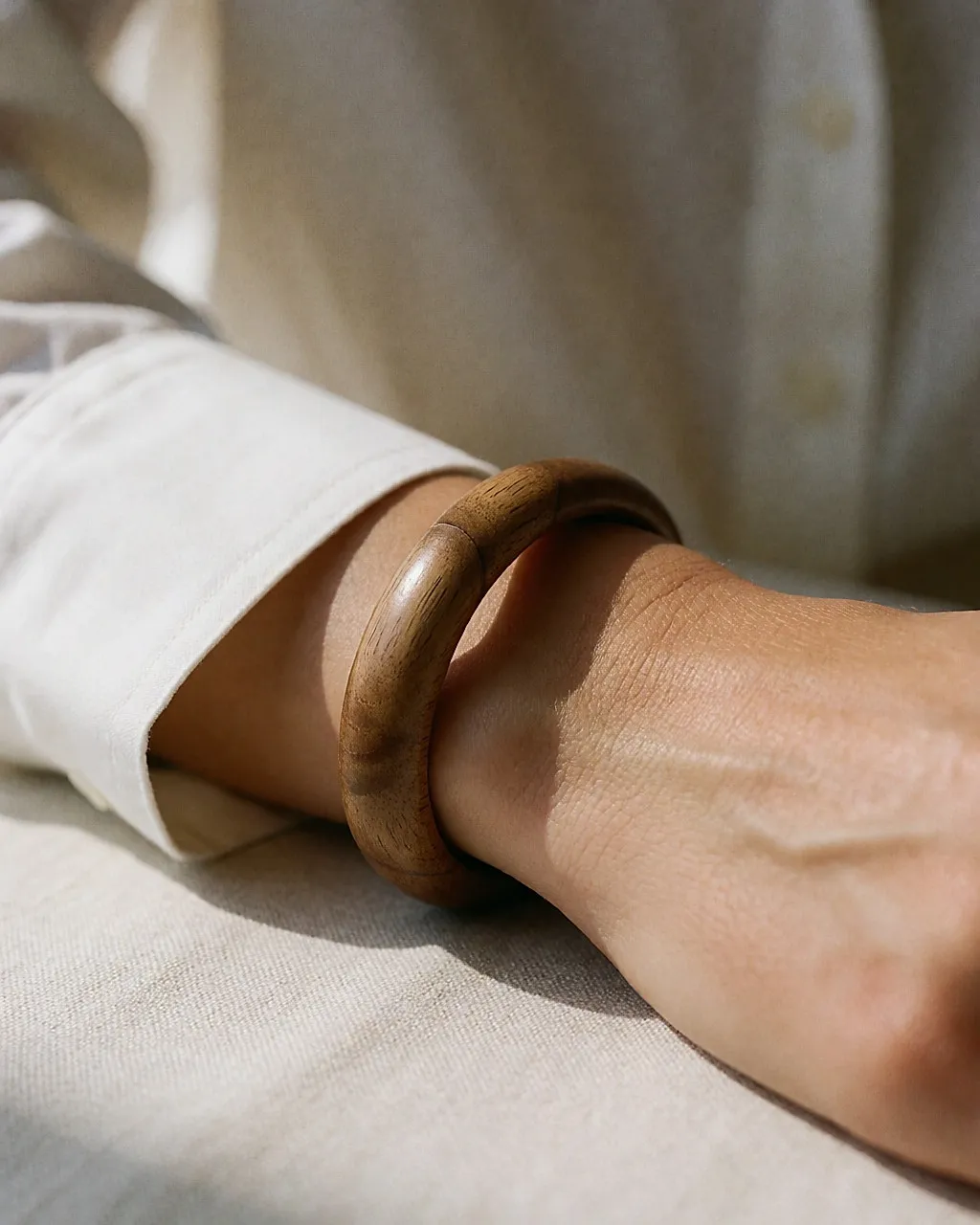
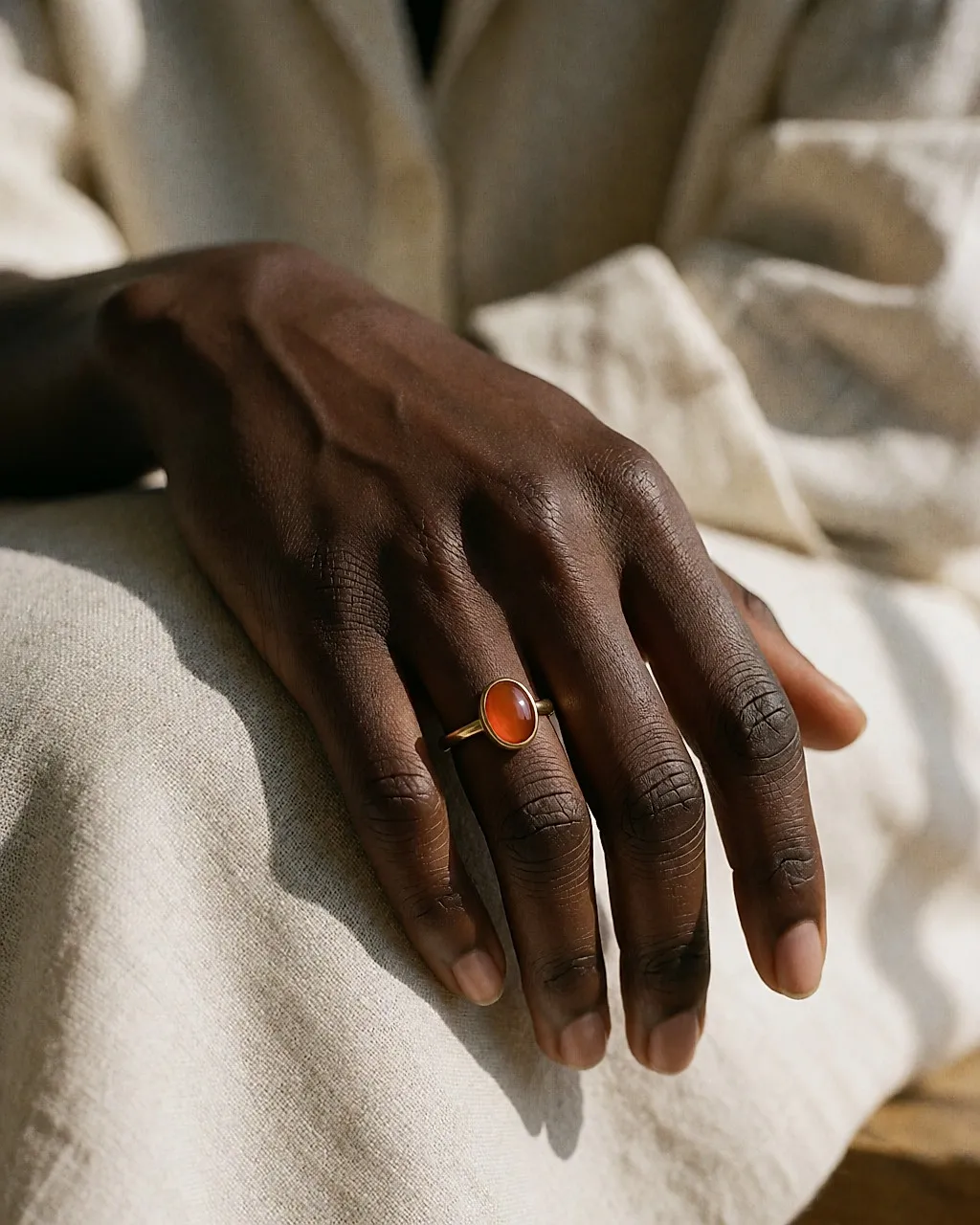
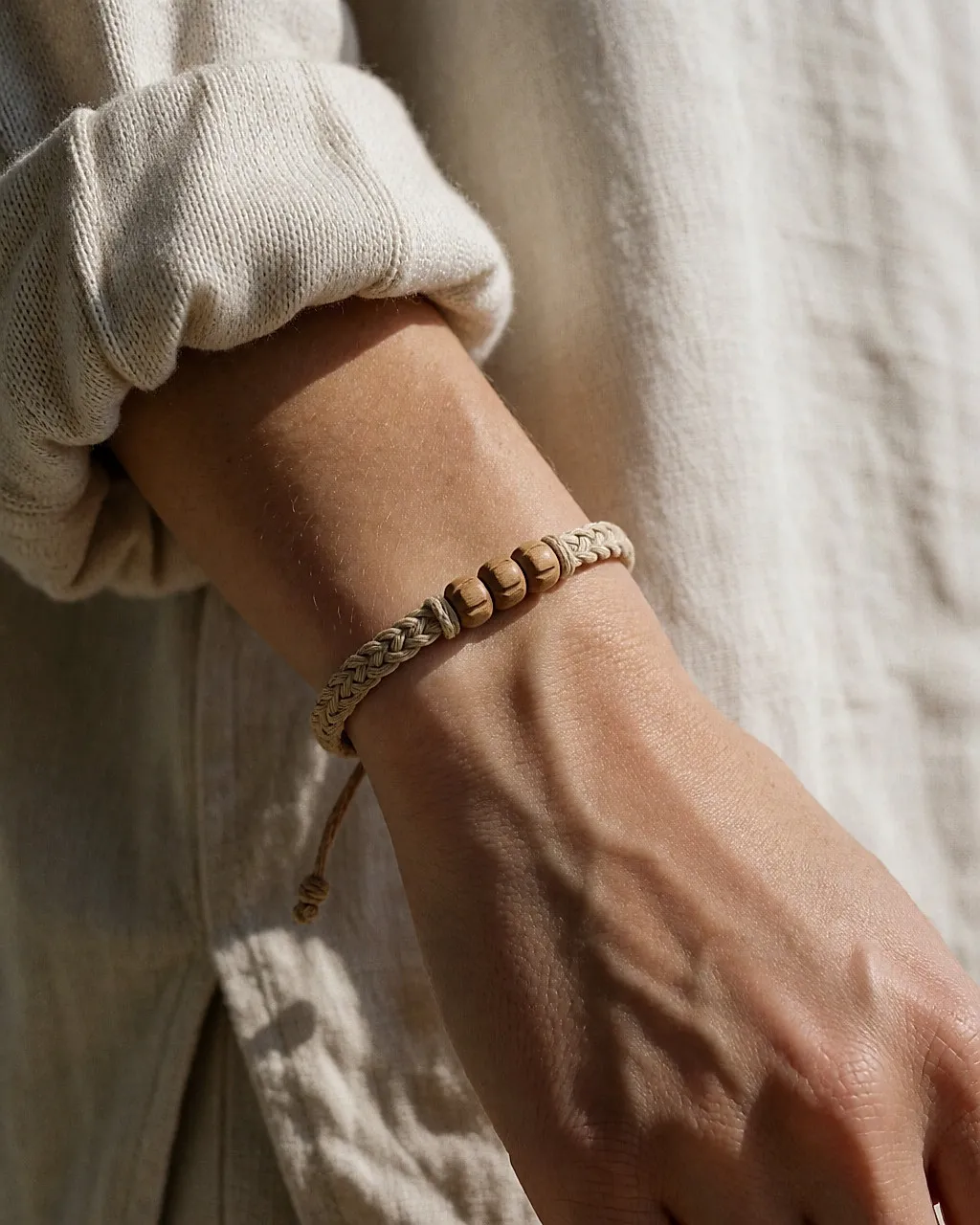
It's also what separates a carefully chosen piece from a bargain-bin accessory. The weight in your hand, the finish of the fastenings, the evenness of the beads: three details that show immediately, in a photo and in real life.
Styling without overloading
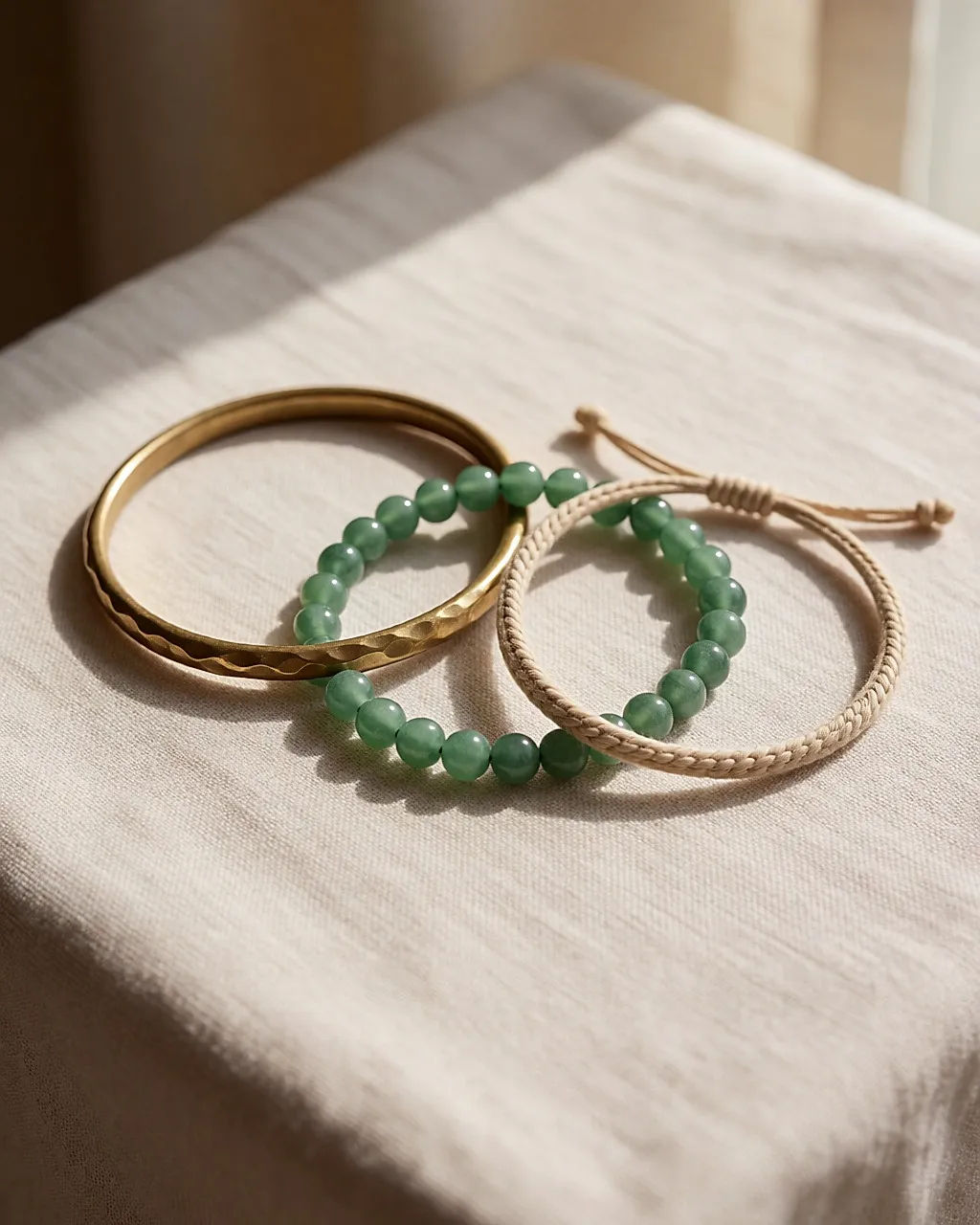
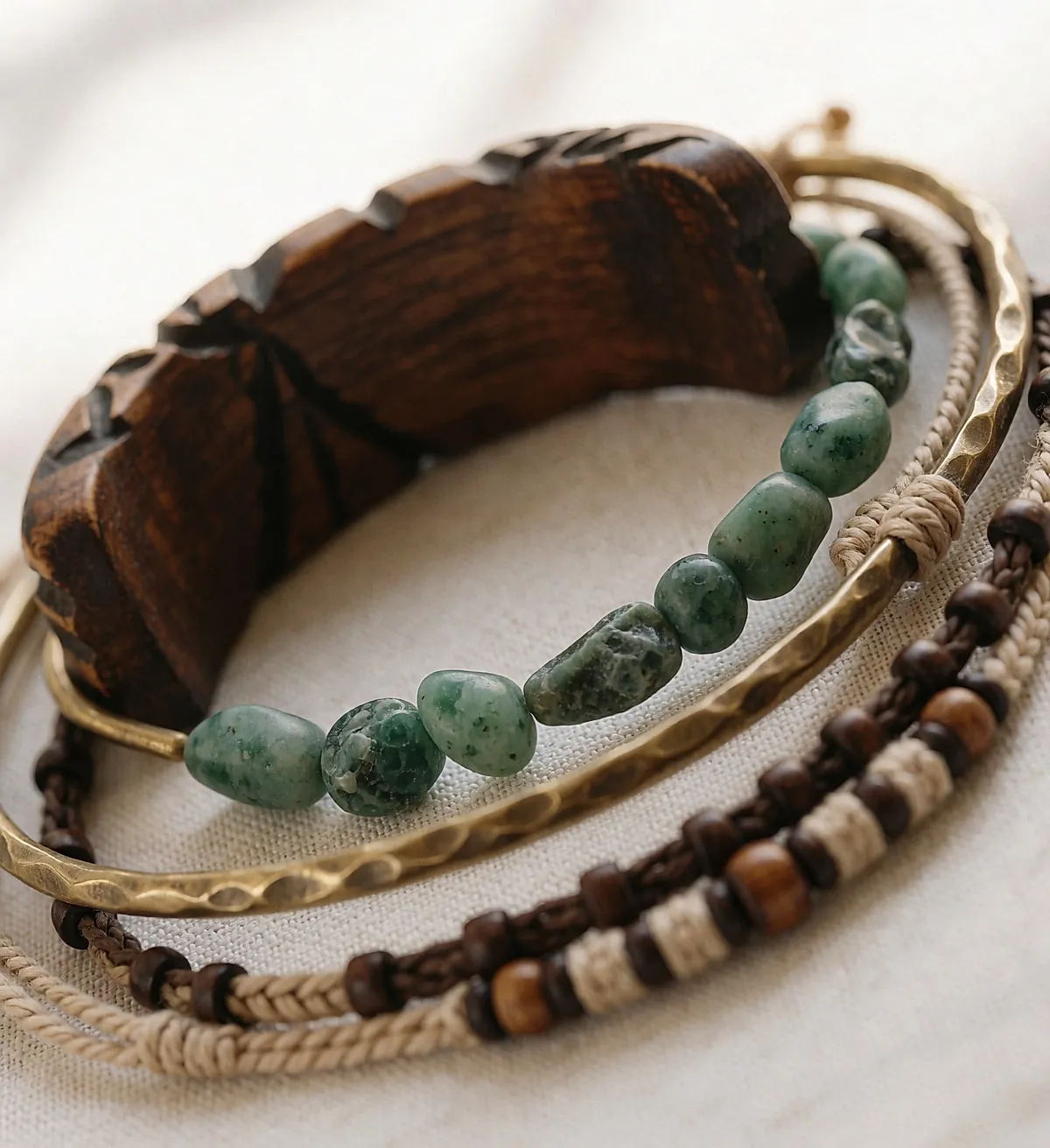
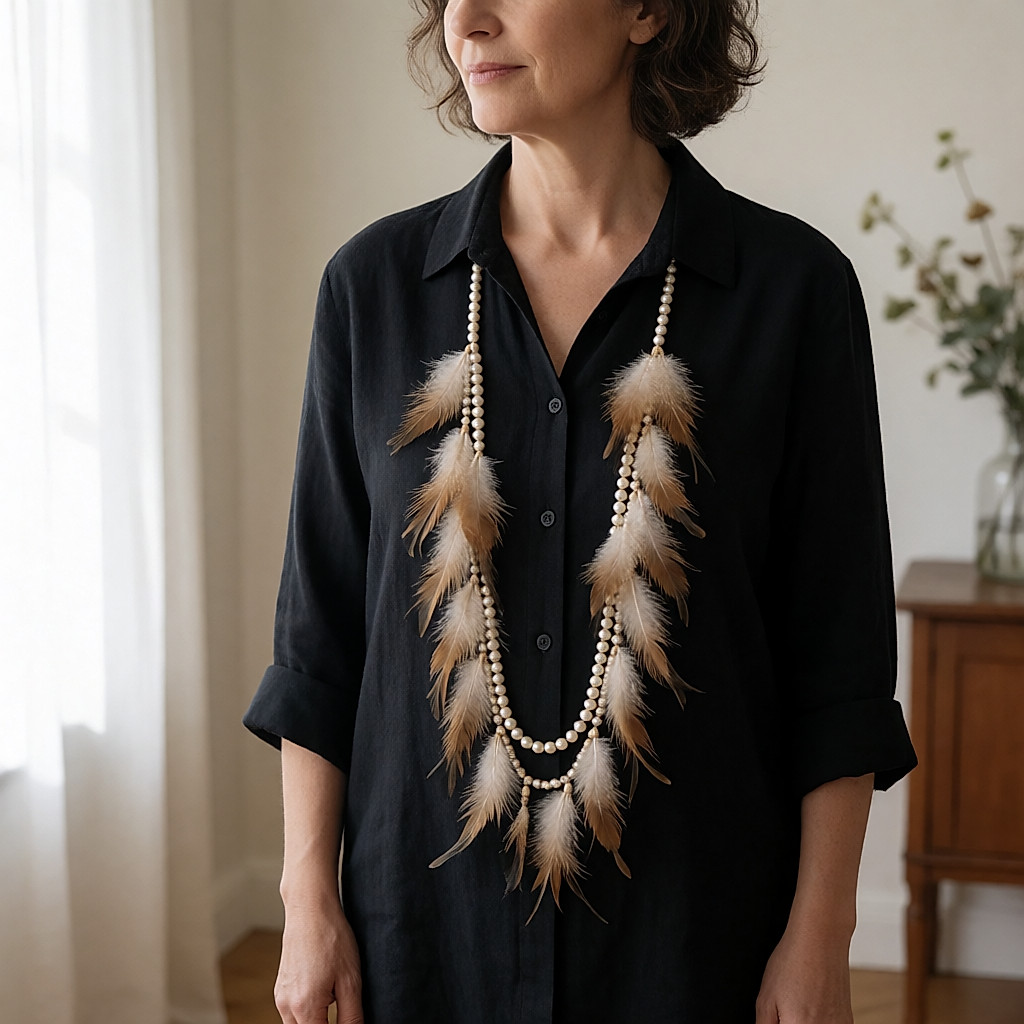
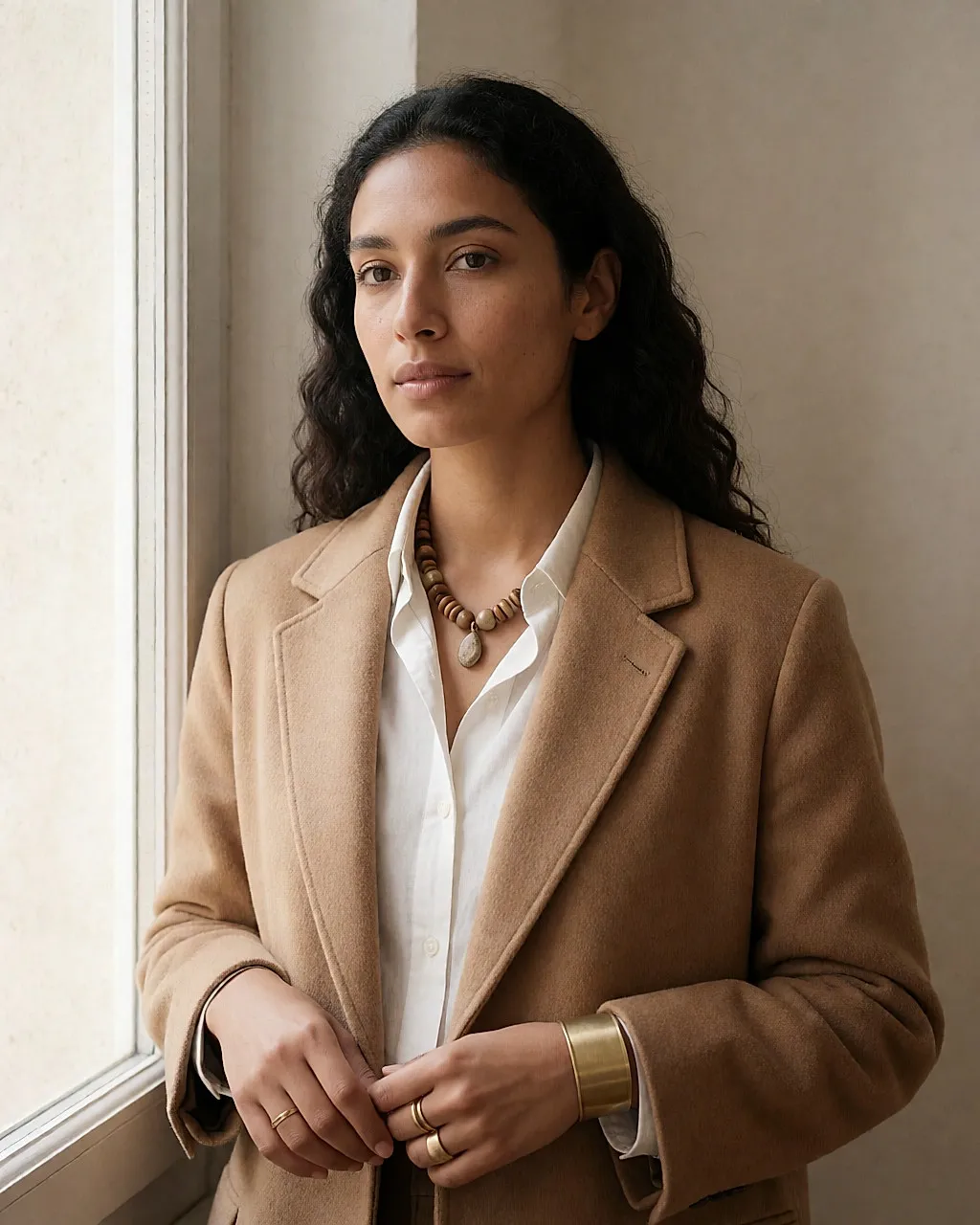
The rule fits in one sentence: one focal point per silhouette, everything else stays quiet. On the wrist, two bracelets at most, one of them fine. At the neck, no more than three lengths — choker, mid-length pendant, long chain. For the ears, if the necklace is bold, switch to simple hoops.
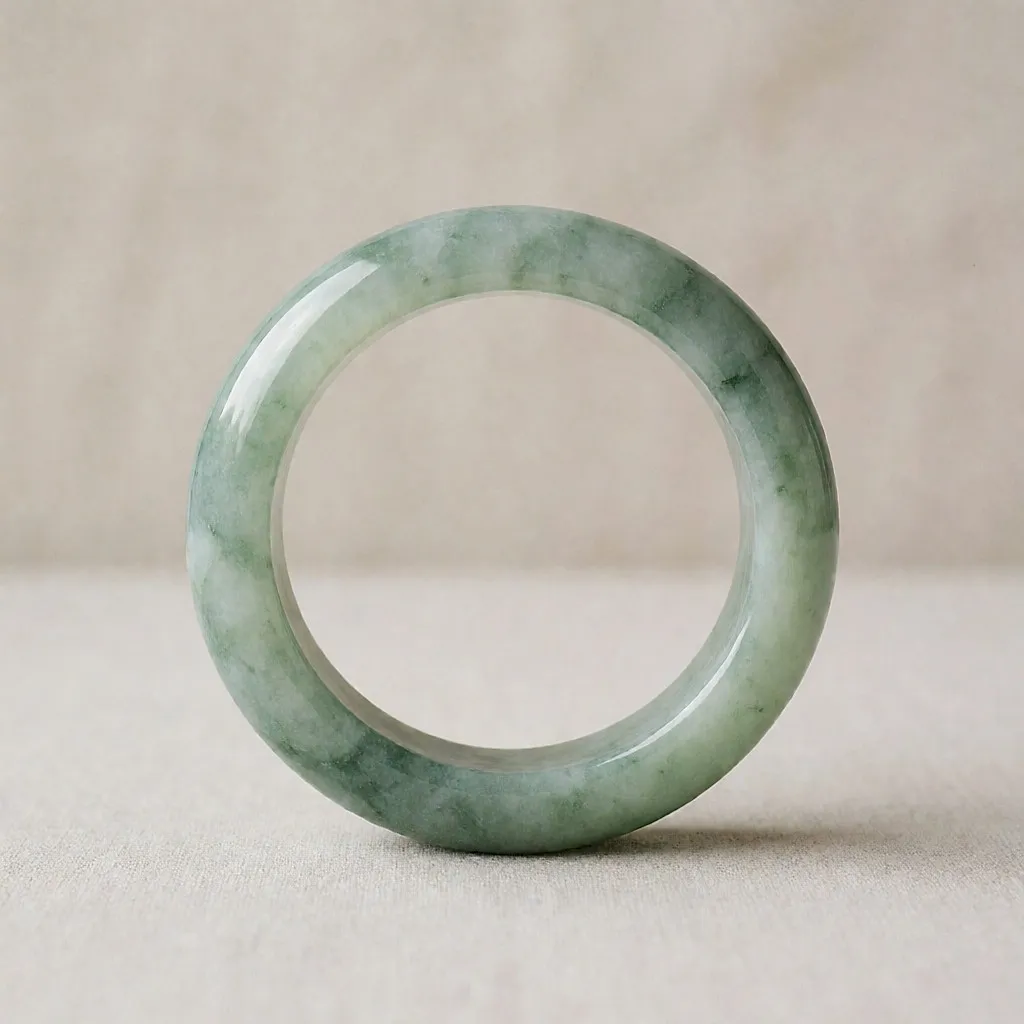
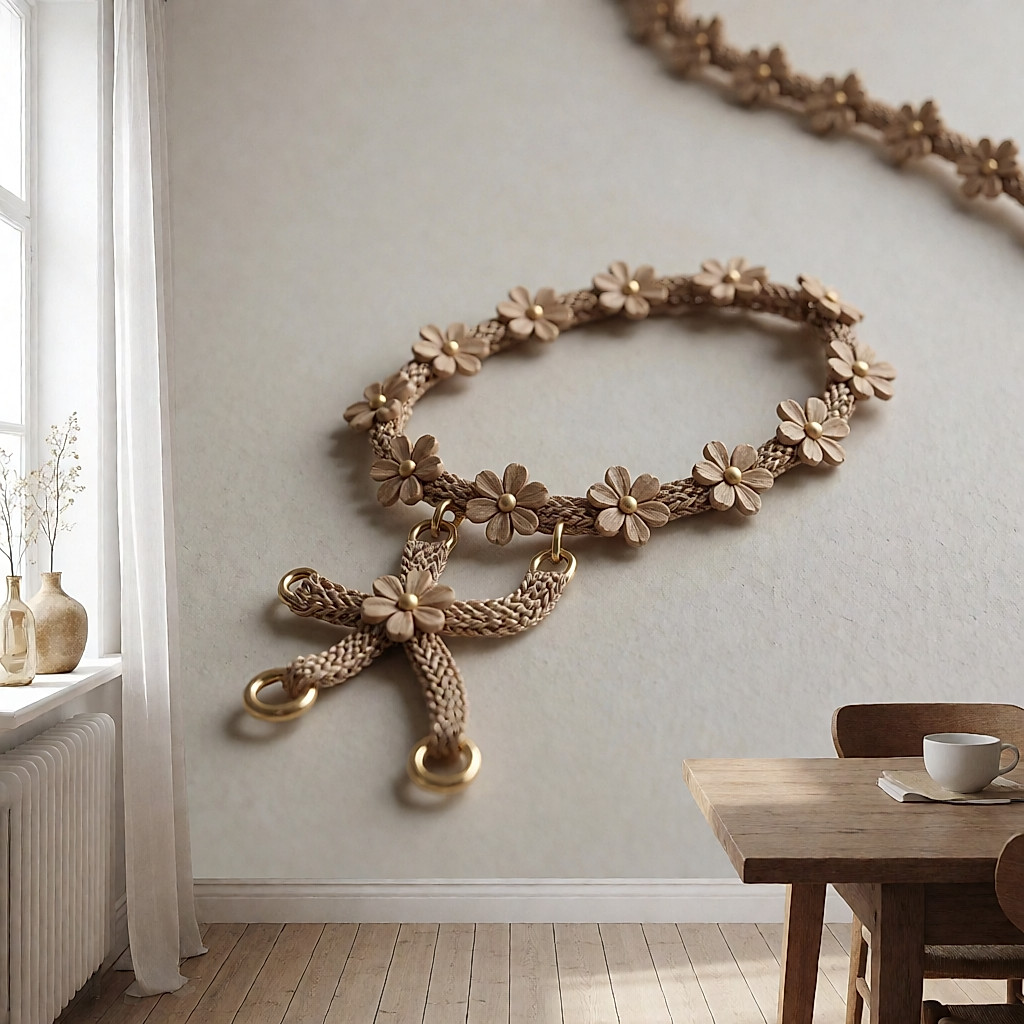
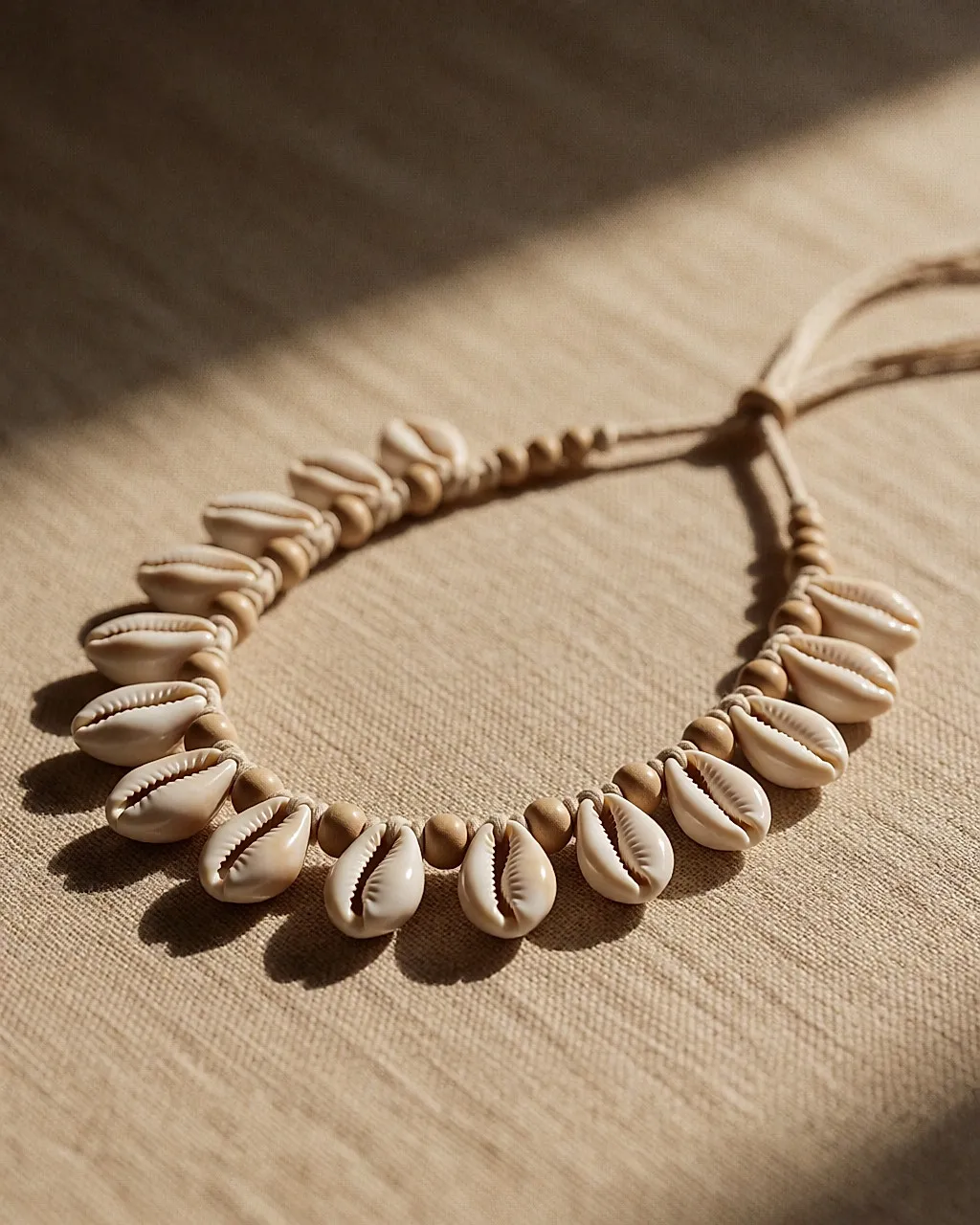
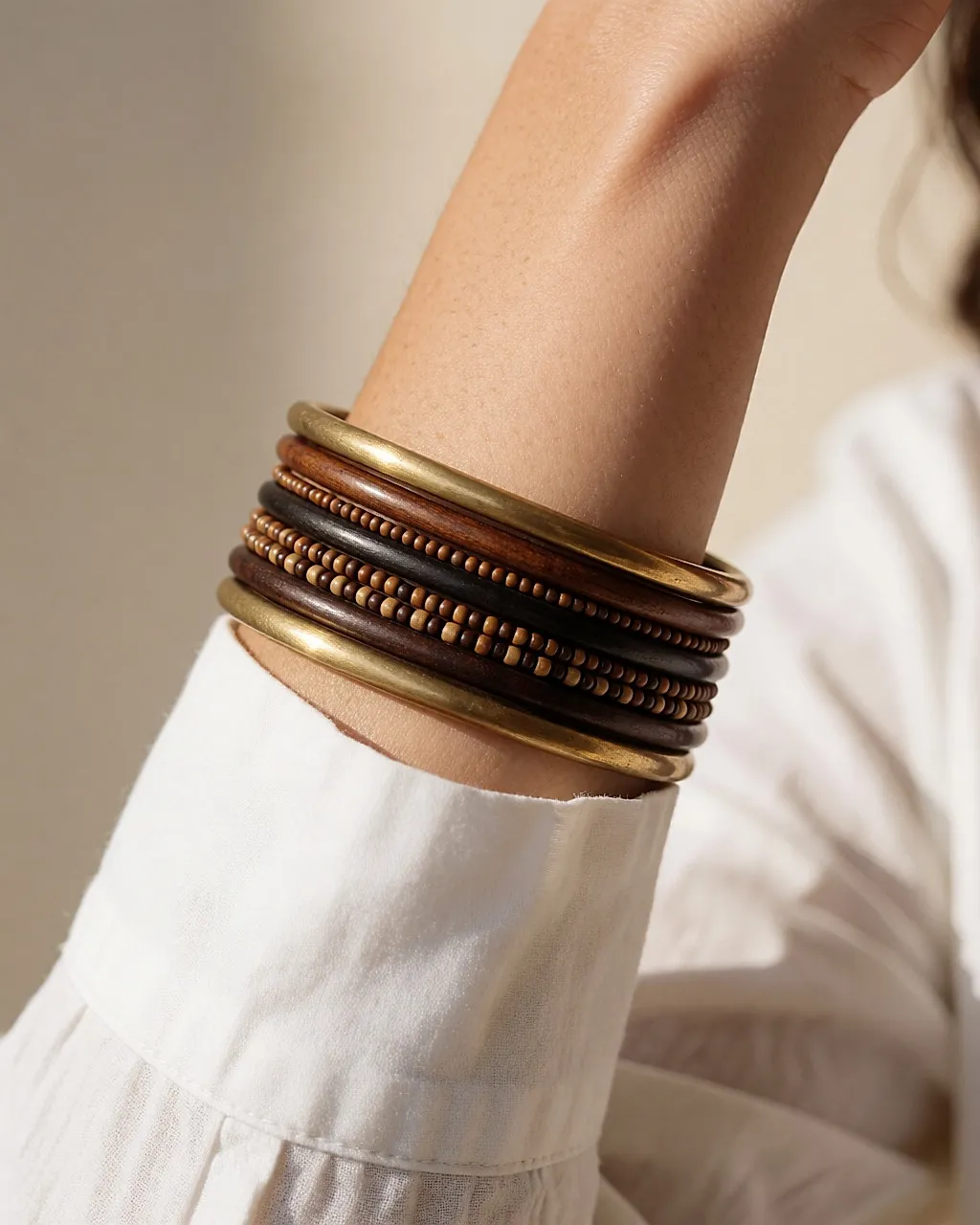
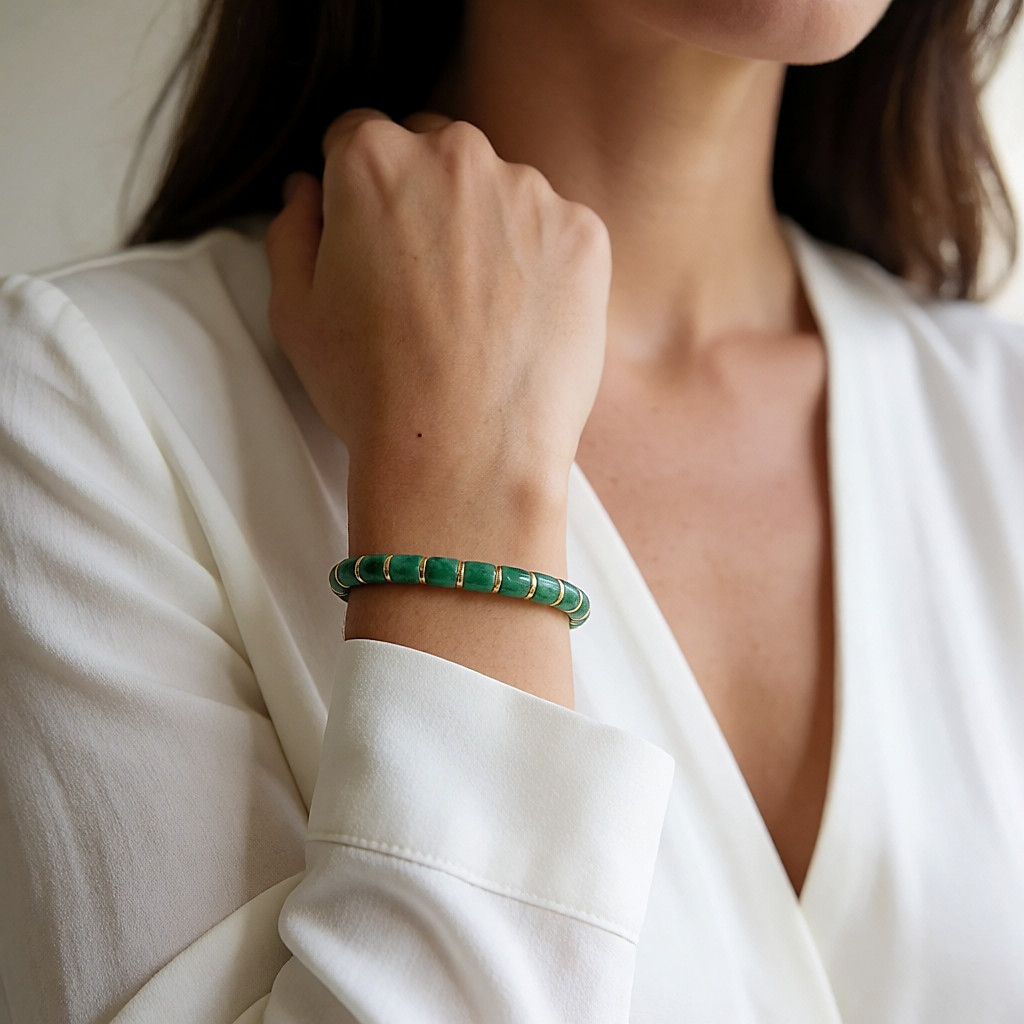
Layering works when bead diameters and metal tones answer each other. A gold chain, a caramel stone, a charm: that's plenty. Add a fourth layer and the whole thing becomes noisy. And if your outfit is already playing the Indian print or a loose, djellaba-inspired cut, take jewellery off rather than adding more.
Choosing without getting caught out
Let's be upfront: I haven't tested anything here. These are selection criteria, not tried-and-tested favourites. What I look at before buying:
- Composition: brass, 925 silver, gold plating. Be wary of 'gold-tone metal' with no further detail — you'll never know what's underneath.
- Traceability: the Fairmined label and the Fairtrade Gold standard certify gold from artisanal and small-scale mines, with social and environmental safeguards. The Responsible Jewellery Council is a set of good-practice standards for the supply chain — not a label stamped on a piece of jewellery.
- Wood: look for the FSC mark on the label — it guarantees responsibly managed forestry.
- Cords and threads: GOTS-certified organic cotton (no GM crops, controlled inputs and wastewater) rather than a polyester braid.
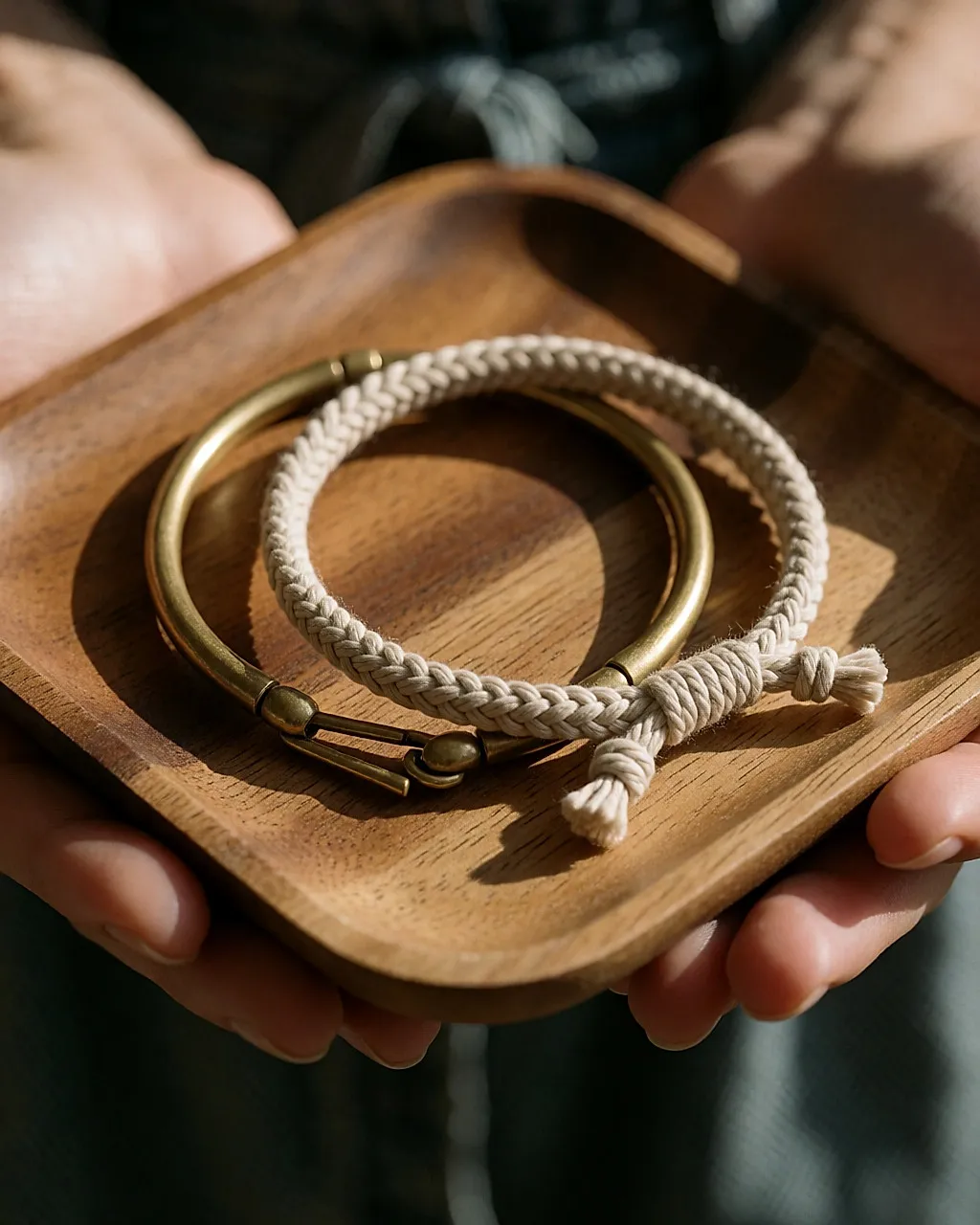
- End of life: metal can be re-polished, a bead re-strung, a cord replaced. A repairable piece lasts far longer than a glued assembly.
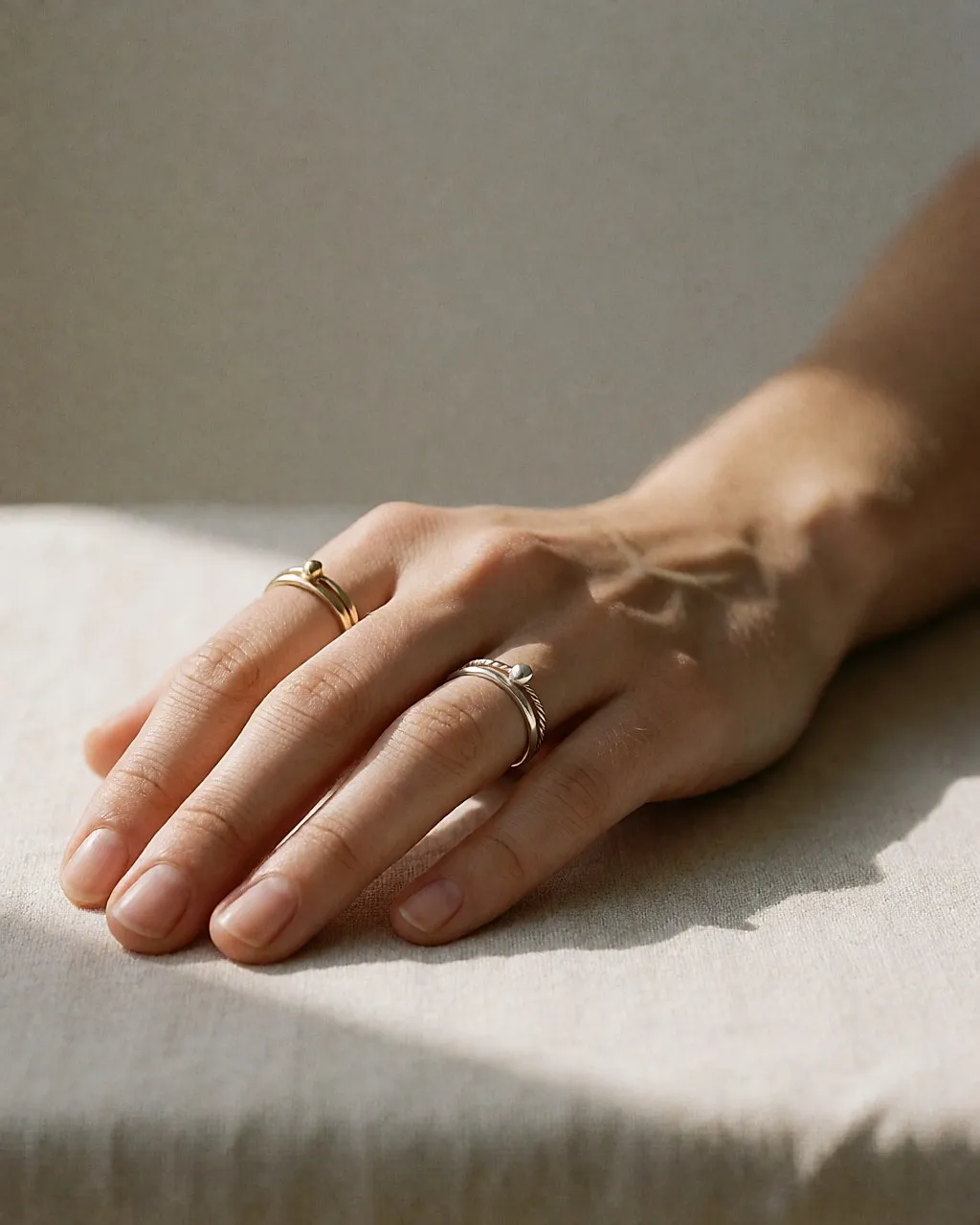
Before you cave in, ask yourself whether the piece will work with three outfits you already wear. If the answer is no, you'll love it for a fortnight. And test the clasp in the shop: on this kind of jewellery, it's usually the first thing to give way.
Budget
Typical UK prices, excluding exceptional pieces:
- bracelets and cords: £8 to £25 on the high street or fashion sites, more like £25 to £55 from a maker or studio;
- earrings: £10 to £30, up to around £60 when the silver is solid;
- pendant necklaces: £15 to £40, and £55 to £105 in brass or recycled silver with a natural stone.
What moves the price: the material, hand assembly, where it's made and whether it holds a real stone. You'll find them at makers' fairs, in independent jewellers, on brand websites and in the accessories aisles of the high street. A £55 piece isn't necessarily better finished than a £25 one; weight and the clasp are what decide it. On a tight budget, a good brass beats a gold plating that can flake quickly.


Comments
Your opinion matters: rate the article, react and reply to comments.
Comments are moderated; AI-assisted comments are flagged. Text emoticons (8-), :-), <3…) are automatically shown as images.