
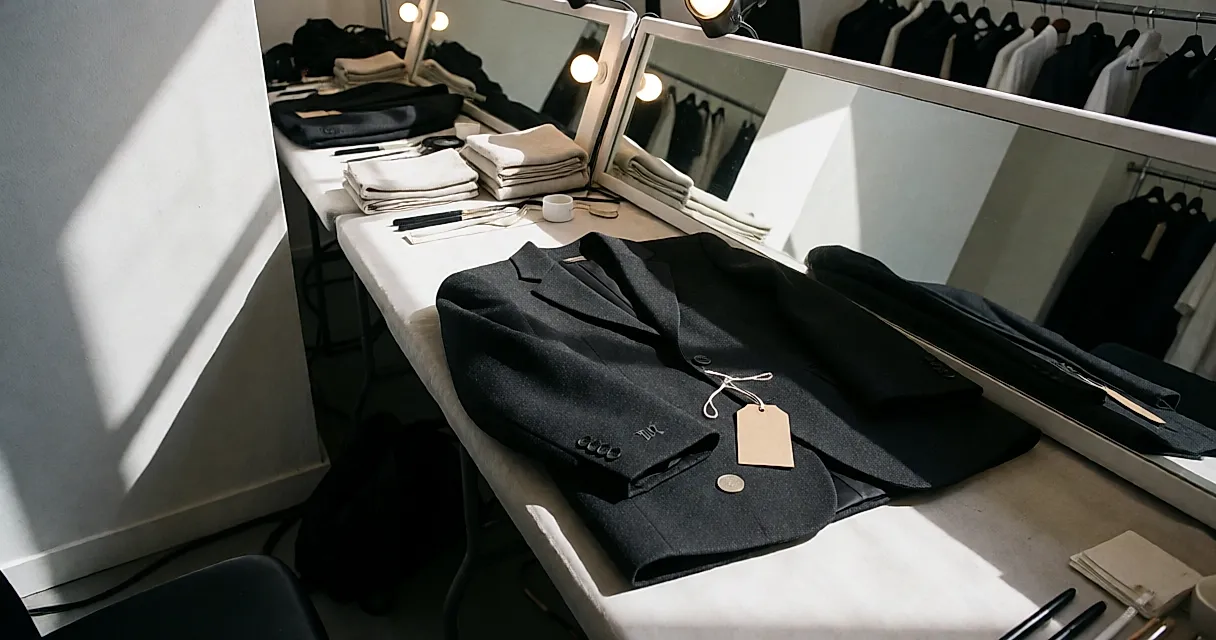
A wool blazer, two discreet initials stitched in tonal thread, and suddenly the piece no longer looks quite like anyone else's. Embroidery is the wardrobe's answer to a tattoo: you love the idea on yourself and find it more questionable on other people. Except that, unlike a tattoo, it can be planned — and sometimes unpicked.
A monogram ties you to a piece, and resale gets harder
That's precisely the appeal: two initials are enough to create a bond. The garment becomes yours, not the one on the mannequin in the window, and you look after it like something personal. A slightly plain jacket, a wool cardigan, a cotton shirt: a monogram gives them a story and often stretches the years you wear them. You keep them longer, you clean them more carefully, you hesitate less before reaching for them.
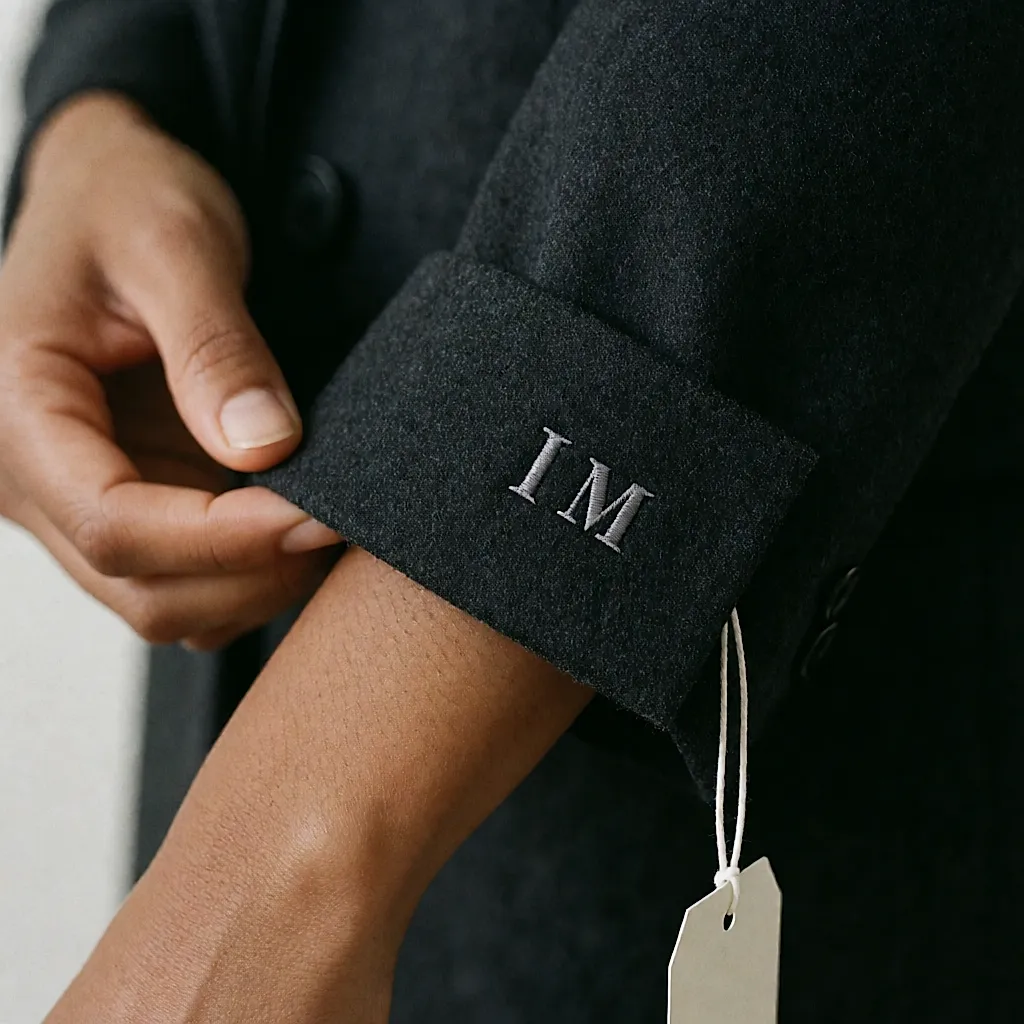
But what happens on the day the piece you love no longer fits? A visible embroidery sharply narrows the pool of buyers: people who share your initials are thin on the ground, and not everyone fancies wearing someone else's name. The garment is still lovely, but it becomes harder to resell — or to pass on. That's the calculation to make before you reach for the thread: how long will you honestly keep it?
Where to put the monogram so it stays private
So where do you place the mark to keep the pleasure without blocking a sale? The lining is usually your best friend: a small monogram there shows only when you open the jacket or turn it inside out. Same logic inside the collar, on a shirt placket or next to the care label. It's discreet, personal, and reveals nothing on the outside.
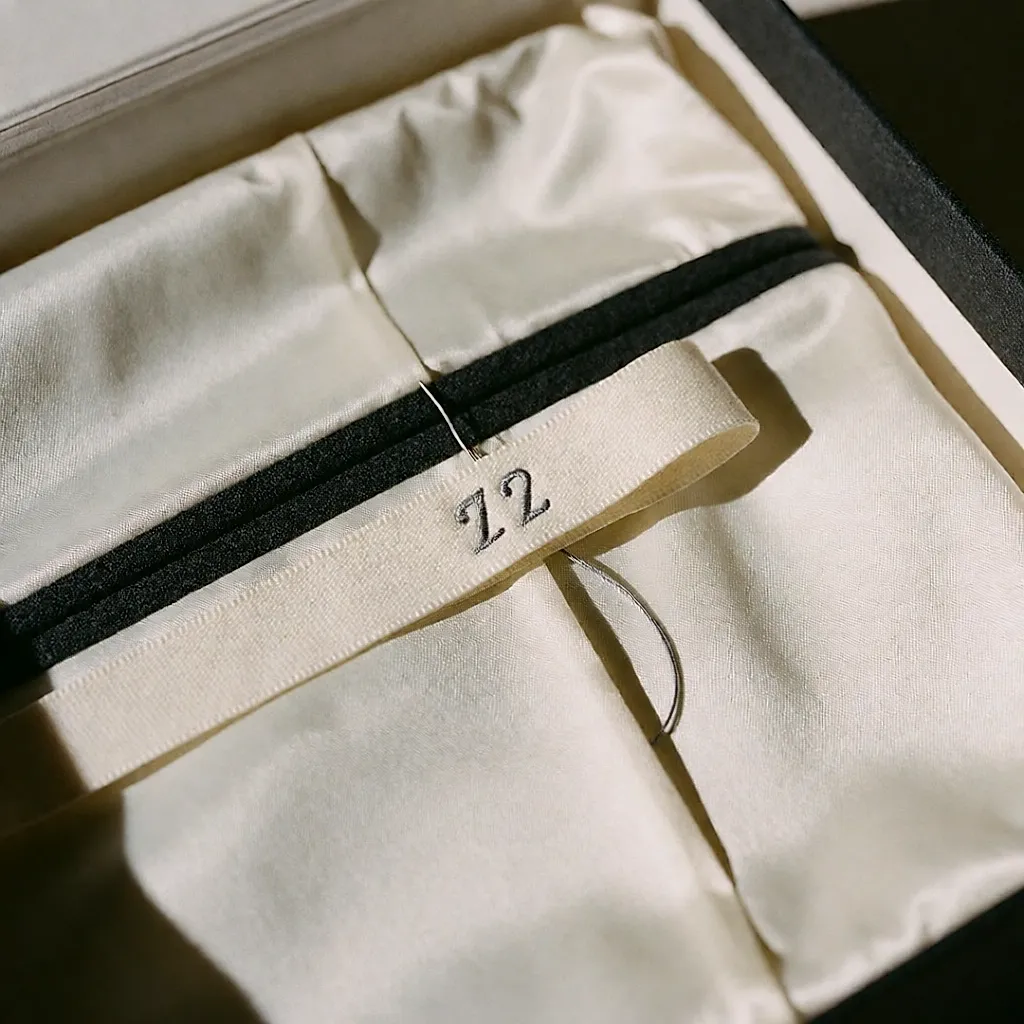
The inner hem works well too on trousers, skirts and coat sleeves. It barely shows, doesn't interfere with the drape, and can disappear if the hem is ever redone. But no one is asking you to turn a trench coat into a wedding invitation! The cleverest route is the removable ribbon: have your initials embroidered on a cotton or silk ribbon, then stitch that inside. The day you sell the piece, one snip and it's anonymous again. Just check that the ribbon doesn't rub against the skin and that it survives cleaning.
The trick that keeps a resale possible: embroider a ribbon, not the lining itself. You keep the memory, the piece keeps more of its resale appeal, and the stitching stays reversible. Ask for tonal thread and two letters at most: it looks more elegant, and it's easier to live with if you change your mind.
When to leave the thread in the drawer
Some pieces you would regret marking. The ones you'll sell on quickly — a well-made coat, a bag, a designer jacket — gain nothing from carrying your name if you think you might part with them one day. Take the same care wherever embroidery would have to go through a fragile lining, delicate leather or a fine knit: the stitching can mark the material, and the repair then costs more than the monogram did.

When should you walk away? When the piece is already very distinctive, when you're not sure about the fit, or when it is likely to be passed on — a borrowed garment, a child's garment they'll grow out of, a gift. In those cases a woven name label slipped into an inside seam is enough. And if you're still hesitating, start with a removable ribbon: wearing it will tell you whether you actually like the monogram.

What a monogram costs
What does this little extra bit of soul set you back? In practice, budget roughly £10 to £20 for two simple initials at a high-street alterations shop, £20 to £40 at a specialist embroidery studio, and £45 to £80 for larger lettering or hand embroidery. Treat those as ballpark figures: the price climbs with the number of letters, the fineness of the thread, how tricky the fabric is and where you live. In London and other big cities, you will reach the top of that range quickly.
Where do you get it done? Alteration shops and independent embroidery studios often do very good work on simple pieces. Haberdashers are the place to find ribbons and thread, while some fashion boutiques offer personalisation on top of a purchase. Online services exist too — but you have to accept not seeing the piece before you post it. For a wool jacket or a cotton shirt, a local studio remains the safest bet; for a removable ribbon, a haberdashery is all you need.
The trade-off that works
If the piece is a staple you plan to wear for years, a discreet monogram inside is a good move: you keep the personal connection without compromising a future sale. If it's a passing piece, a trend or an impulse buy, put the thread away and choose a removable tag. The right embroidery isn't the one that shouts your name — it's the one that leaves the door open.
And if you do fall for a visible monogram, do it on a piece you're certain to wear until it falls apart. At least then the resale question won't come up again.


Comments
Your opinion matters: rate the article, react and reply to comments.
Comments are moderated; AI-assisted comments are flagged. Text emoticons (8-), :-), <3…) are automatically shown as images.