
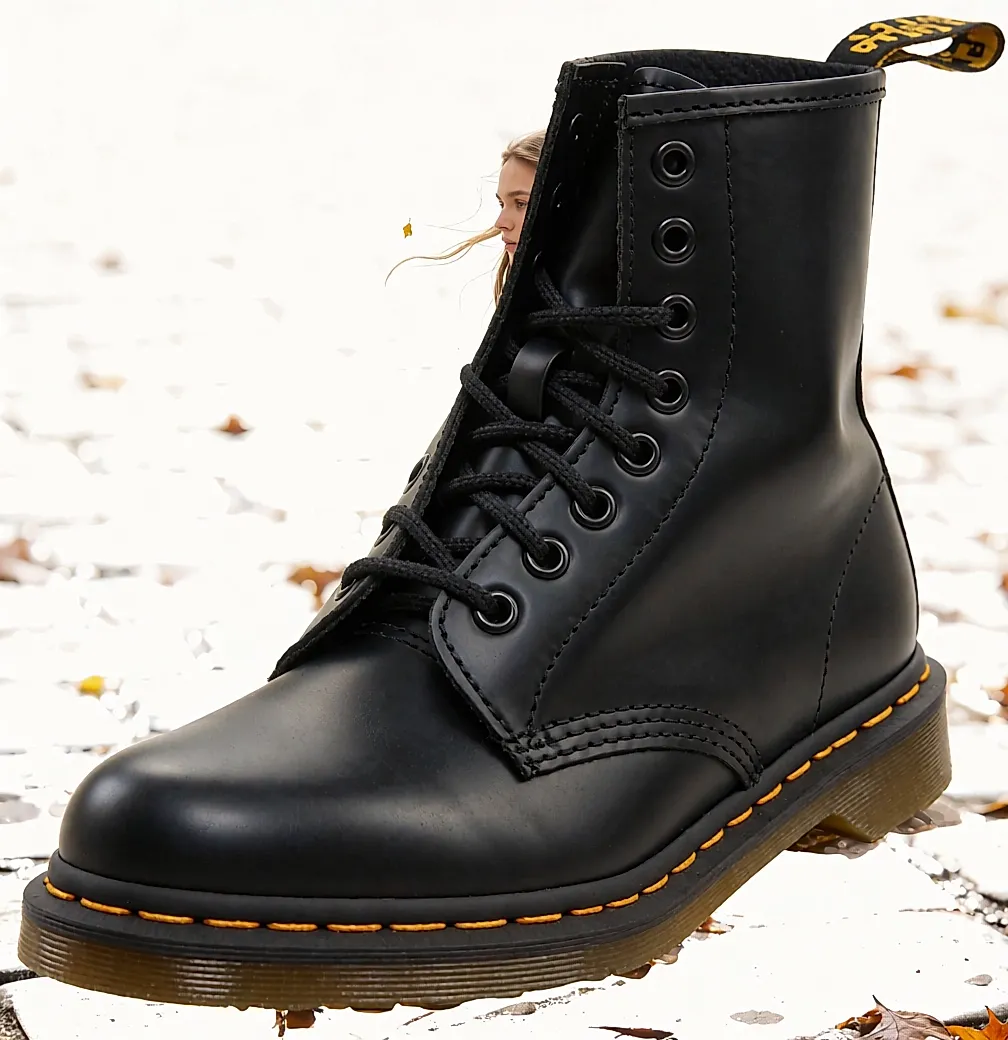
You've dug your old pair out of the wardrobe, the ones that have seen three winters and two festivals? You're not alone. For a few seasons now, the eight-eyelet boot has been cropping up on pavements, runways and in the wardrobes of the under-35s. Not bad for a shoe originally dreamed up to ease sore, damaged feet.
From a broken foot to a punk icon
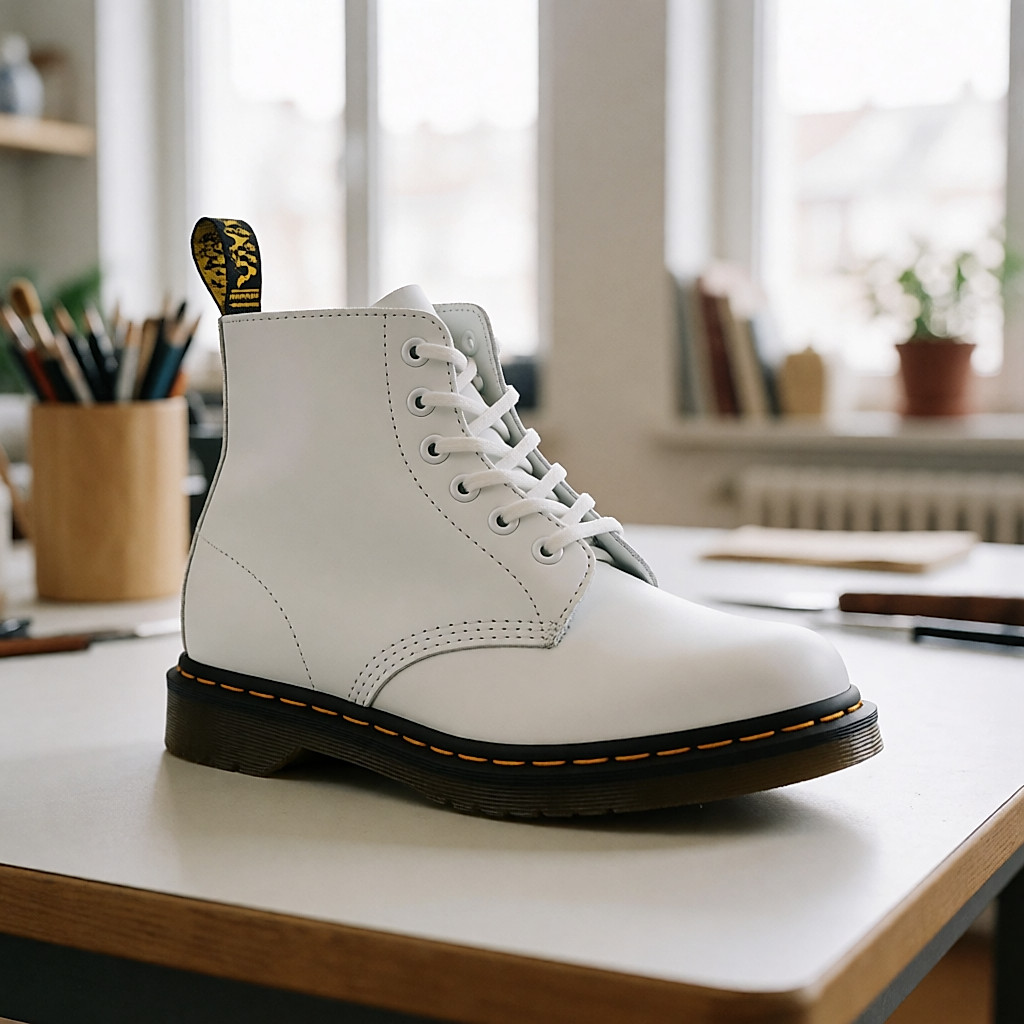
Back to 1945. Klaus Märtens, a German military doctor, broke his foot skiing. His hospital boot was uncomfortable, so with engineer Herbert Funck he cobbled together an air-cushioned sole that was flexible and cushioned.
Fifteen years later, the Griggs family, shoemakers based in Northamptonshire, bought the licence and reworked the design. The 1460 launched on 1 April 1960 — hence the name. High upper, yellow stitching, cleated sole: the design has barely changed since.
Very soon, it was subverted. British workers liked its toughness, then punk took it over: the Sex Pistols, The Clash and The Cure made it a wardrobe staple as much as a badge of belonging. In the 1990s, Kate Moss, Naomi Campbell and Madonna wore them, and the work boot crossed into fashion.
Why it still works
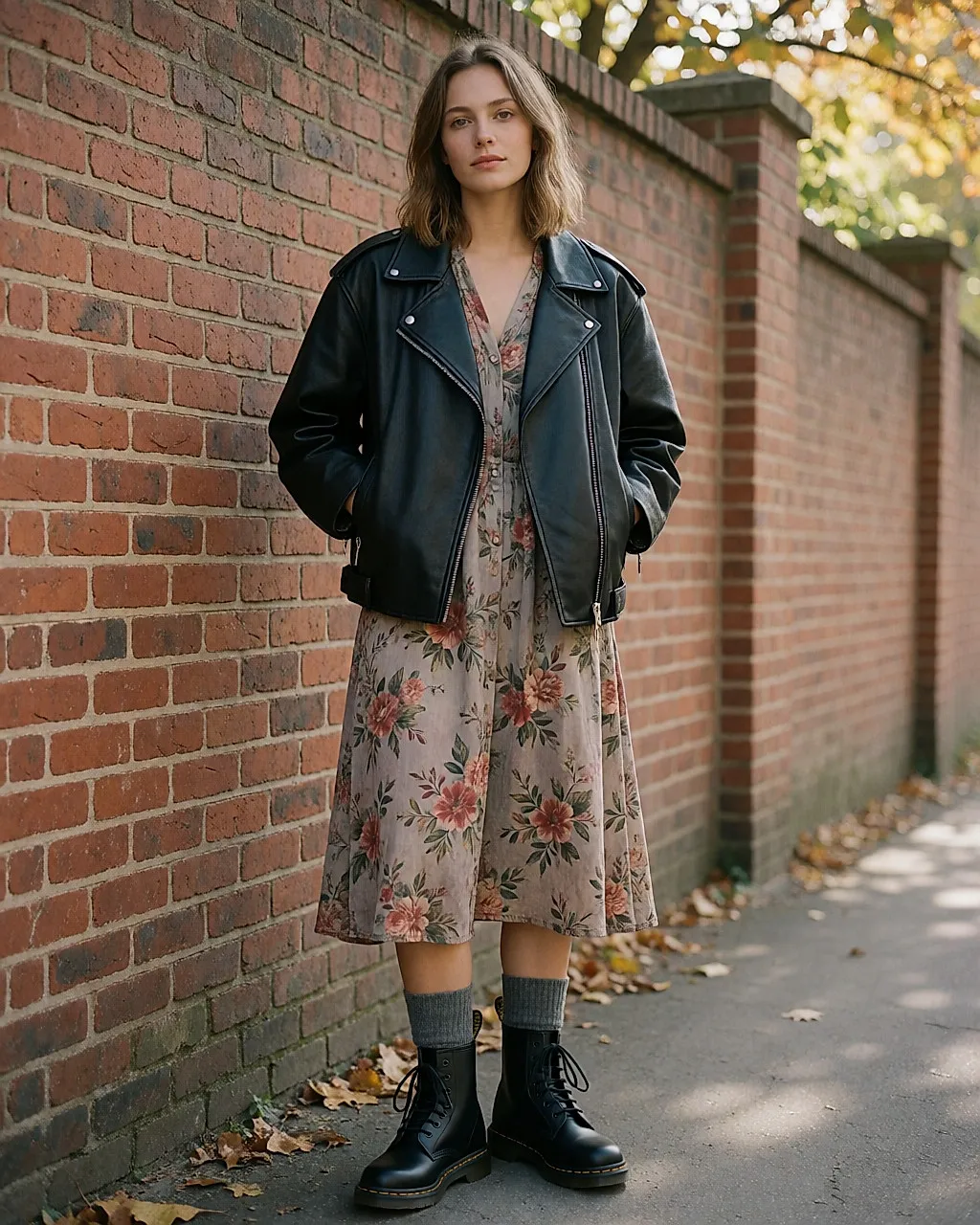
Its strength is contrast. A chunky upper, thick leather that develops a patina, a deliberately heavy feel: worn with a floral dress or wide-leg trousers, it breaks up an overly prim silhouette. Layered with raw denim and thick wool socks, it warms up a head-to-toe winter look.
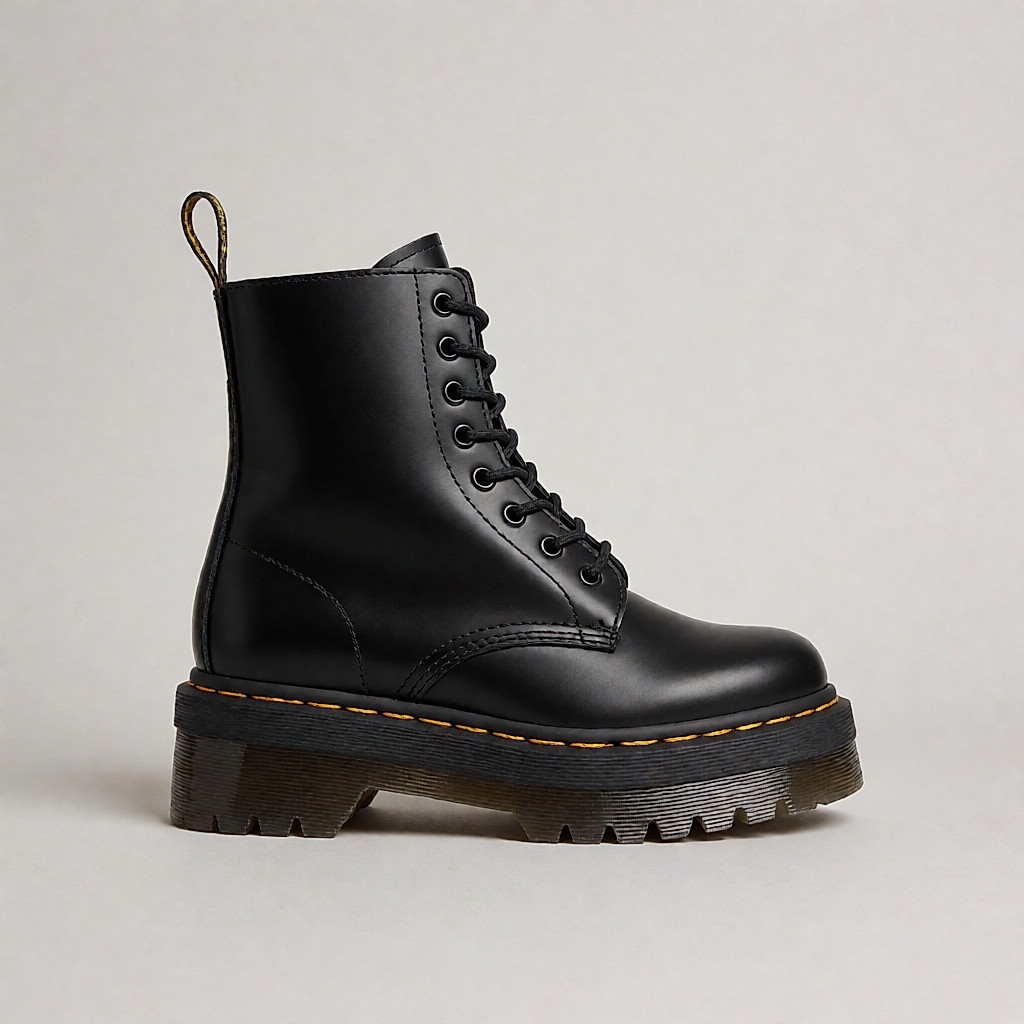
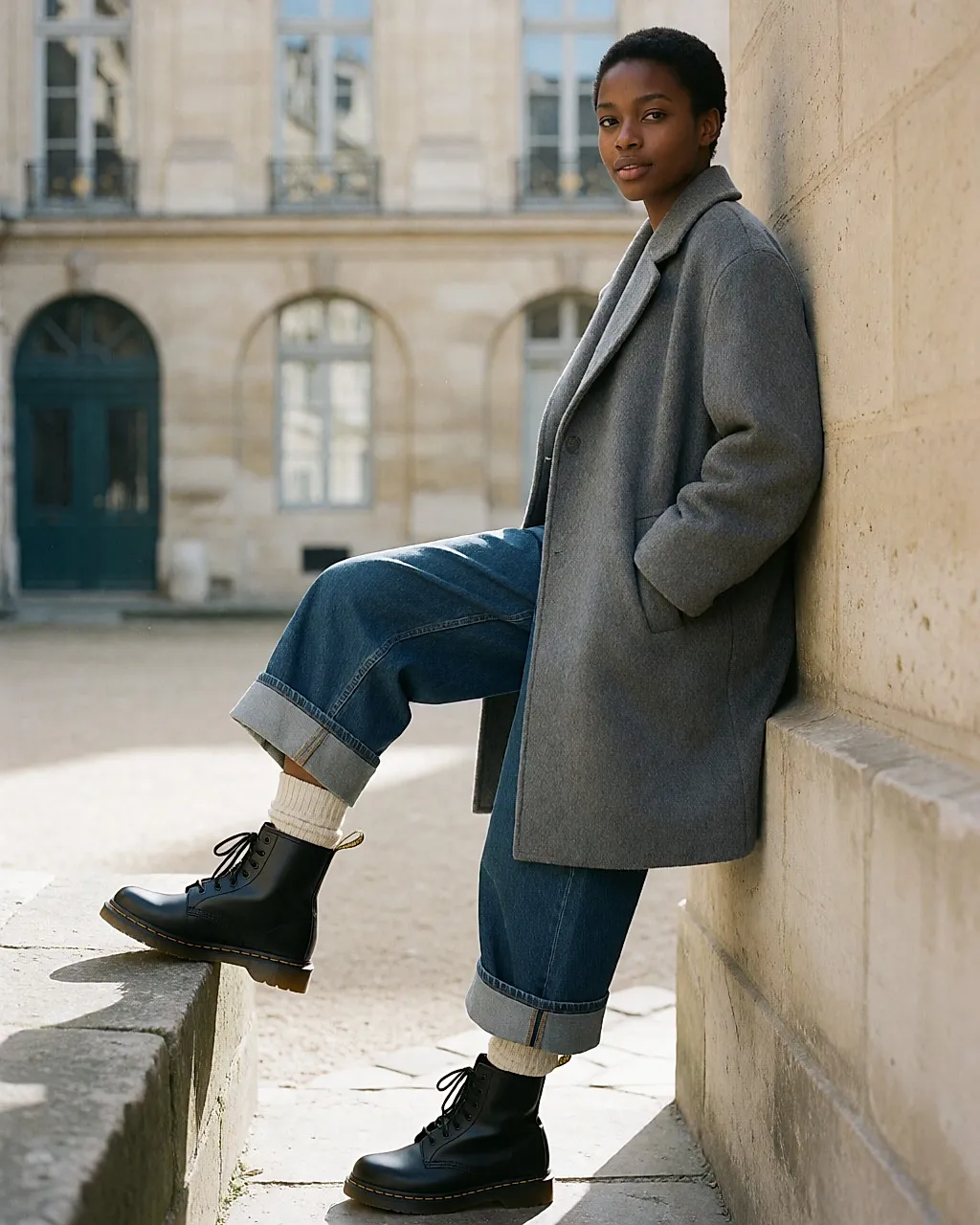
On the look front, two schools. The black 1460 in smooth leather is the goes-with-everything basic. Platform or burgundy versions make more of a statement, to be accessorised sparingly. Classic or bold: it's up to you which silhouette you want to tell.
The move that changes everything: for the first few weeks, the stiff upper rubs the heel. Wear high socks, lace without tightening the top of the boot, and condition the leather once a month with a neutral balm. A cobbler can also soften the heel counter — it saves a fair few blisters.
Manufacturing: what has actually changed
The '100% biodegradable soles' line is no longer part of the brand's story. What is documented today is something else.
The leather comes from tanneries audited by the Leather Working Group, a framework that scores sites on water, chemical and waste management — note, though, this label covers the tannery, not the whole shoe. The brand also offers an animal-free range: the trade-off is a synthetic material, so it is petroleum-based. And some 1460s, notably the Made in England line, are stitched and can be resoled by a cobbler, which significantly extends their lifespan. I haven't tested this line, still produced in Wollaston, but it is the most repairable version in the catalogue.

Budget
| Version | Typical UK price range |
|---|---|
| 1460 smooth leather | £155 to £205 |
| Animal-free styles | £145 to £190 |
| Platform / special editions | £190 to £240 |
| Made in England | £255 to £340 |
| Kids | £75 to £110 |
The price varies by material, place of manufacture, collaborations and size. Second-hand — Vinted, charity shops, vintage shops — expect around £45 to £100 depending on condition: check the sole wear and the strength of the stitching. You'll find them on the official Dr. Martens site and in Dr. Martens stores, at multi-brand stockists and online. Allow £9 to £13 for a care balm: a small regular habit that really does extend their lifespan.
Comments
Your opinion matters: rate the article, react and reply to comments.
Comments are moderated; AI-assisted comments are flagged. Text emoticons (8-), :-), <3…) are automatically shown as images.