
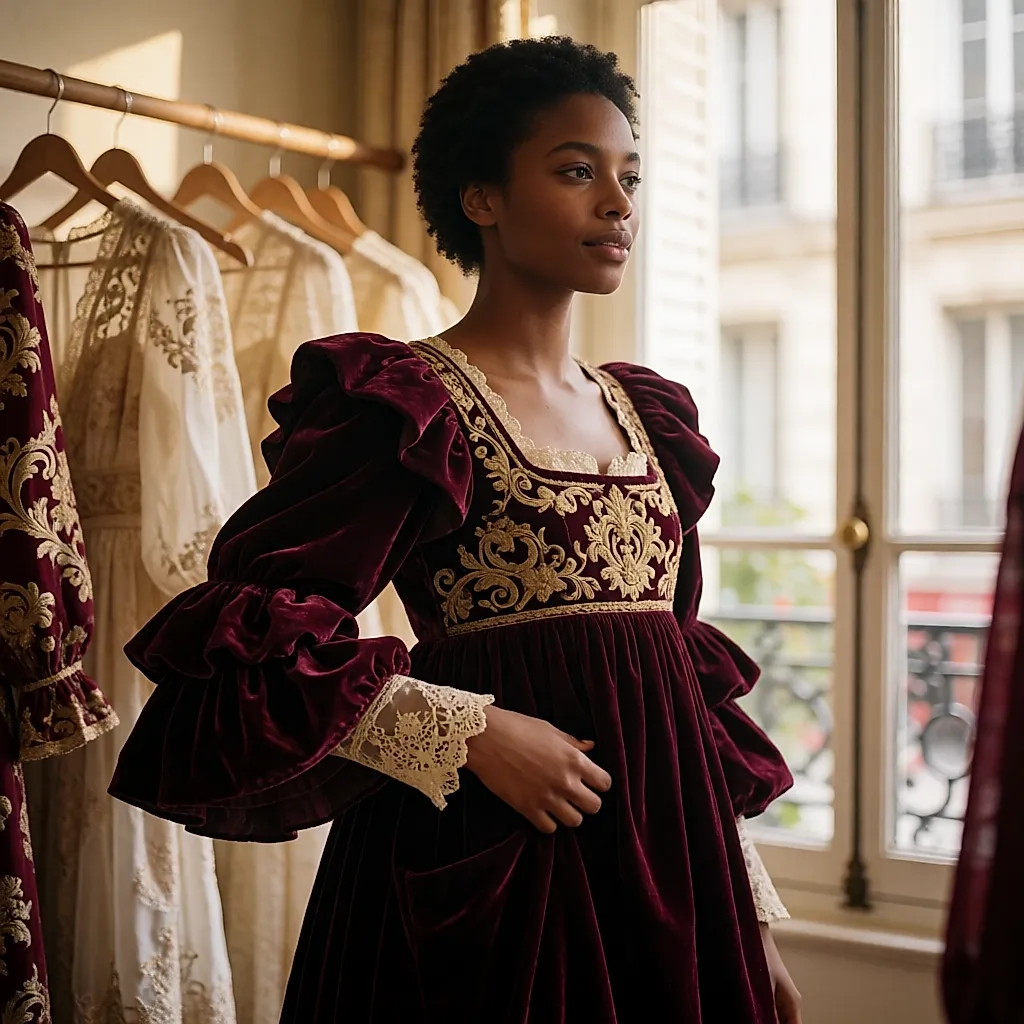
Have you ever stood in front of a wardrobe that's fit to burst, sighing that there's nothing to wear? The problem isn't quantity: it's that everything ends up looking much the same. So if you're after a piece you won't see on someone else at every dinner, there's an address worth noting. Le Boudoir de Madame, a multi-brand womenswear boutique, is putting the spotlight on designs by Olghita de Pias. And to be upfront: I haven't had my hands on these pieces yet. This article is documentary rather than a review — but the designer's approach is worth a closer look.
Baroque and Spanish culture, a deliberate signature
Olghita de Pias follows her own enthusiasms rather than the rhythm of catalogue-driven collections. Her reference points are baroque art and Spanish culture. In practice that means generous lines, unapologetic ornament and real richness of colour. The silhouette stays thoroughly feminine, a long way from the minimalism filling most rails. It's a wardrobe with a point of view: you either love it or you walk on by, but it's hard to feel indifferent.
How a piece hangs comes down to the fabric
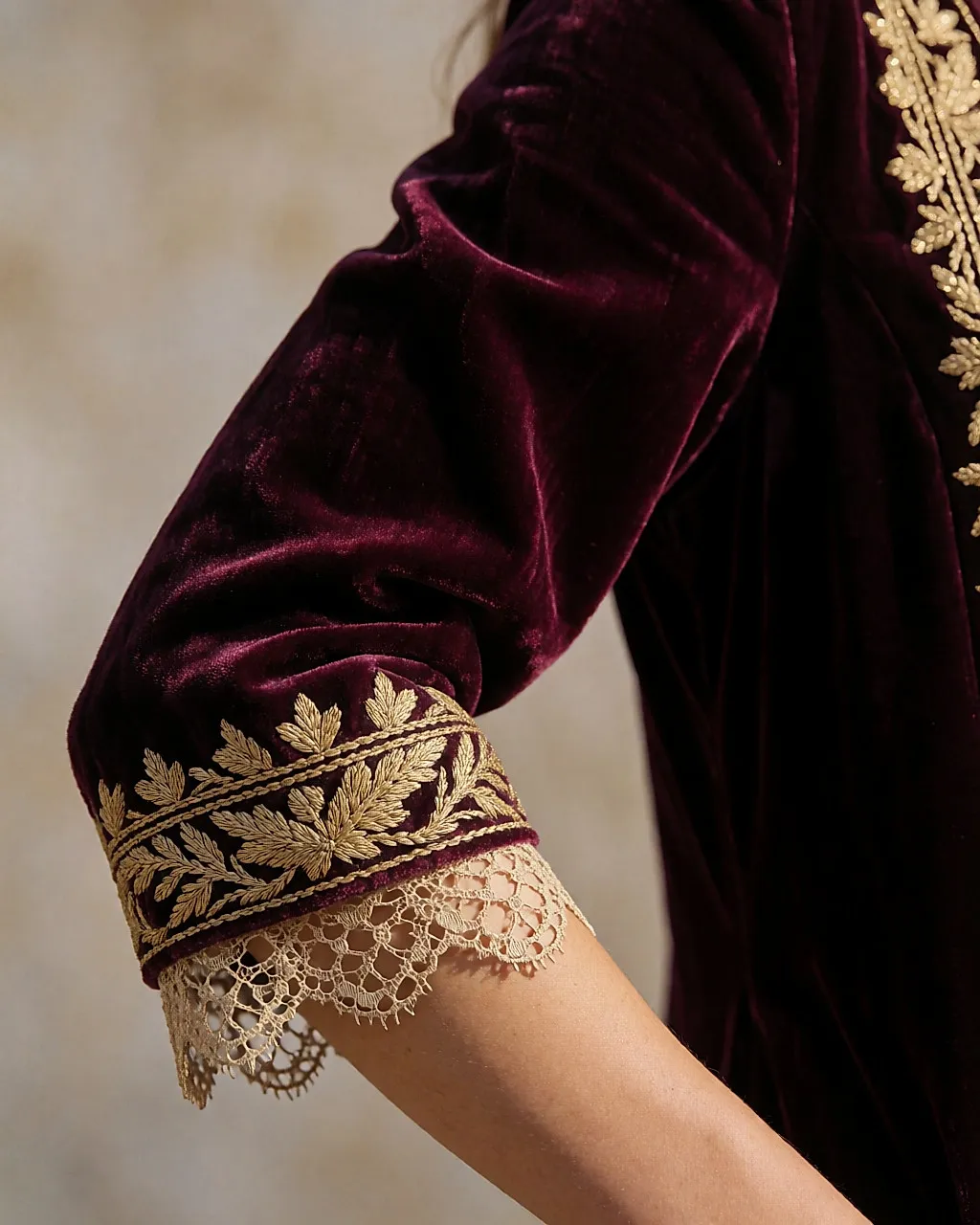
You can have the most perfectly judged cut in the world, but if the fabric doesn't play along, the garment never comes alive. The materials highlighted here are noble ones — silk, velvet, muslin and lace, often with ornament. Silk falls along the body and moves with it; a budget viscose creases, pulls at the waist and ages badly after a few washes. Lace, meanwhile, should be judged on its texture and the fineness of its motif, not on how many metres of it were sold.
Worth knowing on the fibre front: conventional silk remains the benchmark for drape. Certified organic silk does exist, but it's still scarcer and often produced in small quantities. Two alternatives hold their own if environmental impact matters to you — cupro and certified lyocell, cellulose fibres with a fluid fall. Either way, read the composition label before you commit: a high proportion of polyester often changes how a piece hangs compared with silk.
Dressing up a statement piece
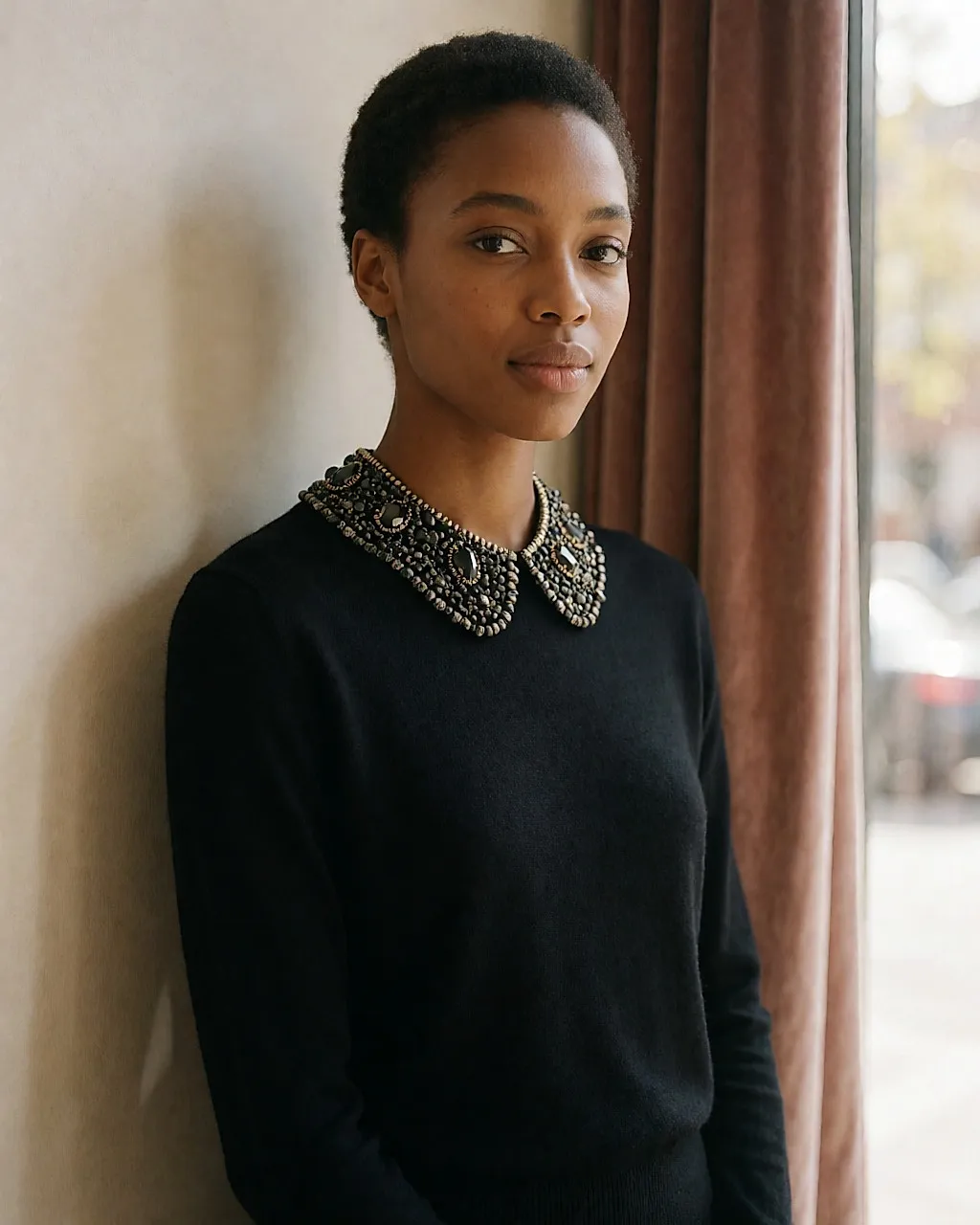
On the accessories side, the boutique lists jewellery, ornate necklaces, lace and crystals. One sizeable caveat: animal-fur bags and stoles have largely left the rails, and contemporary ready-to-wear tends to prefer faux fur. You still need to read the composition, because plenty of faux fur is virgin acrylic, derived from petroleum. A faux-fur stole made from recycled fibres, with the Global Recycled Standard (GRS) on the label, is a better choice — the certification covers the recycled content and its traceability, though not what happens to the piece at end of life.
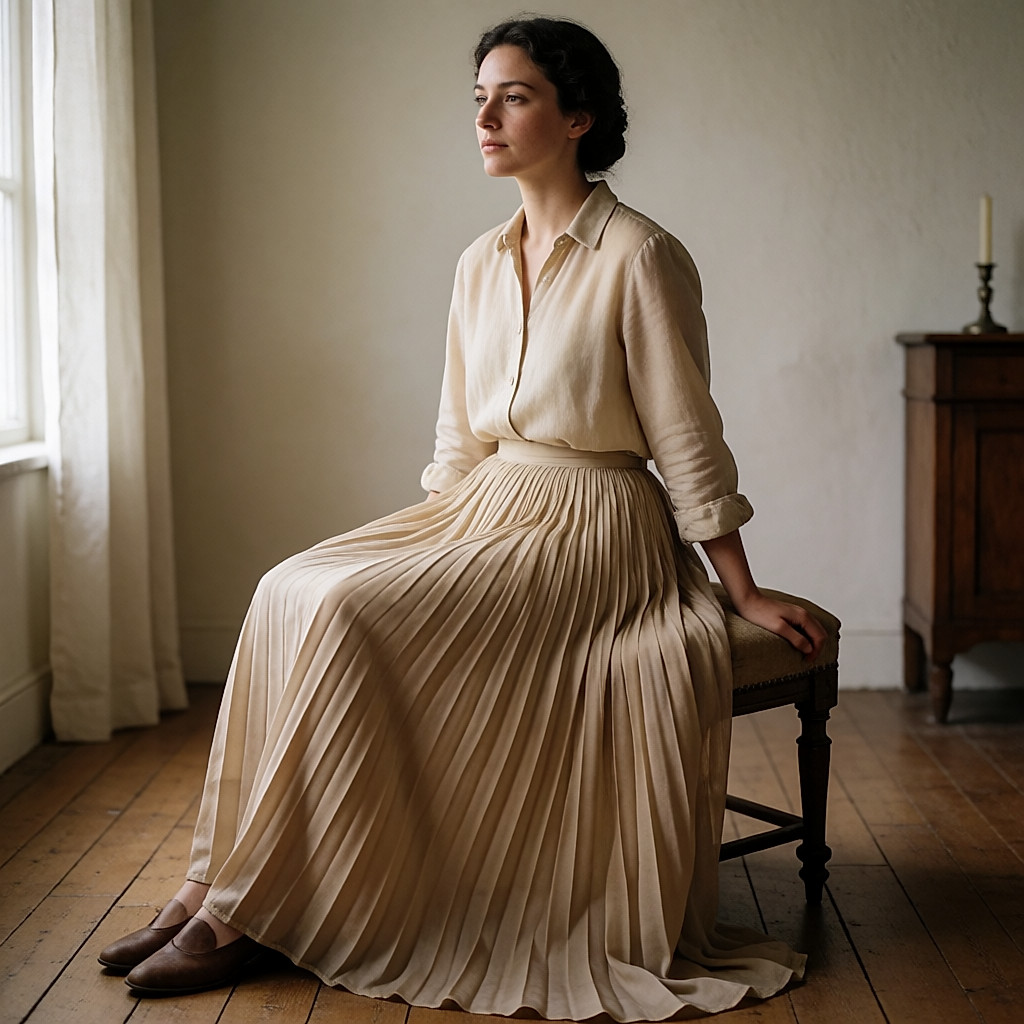
The one styling rule worth keeping: a single statement piece per outfit. Everything else in quiet layering — fine knitwear, straight trousers, clean boots — so the look can breathe instead of shouting.
The three-metre test. Before you fall for a heavily ornamented piece, step back three metres and photograph it with your phone. If the detail collapses into a fuzzy mass, the look won't hold up over a day's wear. If it still reads clearly, you've found your piece.
What it costs
Expect roughly £110 to £300 for a designer top or skirt made in a small run, and more like £220 to £520 for a long dress lined in silk or velvet. Prices move with fabric and season, so treat those as a guide rather than a quote. Several things push the figure up: the material (real silk versus a blend), where it's made (a European atelier versus offshore production), the size of the run (one-off, small batch or repeat run) and alterations — hemming, taking in — which are usually charged separately.
Where to look: the designer's own online shop or atelier, multi-brand concept stores, pre-owned designer platforms (Vestiaire Collective, Vinted) and designer fairs, where you can try before you pay. If you're ordering online, check the returns policy: on an ornate piece, one size out makes all the difference to how it hangs.
Comments
Your opinion matters: rate the article, react and reply to comments.
Comments are moderated; AI-assisted comments are flagged. Text emoticons (8-), :-), <3…) are automatically shown as images.