

The back of a piece of jewellery — the side you never turn over in a shop window — tells you more than the name printed on the box. A well-set stone, a clasp that works cleanly, a weight that doesn’t lie: three checks that take thirty seconds and save a lot of disappointment. Do them before you look at the price tag, not after.
Turn the piece over. Now.
The first instinct when you try on a necklace or ring is to look at the front. Rookie mistake — and we’ve all made it. The underside is the part the maker knows you won’t see, so it’s often where they rush.
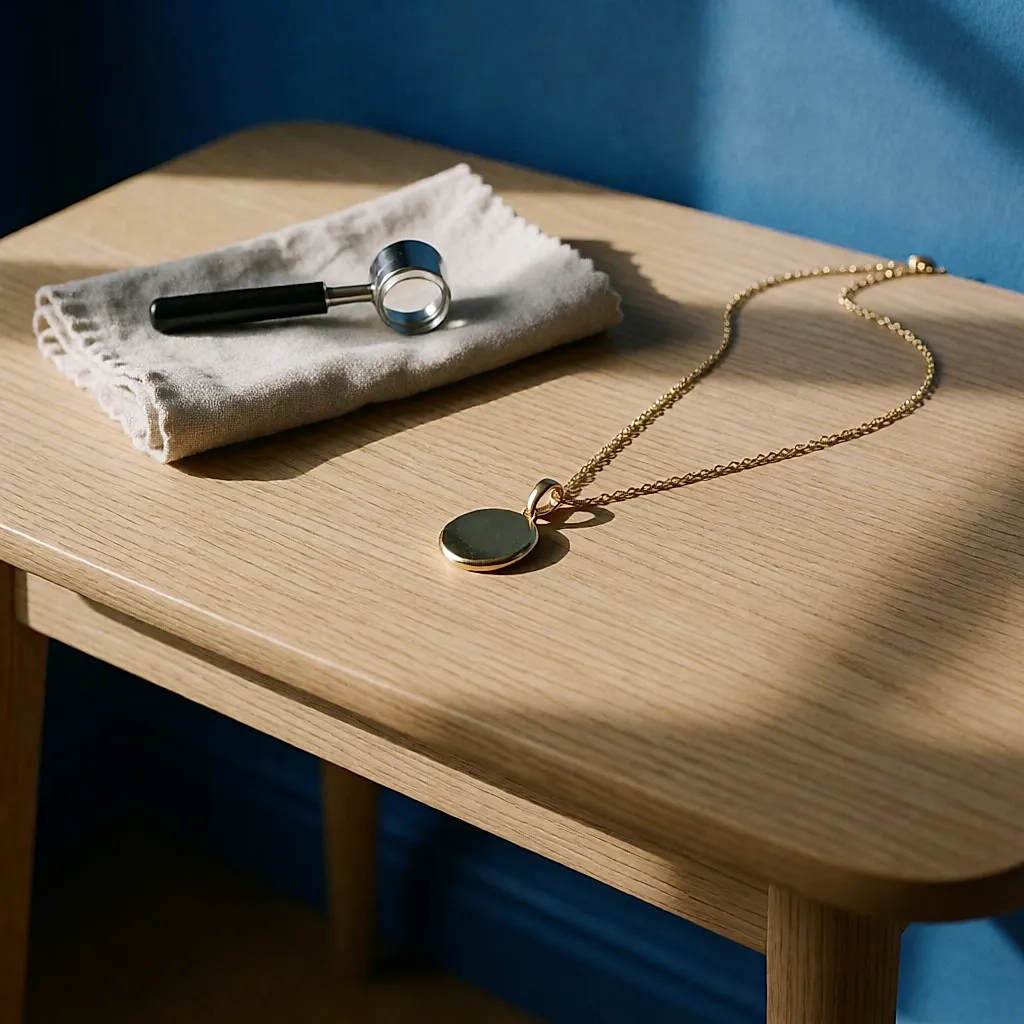
Turn the pendant over. The setting — the structure that holds the stone — should be neat: claws of equal length, folded with the same regularity, holding the stone without biting into it. If the claws point in all directions, if one is shorter, if your finger catches on a rough edge, the stone may move. And a stone that moves will eventually fall out, usually somewhere you’ll never find it.
Look at the solder joins at the back, too: they should be smooth, almost invisible. A blobby solder point, a black mark, a sharp edge between two links, and you know what to expect from the rest. It isn’t about price: a £40 piece can be neatly finished, while a badly finished £400 piece is still badly finished.
Give the clasp five seconds of fidgeting
Open it, close it, open it again. A necklace or bracelet clasp should work with a clean action, without force, and stay shut when you pull gently. If it catches, grinds, or takes three attempts, that isn’t a nail problem — it’s a manufacturing fault.
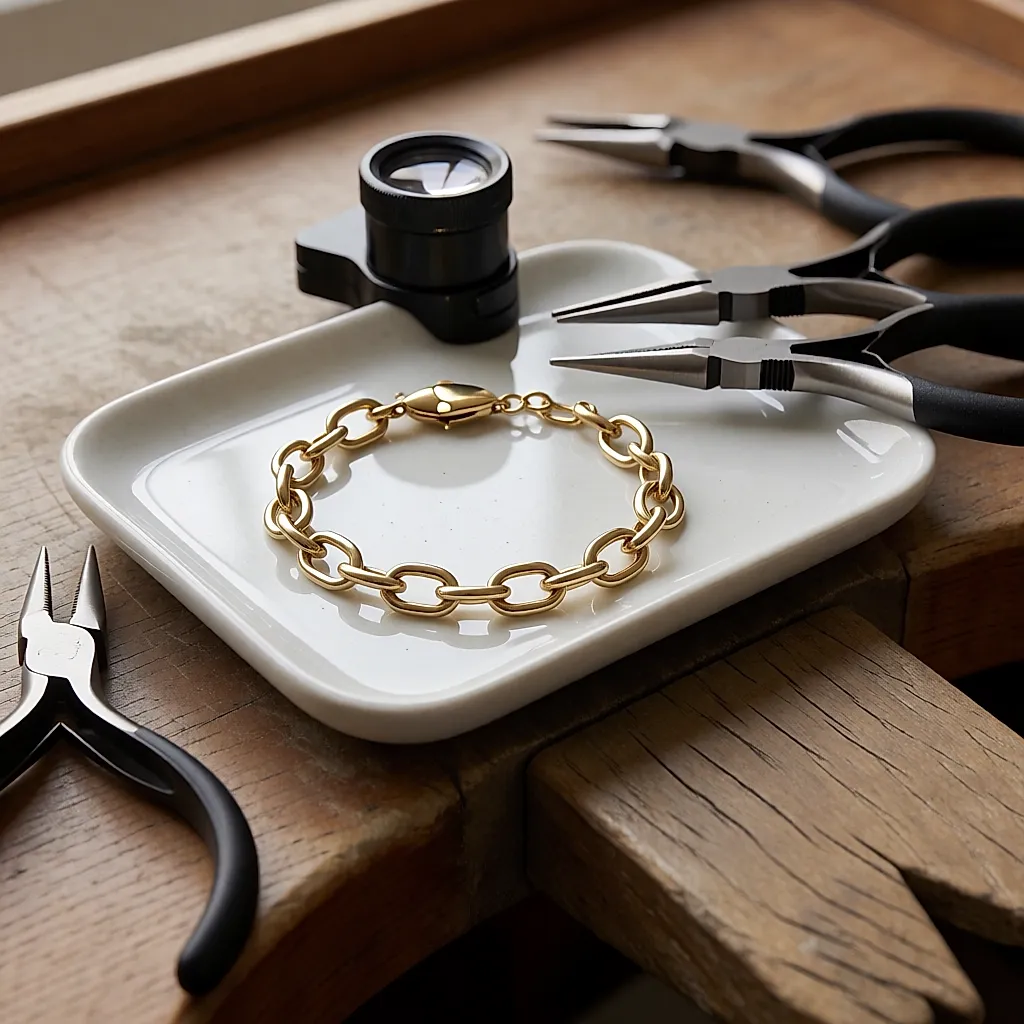
Lobster clasps and spring-ring clasps are the easiest to test: the little lever should spring back on its own, with no side-to-side play. With a magnetic clasp, be wary: it isn’t a bad choice in itself, but it can pop open under a wool collar or in a cross-body bag. And on a bracelet, look at the extender chain: if the links are as thin as thread, it will break before the clasp does.
One silly detail: ask the sales assistant to let you fasten it yourself. It’s your wrist, your neck, your every-morning gesture.
The wet-finger test: run your fingertip over the entire back of the piece. Every snag, every point that catches your skin is a finishing fault. A well-made piece is smooth even where nobody looks.
Weight doesn’t lie, and neither does hollow construction
Weigh the piece in your hand, then roll it between two fingers. Solid metal jewellery has a density you can feel: it drops, it doesn’t float. A hollow piece — many cuffs and statement earrings — feels feather-light for its surprising volume. It isn’t always a con: hollow construction lightens the ear and makes large shapes possible. But it should be stated, not discovered at home.
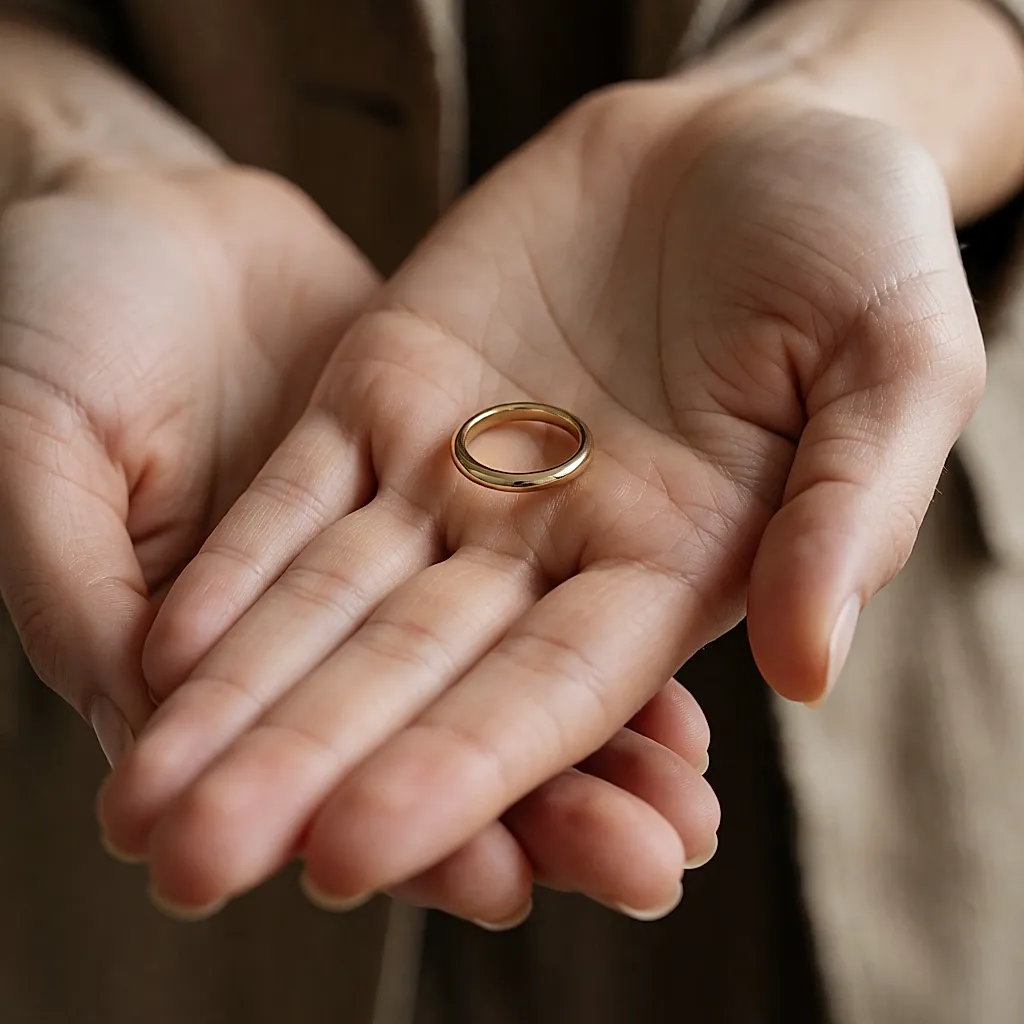
The mark to know is the hallmark. In the UK, most precious-metal jewellery above the small exemption weights carries an assay office hallmark (375 for 9ct gold, 750 for 18ct gold, 925 for sterling silver). If it’s missing, ask the seller why; it doesn’t on its own prove the metal isn’t precious, but it is information. It isn’t a crime: gold plate or gold-toned brass can be perfectly wearable, as long as you know what you’re buying and care for it differently.
And let’s ask the awkward question: if a piece is sold as ‘silver’ but weighs next to nothing and has no hallmark, what exactly is holding the stone?
Budget
Prices vary enormously with the metal, the stone and the finish. As a rough UK guide: costume jewellery (brass, steel, resin), £15–£60 — at this level you’re judging the finish, not the lifespan. Gold plate, £40–£150 depending on the thickness of the plating and the brand. Solid hallmarked silver, £60–£250 for a simple piece. With 18ct gold you’re in a different category: from several hundred pounds upwards, and the price follows the weight of the metal.
Where to see them? Designer fairs and makers’ markets let you turn a piece over before you buy, which is a luxury. Online, look for photos of the back and a mention of the hallmark; if the listing only shows the front, that’s already a bad sign.
As you’ll have gathered, a signature is never a certificate of manufacture. It tells a story, a design, a house — and quite right too. But a pretty name on a clasp that gives up is an £80 disappointment. So next time, turn the piece over, fidget with the clasp, weigh it in your hand. Thirty seconds of curiosity, and you’ll know whether the jewellery is made to last or made for the photo.


Comments
Your opinion matters: rate the article, react and reply to comments.
Comments are moderated; AI-assisted comments are flagged. Text emoticons (8-), :-), <3…) are automatically shown as images.