
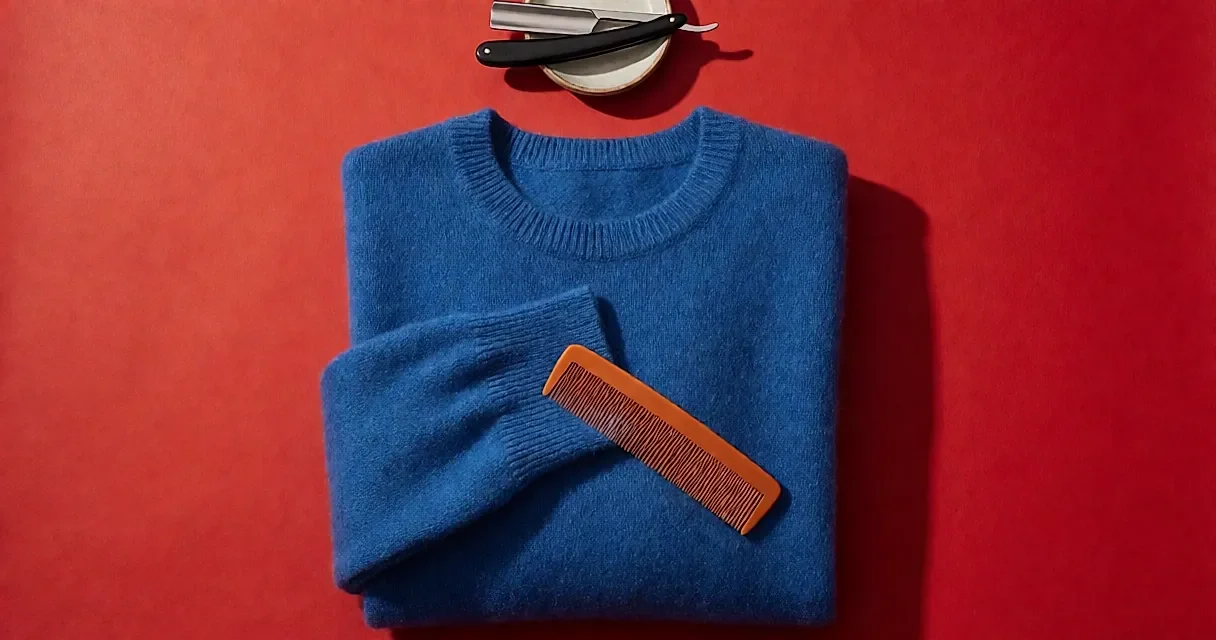
A small, fine-toothed pocket comb drawn flat across a sleeve: it is the least glamorous tool in the sewing drawer — and probably the best-value one. Next to it, the electric bobble remover — often sold as a fabric shaver — has everything going for it: quicker, louder, more “instant results”. Except the difference between the two isn't only a question of speed. It's a blade.
Cashmere bobbles. That isn't a manufacturing fault: it's the fate of many natural knits that rub. Under the arm, along a bag strap, at the cuff, fibres lift, twist around each other and form those little balls that put three years on a jumper in two wears. You can see them, you can feel them under your fingertips, and you want it sorted fast. Which is where the electric bobble remover comes in.
What the comb actually removes
A bobble isn't dust sitting on the wool: it's material. Tangled fibres still anchored to the knit at their base. The cashmere comb — sometimes sold as a de-pilling comb — doesn't cut anything: its teeth catch the pill and pull it out of the knit, the way you untie a knot rather than slice through it.
What it won't do is remove the cause. A piece that has bobbled once can bobble again if the friction carries on. The comb simply brings the surface back to looking new, and that's already a lot: cashmere that's been carefully de-bobbled can keep looking neat for longer.
Two caveats, straight away. On a very loose or looped knit, the teeth can catch more than the bobble — go at it with a light hand, or leave it alone. And on cashmere worn thin enough to be see-through, no tool will work miracles.
What a razor damages without you noticing
The electric bobble remover works with a rotating blade behind a protective grille. It is effective, true, and on a chunky everyday jumper the difference is often hard to see. But here's the thing: the blade can cut the bobble and the healthy fibres around it. Run it several times over the same spot and it can thin the knit, leave uneven patches and, in careless hands, open small holes that weren't there before.
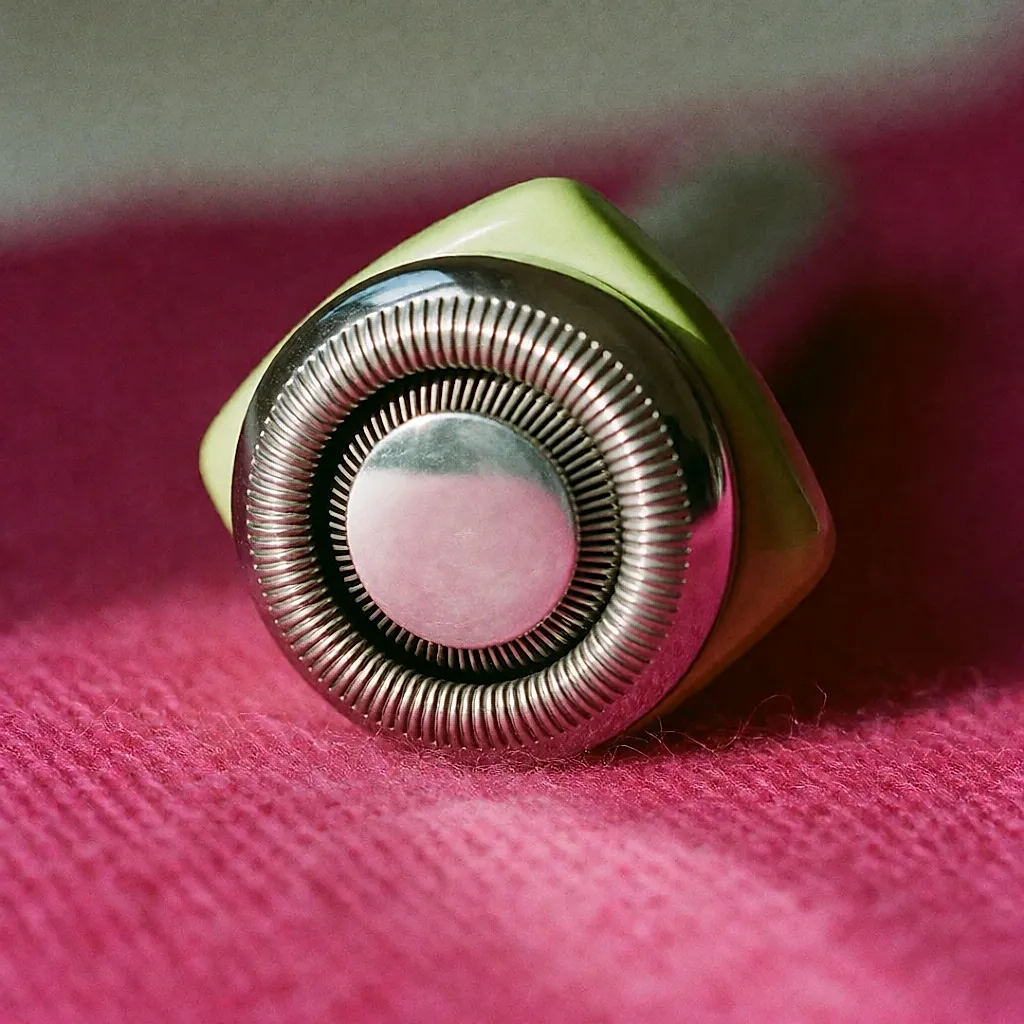
The sneaky part is what happens next. Heavy or repeated use can weaken the knit, so keep it for thick pieces. Should you throw it out? Not necessarily. But save it for matte pieces whose ageing you can live with — not the fine cashmere you love.
The technique, in order
Lay the piece flat, with your hand inside to tension it slightly. Work in small strokes, always in the same direction, without pressing, starting with the areas that rub: underarms, waistband, cuffs, sleeve hems. Stop, look, and only go again if you need to — one big sweep in every direction is the enemy.

After that, the real maintenance happens elsewhere. Wash inside out, cold, with a gentle detergent, minimal spin, dry flat on a towel: nothing dramatic, but it's what helps limit bobbling at source. And when you put it away, fold, don't hang — hangers stretch the shoulders and leave marks. Let the piece rest between wears and it will thank you.
- Always comb a dry piece, never a damp one.
- One zone at a time, in daylight: you can see what you're removing much better.
- Space the sessions out — de-bobbling after every wear eventually tires the knit.
- After the comb, a soft brush in the direction of the nap sets the surface straight again.
What it costs
None of this is expensive: expect to pay roughly £5 to £18 for a metal comb, £9 to £22 for a wooden one — nicer in the hand and less likely to vanish to the back of a drawer. An electric bobble remover sits somewhere between £13 and £40 depending on brand and finish. The price mostly tracks the material, the size of the comb or shaver head and where you buy it.
Where to get your hands on one? Haberdasheries, household and hardware shops, supermarkets and online. A local haberdashery is still your best bet if you want to judge the size of the teeth before buying — for fine cashmere, go for fine, closely set teeth. And if you've only got one jumper to save, ask around: these tools get forgotten in drawers and lent out willingly.
One question remains, and it applies to the whole wardrobe: how many pieces have you retired over three bobbles? Cashmere isn't as fragile as it looks; it's often just badly looked after. A £10 comb in the hall drawer can help you get more wear from a sleeve, a collar, another winter — probably the best deal in your wardrobe.



Comments
Your opinion matters: rate the article, react and reply to comments.
Comments are moderated; AI-assisted comments are flagged. Text emoticons (8-), :-), <3…) are automatically shown as images.