
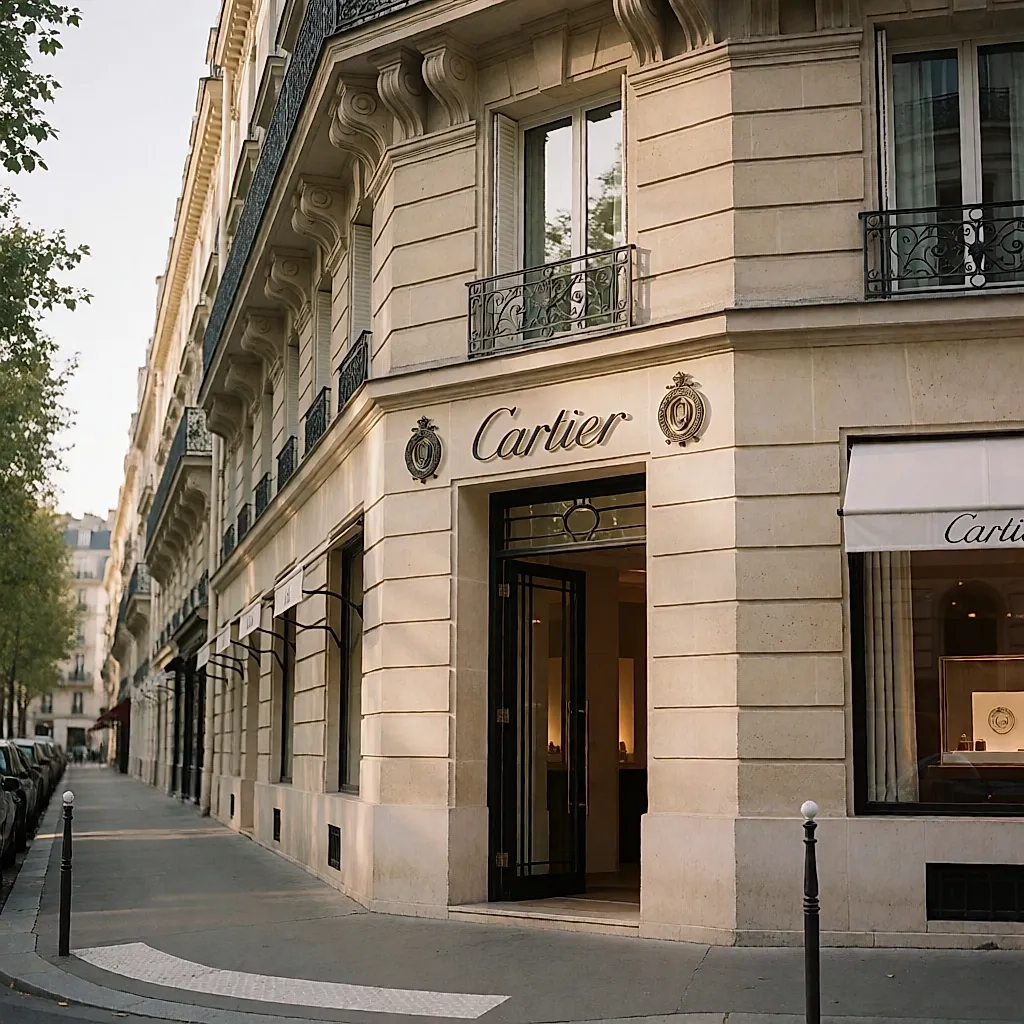
Cartier's story began in 1847, when Louis-François Cartier took over his master's workshop in Paris. His flair and artistic imagination soon had the house dressing the French imperial family. In 1899 Cartier settled for good on rue de la Paix in Paris, and from then on it earned its reputation as jeweller to Europe's crowned heads. In 1902, the King of England ordered 27 tiaras from Cartier's London boutique. Courts across Europe followed suit. But it wasn't only royalty who admired the house: its insistence on the exceptional and its boldness in design won over a far wider public.
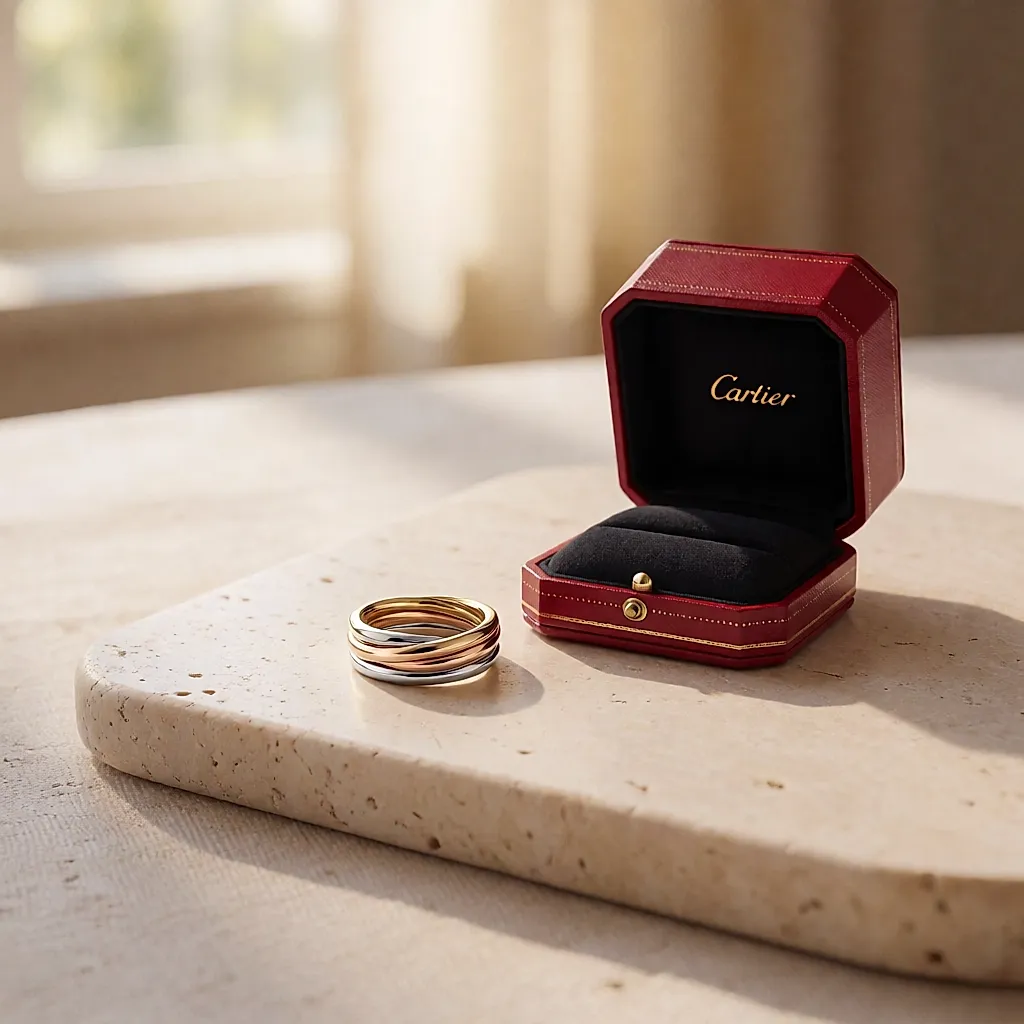
Trinity remains Cartier's signature piece. First made in 1924 by Louis Cartier at the request of Jean Cocteau, it is still one of the jeweller's best-known designs. Made of three bands — one white gold, one rose gold, one yellow gold — the ring has changed with the times: all-gold or set with diamonds, Trinity still appeals for its originality. Buyers clamoured for it from the day it launched, eye-watering price and all. In the house's history, Trinity made its mark as a piece created without a single precious stone, a daring idea at the time. And you don't need a special occasion or a formal outfit to slip it on: for all its price and its goldsmithing, Trinity is a luxury piece you can wear every day, with jeans as easily as with evening dress. Its success has never dipped since. Following in its wake, the house created a bracelet made of three bands too. The different colours carry a very particular meaning — three sentiments of inestimable value: yellow gold stands for fidelity, white gold for friendship, rose gold for love. The ring's originality and simplicity probably explain its longevity and its success. It is still one of the house's flagships today. Whether you're after a piece for a wedding or simply want to treat yourself, Trinity is one of the must-haves of contemporary fine jewellery. It now comes in an all-gold version, a more attainable model aimed at a wider audience. Among the other variations, Cartier has created Trinity in gold and diamonds — as for the price, it's frankly eye-watering. Needless to say, that particular work of art is reserved for the very few.
Cartier is owned by the Swiss group Richemont, which took a majority stake in 1988 and full ownership in 1993. The group also owns prestigious names such as Piaget, Montblanc and Baume & Mercier. Alongside jewellery, Cartier makes accessories, leather goods, fragrance, eyewear and lighters, and it does a brisk trade in watchmaking too, with watches and clocks selling in their thousands.
New collections appear on the house's official site, cartier.com.
'Cartier is a subtle magician who makes pieces of the moon hold together on a thread of sun.' That line, pure poetry and written about Cartier, the jeweller of jewellers, is Jean Cocteau's. You couldn't wish for a better definition of the house, master of contemporary chic. And the subject of that line? A ring — but not just any ring. Three interlocking bands making one ring, named Trinity. Three bands, each with its own meaning, for a ring that became legendary.
Budget
On price, we're not talking 'budget' here — but the house does have genuine entry points. Expect in the region of £1,000 to £1,700 for a small-format Trinity in three golds, and more like £2,100 to £3,400 for larger sizes or wider versions. Diamond-set models start at around £4,300 and can climb far higher depending on the number of stones. Trinity bracelets and other entry-level pieces from the house usually sit between £850 and £2,600. These ranges shift with the gold price, the size and where you buy, so the safest move is to check the prices shown in a boutique or on the official site before you commit; UK pricing is set locally and can differ from prices in the EU.
Sources
- Cartier — Maison Cartier, official site.
- Richemont — Richemont group, Cartier.



Comments
Your opinion matters: rate the article, react and reply to comments.
Comments are moderated; AI-assisted comments are flagged. Text emoticons (8-), :-), <3…) are automatically shown as images.