
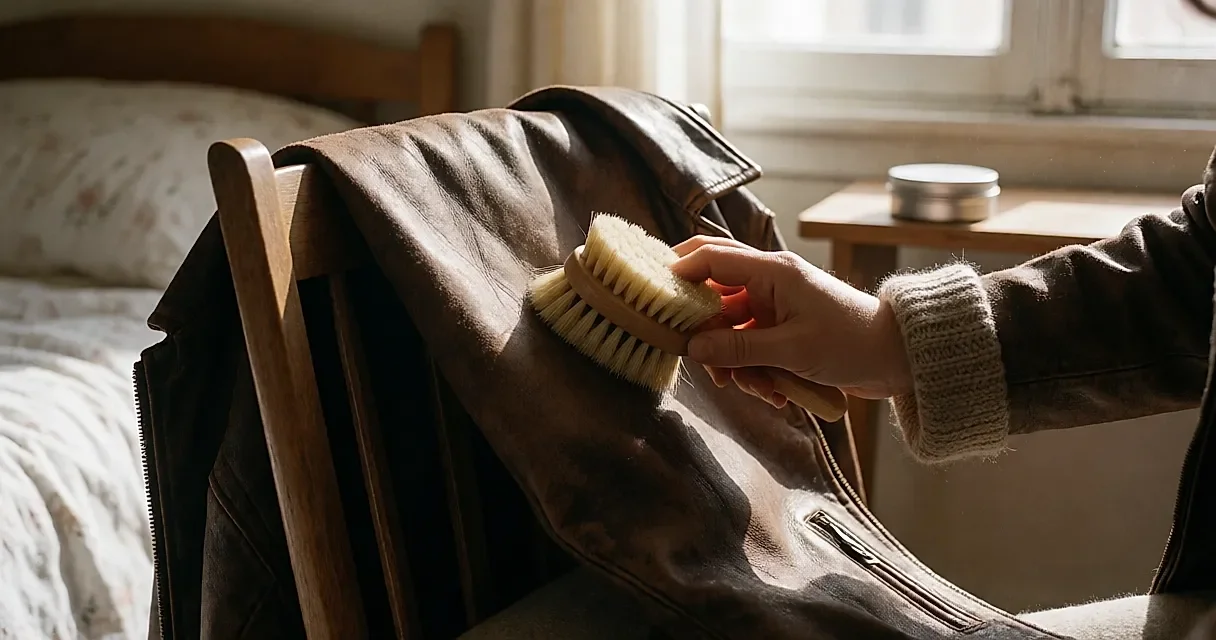
Leather that has gone grey isn't necessarily worn-out leather: it is almost always leather that has been conditioned without being cleaned first. Look at the crease at the elbow of your favourite jacket – the grey paste sitting in the fold is not patina. It is dust trapped under a layer of cream, and once you have seen it, you cannot unsee it. The good news: leather care comes down to two steps, not ten products.
The step we skip
A jacket worn all winter picks up more than you might think: tube dust, salt from the pavements, city dust settling into the grain and the seams. And that is exactly what we never remove, because conditioner makes its presence felt – you apply it, you can smell it, and you feel as though you have done something. A brush, on the other hand, leaves no trace that it has been anywhere near the leather. Guess which one gets forgotten?
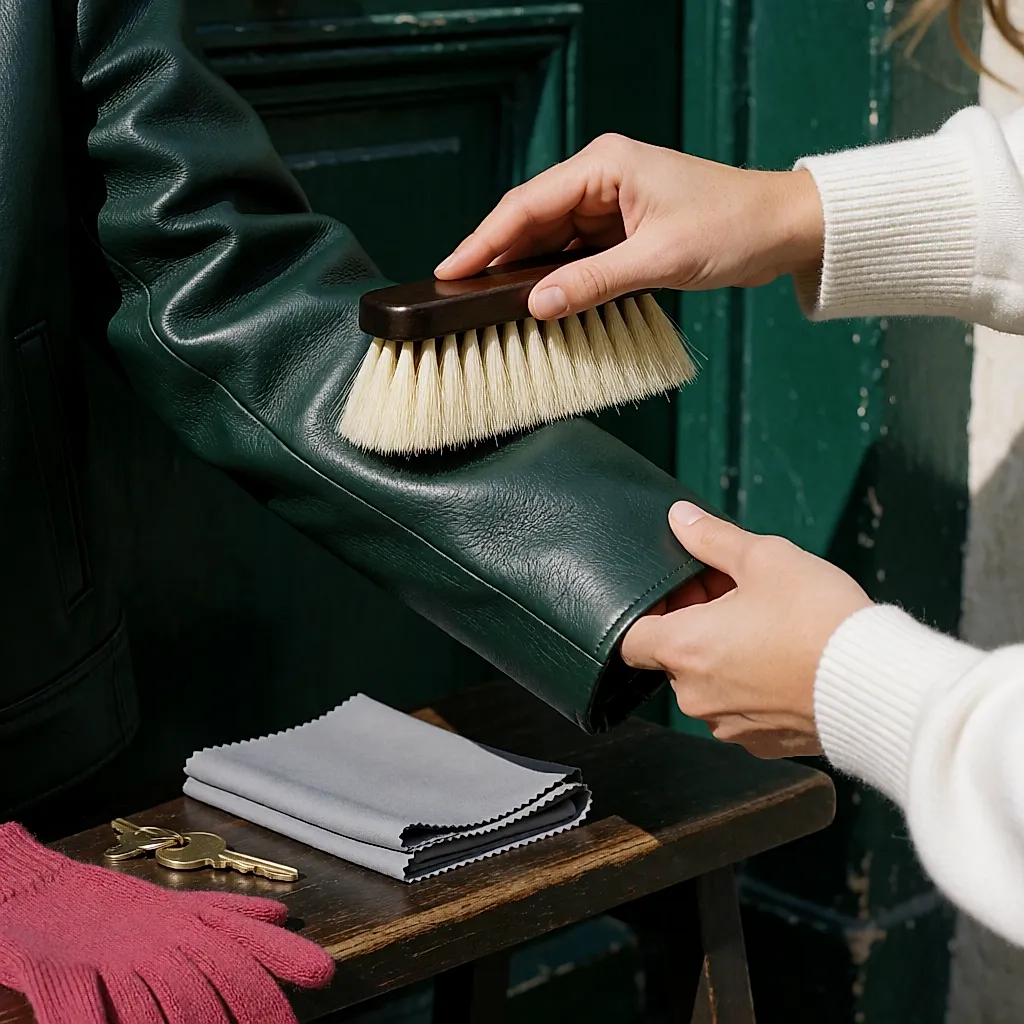
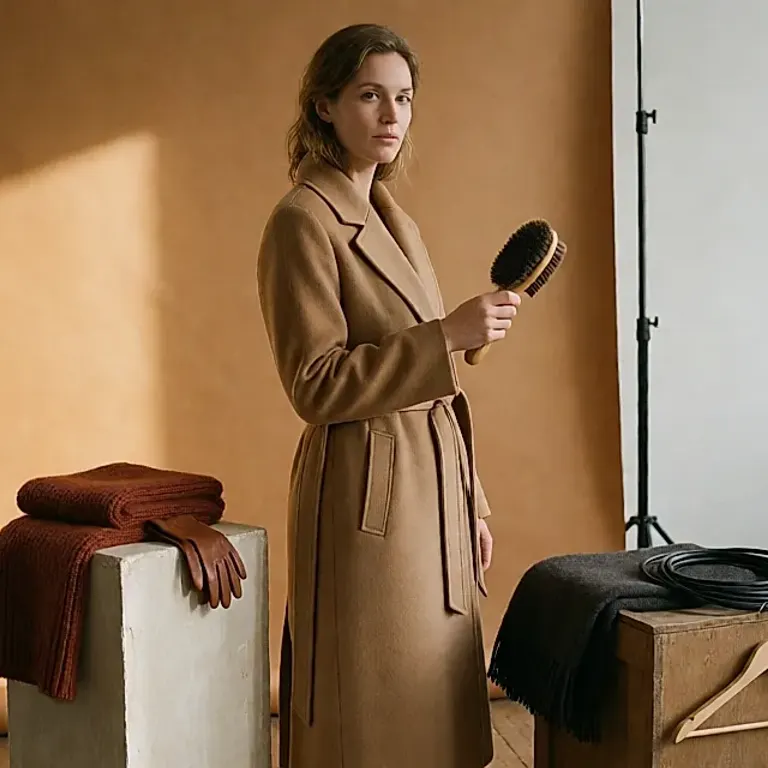
The technique is simple enough: a soft horsehair brush, short strokes, no pressure, paying attention to folds, cuffs, seams and the bottom of sleeves. Nothing rough, nothing wet – soaked leather takes hours to dry and loses its shape. In practice, brushing every two or three outings is often enough for a piece worn in town, and once a month for a bag that travels with you every day. Got ten minutes on a Sunday? That's already a win.
For dust that has worked its way in, use a slightly damp microfibre cloth, then leave it to dry naturally, away from a radiator that will stiffen the leather.
Conditioner doesn't clean leather, it nourishes it
This is where it really matters. Conditioner applied to dusty leather doesn't make the dust disappear; it locks it in. The paste builds up in the grain, the surface loses its sheen, and you conclude – a little too quickly – that the piece is short on care. So you add another layer. Then another. After two winters, the leather is greasy, dull and still just as dirty.
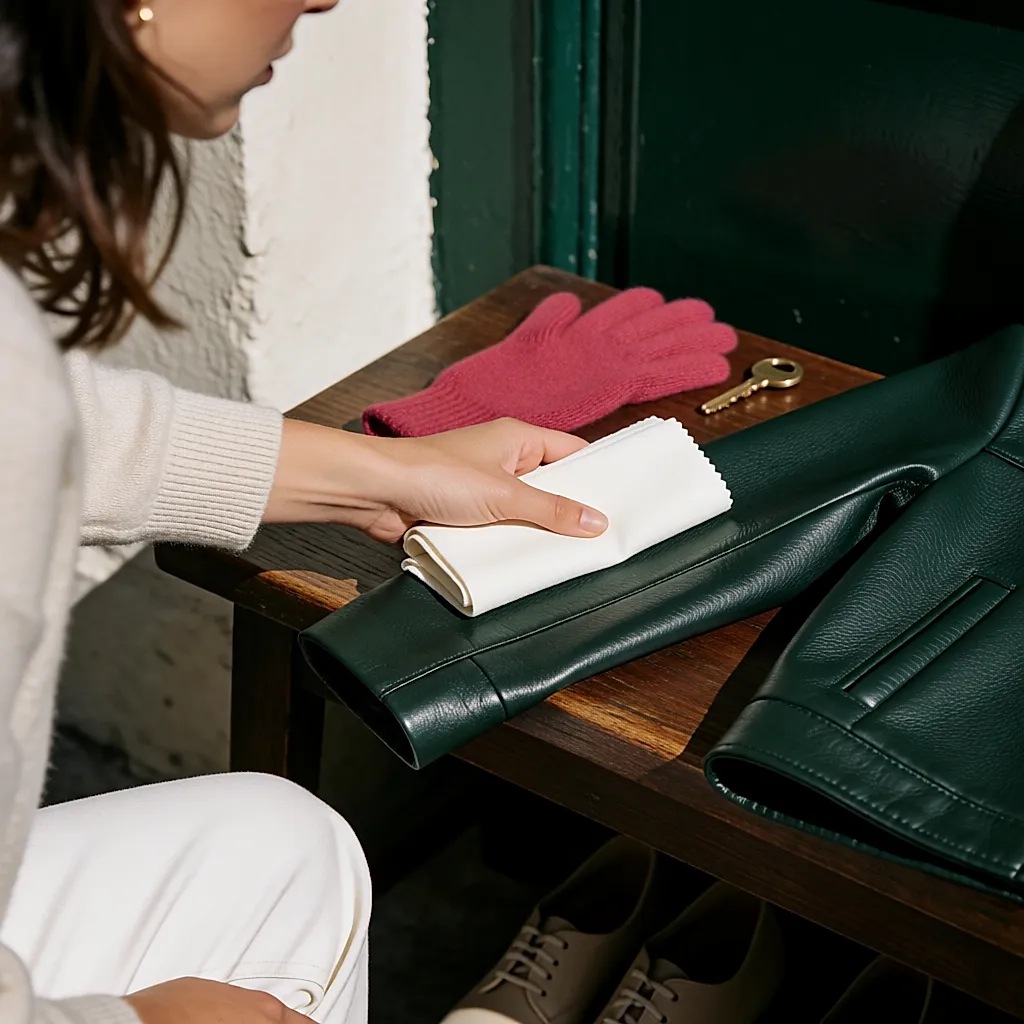
The order matters more than the product: brush, leave the leather to breathe for a moment, then condition. A pea-sized amount is enough for one sleeve; spread it in a thin layer with a cloth, let it sink in, then buff with a clean cloth. If product is still sitting on the surface after 15 minutes, you used too much – wipe off the excess; your leather will thank you.
As for frequency, be wary of marathon-style routines: two to four conditionings a year will cover most needs, with more for a piece that is heavily exposed to sun or worn every day. Supple, matte leather that isn't cracking at the folds is already saying thank you.
Not every leather needs the same care
The real trap is treating suede like smooth calf leather. Suede and nubuck – those velvety leathers – hate ordinary creams: they flatten, mark and lose their nap. For them, a specialist brush and an eraser, nothing more. Patent leather needs only a soft cloth: any cream will make it sticky and cloudy.
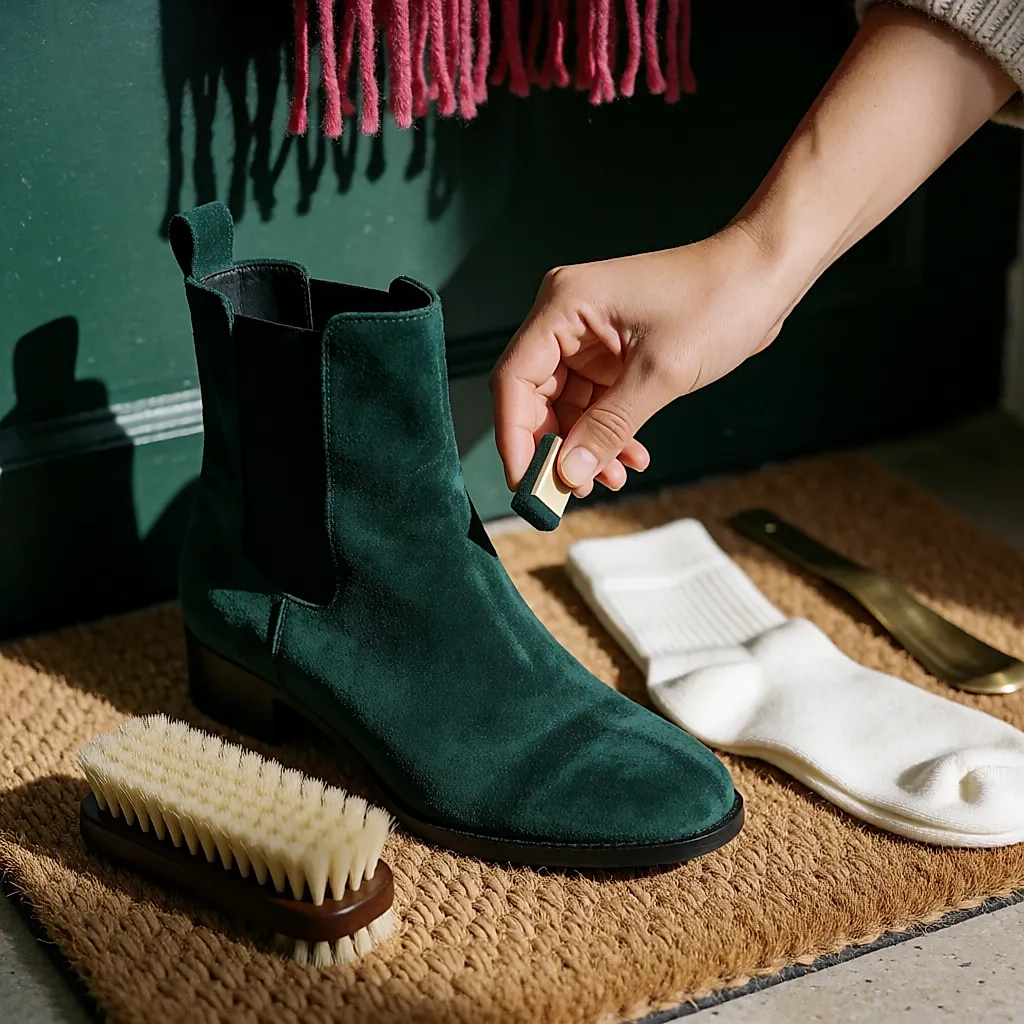
Then there is hand-dyed or hand-patinated leather, which can darken with certain products. If in doubt, test on a hidden area, under the sole or inside the bottom of a bag. It is the kind of precaution that takes 30 seconds and saves you an afternoon of regret.
The two-step routine to remember
- Brush with a soft brush, dry, over the whole surface, including folds and seams.
- Use a damp microfibre cloth for stubborn marks, then dry naturally.
- Only then apply a pea-sized amount of conditioner in a thin layer, then buff.
- Two to four conditionings a year are enough – not one every season.
What it costs
Leather care is one of the least costly parts of a wardrobe. Expect to pay around £8–20 for a decent horsehair brush, £10–25 for a 100ml tin of conditioner from a chemist, shoe repairer or beauty retailer, and up to £35 for more concentrated shoe-repairer formulas. A complete kit – brush, cloth and conditioner – costs £20–50 from larger specialist retailers and online.
Price varies mainly with the range and size: one tin will easily last two to three years for a household. If you would rather hand the piece over, a full service at a shoe repairer often costs £15–40 depending on the size of the item, the city and the service – useful for a valuable bag or a jacket that has lived. And if you like to know what is in the formula, look for naturally derived waxes and refillable or glass containers: that is where the real difference lies, more than in the price on the label.
Leather that is brushed regularly does not need to be scrubbed to death. It ages, develops patina and catches the light – and that is exactly what we love about it. So before you buy a fourth product, try the brush: it may be the one thing your jacket has been missing for three winters.


Comments
Your opinion matters: rate the article, react and reply to comments.
Comments are moderated; AI-assisted comments are flagged. Text emoticons (8-), :-), <3…) are automatically shown as images.