

A drop of olive oil lands on a cream jumper and the drama comes down to three centimetres of wool. The reflex is to rub, as if the knit will forget faster under your palm. It won't: the grease spreads, sinks in, and the stain becomes a little signature you never asked for.
Wool is a delicate natural fibre: its fibres can tighten, felt and remember how they've been handled. So before you reach for detergent, start with the quietest step - absorb. No soap straight away, no hot water, no iron. Treat a grease stain like an awkward guest: contain it, give it time to draw out, then show it the door.
Why rubbing makes it worse
Rubbing gives the illusion of acting fast. In reality, pressure pushes the grease into the fibre and spreads it over a wider area; on wool it also tires the knit and can create a fluffy, pill-prone patch that is more visible than the stain itself. The heroic gesture of the moment becomes, as it dries, a halo looking back at you.
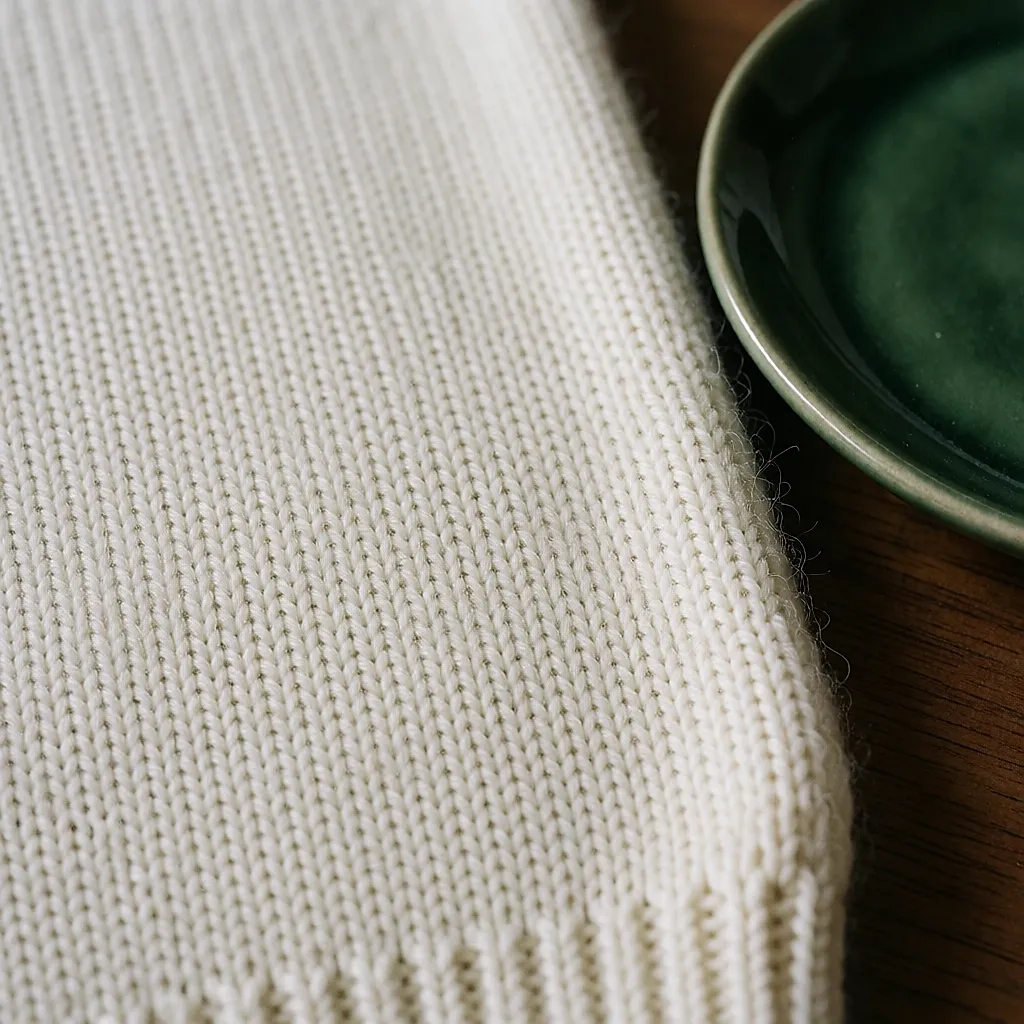
Heat doesn't help either. While the stain is there, it's better to avoid hot water and, above all, the iron: heat can set the grease in the fibre instead of lifting it out. That's why you absorb first, wash afterwards, and only iron once the wool is clean, dry and completely trace-free.
What to do, minute by minute
As soon as a stain appears, blot, don't rub. Put kitchen paper or a clean cloth underneath the area, then pat it gently with another piece of paper. Change the paper as soon as it takes up grease: the aim is to remove as much as possible before it settles, not to move it around the jumper.
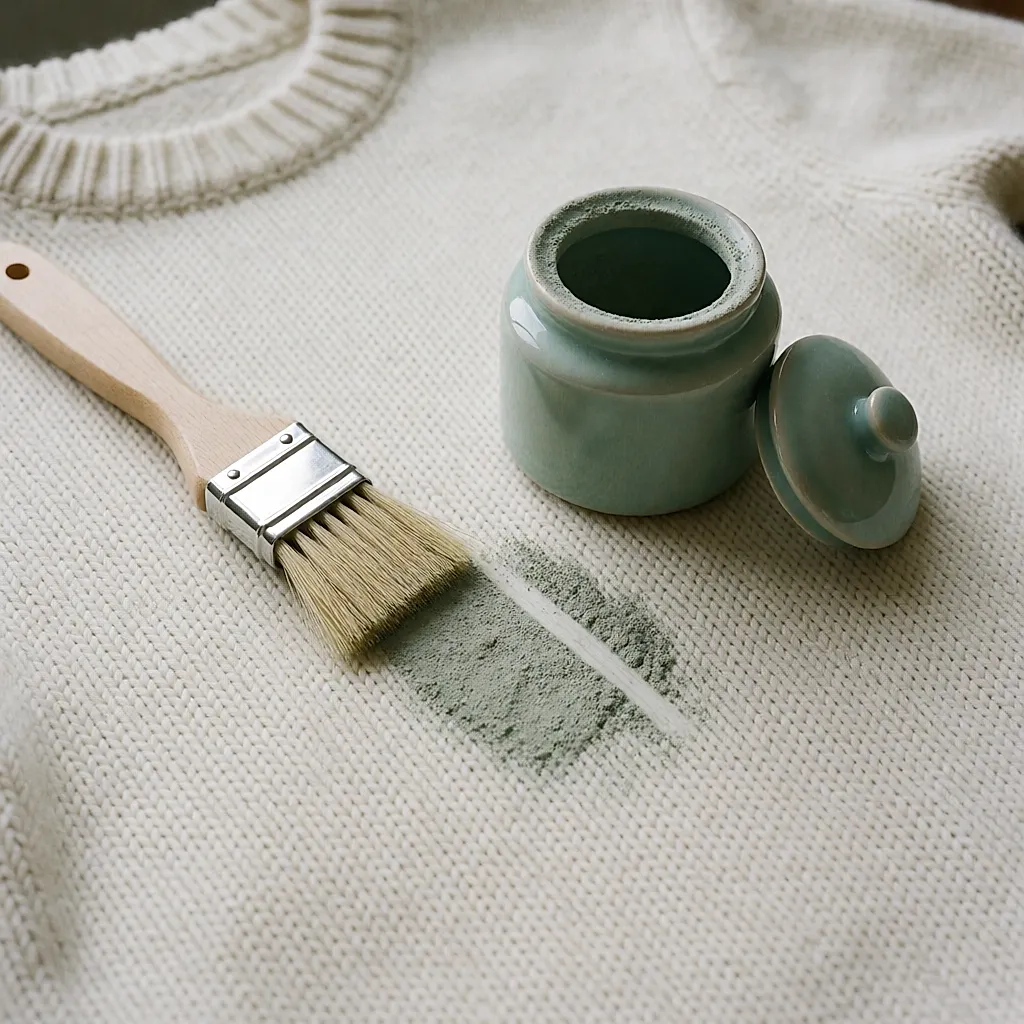
Next, sprinkle on stain-absorbing powder - or place a clean absorbent pad over the area if you don't have any. Leave it while the powder draws out the grease: in practice, often 15 to 30 minutes, sometimes longer on an old stain. Then brush it away with a soft brush, without pressing, and repeat if the stain is still visible. Is it repetitive? Yes. That is exactly what stops the situation turning into a drama.
Cold wash, flat dry, keep the iron away
Once the stain has been absorbed - and only then - wash it. Cold water, a wool or hand-wash cycle, gentle detergent: don't drown the knit in a hot bath and hope the problem disappears. Rinse without wringing, press between two towels to remove the water, then dry flat on a clean towel, away from direct heat. A jumper dried on a hanger loses its shape; one dried on a radiator remembers the lesson.
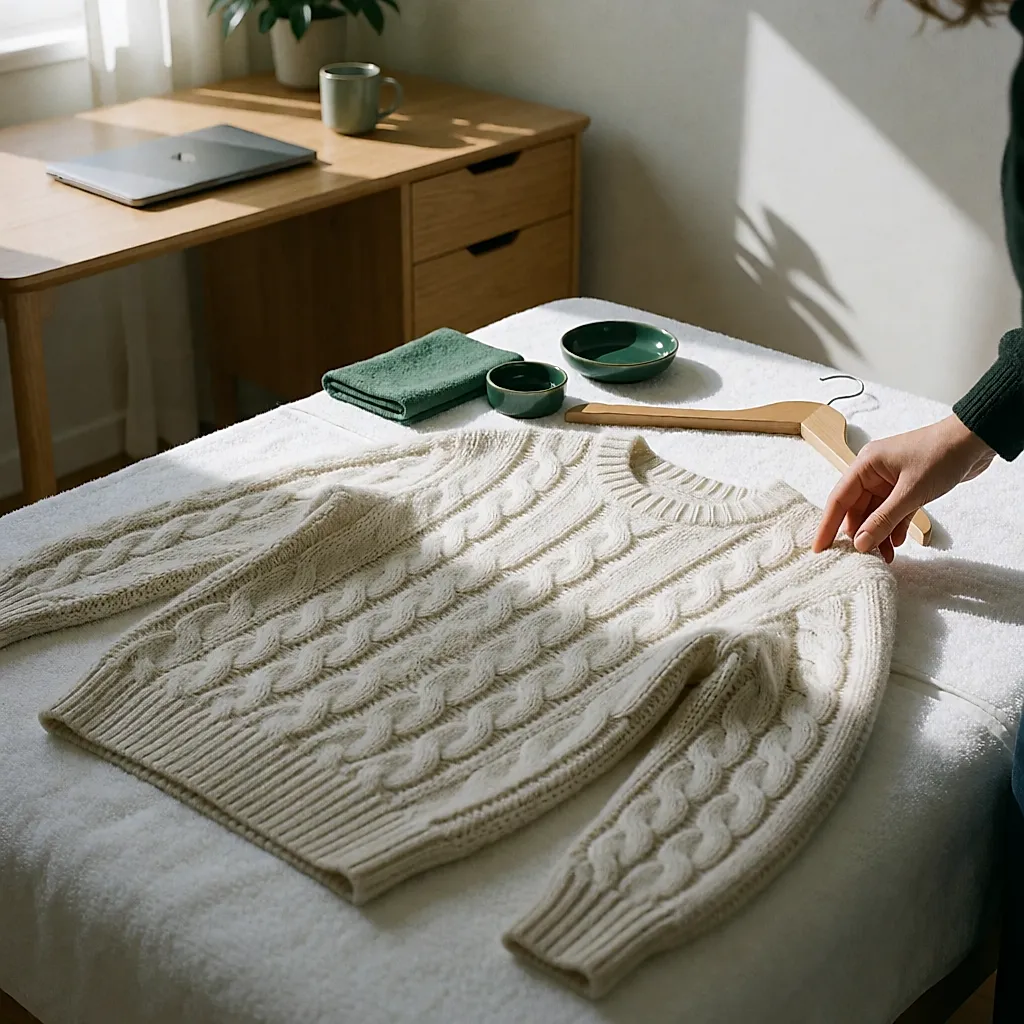
And the iron? Keep it in the cupboard until the stain has gone. This may be the hardest rule to follow, because you want to wear the piece straight away. But ironing a grease stain while it is still there only helps it settle in. If you're still unsure after drying, repeat the absorption, wash cold again and give it time. Wool handles patience better than haste.
Before putting any product on coloured wool, check colourfastness on an inside hem. Always work on the reverse, with a clean cloth underneath, and don't use an iron while the stain is still visible.
Budget
The real smart buy isn't a spectacular product: it's what you already have. A roll of kitchen paper, a pot of stain-absorbing powder and a soft brush are enough. Expect roughly £4 to £10 for a pot of stain-absorbing powder, and around £4 to £12 for a wool detergent; pack size, refill options, brand and where you shop all make a difference. Compare prices at a household goods store, at the supermarket or online. One pot will handle several stains, which makes it decent value.
For washing, a wool detergent is easy to find at a household goods store, at the supermarket or online; there's no need to stock up on lots of bottles, one is enough. Prices vary with the size of the pot, whether there's a refill and where you buy, but the real difference lies elsewhere: a stain treated straight away costs less than a felted jumper replaced in frustration.
A wool jumper saved is a small wardrobe victory. The piece stays, the drape stays, and you avoid that moment when you buy exactly the same jumper again while promising to be more careful. The next drop of oil? You'll know it hasn't won as long as the iron stays away.



Comments
Your opinion matters: rate the article, react and reply to comments.
Comments are moderated; AI-assisted comments are flagged. Text emoticons (8-), :-), <3…) are automatically shown as images.