
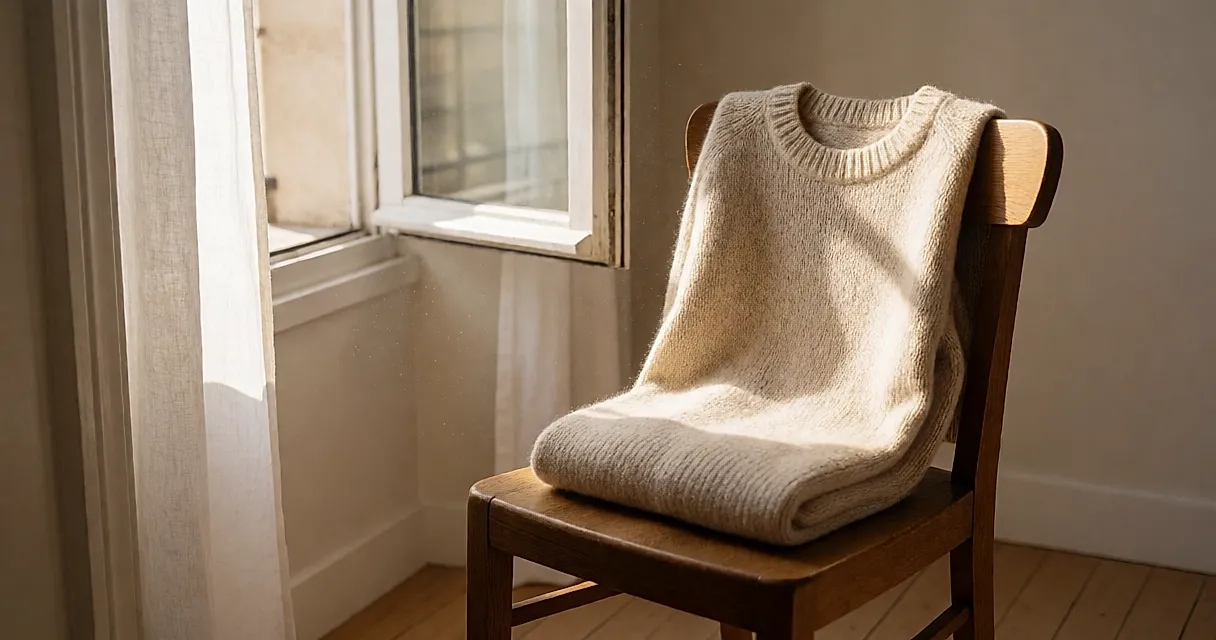
Your merino jumper has spent the evening in a restaurant and come home carrying a faint memory of red wine. The reflex is the laundry basket. Except wool doesn't need a bath to sort that out: one night on a hanger, window ajar, and it will often go another couple of wears. It is one of the best-value maintenance habits in your wardrobe — and, frankly, the most restful.
A knit breathes, so let it breathe
Wool is a natural fibre: it takes in a little moisture and releases it again, which is why it copes reasonably well with the humidity in a room and much less well with a hot drum cycle. In practice, a jumper worn for two days has little to answer for if it has spent the night in the open air between outings.
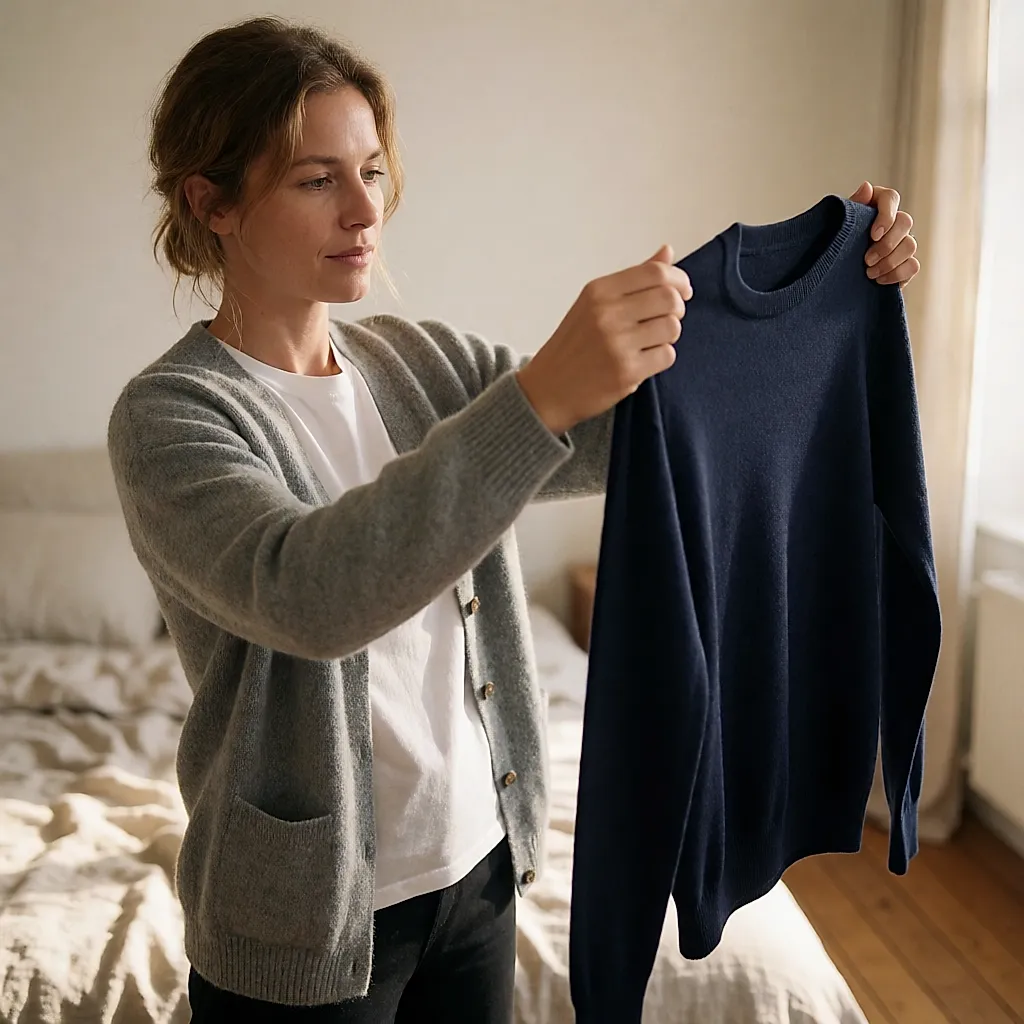
Airing is about shape, too. A knit still warm from yesterday holds the memory of shoulders and elbows; hung properly, it settles back into place and recovers its drape. It sounds obvious, and yet: how many jumpers have gone into the machine when all they needed was an open window?
Where, how long, and on what
The right hanger first. Not a wire hanger that puts dents in the shoulders, but a wide hanger, wooden or padded, that follows the line of the shoulder seam. Expect to pay somewhere between £6 and £15 for a decent one from a department store haberdashery or online; it is a small outlay for something that works hard.
Then the spot. A room at normal temperature, a gentle draught, and above all, not the radiator or full sun through the glass: dry, harsh heat tires the fibre. In practice we would happily leave a knit that has simply been worn overnight or for a day — ample time for the air to do its work. A heavy knit that is damp from washing should be dried flat, never hung up while soaking.
One detail that earns its keep: a soft-bristled clothes brush (£8 to £20 depending on the finish) lifts dust and small pills in a couple of passes, and puts off wash day accordingly. And if a piece is only creased from a spell in a suitcase, a little steam applied from a sensible distance works wonders.
What one wash too many takes away
Every wash, even a gentle one, puts the fibre to the test: water, agitation, then drying. Repeated often enough, it starts to show — the handle loses its suppleness, the surface fibres begin to felt, the cuff edges soften a little too far. The drape suffers before the colour even shifts: the jumper is still wearable, but it no longer falls the same way over the body.
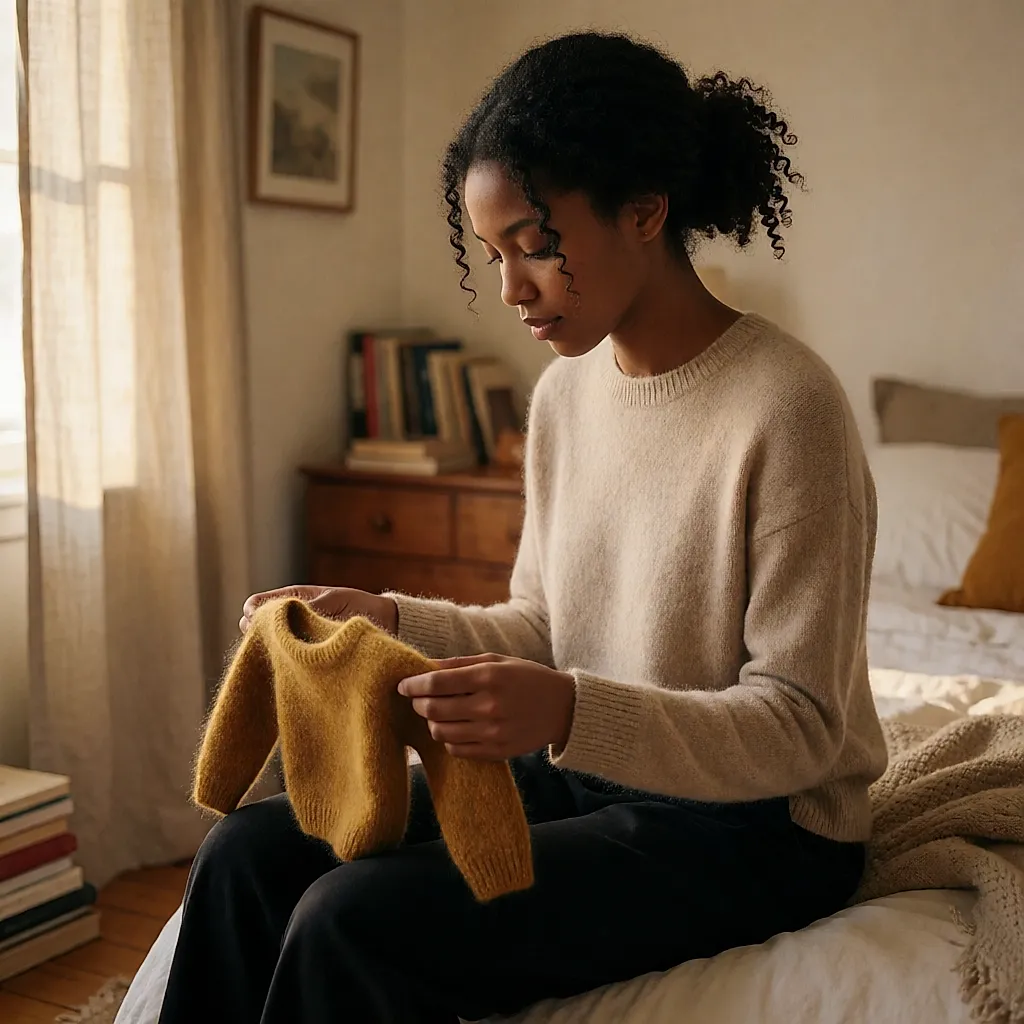
And then there is the classic. Too hot, too much agitation, and wool felts: the knit tightens, the whole thing takes on the look of a doll's jumper, and there is no undo button. We have all got a specimen at the back of a drawer to remember it by.
When washing really is necessary
Three signals, no more. A stain that won't lift with a dab of lukewarm water. A smell that clearly lingers after a night's airing — body odour, not perfume. And several days in a row of direct contact with the skin, especially for knits worn next to it.
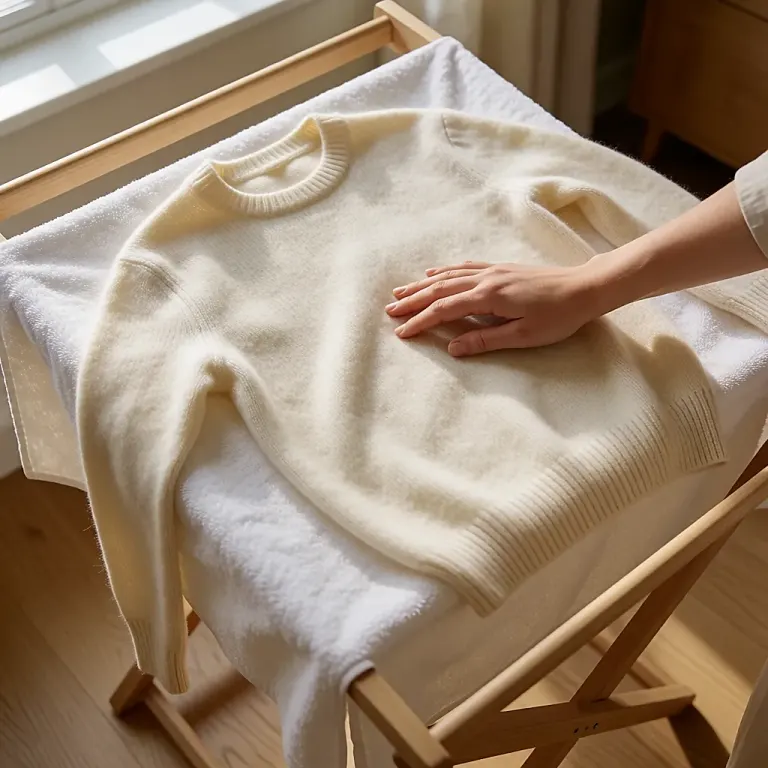
After that, wash strictly according to the care label: it sets out the programme, the temperature and the drying. Choose a gentle wool cycle or hand wash, a low spin and a suitable detergent; dry flat after rolling it in a towel. For structured pieces, professional cleaning costs around £10 to £25 depending on the item and where you live — money better spent than on three careless washes.
The routine that works: when you get home, shake the knit out, hang it on the wide hanger, window ajar, overnight. Brush it. Store it folded — never on a hanger for a jumper, or the knit will stretch out of shape. And only wash it when it gives you a signal.
The upshot: fewer wash cycles, jumpers that keep their handle and their drape, and a dry-cleaning bill that shrinks. Wool doesn't need much looking after — just a bit of air. Tonight, before you close the window, remember: your favourite knit may only have been asking for a draught, not a bath.


Comments
Your opinion matters: rate the article, react and reply to comments.
Comments are moderated; AI-assisted comments are flagged. Text emoticons (8-), :-), <3…) are automatically shown as images.