
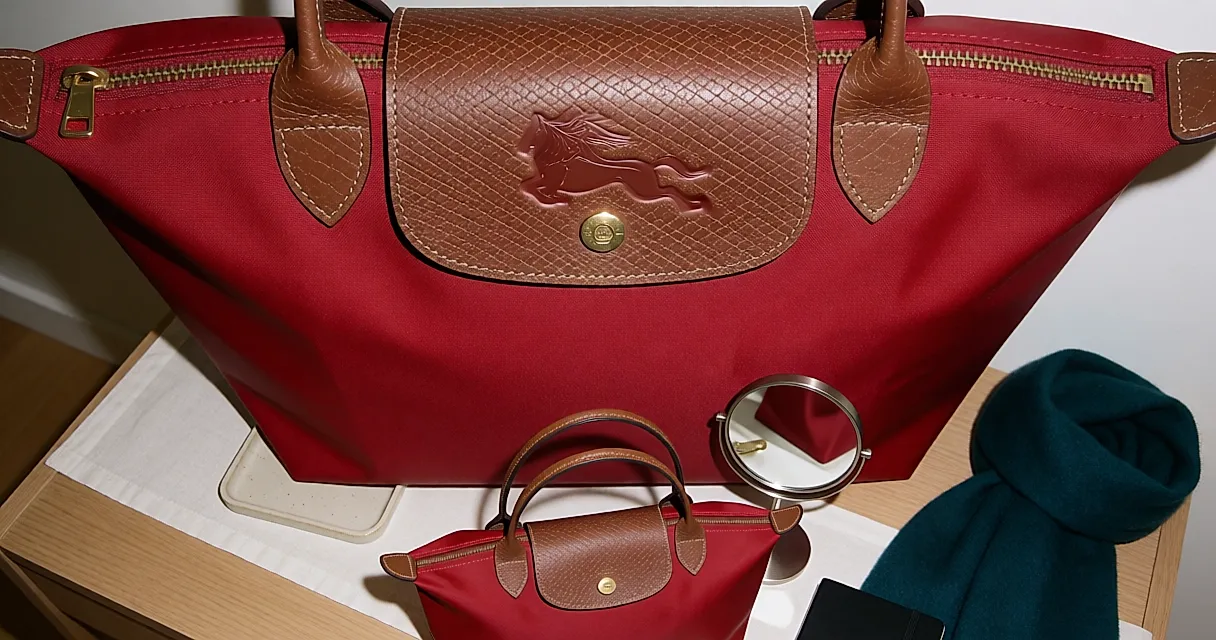
There are bags you choose for a silhouette you haven't seen before, and bags you buy again with your eyes closed because you already know exactly where your phone sits at the bottom. Right now, it's the second kind that's taking on volume: same design, same stitching, same fastening, a few extra centimetres. And the real point isn't the size. It's what those centimetres do to the weight, the opening and your shoulder.
A familiar design, scaled up
Houses rarely reinvent a bestseller. You recognise it in the street before you've seen the label; you know how it opens, where the purse goes, whether the strap will fit over a winter coat. So when a house wants to build on a success, it has two options: design something else and risk disappointing people, or enlarge what already works. The second is so comfortable that it ends up becoming a trend in its own right.
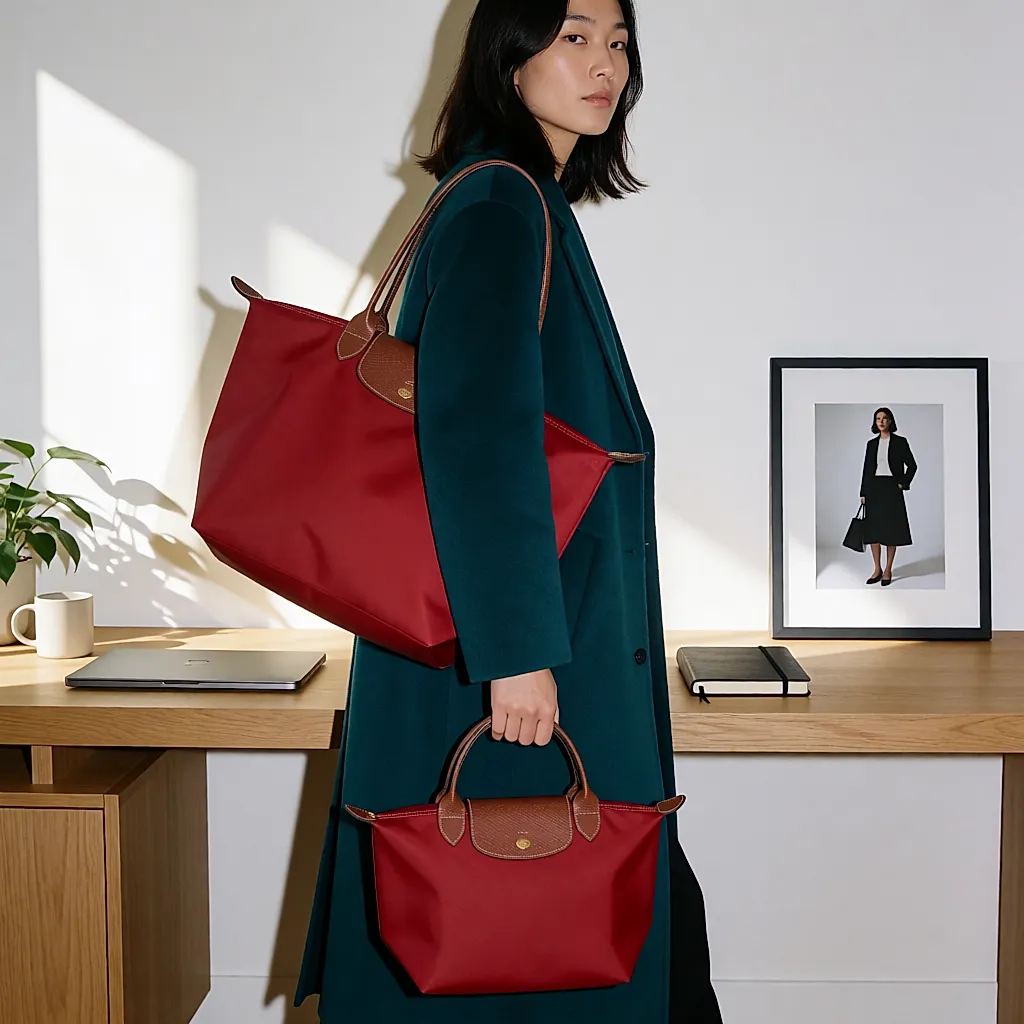
The Longchamp Le Pliage is a textbook case: the same folded-canvas shape has been around for years, from mini to travel size, without ever needing a new name. Except that scaling up is hardly ever neutral. A small bag has jewel-like proportions and is carried in the hand; the same design in large becomes a tote, and a tote gets filled. Hence the real question: do you need more room, or only the idea of having more room?
The empty weight is the number we forget to check
A large bag in thick leather can already feel heavy when empty, before you add a laptop, a water bottle and a November umbrella. In the shop you lift it for three seconds, decide it feels light, and discover after an hour's walk that it is sawing at your shoulder. Coated canvas and thick cotton are much lighter; the trade-off is structure, because thick leather holds itself up while supple canvas slumps. Light or simply empty? The distinction is worth your time.
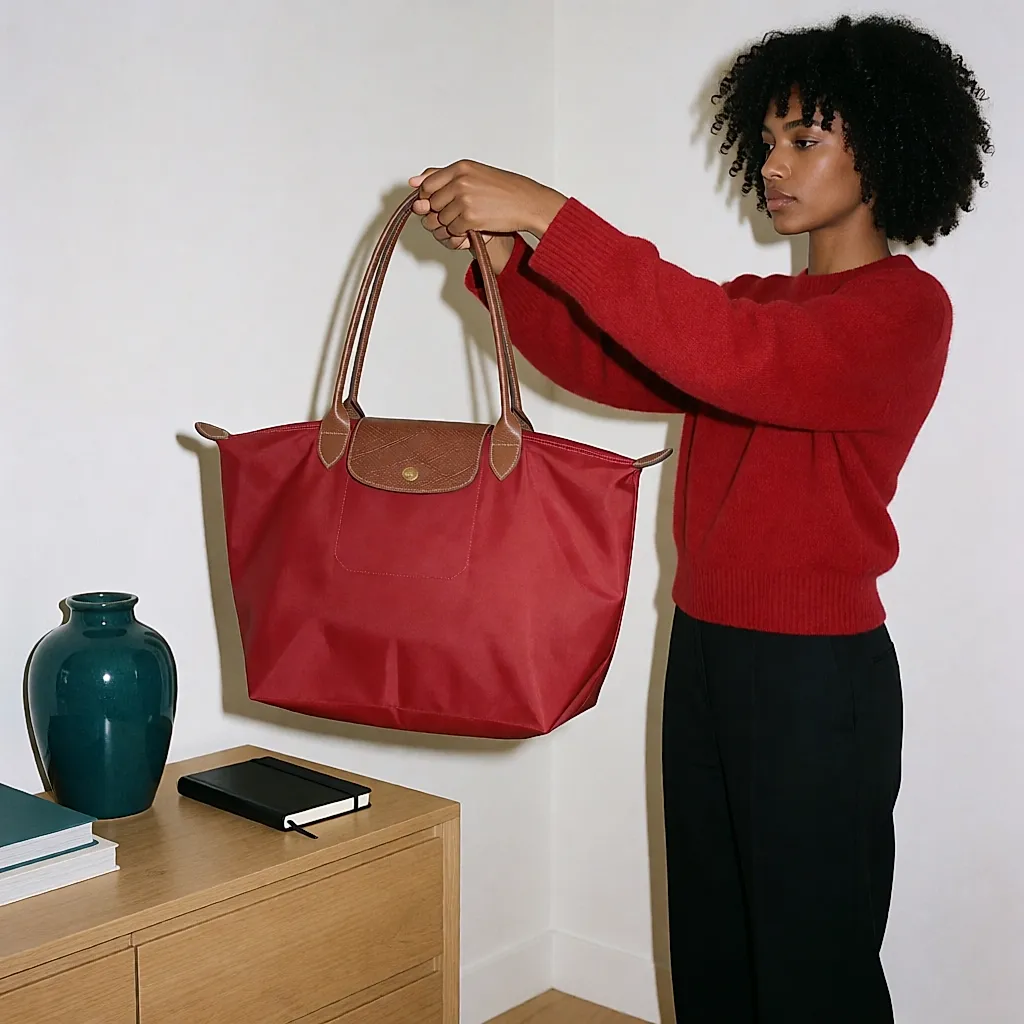
The gesture that beats most advice: lift it empty, then picture it with your daily life inside. Look, too, at what adds weight without showing it: a thick lining, reinforcements, metal feet, a big closure. That is often what separates the large bag you forget you're carrying from the one you abandon in the hallway after three weeks.
The opening decides how patient you'll be
An XL bag with a mini bag's opening means fishing for your keys at every street corner. The outside width gains centimetres; the opening, where your hand actually goes, gains far fewer. You reach in up to the elbow and come back with a charger, two receipts and a moderate sense of satisfaction.
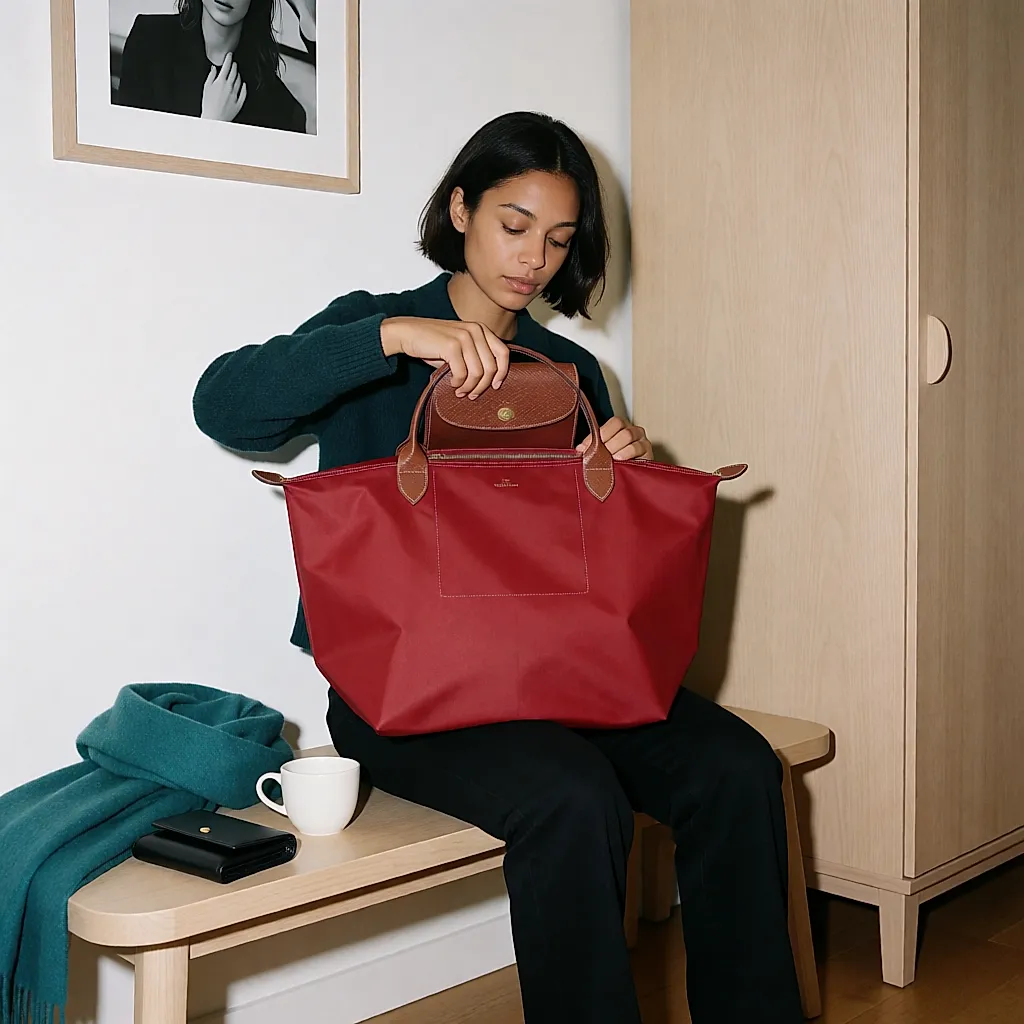
So open it wide, in the position you'll actually carry it: on your shoulder, on your knee, tucked under your arm. A magnetic flap lets your hand slip in easily; a zip protects more but slows everything down; an open tote works well in the office and less so on a packed train. Check the gusset too: it decides whether the bag opens like a door or a slit.
The strap is the detail that hurts
A strap that is too narrow and the bag joins the category of things you leave at home: on a loaded large bag, it turns into a cheese wire across your shoulder. In practice, a wider strap, in canvas for example, spreads the pressure better without showing it. Chains are beautiful and merciless: they slide when empty and cut when full.
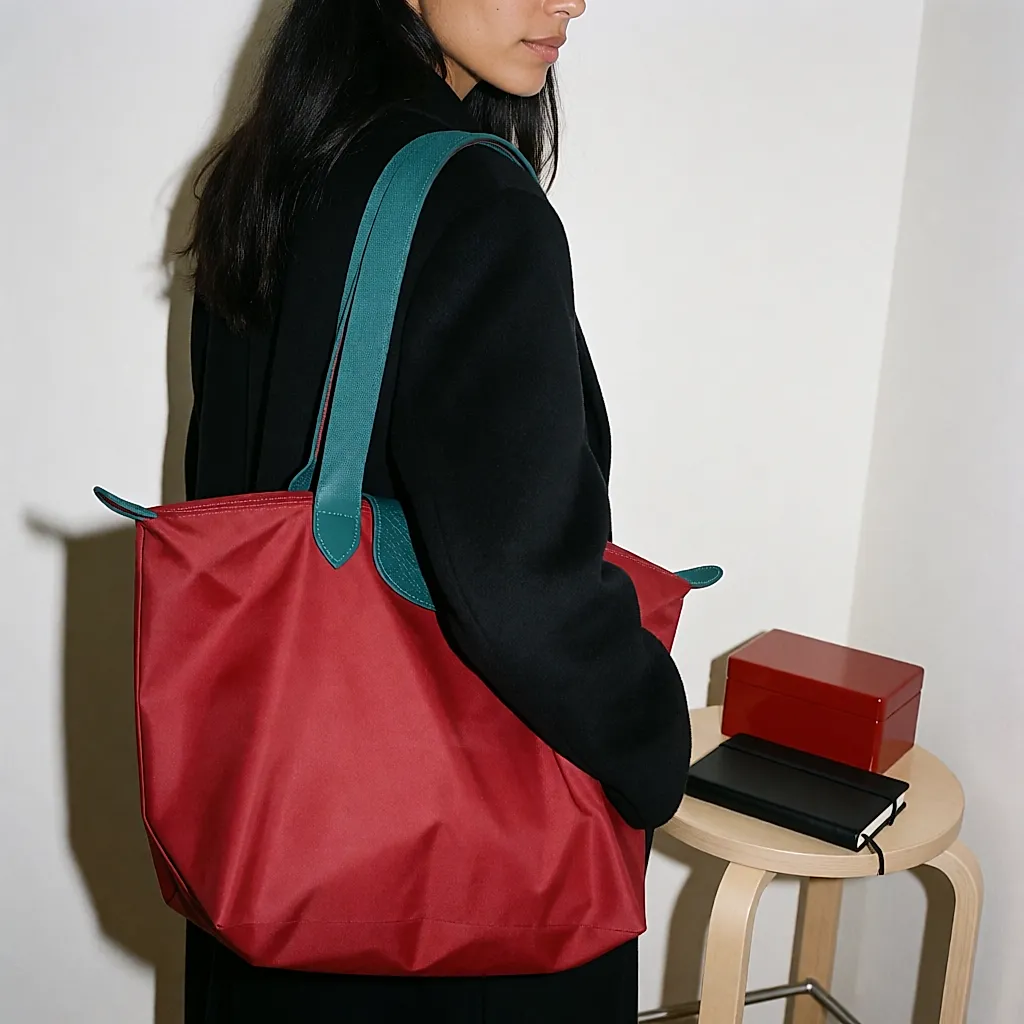
Finally, look at how the strap is attached, whether stitched straight on or clipped, and check whether the length adjusts. Worn cross-body, a large bag lands at hip height: handy on a bike, awkward in a car, less than elegant over a thick parka. On the shoulder, shorter, it carries better all day, provided the handles fit over your coat.
Budget
The large version often costs a little more than its smaller sibling: more material, more work. In coated canvas or thick cotton, expect to pay in the region of £75 to £170 depending on size and finish; in full-grain or calf leather, the range climbs quickly to around £230 to £550. Beyond that, you are mostly paying for the brand and the hand assembly.
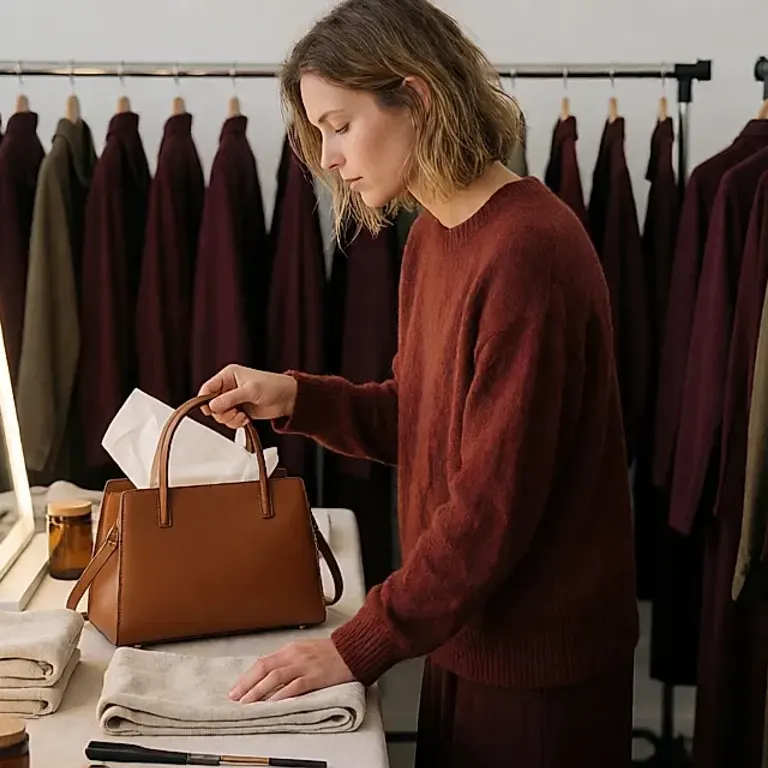
If the budget is tight, there are two routes: the midi size, often a sensible choice in daily use, and pre-loved, where a classic in good condition frequently sells for a fraction of the new price. You still need to inspect the corners, the lining and the clips.
Three things to do in the shop Lift the bag empty and keep that weight in mind. Open it wide with your own hand, not just your fingertips. Then put the strap over your shoulder while wearing the coat you have on now: that coat will decide whether the bag leaves the shop with you.
Then there is the underlying question, the one no product page can fully settle: do you like this large size for what it holds or for the look it gives? Both are defensible. Under about £180, a well-made large canvas tote should do the job without punishing your shoulder; between roughly £230 and £550, aim for leather that holds its shape rather than the softest hide, even if that means giving up the slouchy drape you love on smaller bags. And if you're still hesitating, take the midi size: it is often the one people carry for a long time.

Comments
Your opinion matters: rate the article, react and reply to comments.
Comments are moderated; AI-assisted comments are flagged. Text emoticons (8-), :-), <3…) are automatically shown as images.